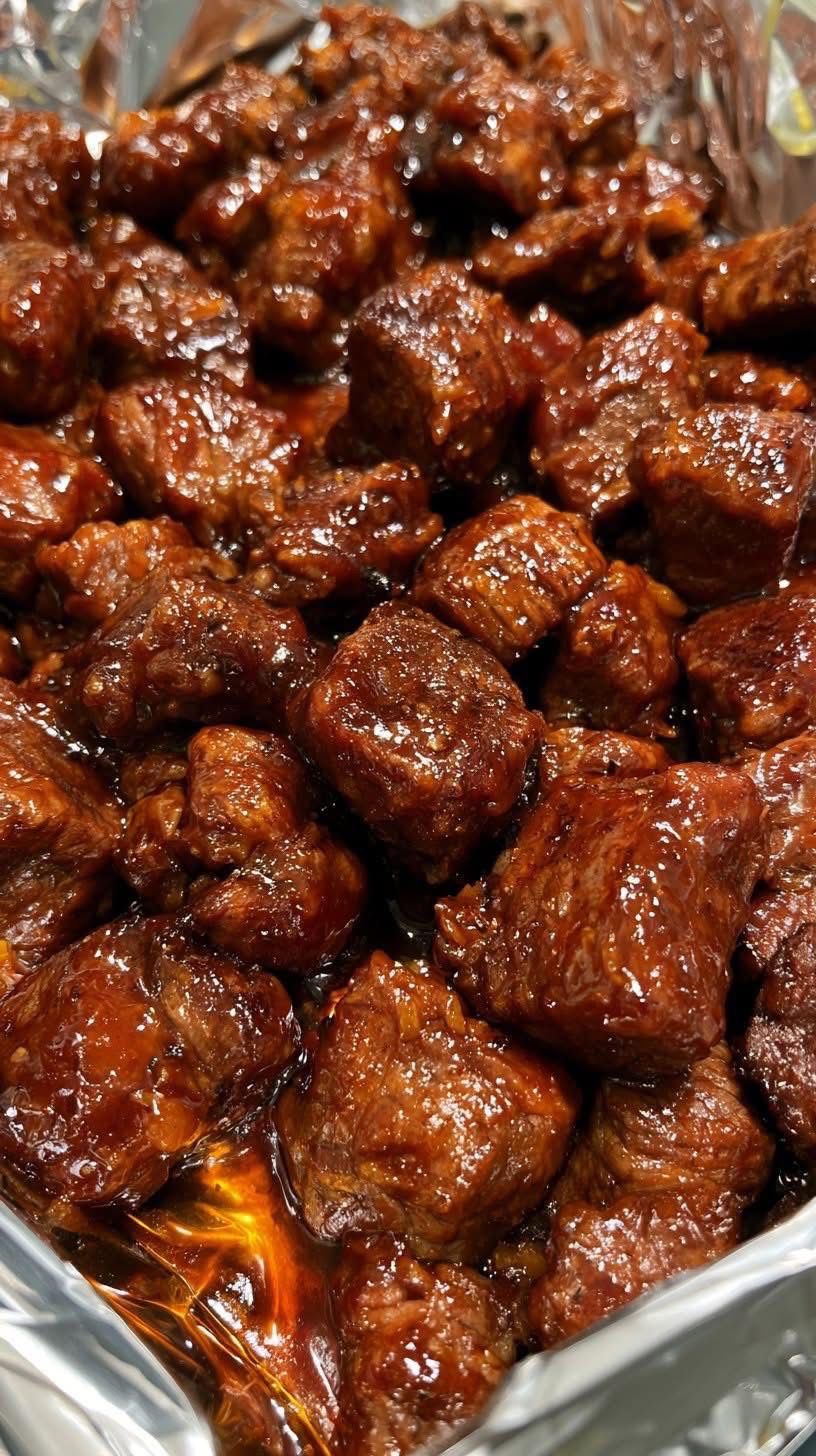
🥩 Melt-In-Your-Mouth BBQ Beef Burnt Ends
These Melt-In-Your-Mouth BBQ Beef Burnt Ends are packed with smoky, savory flavor and finished with a glossy, caramelized barbecue glaze. Tender cubes of well-marbled beef chuck are slowly smoked, then braised with barbecue sauce, butter, brown sugar, and honey until incredibly juicy and fork-tender.
They’re perfect for weekend BBQs, game-day gatherings, family dinners, cookouts, and party appetizers.
Recipe Overview
| Detail | Information |
| 🥩 Prep Time | 20 minutes |
| 🔥 Cook Time | 5 hours 30 minutes |
| ⏱️ Total Time | 5 hours 50 minutes |
| 🍽️ Servings | 6–8 |
| 🌡️ Cooking Method | Smoking + Braising |
| ⭐ Difficulty | Easy to Intermediate |
| 🥣 Main Flavor | Sweet, smoky, savory, and rich |
Why You’ll Love This Recipe
These beef burnt ends deliver the indulgent flavor of classic barbecue without requiring an entire brisket.
Using a well-marbled chuck roast makes this recipe more affordable while still producing incredibly tender beef with a beautiful smoky bark.
The beef is first seasoned generously and smoked until a dark mahogany crust develops.
It is then covered with a rich combination of barbecue sauce, butter, brown sugar, honey, vinegar, and beef broth.
The covered braising stage allows the connective tissue to slowly break down, creating juicy, tender beef with a deliciously sticky exterior.
🥩 Ingredients
Beef and Dry Rub
| Ingredient | Quantity |
| Beef chuck roast | 3½–4 lb |
| Yellow mustard | 2 tbsp |
| Coarse kosher or sea salt | 1½ tbsp |
| Coarse black pepper | 1½ tbsp |
| Smoked paprika | 1 tbsp |
| Garlic powder | 1 tbsp |
| Onion powder | 1 tsp |
| Chili powder | 1 tsp |
Sticky BBQ Glaze
| Ingredient | Quantity |
| Sweet BBQ sauce | 1 cup |
| Unsalted butter | 4 tbsp |
| Dark brown sugar | ⅓ cup, packed |
| Honey or agave | 2 tbsp |
| Apple cider vinegar | 2 tbsp |
| Low-sodium beef broth | ¼ cup |
🔥 Step-by-Step Instructions
Step 1: Prepare the Beef
Pat the chuck roast completely dry using paper towels.
Trim away any large pieces of hard exterior fat, but leave the internal marbling intact. That marbling will help keep the beef juicy during the long cooking process.
Cut the roast into relatively even 1¼–1½-inch cubes.
Try to keep the pieces similar in size so they cook at approximately the same rate.
Lightly coat the beef cubes with yellow mustard. The mustard works primarily as a binder and helps the seasoning adhere to the meat.
In a small bowl, combine the salt, coarse black pepper, smoked paprika, garlic powder, onion powder, and chili powder.
Generously season all sides of the beef cubes.
For even better flavor, you can refrigerate the seasoned beef uncovered for several hours or overnight.
Step 2: Smoke the Beef
Preheat your smoker or pellet grill to 250°F (121°C).
Hickory, oak, or pecan wood works particularly well for this recipe.
Arrange the seasoned beef cubes directly on the smoker grates.
Leave a little space between each piece so the smoke can circulate around the meat.
Smoke for approximately 2½–3 hours.
The exterior should develop a dark, flavorful bark, while the internal temperature should reach approximately 165°F (74°C).
Remember that the exact timing can vary depending on the size of the cubes, smoker temperature, and type of beef.
Step 3: Prepare the BBQ Braising Glaze
Transfer the smoked beef cubes into a heavy-duty disposable aluminum pan or oven-safe baking dish.
Pour the barbecue sauce over the beef.
Add the apple cider vinegar and beef broth.
Sprinkle the brown sugar evenly over the meat.
Drizzle the honey over the top.
Finally, distribute the butter pats throughout the pan.
Gently toss everything together so the beef is coated with the sauce mixture.
Step 4: Cover and Braise
Cover the pan tightly with heavy-duty aluminum foil.
For the best results, create a tight seal around the edges. Keeping the steam inside helps the beef become exceptionally tender.
Return the covered pan to the smoker at 250°F (121°C).
You can also transfer it to a conventional oven set to the same temperature.
Braise for approximately 1½–2 hours.
Start checking the beef toward the end of the cooking time.
The burnt ends are ready when an instant-read thermometer or probe slides into the meat with very little resistance.
The internal temperature will generally be around 200–205°F (93–96°C) when the beef reaches its characteristic tender texture.
Step 5: Caramelize the Burnt Ends
Carefully remove the foil because the pan will contain very hot steam.
Gently stir the beef cubes through the sauce and accumulated juices.
Return the uncovered pan to the smoker or oven.
Cook for another 15–20 minutes.
During this final stage, the sauce should become thicker, darker, and beautifully glossy.
The edges of the beef should become slightly caramelized and sticky.
Step 6: Rest and Serve
Remove the pan from the heat.
Allow the burnt ends to rest uncovered for approximately 10 minutes.
This gives the juices and glaze a chance to settle while the beef cools slightly.
Serve warm with plenty of the caramelized sauce from the pan.
⭐ Best Tips for Perfect Burnt Ends
Use well-marbled beef.
A chuck roast with good marbling will generally produce juicier and more flavorful burnt ends.
Keep the cubes fairly large.
Beef shrinks during cooking, so starting with 1¼–1½-inch cubes helps prevent the finished pieces from becoming too small or dry.
Don’t rush the braising stage.
The covered cooking period is essential for breaking down connective tissue and achieving that soft, tender texture.
Use a thermometer.
Temperature is useful, but tenderness is the real test. The probe should slide into the beef easily.
Don’t drown the beef.
You want enough sauce to coat and braise the meat without completely submerging every piece.
Seal the pan tightly.
A good foil seal traps moisture and helps create the tender texture associated with great burnt ends.
🥣 Best Ingredient Options
Beef
A well-marbled chuck roast is an excellent choice.
For an especially rich result, choose a higher-quality cut with visible intramuscular fat.
BBQ Sauce
A sweet and smoky Kansas City-style BBQ sauce works beautifully with the brown sugar and honey.
For a more tangy flavor, choose a vinegar-forward sauce.
Smoking Wood
Hickory: Bold and smoky.
Oak: Balanced and traditional.
Pecan: Smooth and slightly sweet.
Applewood: Mild and subtly fruity.
🌶️ Recipe Variations
Sweet & Spicy Burnt Ends
Add 1–2 tablespoons of hot honey or sriracha to the braising sauce.
For additional heat, add a small pinch of cayenne pepper.
Extra Smoky Burnt Ends
Use a smoky BBQ sauce and hickory or oak wood during the smoking stage.
A small amount of smoked paprika in the dry rub will add another layer of smoky flavor.
Asian-Inspired BBQ Beef
Replace part of the BBQ sauce with hoisin sauce and add a little soy sauce, fresh ginger, minced garlic, and toasted sesame oil.
This creates a sweet-savory fusion glaze with a completely different flavor profile.
Oven-Only Burnt Ends
Season and sear the beef cubes in a hot skillet.
Transfer them to a covered oven-safe baking dish with the glaze ingredients.
Bake at 275°F (135°C) until extremely tender.
Remove the cover during the final 15–20 minutes to allow the sauce to caramelize.
🍽️ What to Serve With BBQ Beef Burnt Ends
These rich beef bites pair beautifully with classic BBQ side dishes.
Creamy macaroni and cheese
Buttery mashed potatoes
Jalapeño cheddar cornbread
Creamy coleslaw
Pickled red onions
Dill pickles
Grilled corn
Fresh garden salad
Roasted vegetables
For a party-style presentation, serve the burnt ends with toasted slider buns and extra BBQ sauce for dipping.
🕐 Make-Ahead Instructions
The beef can be cut and seasoned up to 24 hours ahead of cooking.
Place the seasoned cubes on a wire rack over a tray and refrigerate uncovered.
This allows the surface to dry slightly and helps create better bark during smoking.
The BBQ glaze can also be prepared ahead of time.
Combine the BBQ sauce, vinegar, brown sugar, honey, and beef broth in an airtight container and refrigerate until needed.
🧊 Storage
Allow leftover burnt ends to cool before transferring them to an airtight container.
Store them together with some of the pan juices to help maintain moisture.
Refrigerate for up to 4 days.
🔥 Reheating
For the best results, place the burnt ends and sauce in an oven-safe dish.
Cover tightly with foil and heat at 300°F (150°C) for approximately 15–20 minutes, or until heated through.
For individual portions, an air fryer can also be used at 320°F (160°C) for approximately 4–5 minutes.
Watch carefully so the sugary glaze does not burn.
❄️ Freezing
Cool the beef completely.
Transfer the burnt ends and sauce to a freezer-safe airtight container or freezer bag.
Freeze for up to 3 months.
Thaw overnight in the refrigerator before reheating gently.
⚠️ Common Mistakes to Avoid
Cutting the cubes too small
Small pieces can lose moisture quickly during the smoking stage.
Skipping the braising stage
Smoking alone won’t necessarily give chuck roast the soft, gelatinous texture you’re looking for.
Cooking at excessively high temperatures
The sugars in the sauce can burn before the beef becomes tender.
Removing the foil too early
Keeping the pan covered during braising helps retain moisture and promotes tenderization.
Judging doneness only by time
Cooking times can vary. Use temperature as a guide, but prioritize the tenderness of the beef.
🥩 Nutrition Estimate
Approximate values per serving and will vary depending on the beef, BBQ sauce, and portion size.
| Nutrient | Approx. Amount |
| Calories | 460 kcal |
| Total Fat | 26 g |
| Saturated Fat | 11 g |
| Cholesterol | 115 mg |
| Sodium | 780 mg |
| Carbohydrates | 22 g |
| Dietary Fiber | 1 g |
| Sugars | 18 g |
| Protein | 34 g |
⚠️ Cette recette peut ne pas convenir à tous. Il est conseillé de consulter un médecin.
❓ Frequently Asked Questions
Can I use brisket instead of chuck roast?
Yes. Traditional burnt ends are commonly made from the brisket point.
Chuck roast is a convenient alternative because it is generally easier to prepare and can become exceptionally tender when cooked low and slow.
What temperature should beef burnt ends reach?
A temperature around 200–205°F (93–96°C) is a useful guideline for chuck roast burnt ends.
However, tenderness matters more than reaching one exact number. The meat should be very tender when probed.
Can I make these without a smoker?
Yes.
You can use the oven for the entire cooking process. Searing or roasting the beef first can help develop additional browned flavor before the covered braising stage.
Can I make burnt ends in a slow cooker?
Yes.
Sear or smoke the beef first if possible, then transfer it to a slow cooker with the sauce ingredients.
Cook on LOW for approximately 4–5 hours, or until the beef is very tender.
For the best sticky exterior, transfer the cooked beef to a baking dish afterward and caramelize it under the oven broiler or in a hot oven for a few minutes, watching carefully.
Why are my burnt ends tough?
The beef may simply need more time.
Chuck roast contains connective tissue that needs sufficient time and moisture to break down.
Continue cooking until the meat becomes probe-tender rather than stopping strictly according to the clock.
🥩 Final Thoughts
These Melt-In-Your-Mouth BBQ Beef Burnt Ends are the ultimate combination of smoky beef, caramelized bark, buttery richness, and sticky-sweet BBQ glaze.
The process is simple: season, smoke, braise, caramelize, and rest.
Serve them as a hearty dinner centerpiece, a BBQ appetizer, or a crowd-pleasing dish for your next backyard gathering.