Introduction
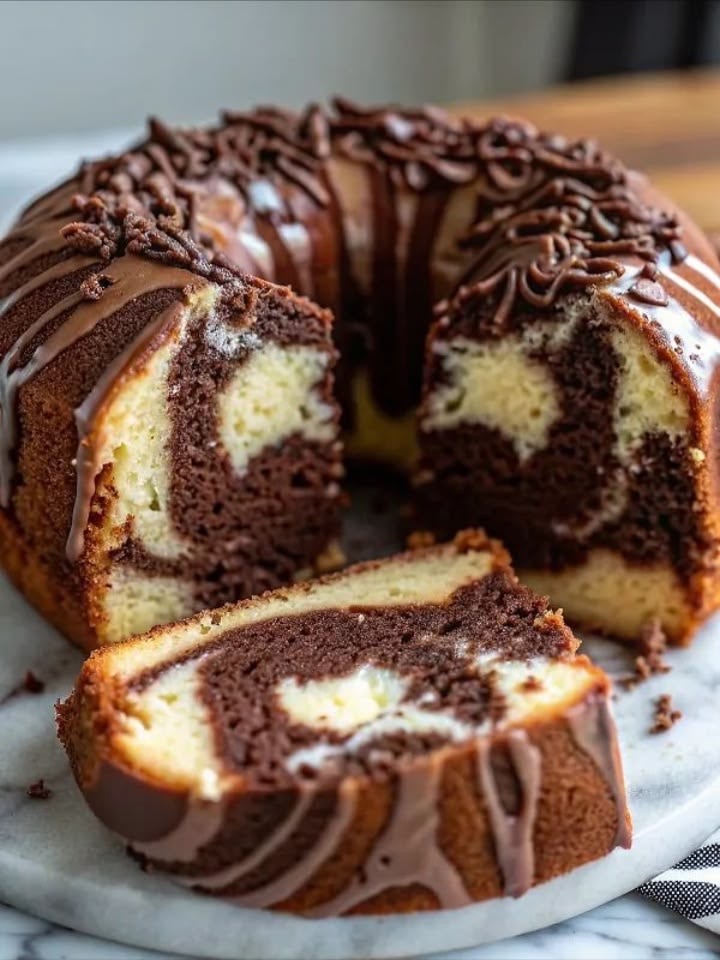
This Chocolate Marble Bundt Cake combines rich chocolate cake with a soft, buttery vanilla cake in a beautiful swirled pattern. Every slice has a delicious contrast of deep chocolate and creamy vanilla flavors, while a silky chocolate glaze drips over the top for an irresistible finish.
The cake is moist, tender, and perfect for birthdays, afternoon coffee, holidays, family gatherings, or an easy homemade dessert.
Recipe Overview
| Category | Details |
| Prep Time | 25 minutes |
| Cook Time | 50–60 minutes |
| Cooling Time | 30–45 minutes |
| Total Time | About 1 hour 45 minutes |
| Servings | 12–14 |
| Cake Pan | 10-inch Bundt pan |
| Oven Temperature | 350°F (175°C) |
| Difficulty | Easy to Intermediate |
| Texture | Moist, soft, and tender |
Why You’ll Love This Recipe
This marble cake gives you the best of both worlds: rich chocolate flavor and classic vanilla cake in every slice. The contrasting colors create a beautiful marbled effect without requiring complicated decorating techniques.
The cake is also made with simple pantry ingredients and can be prepared ahead of time, making it a great choice when you need an impressive homemade dessert recipe without spending hours in the kitchen.
The chocolate glaze adds another layer of richness and creates the glossy finish shown in the photo.
Ingredients
Vanilla Cake Batter
| Ingredient | Amount |
| All-purpose flour | 2½ cups (315 g) |
| Baking powder | 2 teaspoons |
| Baking soda | ½ teaspoon |
| Salt | ½ teaspoon |
| Unsalted butter, softened | 1 cup (226 g) |
| Granulated sugar | 1¾ cups (350 g) |
| Large eggs | 4 |
| Vanilla extract | 2 teaspoons |
| Sour cream | 1 cup (240 g) |
| Whole milk | ½ cup (120 ml) |
Chocolate Batter
| Ingredient | Amount |
| Unsweetened cocoa powder | ½ cup (45–50 g) |
| Hot coffee or hot water | ¼ cup (60 ml) |
| Granulated sugar | 2 tablespoons |
| Vanilla cake batter | About half of the prepared batter |
For the Chocolate Glaze
| Ingredient | Amount |
| Semi-sweet chocolate | 100 g |
| Heavy cream | ½ cup (120 ml) |
| Unsalted butter | 1 tablespoon |
| Powdered sugar | 2–3 tablespoons, optional |
Step-by-Step Instructions
1. Prepare the Bundt Pan
Preheat the oven to 350°F (175°C).
Generously grease a 10-inch Bundt pan with softened butter or baking spray.
Dust the pan lightly with flour, making sure to coat all the grooves and corners.
Tap out any excess flour.
Properly preparing the Bundt pan is important because the cake contains a moist batter that can otherwise stick to the intricate sides.
2. Mix the Dry Ingredients
In a medium bowl, whisk together the flour, baking powder, baking soda, and salt.
Set aside.
3. Cream the Butter and Sugar
In a large mixing bowl, beat the softened butter and sugar for approximately 3–4 minutes until light, fluffy, and pale.
This step helps create a tender cake texture.
4. Add the Eggs
Add the eggs one at a time, beating well after each addition.
Scrape down the sides of the bowl as needed.
Add the vanilla extract and mix briefly.
5. Combine the Wet and Dry Ingredients
Add about one-third of the flour mixture to the butter mixture.
Mix gently.
Add half of the sour cream and half of the milk.
Continue alternating the dry and wet ingredients, ending with the remaining flour mixture.
Mix only until the batter is smooth.
Do not overmix.
6. Prepare the Chocolate Mixture
Place the cocoa powder in a small bowl.
Add the hot coffee or hot water and whisk until smooth.
Add the 2 tablespoons of sugar and mix well.
Allow the mixture to cool slightly.
Coffee does not make the cake taste strongly like coffee; instead, it can intensify the chocolate flavor.
7. Create the Two Batters
Divide the cake batter approximately in half.
Add the cocoa mixture to one portion.
Fold gently until evenly combined.
You should now have one vanilla batter and one chocolate batter.
8. Layer the Batter
Spoon approximately one-third of the vanilla batter into the prepared Bundt pan.
Add one-third of the chocolate batter.
Continue alternating the vanilla and chocolate batters until everything has been added.
Try not to spread the layers too perfectly because irregular pockets of batter create a more natural marble effect.
9. Create the Marble Effect
Insert a butter knife or wooden skewer into the batter.
Make a few gentle swirling movements through the batter.
Do not over-swirl.
Around 5–8 gentle swirls are usually enough to create beautiful chocolate and vanilla patterns without completely blending the two batters.
10. Bake
Place the Bundt pan in the preheated oven.
Bake for approximately 50–60 minutes.
Insert a wooden toothpick into the thickest part of the cake. It should come out clean or with a few moist crumbs attached.
Avoid opening the oven repeatedly during baking.
11. Cool the Cake
Remove the cake from the oven and allow it to cool in the Bundt pan for approximately 10–15 minutes.
Carefully invert it onto a wire rack.
Allow it to cool completely before adding the glaze.
If the cake is still warm, the glaze may become too thin and slide completely off the surface.
12. Prepare the Chocolate Glaze
Place the chopped chocolate in a heatproof bowl.
Heat the heavy cream until it is hot and steaming but not boiling.
Pour the hot cream over the chocolate.
Let it sit for approximately 2 minutes.
Add the butter and whisk until smooth and glossy.
If you want a sweeter glaze, whisk in 2–3 tablespoons of powdered sugar.
13. Glaze the Cake
Place the completely cooled Bundt cake on a serving plate.
Slowly drizzle the chocolate glaze over the top, allowing it to naturally run down the sides.
For the decoration shown in the photo, use a spoon or piping bag to create thin chocolate lines across the top.
Allow the glaze to set for approximately 15–20 minutes before slicing.
Best Tips
Use room-temperature butter, eggs, sour cream, and milk whenever possible. This helps the ingredients combine smoothly and creates a more uniform cake batter.
Do not overmix the batter after adding the flour. Excessive mixing can develop too much gluten and make the cake dense.
The Bundt pan needs to be thoroughly greased, especially around the center tube and decorative grooves. A well-prepared pan makes releasing the cake much easier.
Do not over-swirl the batter. Too much swirling can eliminate the distinct chocolate and vanilla pattern.
Allow the cake to cool completely before glazing. A warm cake can cause the chocolate glaze to become thin and runny.
Best Ingredient Options
Butter: Unsalted butter allows you to control the amount of salt in the recipe. If using salted butter, reduce the added salt slightly.
Sour cream: Full-fat sour cream provides excellent moisture and richness. Plain full-fat Greek yogurt can be used as an alternative.
Cocoa powder: Unsweetened natural cocoa powder works well. Dutch-process cocoa can also be used, although the final flavor and color may differ slightly.
Chocolate: Semi-sweet chocolate provides a balanced glaze. Dark chocolate creates a richer, more intense finish.
Coffee: Hot brewed coffee enhances the chocolate flavor. Hot water can be used if you prefer not to use coffee.
Recipe Variations
Chocolate Chip Marble Cake
Fold ¾ cup of mini chocolate chips into the batter before adding it to the Bundt pan.
Double Chocolate Marble Cake
Add ½ cup of chocolate chips to the chocolate batter for extra pockets of melted chocolate.
Orange Chocolate Marble Cake
Add 1 tablespoon of finely grated orange zest to the vanilla batter and use dark chocolate for the glaze.
Chocolate Peanut Butter Marble Cake
Swirl ½ cup of softened peanut butter into the batter before baking.
Espresso Marble Cake
Replace the hot water in the chocolate mixture with strong espresso or coffee and add ½ teaspoon of instant espresso powder.
Vanilla Almond Marble Cake
Add ½ teaspoon of almond extract to the vanilla batter for a subtle nutty flavor.
What to Serve With
Serve slices with a cup of coffee, espresso, black tea, or hot chocolate.
For a more indulgent dessert, add a spoonful of whipped cream or vanilla ice cream.
Fresh strawberries, raspberries, or cherries also provide a pleasant contrast to the rich chocolate flavor.
Make-Ahead Instructions
The cake can be baked 1 day ahead.
Allow it to cool completely, then cover it tightly with plastic wrap or place it in an airtight cake container.
Prepare the chocolate glaze on the day of serving for the freshest appearance.
You can also prepare the glaze in advance and gently warm it before decorating.
Storage
Store the glazed cake at room temperature in an airtight container for up to 2 days if your kitchen is cool.
For longer storage, refrigerate the cake for up to 5 days.
Allow refrigerated slices to sit at room temperature for approximately 20–30 minutes before serving for the best texture.
Reheating
This cake is usually delicious at room temperature and does not require reheating.
If you prefer a warm slice, place one serving in the microwave for approximately 8–12 seconds.
Avoid overheating because it can dry out the cake and cause the chocolate glaze to become excessively soft.
Freezing
The cake can be frozen either whole or in individual slices.
For individual portions, wrap each slice tightly in plastic wrap and place the slices in a freezer-safe container.
Freeze for up to 2–3 months.
Thaw overnight in the refrigerator or for several hours at room temperature.
For the best appearance, freeze the cake without the glaze and prepare fresh chocolate glaze after thawing.
Common Mistakes to Avoid
Not greasing the Bundt pan properly: The cake can stick to the detailed grooves and break during removal.
Using cold butter: Cold butter will not cream properly with the sugar and can affect the cake’s texture.
Overmixing: Mix only until the ingredients are incorporated after adding the flour.
Over-swirling: Too many knife movements can turn the marble pattern into one uniform chocolate-colored batter.
Underbaking: The center should be fully baked before removing the cake from the oven.
Removing the cake too quickly: Let it rest in the Bundt pan for 10–15 minutes before turning it out.
Glazing a warm cake: The glaze will become too thin and may slide off rather than forming the beautiful drips shown in the photo.
Nutrition Estimate
Approximate nutrition per serving, assuming 14 slices:
| Nutrient | Estimated Amount |
| Calories | 430 kcal |
| Protein | 6 g |
| Carbohydrates | 52 g |
| Fat | 23 g |
| Saturated Fat | 14 g |
| Fiber | 2 g |
| Sugar | 32 g |
| Sodium | 250 mg |
| Calcium | 65 mg |
Nutrition values are estimates and may vary depending on the exact ingredients and serving size.
Frequently Asked Questions
Why did my marble cake become dry?
Overbaking is one of the most common reasons. Start checking the cake around the 50-minute mark and remove it once a toothpick comes out with a few moist crumbs.
How do I get a stronger marble effect?
Divide the batter evenly and alternate spoonfuls of vanilla and chocolate batter. Use only a few gentle swirls with a knife or skewer.
Can I use Greek yogurt instead of sour cream?
Yes. Full-fat plain Greek yogurt is a good substitute and provides similar moisture.
Can I make this cake without coffee?
Absolutely. Replace the coffee with an equal amount of hot water. Coffee simply helps intensify the chocolate flavor.
Why did my Bundt cake stick to the pan?
The pan may not have been greased thoroughly, particularly around the center tube and decorative grooves. Make sure every part of the interior is coated before adding the batter.
Can I use a different cake pan?
Yes. You can use two standard loaf pans, although the baking time will need to be adjusted. Begin checking the cakes earlier because smaller pans bake faster.
Can I make the glaze thicker?
Yes. Allow the glaze to cool for several minutes before drizzling. For an even thicker glaze, use slightly less heavy cream or add a little more chocolate.
Final Thoughts
This Chocolate Marble Bundt Cake is a beautiful combination of rich chocolate and delicate vanilla flavors. The moist crumb, striking marble pattern, and glossy chocolate glaze make it an impressive dessert without complicated decorating.
Whether you’re preparing it for a family gathering, holiday table, birthday celebration, or simply looking for an easy homemade chocolate cake recipe, this Bundt cake delivers a bakery-style presentation with straightforward ingredients and simple techniques.