Introduction
Cleaning around the base of the toilet can be one of the most frustrating parts of bathroom cleaning. Dirt, soap residue, grime, and buildup can collect around the edges and make the floor look dull.
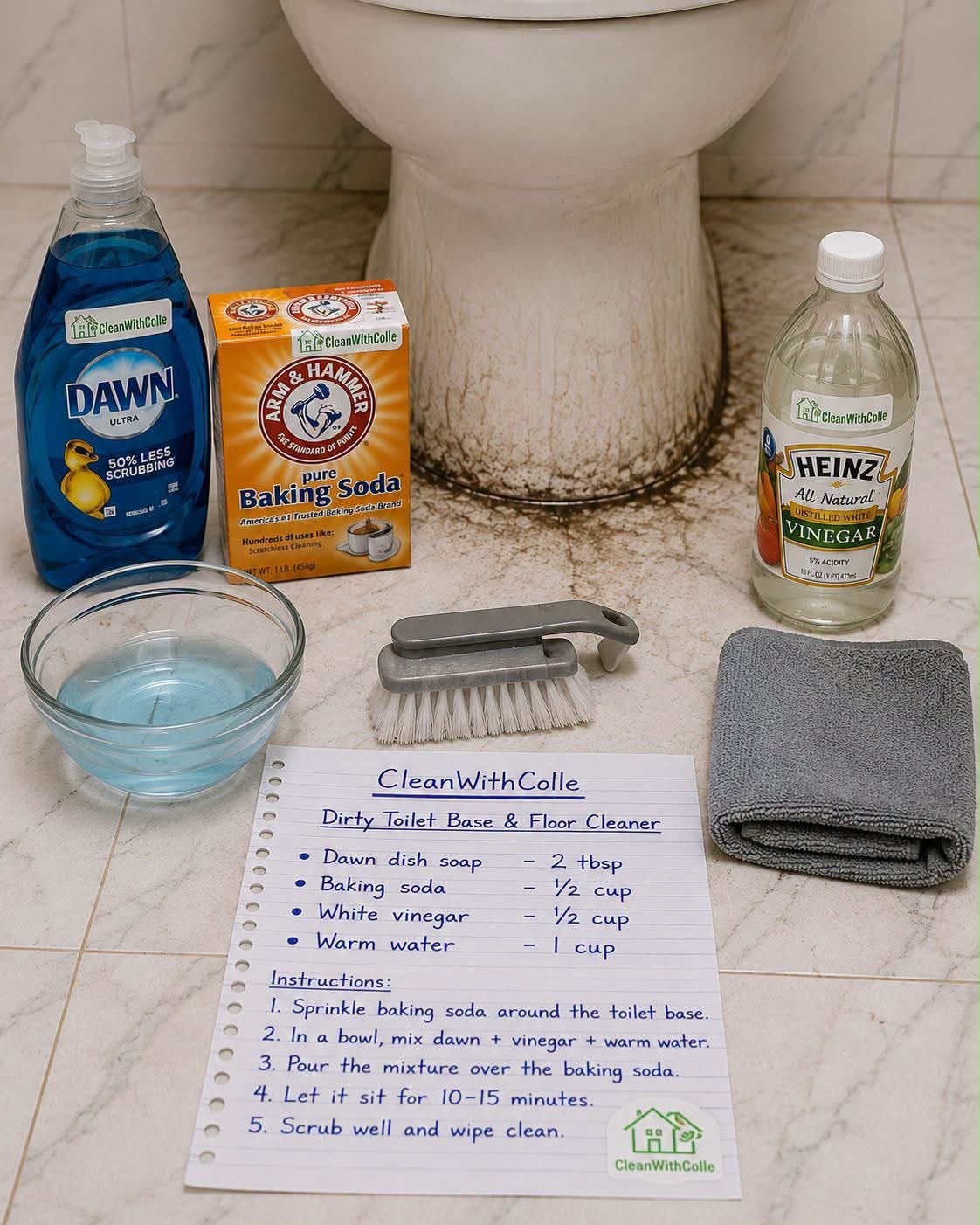
This simple homemade toilet base and floor cleaner combines dish soap, baking soda, white vinegar, and warm water to create an easy cleaning solution for washable bathroom surfaces.
The baking soda provides gentle scrubbing power, while dish soap helps loosen greasy residue and everyday grime. Vinegar is acidic and can help with some mineral deposits and soap residue.
This recipe is intended for cleaning, not disinfecting or sanitizing. For areas that require disinfection, use an appropriate EPA-registered disinfectant according to its label directions.
Recipe Overview
| Category | Details |
| Recipe | Dirty Toilet Base & Floor Cleaner 🧼 |
| Prep Time | 5 minutes |
| Cleaning Time | 15–20 minutes |
| Total Time | About 20–25 minutes |
| Yield | About 2 cups |
| Difficulty | Easy |
| Best For | Toilet base, bathroom floor, washable tile |
| Main Ingredients | Dish soap, baking soda, white vinegar, warm water |
| Application | Scrub and wipe |
Why You’ll Love This Recipe
This homemade bathroom cleaner uses inexpensive household ingredients and requires very little preparation.
It is particularly useful for everyday dirt and grime around the toilet base where a regular mop may not reach effectively.
The baking soda gives you mild abrasive action, making it easier to work on stubborn surface grime with a cleaning brush or cloth.
Dish soap helps lift oily residue and general bathroom dirt, while diluted vinegar can help loosen certain mineral deposits.
Ingredients
Cleaning Mixture
| Ingredient | Amount |
| Dish soap | 2 tbsp |
| Baking soda | ½ cup |
| White vinegar | ½ cup |
| Warm water | 1 cup |
Equipment
| Item | Purpose |
| Small bowl | Mixing |
| Cleaning brush | Scrubbing around toilet base |
| Microfiber cloth | Wiping |
| Gloves | Hand protection |
| Measuring cup | Measuring ingredients |
Step-by-Step Instructions
1. Prepare the Bathroom
Remove loose dirt, hair, and debris from around the toilet base.
A dry cloth, paper towel, or vacuum attachment can be useful for removing loose particles before applying the cleaner.
2. Protect Yourself
Put on household cleaning gloves before beginning.
Open a window or turn on the bathroom exhaust fan to provide ventilation.
3. Apply the Baking Soda
Sprinkle approximately ½ cup of baking soda around the dirty areas at the base of the toilet.
Focus on visible grime and buildup.
4. Prepare the Liquid Mixture
In a separate bowl, combine 2 tablespoons of dish soap with 1 cup of warm water.
Stir gently until combined.
5. Add the Vinegar Carefully
Add ½ cup of white vinegar to the liquid mixture.
The vinegar and baking soda will react with fizzing when they come into contact.
This reaction is normal, but it also means that combining large amounts of the two ingredients significantly reduces their individual cleaning properties.
6. Apply to the Dirty Area
Slowly apply the liquid mixture around the toilet base.
Work in small sections rather than flooding the floor.
Allow the solution to sit for approximately 10–15 minutes.
Do not allow the mixture to dry completely on the surface.
7. Scrub
Use a bathroom cleaning brush to gently scrub around the toilet base.
Pay special attention to corners, grout lines, and areas where grime has accumulated.
For delicate surfaces, use a soft sponge or microfiber cloth instead of a stiff brush.
8. Wipe Clean
Use a clean, damp microfiber cloth to remove the loosened residue.
Rinse the cloth frequently while cleaning.
9. Rinse the Floor
Wipe the area again with clean water to remove remaining soap and cleaning residue.
10. Dry the Area
Finish with a clean, dry microfiber cloth.
Drying the area helps prevent water marks and leaves the floor looking cleaner.
Best Tips
Always test the cleaning solution on a small, inconspicuous area before applying it to the entire floor.
Use warm rather than very hot water. Extremely hot water is unnecessary for this cleaning method.
Work in small sections when cleaning around the toilet base. This gives you better control and prevents excessive liquid from spreading across the bathroom floor.
For stubborn grime, gentle repeated scrubbing is usually better than applying excessive force.
Never mix this cleaner with bleach, ammonia, toilet-bowl cleaner, or other household cleaning chemicals.
Best Ingredient Options
Dish Soap: A basic liquid dish soap works well for everyday grease and grime. Avoid using large amounts because excess soap can leave a residue.
Baking Soda: Regular household baking soda provides gentle abrasive cleaning power.
White Vinegar: Standard distilled white vinegar is suitable for this recipe.
Water: Warm tap water is sufficient. There is no need to use boiling water.
Recipe Variations
For extra-stubborn surface grime, use the baking soda separately as a mild scrub and use diluted dish soap afterward rather than adding more vinegar.
For a simple daily cleaner, mix a small amount of dish soap with warm water and use it with a microfiber cloth.
For mineral deposits, diluted white vinegar may be useful on acid-safe surfaces. Allow it to sit briefly before wiping and rinsing.
For grout cleaning, use baking soda with a small amount of water to make a paste and scrub gently with an appropriate grout brush.
What to Use It On
This cleaner is best suited to acid-resistant, washable surfaces such as many ceramic or porcelain bathroom tiles.
Always check the manufacturer’s care instructions before using vinegar on flooring or fixtures.
Avoid vinegar on marble, limestone, travertine, and other natural stone surfaces, because acids can etch or damage them.
Make-Ahead Instructions
For the safest approach, mix only the amount you need for the cleaning session.
If you prepare the ingredients ahead of time, keep them separate rather than storing a mixture containing baking soda and vinegar.
A simple dish-soap-and-water solution can be prepared for routine cleaning and used fresh.
Storage
Do not store a homemade mixture containing fresh vinegar and baking soda in a tightly sealed bottle.
The ingredients react and can produce gas.
Keep individual cleaning ingredients in their original labeled containers and prepare the cleaning solution fresh when needed.
Reheating
This cleaning recipe does not require reheating.
If the water cools while you are cleaning, there is no need to warm it again. Room-temperature water can still be used for wiping and rinsing.
Freezing
There is no reason to freeze this cleaning solution.
For the best results, prepare a fresh batch whenever you need to clean the toilet base and bathroom floor.
Common Mistakes to Avoid
Mixing with bleach: Never combine vinegar or other acids with bleach. Dangerous chlorine gas can be released.
Mixing with ammonia: Do not combine this recipe with ammonia-containing cleaners.
Using vinegar on natural stone: Acidic cleaners can damage marble, limestone, travertine, and similar stone surfaces.
Using too much baking soda: A thick layer can leave residue and make rinsing more difficult.
Scrubbing too aggressively: Excessive pressure can scratch certain finishes or damage grout.
Expecting disinfection: This homemade cleaner should not be treated as a disinfectant. Cleaning and disinfecting are different processes.
Cleaning Safety
Keep all cleaning ingredients away from children and pets.
Wear gloves if you have sensitive skin and ensure the bathroom has adequate ventilation.
Most importantly, never mix household cleaning products unless the product label specifically says the combination is safe.
Frequently Asked Questions
Can I use this cleaner around the toilet base?
Yes, it can be used on compatible washable bathroom surfaces around the toilet base. Always test first and check the flooring manufacturer’s care instructions.
Does baking soda and vinegar clean better together?
The fizzing reaction looks powerful, but baking soda and vinegar largely neutralize each other. For certain cleaning jobs, using them separately can be more effective.
Can I use this on ceramic tile?
Generally, ceramic tile can tolerate diluted vinegar, but the grout and surrounding materials should still be considered. Test a small area first.
Can I use this on marble?
No. Avoid vinegar and other acidic cleaners on marble and many other natural stone surfaces because they can cause etching.
Does this mixture disinfect the toilet floor?
No. It should be considered a general cleaning mixture rather than a disinfectant. If disinfection is needed, use a suitable disinfecting product according to its label.
How often should I clean around the toilet?
For a regularly used bathroom, wiping and cleaning the toilet base about once a week can help prevent buildup. High-use bathrooms may require more frequent cleaning.
Final Thoughts
This simple Dirty Toilet Base & Floor Cleaner is a practical homemade cleaning method for tackling everyday bathroom grime.
With dish soap, baking soda, white vinegar, and warm water, you can clean compatible washable surfaces without complicated preparation.
For the best results, use gentle scrubbing, rinse thoroughly, and always check whether your particular flooring is compatible with vinegar.
Most importantly, keep household cleaning products separate and never mix this recipe with bleach, ammonia, or other chemical cleaners. 🧼✨