Introduction
These Fluffy Homemade Cinnamon Pecan Rolls are soft, buttery, and packed with warm cinnamon flavor.
Each roll is made from tender enriched yeast dough, layered with brown sugar, cinnamon, butter, and finely chopped pecans.
As the rolls bake, the filling melts into the dough, creating beautifully caramelized edges and irresistible cinnamon-sugar spirals.
This homemade breakfast pastry is perfect for weekend brunches, holiday mornings, family gatherings, or a cozy afternoon treat.
The recipe uses simple ingredients and straightforward techniques to create bakery-style cinnamon rolls right in your kitchen.
Recipe Overview
| Detail | Information |
| Prep Time | 30 minutes |
| Cook Time | 25 minutes |
| Resting/Proofing Time | About 2 hours |
| Total Time | About 2 hours 55 minutes |
| Servings | 9 large rolls |
| Difficulty | Easy to Moderate |
| Cooking Method | Oven Baking |
| Cuisine | American-inspired |
| Main Flavor | Sweet, buttery, cinnamon, nutty |
Why You’ll Love This Recipe
These cinnamon pecan rolls have an exceptionally soft and fluffy texture thanks to the enriched dough made with milk, butter, and eggs.
The brown sugar and cinnamon filling melts into the dough during baking, creating a rich and aromatic center.
Finely chopped pecans add a delicious nutty crunch without overpowering the soft texture of the rolls.
The dough is easy to work with and can be prepared using a stand mixer or by hand.
These rolls are also perfect for holiday baking, homemade breakfast recipes, weekend brunch, and comforting family desserts.
Ingredients
Enriched Dough
| Ingredient | Quantity | Notes |
| 🥛 Whole milk | 1 cup (240 ml) | Warmed to 110°F (43°C) |
| 🍞 Active dry yeast | 2¼ tsp (1 packet) | Make sure it is fresh |
| 🍚 Granulated sugar | ⅓ cup (65 g) | |
| 🧈 Unsalted butter | ½ cup (115 g) | Melted and slightly cooled |
| 🥚 Large egg | 1 | Room temperature |
| 🥚 Egg yolk | 1 | Adds richness |
| 🌾 Bread flour | 4–4½ cups | Add gradually |
| 🧂 Kosher salt | 1 tsp | Balances the sweetness |
Cinnamon Pecan Filling
| Ingredient | Quantity | Notes |
| 🧈 Unsalted butter | ½ cup (115 g) | Very soft |
| 🍯 Dark brown sugar | ¾ cup (150 g) | Packed |
| 🌿 Ground cinnamon | 2 tbsp | Use good-quality cinnamon |
| 🥜 Pecans | ½ cup (60 g) | Finely chopped |
Optional Cream Cheese Frosting
| Ingredient | Quantity | Notes |
| 🧀 Cream cheese | 4 oz (113 g) | Softened |
| 🧈 Unsalted butter | 2 tbsp (28 g) | Softened |
| ❄️ Powdered sugar | 1 cup (120 g) | Sifted |
| 🌿 Vanilla extract | 1 tsp | |
| 🥛 Milk | 1–2 tbsp | Adjust consistency |
Step-by-Step Instructions
Activate the Yeast
Warm the milk to approximately 110°F (43°C).
The milk should feel warm but not hot.
Pour it into the bowl of a stand mixer.
Add the active dry yeast and 1 tablespoon of the granulated sugar.
Stir gently and let the mixture stand for 5–10 minutes.
The surface should become slightly foamy, indicating that the yeast is active.
Mix the Wet Ingredients
Add the remaining granulated sugar to the yeast mixture.
Add the melted butter, whole egg, and egg yolk.
Whisk or mix until everything is well combined.
Make sure the melted butter has cooled slightly before adding it so it doesn’t cook the eggs.
Make the Dough
Add 4 cups of bread flour and the kosher salt.
Using a dough hook, mix on low speed until the ingredients come together.
The dough should look soft and slightly sticky.
If it is excessively sticky, gradually add the remaining flour, about 1 tablespoon at a time.
Avoid adding too much flour because this can make the finished rolls dense.
Knead the Dough
Increase the mixer to medium-low or medium speed.
Knead for approximately 5–7 minutes.
The dough should become smooth, elastic, and soft.
It should pull away from the sides of the bowl while remaining slightly tacky.
You can also knead the dough by hand on a lightly floured surface for approximately 8–10 minutes.
First Rise
Lightly grease a large bowl.
Shape the dough into a smooth ball and place it inside.
Cover the bowl with plastic wrap or a clean kitchen towel.
Place it in a warm, draft-free area.
Let the dough rise for approximately 60 minutes, or until it has doubled in size.
The exact time depends on the temperature of your kitchen.
Prepare the Filling
While the dough rises, prepare the cinnamon pecan filling.
Place the softened butter in a small bowl.
Make sure the butter is soft enough to spread easily but isn’t melted.
In another bowl, combine the brown sugar and cinnamon.
Finely chop the pecans.
Set everything aside.
Roll Out the Dough
Once the dough has doubled in size, gently press it down to release excess air.
Transfer it to a lightly floured work surface.
Roll the dough into approximately a 12 × 18-inch (30 × 46 cm) rectangle.
Try to maintain an even thickness throughout.
Add the Filling
Spread the softened butter evenly across the dough.
Leave approximately ½ inch around the edges.
Sprinkle the brown sugar and cinnamon mixture evenly over the butter.
Scatter the chopped pecans across the entire surface.
Press the filling very gently into the dough so it stays in place while rolling.
Roll the Dough
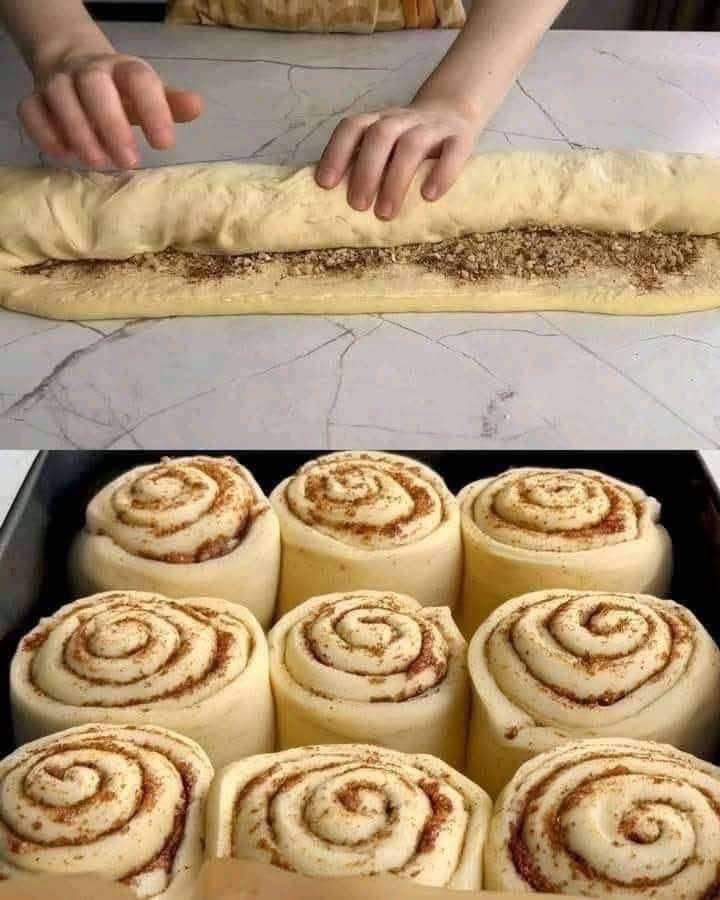
Starting from one of the long sides, carefully roll the dough into a tight log.
Roll steadily while maintaining even pressure.
Avoid making the roll excessively loose because this can create large gaps inside the finished cinnamon rolls.
Pinch the seam gently to seal the log.
Cut the Rolls
Use a sharp serrated knife to cut the log into 9 equal pieces.
For especially clean cuts, you can also use unflavored dental floss.
Slide the floss underneath the log.
Bring the ends upward and cross them over the top to create a clean cut.
Arrange the Rolls
Grease a 9 × 9-inch baking pan for taller rolls, or use a 9 × 13-inch pan for slightly more space between them.
Place the rolls cut-side up.
Leave a little space between each roll because they will expand during the second rise.
Second Rise
Cover the baking pan loosely with a clean towel or plastic wrap.
Let the rolls rise in a warm place for approximately 45–60 minutes.
They should become noticeably larger, soft, and puffy.
The rolls should be close to touching before baking.
Preheat the Oven
During the final portion of the second rise, preheat your oven to 350°F (175°C).
Place the oven rack in the center position.
Bake the Cinnamon Rolls
Bake the rolls for approximately 22–27 minutes.
The tops should be golden brown and the center should be fully baked.
If the tops are browning too quickly, loosely cover the pan with aluminum foil during the final few minutes.
For the most accurate result, the center of the dough should reach approximately 190°F (88°C).
Avoid overbaking because this can make the rolls dry.
Cool Slightly
Remove the pan from the oven.
Let the rolls cool for approximately 10–15 minutes before frosting.
This allows the filling to settle while keeping the rolls pleasantly warm.
Prepare the Cream Cheese Frosting
Place softened cream cheese and butter in a mixing bowl.
Beat until smooth and creamy.
Add the powdered sugar and vanilla extract.
Mix until completely smooth.
Add milk, 1 tablespoon at a time, until the frosting reaches your preferred consistency.
For thick frosting, use less milk.
For a thinner glaze, add slightly more.
Frost the Rolls
Spread the cream cheese frosting over the warm cinnamon rolls.
Allow it to melt slightly into the spirals.
For an especially attractive presentation, sprinkle a few extra finely chopped pecans over the frosting.
Serve while warm.
Best Tips
Use milk that is approximately 110°F (43°C) when activating the yeast.
Milk that is too hot can damage the yeast, while milk that is too cool may slow down activation.
Don’t add all of the flour at once.
Different brands of flour absorb liquid differently, so the final amount may vary slightly.
The finished dough should be soft and elastic rather than stiff.
Avoid adding excessive flour during kneading.
A slightly tacky dough produces softer cinnamon rolls.
Make sure the butter used for the filling is soft rather than melted.
Soft butter spreads evenly without making the filling excessively greasy.
Roll the dough firmly but gently.
A consistent roll helps create beautiful, even spirals.
For clean slices, use unflavored dental floss or a sharp serrated knife.
Don’t rush the second rise.
Proper proofing is one of the most important steps for achieving light and fluffy homemade cinnamon rolls.
Avoid overbaking.
Once the rolls are golden and the center is cooked, remove them from the oven.
Best Ingredient Options
Bread Flour
Bread flour provides enough gluten structure to create soft but slightly elastic rolls.
All-purpose flour can also be used if that’s what you have available.
Whole Milk
Whole milk gives the dough a richer texture and more tender crumb.
For an especially rich breakfast pastry, whole milk is the preferred choice.
Brown Sugar
Dark brown sugar creates a deeper caramel-like flavor.
Light brown sugar works perfectly if you prefer a milder sweetness.
Pecans
Freshly chopped pecans provide the best flavor and texture.
For extra flavor, lightly toast them before chopping and allow them to cool completely.
Cinnamon
Fresh cinnamon gives the filling a warmer and more aromatic flavor.
Recipe Variations
Classic Cinnamon Rolls
For a simpler version, leave out the pecans.
You’ll have traditional soft cinnamon rolls with a buttery brown sugar and cinnamon filling.
Maple Pecan Rolls
Replace a small portion of the brown sugar with pure maple syrup.
Add extra toasted pecans for a rich maple-pecan flavor.
Apple Cinnamon Rolls
Finely dice a small apple and distribute it over the cinnamon filling.
Pat the apple pieces dry first to reduce excess moisture.
Orange Cinnamon Rolls
Add finely grated orange zest to the filling.
The citrus flavor pairs beautifully with cinnamon and brown sugar.
Chocolate Pecan Rolls
Add a small handful of mini chocolate chips along with the chopped pecans.
The chocolate melts into the cinnamon filling during baking.
Caramel Pecan Rolls
Drizzle warm caramel sauce over the baked rolls before adding the frosting.
The combination of caramel, cinnamon, and pecans makes an especially indulgent dessert.
What to Serve With
These cinnamon rolls are excellent with freshly brewed coffee.
Serve them with cappuccino, latte, or espresso for a bakery-style breakfast.
Fresh berries also make a refreshing side.
Strawberries, blueberries, and raspberries work particularly well.
For a larger brunch, serve the rolls with scrambled eggs, fresh fruit, yogurt, or a simple breakfast casserole.
Make-Ahead Instructions
The dough can be prepared the night before.
After kneading, place the covered dough in the refrigerator instead of allowing it to complete its first rise at room temperature.
The slow refrigeration process allows the dough to develop additional flavor.
The rolls can also be shaped the night before.
Place the sliced rolls into the greased baking pan, cover tightly, and refrigerate overnight.
The following morning, allow them to sit at room temperature for approximately 60–90 minutes, or until visibly puffy.
Then bake according to the recipe.
Storage
Store leftover cinnamon rolls in an airtight container.
At room temperature, they are best enjoyed within 1–2 days.
Because of the cream cheese frosting, refrigerate them if you plan to keep them longer.
Refrigerated rolls can generally be kept for approximately 3–4 days.
Allow them to warm slightly before serving for the best texture.
Reheating
For one roll, microwave for approximately 15–25 seconds.
For multiple rolls, cover the baking dish loosely with foil.
Warm them in a 300°F (150°C) oven for approximately 10–15 minutes.
Avoid overheating because the dough can become dry.
Freezing
Cinnamon rolls can be frozen either before or after baking.
For baked rolls, allow them to cool completely.
Wrap each roll tightly and place them in a freezer-safe container or bag.
Freeze for up to approximately 2–3 months for best quality.
Thaw overnight in the refrigerator and reheat gently.
If freezing unbaked rolls, arrange the shaped rolls in a freezer-safe pan and freeze before the final rise.
Thaw overnight in the refrigerator, then allow them to become puffy at room temperature before baking.
Common Mistakes to Avoid
Using Milk That Is Too Hot
Very hot milk can interfere with yeast activity.
Keep the milk around 110°F (43°C).
Adding Too Much Flour
Too much flour creates dense and dry cinnamon rolls.
Add flour gradually until the dough becomes soft and elastic.
Skipping the First Rise
The first rise gives the yeast time to develop the dough’s structure.
Wait until the dough has approximately doubled in size.
Underproofing the Rolls
If the shaped rolls haven’t become noticeably puffy before baking, they may turn out dense.
Give them enough time for the second rise.
Overfilling With Butter
Excess melted butter can cause the filling to leak out during baking.
Use softened butter and spread it evenly.
Rolling Too Loosely
A loose dough log can create large gaps in the cinnamon spirals.
Roll firmly while avoiding excessive pressure.
Overbaking
Overbaked cinnamon rolls quickly lose their soft texture.
Start checking them around the 22-minute mark.
Nutrition Estimate
Approximate nutrition per roll, including cream cheese frosting:
| Nutrient | Amount |
| Calories | 510 kcal |
| Carbohydrates | 68 g |
| Protein | 8 g |
| Fat | 24 g |
| Saturated Fat | 12 g |
| Sugar | 31 g |
| Fiber | 3 g |
| Sodium | 390 mg |
Nutrition values are estimates and can vary depending on the specific ingredients, frosting quantity, and serving size.
Frequently Asked Questions
Why aren’t my cinnamon rolls fluffy?
The yeast may not have been active, the dough may have been underproofed, or too much flour may have been added.
Make sure the yeast is fresh and allow both rises to finish properly.
Can I use all-purpose flour?
Yes.
Bread flour provides a slightly chewier and more structured texture, but all-purpose flour can produce excellent soft cinnamon rolls.
Can I make these without a stand mixer?
Absolutely.
Mix the dough with a wooden spoon until it becomes difficult to stir, then knead it by hand for approximately 8–10 minutes.
How do I know when the dough has risen enough?
The dough should approximately double in size during the first rise.
For the second rise, the individual rolls should look noticeably puffy and should nearly touch one another.
Can I prepare cinnamon rolls the night before?
Yes.
Shape the rolls, cover the pan tightly, and refrigerate overnight.
Allow them to sit at room temperature until puffy before baking.
Why did the filling leak out?
Some filling leakage is normal.
However, excessive leakage can happen when too much butter is used or when the dough is rolled too loosely.
Can I make them without cream cheese frosting?
Yes.
They are delicious without frosting or with a simple powdered sugar glaze.
Can I toast the pecans first?
Yes.
Lightly toast the pecans at 350°F (175°C) for about 5–8 minutes, then cool them completely before chopping.
This enhances their nutty flavor.
Final Thoughts
These Fluffy Homemade Cinnamon Pecan Rolls are everything you want from a homemade breakfast pastry: soft, buttery, aromatic, and filled with warm cinnamon flavor.
The tender yeast dough surrounds a rich brown sugar filling and finely chopped pecans, creating beautiful spirals in every roll.
A generous layer of cream cheese frosting makes them even more indulgent.
Whether you’re preparing a weekend brunch recipe, holiday breakfast, family gathering, or comforting homemade dessert, these cinnamon rolls are sure to become a favorite.
For the softest results, remember to avoid excessive flour, give the dough enough time to rise, and remove the rolls from the oven as soon as they’re fully baked.
.