Introduction
Baking soda is one of the most versatile household cleaning products. Affordable, easy to use, and naturally deodorizing, it can become a useful part of your bathroom cleaning routine.
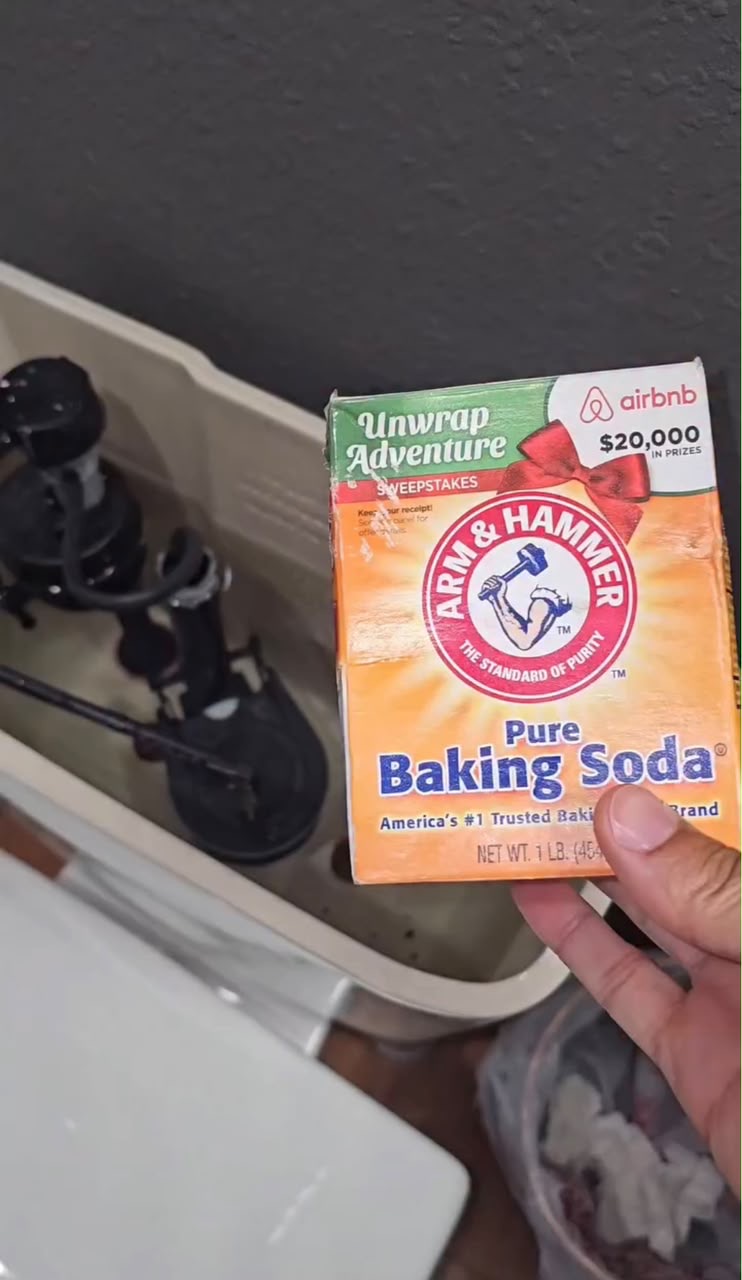
Using a small amount of baking soda in the toilet tank may help freshen the tank and loosen light residue. However, it is important to understand that baking soda is not a powerful descaler and should not be treated as a cure for serious mineral buildup or plumbing problems.
In this complete guide, you will discover how to use baking soda safely, what it can and cannot do, how often to use it, and which common mistakes to avoid.
Recipe / Method Overview
| Feature | Details |
| Preparation Time | 2–5 minutes |
| Recommended Action Time | About 30 minutes |
| Main Purpose | Light cleaning and deodorizing |
| Cost | Very low |
| Difficulty | Very easy |
| Main Ingredient | Baking soda |
| Best For | Light residue and odors |
| Frequency | Occasional maintenance |
| Suitable For | Most standard toilet tanks when used moderately |
Why You’ll Love This Cleaning Method
This method is incredibly simple and requires only a small amount of baking soda.
Baking soda has mild abrasive and deodorizing properties, making it useful for everyday household cleaning. When used correctly, it can help freshen a toilet tank and loosen some light residue.
Another advantage is affordability. A box of baking soda costs very little compared with many specialized bathroom cleaning products.
It is also easy to incorporate into a regular home cleaning routine without requiring complicated equipment.
However, the biggest benefit is convenience. You can clean the tank with minimal preparation while also taking the opportunity to inspect the toilet’s internal components.
Ingredients and Materials
| Category | Item | Amount |
| Main Ingredient | Baking soda | ½–1 cup |
| Cleaning Tool | Soft sponge or soft brush | 1 |
| Protection | Household cleaning gloves | Optional |
| Rinsing | Clean water | As needed |
Optional Cleaning Products
White vinegar can be useful for certain bathroom cleaning tasks, but it does not need to be mixed with baking soda inside the toilet tank.
When baking soda and vinegar are combined, they react immediately and produce fizzing. Although this reaction can help loosen some surface residue, the two ingredients also partially neutralize each other.
For targeted cleaning, it is often more practical to use each product separately.
Step-by-Step Instructions
Prepare the Toilet Tank
Carefully remove the toilet tank lid and place it on a stable, flat surface.
Take a moment to look inside the tank before adding anything.
Check the water level and inspect the visible components for obvious problems.
Check the Toilet Mechanism
Look at the float, fill valve, flapper, and other accessible components.
If the toilet is constantly running or you notice a leak, solve that issue first. Baking soda will not repair a defective toilet component.
Add the Baking Soda
Slowly add approximately ½ to 1 cup of baking soda to the water inside the tank.
Try to distribute it evenly rather than dumping everything into one location.
Allow It to Work
Leave the baking soda in the tank for approximately 30 minutes.
For light maintenance, there is generally no need to leave a large amount of baking soda in the tank overnight.
Gently Clean the Tank
Use a soft sponge or non-abrasive brush to gently clean accessible surfaces.
Pay attention to areas where residue has accumulated.
Avoid applying excessive pressure to the toilet’s internal mechanisms.
Flush the Toilet
Flush the toilet once or twice to help remove the remaining baking soda and loosened residue.
Make sure the tank refills normally afterward.
Replace the Lid
Carefully put the tank lid back into position.
Your basic toilet tank maintenance is now complete.
Best Tips for Better Results
Use baking soda moderately. Adding more product does not necessarily mean better cleaning.
Inspect the toilet tank before cleaning so you can identify leaks, worn components, or unusual buildup.
Always use a soft sponge or brush around delicate toilet mechanisms.
If your home has very hard water, inspect the tank regularly for mineral deposits.
Most importantly, do not rely on baking soda alone when dealing with serious limescale or plumbing problems.
Best Ingredient Options
Baking Soda
Regular household baking soda is sufficient for light cleaning and deodorizing.
Store it in a dry, sealed container to prevent moisture from causing it to clump.
White Vinegar
White vinegar can be useful for removing mineral deposits from appropriate bathroom surfaces.
However, avoid mixing vinegar with bleach or other cleaning chemicals.
Citric Acid
Citric acid can be more effective than baking soda when dealing with significant mineral deposits.
If you use a commercial citric acid product, always follow the manufacturer’s instructions and safety recommendations.
Cleaning Method Variations
Light Maintenance
For simple maintenance, use baking soda alone, allow it to work briefly, and flush the toilet.
Deeper Surface Cleaning
If you see visible residue on accessible tank surfaces, gently scrub those areas with a soft sponge after the baking soda has had time to work.
Toilet Bowl Cleaning
The toilet tank and toilet bowl require different cleaning approaches.
For the bowl, use a toilet cleaner designed for the specific type of buildup you are trying to remove.
Hard-Water Maintenance
If your water is highly mineralized, regular inspection is more useful than repeatedly increasing the amount of baking soda.
Persistent mineral deposits may require a dedicated descaling product.
What to Combine With This Method
A clean toilet requires more than occasional tank maintenance.
Regularly clean the toilet bowl, seat, lid, flush button, and exterior surfaces.
A good-quality toilet brush can help prevent stubborn residue from accumulating inside the bowl.
You should also keep the bathroom properly ventilated to reduce excessive moisture and unpleasant odors.
For exterior surfaces, use a soft microfiber cloth and a suitable household bathroom cleaner.
Make-Ahead / Regular Maintenance Instructions
You do not need to prepare anything in advance for this cleaning method.
Instead, establish a simple bathroom maintenance schedule.
Inspect the toilet tank periodically and clean it whenever you notice visible residue or unpleasant odors.
If the toilet is running continuously, address the mechanical problem rather than repeatedly cleaning the tank.
A small leak can waste a surprising amount of water over time.
Storage
Keep baking soda in a dry location and close the package securely after every use.
Moisture can cause baking soda to become compacted and difficult to measure.
Store white vinegar and other cleaning products according to their labels.
Keep household cleaning products away from children and pets.
What to Do With Old or Clumped Baking Soda
Baking soda that has become slightly clumpy due to moisture can still be useful for many household cleaning tasks.
Break up the clumps before measuring it.
However, do not use baking soda that has become contaminated with other chemicals, dirt, or unknown substances.
Important Safety Precautions
Never mix bleach with vinegar, acids, ammonia, or other incompatible cleaning products.
These combinations can produce dangerous gases.
Baking soda itself is generally mild, but combining household cleaning products without understanding their chemical reactions can be hazardous.
When using a commercial toilet cleaner, always read the product label and follow the manufacturer’s instructions.
Avoid pouring excessive quantities of any cleaning product into the toilet tank.
Common Mistakes to Avoid
Using Too Much Baking Soda
More baking soda does not automatically mean better cleaning.
A moderate amount is sufficient for light maintenance.
Scrubbing With Metal Tools
Avoid knives, metal scrapers, and other sharp objects.
They can damage surfaces or toilet components.
Ignoring a Running Toilet
If the toilet continues to run after flushing, inspect the flapper, fill valve, and float.
Cleaning will not fix a defective component.
Mixing Cleaning Chemicals
Never randomly combine household cleaners.
In particular, keep bleach away from vinegar and acidic products.
Expecting Baking Soda to Remove Heavy Limescale
Baking soda is not a strong descaling agent.
Severe mineral buildup may require a suitable commercial descaler or professional attention.
Technical Cleaning Estimate
| Parameter | Estimated Result |
| Deodorizing Action | Good for mild odors |
| Cleaning Action | Mild to moderate |
| Descaling Power | Limited |
| Difficulty | Very easy |
| Cost | Very low |
| Preparation | Minimal |
| Maintenance Frequency | As needed |
| Best Use | Light tank cleaning |
Frequently Asked Questions
Can baking soda damage my toilet tank?
Baking soda is generally a mild household cleaning ingredient and is unlikely to damage standard toilet tank surfaces when used moderately.
However, avoid aggressive scrubbing around delicate components.
Can I put baking soda directly into the toilet tank?
Yes. A moderate amount can be used for light cleaning and deodorizing.
Afterward, flush the toilet to rinse away remaining residue.
Can I add vinegar to the baking soda?
You can create a fizzing reaction by combining them, but this does not necessarily make the cleaning process more effective.
The two ingredients react and partially neutralize one another.
For best results, use cleaning products according to the specific job they are intended to perform.
Does baking soda remove limescale?
It may help loosen light residue, but it is not an effective solution for heavy limescale.
For serious mineral buildup, use an appropriate descaling method.
How long should baking soda stay in the toilet tank?
Around 30 minutes is generally sufficient for a light cleaning.
There is usually no need to use excessive quantities or leave large amounts sitting in the tank for extended periods.
Can I use old baking soda?
Yes, old baking soda can still be useful for household cleaning as long as it has remained clean and has not been contaminated.
Its effectiveness for baking may decrease over time, but that does not automatically make it useless for cleaning.
Is baking soda safe for septic systems?
Small amounts of baking soda used for ordinary household cleaning are generally considered compatible with septic systems.
Nevertheless, avoid excessive use of household chemicals and follow the recommendations for your particular septic system.
How to Keep Your Toilet Cleaner for Longer
The best bathroom cleaning routine is based on consistency rather than excessive use of cleaning products.
Clean the toilet bowl regularly, wipe down exterior surfaces, and inspect the tank periodically.
Good bathroom ventilation can also help reduce moisture and unpleasant odors.
If you notice persistent odors, discoloration, mineral deposits, or water running continuously, investigate the underlying cause instead of simply adding more cleaning products.
Final Thoughts
Baking soda can be a simple, inexpensive addition to your toilet maintenance routine.
Used in moderation, it can help with light cleaning and deodorizing while requiring very little time or equipment.
However, it is important to have realistic expectations. Baking soda is not a powerful limescale remover and cannot replace proper plumbing repairs or specialized descaling products when serious problems occur.
The best approach is to combine occasional tank maintenance with regular toilet cleaning and routine inspection of the flushing mechanism.