Introduction
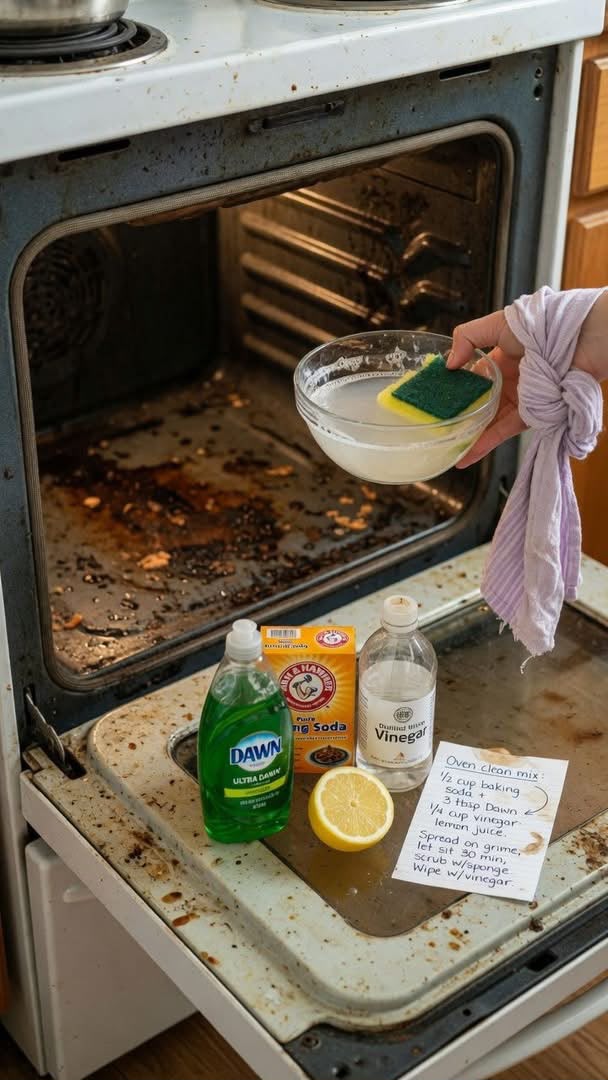
Are you tired of spending money on expensive residential cleaning services or harsh commercial degreasers? This natural DIY oven cleaner is a simple, budget-friendly solution for tackling baked-on grease and everyday kitchen grime.
Maintaining a spotless kitchen can feel like a full-time job, but a few common household ingredients can help simplify your home cleaning routine without relying on heavily fragranced commercial products.
Whether you are preparing your kitchen for a deep clean, getting your home ready for guests, or simply looking for an affordable cleaning solution, this homemade oven-cleaning paste can help loosen stubborn residue with minimal effort.
Recipe Overview
| Category | Detail |
| Prep Time | 5 minutes |
| Sit Time | 30 minutes |
| Total Time | 35 minutes |
| Estimated Cost | Under $2 |
| Yield | Enough for 1 standard oven |
| Difficulty | Easy |
| Purpose | Heavy-duty oven cleaning |
Why You’ll Love This Recipe
This homemade oven cleaner uses inexpensive household staples, making it a practical alternative when you want to reduce your spending on specialized cleaning products.
The mildly abrasive texture of baking soda helps loosen grime, while dish soap helps lift greasy residue from suitable oven surfaces.
It is also easy to prepare whenever your oven needs attention. There is no complicated equipment or lengthy preparation process, making this a convenient addition to a regular home maintenance routine.
Ingredients
Natural Oven-Cleaning Paste
| Ingredient | Measurement | Purpose |
| Baking Soda | 1/2 cup | Mild abrasive |
| Dish Soap | 3 tablespoons | Helps loosen grease |
| Distilled White Vinegar | 1/4 cup | Acidic cleaning ingredient |
| Fresh Lemon Juice | 1 squeeze | Adds acidity and fresh scent |
Step-by-Step Instructions
Prepare the oven: Make sure the oven is completely switched off and cool. Remove the oven racks and set them aside for separate cleaning.
Make the paste: Combine the baking soda and dish soap in a small bowl. Slowly add the vinegar while stirring gently.
Add the lemon: Add a squeeze of fresh lemon juice and mix until you have a spreadable paste. Expect some fizzing when the acidic ingredients meet the baking soda.
Apply carefully: Spread a thin layer over greasy, dirty areas of the oven interior. Avoid heating elements, electrical components, vents, and areas where the appliance manufacturer advises against applying liquid cleaners.
Let it sit: Leave the paste on the affected areas for approximately 30 minutes. For particularly stubborn residue, additional soaking time may help, provided the oven manufacturer’s cleaning instructions allow it.
Scrub gently: Use a non-scratch sponge or suitable cleaning pad to loosen the softened residue.
Wipe thoroughly: Remove all cleaner residue with a clean, damp microfiber cloth. Repeat with fresh water until the interior is completely clean.
Dry the oven: Finish with a dry microfiber cloth and allow the oven to air-dry completely before using it again.
Best Tips
Always start with a completely cool oven. Working on a cool surface makes the cleaning process easier and reduces the risk associated with applying cleaning products around hot surfaces.
For heavily baked-on grease, patience is more effective than excessive scrubbing. Allowing the paste sufficient contact time can help soften residue before you begin cleaning.
Wear household cleaning gloves if your skin is sensitive to baking soda or dish soap, and keep the room reasonably ventilated while cleaning.
Most importantly, check your oven manufacturer’s care instructions before using any homemade cleaner, particularly if your appliance has a special interior coating.
Best Ingredient Options
A concentrated grease-cutting dish soap can work well for this recipe, although there is no need to use a particular brand.
Plain baking soda is preferable to baking powder because they are chemically different products and baking powder is not intended to serve as the same type of cleaning abrasive.
Fresh lemon juice can be included for its pleasant citrus aroma, but it is optional. The basic cleaning mixture can be prepared without it.
Recipe Variations
For a simple fragrance variation, you can add a small amount of lemon zest to the cleaning mixture, provided you thoroughly remove the residue afterward.
For lighter everyday cleaning, use a thinner paste with less baking soda and focus on recently formed grease rather than heavily carbonized deposits.
For oven racks, clean them separately according to the manufacturer’s recommendations. A large basin or bathtub lined with an old towel can provide enough space for soaking removable racks.
What to Use With This Cleaner
A good microfiber cloth is ideal for the final wipe-down because it helps remove fine residue without leaving excessive lint behind.
A non-scratch sponge can help loosen softened grease without being unnecessarily abrasive.
For narrow areas around removable components, a soft cleaning brush can be useful. Avoid forcing cleaning tools into vents, electrical openings, or other sensitive parts of the appliance.
Make-Ahead Instructions
This cleaning paste is best prepared immediately before use.
Rather than mixing a large batch in advance, measure the dry ingredients and liquid ingredients separately if you want to save preparation time.
Fresh preparation also makes it easier to control the consistency and amount needed for your particular oven.
Storage
It is not recommended to store the fully mixed vinegar-and-baking-soda paste in a tightly sealed container because the mixture can release gas while reacting.
For convenience, keep the individual ingredients stored separately according to their package instructions and make a fresh batch whenever you clean the oven.
Reheating
This cleaning product should never be microwaved, heated, or cooked.
Always mix it at room temperature.
If your appliance manufacturer permits cleaning when the oven is slightly warm, follow the manufacturer’s instructions carefully. Otherwise, a completely cool oven is the safest general starting point.
Freezing
There is no reason to freeze this homemade cleaner.
Freezing can change the consistency of the mixture and makes preparation less convenient. Fresh batches are inexpensive and simple to prepare.
Common Mistakes to Avoid
One common mistake is scrubbing immediately after applying the paste. Give the cleaner enough contact time to loosen the residue first.
Never apply homemade cleaning mixtures directly to exposed heating elements, electrical components, fans, vents, or other sensitive areas.
Do not substitute laundry detergent, dishwasher detergent, or cleaning chemicals for dish soap. Combining unrelated cleaning products can create unwanted chemical reactions.
Most importantly, never mix this cleaner with bleach, ammonia, commercial oven cleaner, or other chemical cleaning products.
Cleaning Safety Note
This recipe is for cleaning purposes only and is not edible.
Always follow the cleaning and maintenance instructions supplied with your specific oven. Some ovens, including certain self-cleaning or specially coated models, may require particular cleaning methods or products.
Nutrition Estimate
| Nutritional Fact | Amount |
| Calories | 0 kcal |
| Total Fat | 0 g |
| Carbohydrates | 0 g |
| Protein | 0 g |
| Intended Use | Cleaning only |
| Important Warning | DO NOT EAT |
Frequently Asked Questions
Can I use this on a glass oven door?
A baking-soda-based paste can be useful for suitable glass surfaces, but apply it gently and avoid aggressive scrubbing that could scratch the surface. Always check your appliance manufacturer’s recommendations first.
Is this safe for self-cleaning ovens?
Do not assume that homemade cleaners are suitable for every self-cleaning oven. Check the owner’s manual before manually cleaning the interior, especially if the oven has a special coating.
Can I use this on baked-on grease?
Yes, the paste is designed to help loosen greasy residue. Very old carbonized deposits may require several cleaning passes rather than one application.
Can I use lemon juice instead of vinegar?
You can use lemon juice as an acidic ingredient, but it does not necessarily provide the same cleaning performance as distilled white vinegar. The lemon is especially useful for adding a fresh citrus scent.
How often should I clean my oven?
The ideal frequency depends on how often you use your oven and how much food spills inside. A quick wipe after major spills can reduce the need for intensive deep cleaning later.
Final Thoughts
A clean oven can make your entire kitchen feel fresher, and you do not always need an expensive collection of specialty products to tackle everyday grease and residue.
This simple DIY oven cleaner combines baking soda, dish soap, vinegar, and optional lemon juice into an easy homemade cleaning solution.
For the best results, work patiently, protect sensitive oven components, rinse away all residue thoroughly, and always follow your appliance manufacturer’s cleaning instructions.
A few minutes of preparation and a little elbow grease can leave your oven looking noticeably cleaner and ready for your next cooking session.