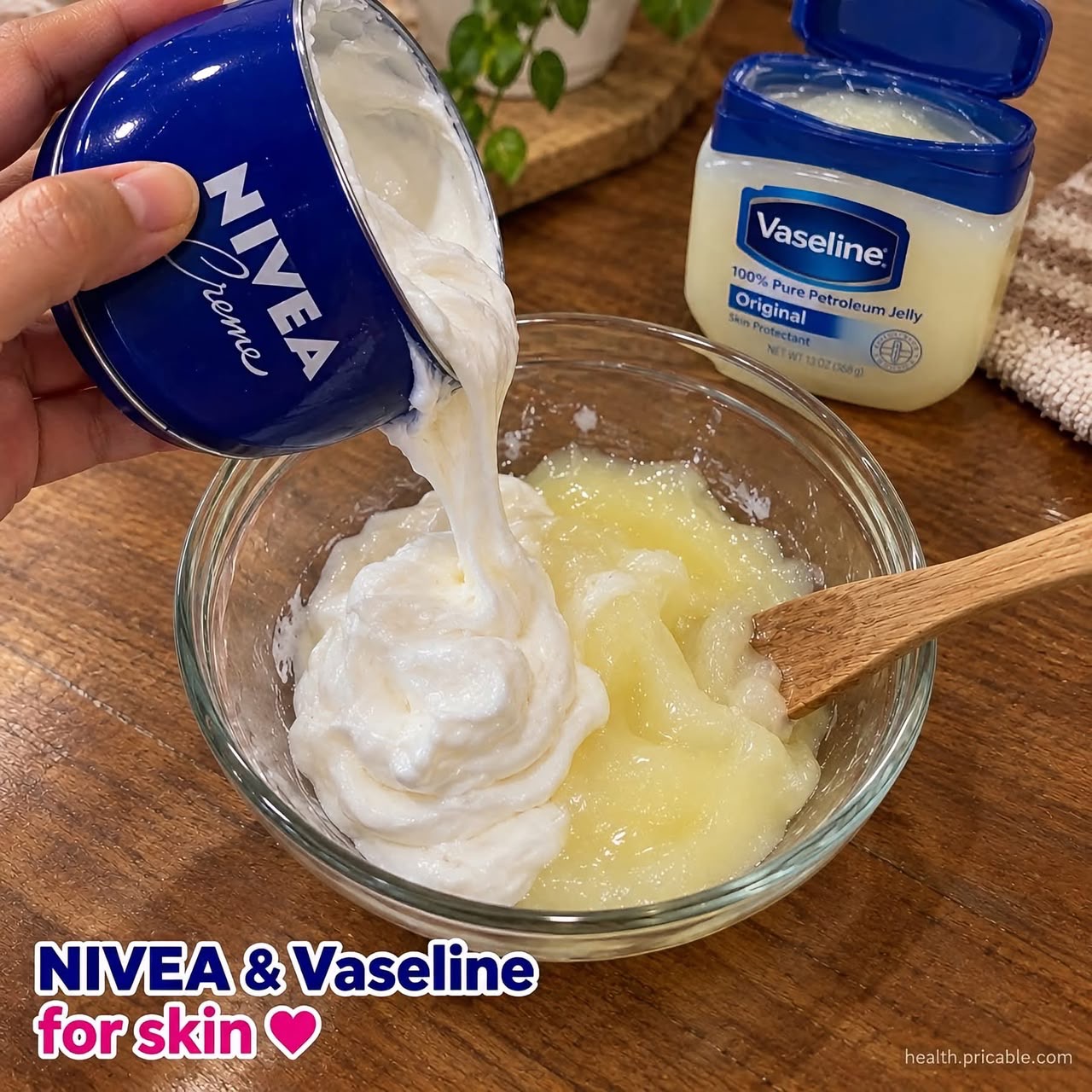
Dry, rough skin can feel uncomfortable, especially on areas such as the hands, elbows, knees, and heels. A simple combination of Nivea moisturizing cream and original Vaseline petroleum jelly can help soften rough skin and reduce moisture loss.
This easy DIY moisturizing mixture uses just two main ingredients and takes only a few minutes to prepare. It is particularly useful for areas that need extra protection against dryness, especially during cold weather or after frequent handwashing.
However, this mixture is not a miracle treatment for wrinkles, dark spots, or other skin conditions. Its main purpose is to moisturize the skin and help maintain its natural moisture barrier.
Recipe Overview
| Details | Information |
| Preparation Time | 5 minutes |
| Application Time | 1–2 minutes |
| Yield | Approximately 3 tablespoons |
| Difficulty | Very easy |
| Main Purpose | Moisturizing dry, rough skin |
| Best Areas | Hands, elbows, knees, and heels |
| Recommended Use | As needed, especially at night |
Why You’ll Love This Moisturizing Cream
This simple moisturizing mixture combines the rich texture of Nivea cream with the protective properties of petroleum jelly. Nivea cream helps moisturize and soften the skin, while Vaseline forms an occlusive layer that slows water loss. The result is a richer preparation that can be especially helpful for dry areas of the body.
Ingredients
| Ingredient | Quantity | Purpose |
| Nivea Creme, classic blue tin | 2 tablespoons | Helps moisturize and soften the skin |
| Original Vaseline petroleum jelly | 1 tablespoon | Helps seal in moisture |
| Sweet almond oil (optional) | A few drops | Adds emollience |
| Vitamin E oil (optional) | A few drops | Adds an oil-based ingredient; not essential for hydration |
Important: Use products intended for cosmetic skin application. The optional oils are not necessary, and adding them may increase the risk of irritation or sensitivity.
Step-by-Step Instructions
Step 1: Prepare Your Equipment
Wash your hands thoroughly and use a clean, completely dry bowl and spatula. Make sure the container you plan to use is also clean and dry.
Step 2: Add the Nivea Cream
Place 2 tablespoons of the classic Nivea cream into the bowl. This provides the moisturizing base for the mixture.
Step 3: Add the Vaseline
Add 1 tablespoon of original petroleum jelly. Because petroleum jelly is thicker than the cream, it may take a little extra mixing to combine the ingredients evenly.
Step 4: Mix Until Smooth
Stir gently with a clean spatula until the two ingredients form a uniform mixture. Avoid adding water, which can affect the stability and cleanliness of the preparation.
For sensitive skin, it is preferable to use the products separately rather than mixing them, because the original products have their own tested formulations.
Step 5: Apply to Dry Areas
Take a small amount and spread a thin layer over clean, slightly damp skin on areas such as the hands, elbows, knees, or heels.
For very dry heels, apply before bedtime and wear clean cotton socks. Avoid applying a thick layer between the toes, where excess moisture can accumulate.
Best Tips for Soft, Hydrated Skin
Apply moisturizer consistently rather than relying on a single intensive treatment. After bathing or washing your hands, gently pat your skin dry and apply a fragrance-free moisturizer while the skin is still slightly damp. For particularly dry patches, a thin layer of petroleum jelly on top can help reduce moisture loss. Avoid very hot water and harsh soaps, which can make dryness worse.
Best Ingredient Options
Original petroleum jelly is a simple option for reducing water loss from the skin. If the Nivea cream causes irritation or contains fragrance that your skin does not tolerate, choose a fragrance-free cream instead. Sweet almond oil is optional and should be avoided if you have an almond allergy. Vitamin E oil is also unnecessary for most people and can cause contact dermatitis in some individuals.
Recipe Variations
For a simpler approach, apply your regular moisturizer first and then smooth a thin layer of petroleum jelly over the driest areas. This avoids changing the original cream’s formulation. For sensitive skin, use a fragrance-free moisturizer and plain petroleum jelly without added fragrance or essential oils.
What to Use With This Moisturizing Routine
A gentle cleanser, a fragrance-free body moisturizer, and sunscreen on exposed skin can help support a healthy skincare routine. During the day, use a broad-spectrum sunscreen with SPF 30 or higher on exposed areas to protect against ultraviolet damage. At night, focus on moisturizing dry areas and avoiding products that cause stinging or redness.
Make-Ahead Instructions
For the best hygiene and product stability, avoid preparing a large batch in advance. Instead, take a small amount of each product directly from its original container using clean hands or a clean spatula, and mix only what you need for immediate use.
Storage Instructions
Because this is a homemade mixture without a validated preservation system or stability testing, the safest option is to prepare a fresh, small amount for immediate application. Do not add water, and do not return leftover mixture to the original product containers.
Discard the mixture if its appearance, smell, or texture changes, or if it becomes contaminated.
Reapplication Instructions
Apply a thin layer whenever the skin feels dry, especially after washing. If the mixture feels excessively greasy, use less or apply petroleum jelly only to the roughest patches. Stop using it if you experience itching, burning, redness, or a rash.
Common Mistakes to Avoid
Applying a thick layer to the entire face can feel heavy and may worsen acne or folliculitis in some people. Adding several oils or fragrances increases the number of ingredients that could cause irritation. Do not use the mixture on infected skin, deep wounds, or unexplained rashes without appropriate medical advice. Also, remember that petroleum jelly helps reduce moisture loss but does not replace sunscreen or treat the underlying causes of persistent skin problems.
Skin Benefits: What to Expect
| Skin Concern | What This Mixture May Do |
| Dry skin | Helps reduce moisture loss |
| Rough elbows and knees | May soften rough patches |
| Dry hands | Helps protect against further moisture loss |
| Cracked heels | May improve dryness when used consistently |
| Fine lines caused by dryness | May temporarily make them less noticeable |
| Dark spots and pigmentation | Not a proven treatment |
| Deep wrinkles | Does not remove or reverse them |
| Acne | May feel too heavy for some acne-prone skin |
Frequently Asked Questions
Can I use Nivea and Vaseline on my face?
You can use these products on facial skin if you tolerate their ingredients, but the combination may be too heavy for some people. If you have acne-prone or sensitive skin, choose a non-comedogenic, fragrance-free moisturizer and test new products on a small area first.
Does this mixture remove wrinkles?
No. It may temporarily soften the appearance of fine lines caused by dryness by helping the skin retain moisture. It does not erase deep wrinkles or reverse skin aging.
Can it remove dark spots?
There is no good evidence that this mixture removes pigmentation or dark spots. Daily sunscreen and treatments selected for the specific cause of pigmentation are more appropriate.
Can I apply it every night?
A small amount can be used at night on dry areas if your skin tolerates both products. Stop if you notice irritation, clogged pores, or worsening breakouts.
Is it suitable for all skin types?
No. Some people may experience irritation from fragrance or other ingredients in their cream. People with acne-prone skin may also find the mixture too occlusive. Choose products according to your skin’s needs and discontinue use if a reaction occurs.
Should I add vitamin E or almond oil?
Neither is necessary. Adding extra ingredients can increase the chance of irritation or allergy, and mixing products can affect their stability. The simplest approach is usually best.
Final Thoughts
The combination of Nivea cream and Vaseline is a straightforward way to create a richer moisturizing preparation for dry hands, elbows, knees, and heels. Its main benefit is helping the skin feel softer while reducing moisture loss, not curing wrinkles, pigmentation, or other skin conditions.
For the safest routine, use small amounts, avoid unnecessary additives, and consider applying a moisturizer followed by a thin layer of petroleum jelly instead of mixing products together.
⚠️ Important Skin Safety Disclaimer: This preparation may not be suitable for everyone. Patch-test new products on a small area of skin and discontinue use if irritation occurs. If you have persistent dryness, painful cracks, swelling, or a skin condition, consult a dermatologist before trying new treatments.