Introduction
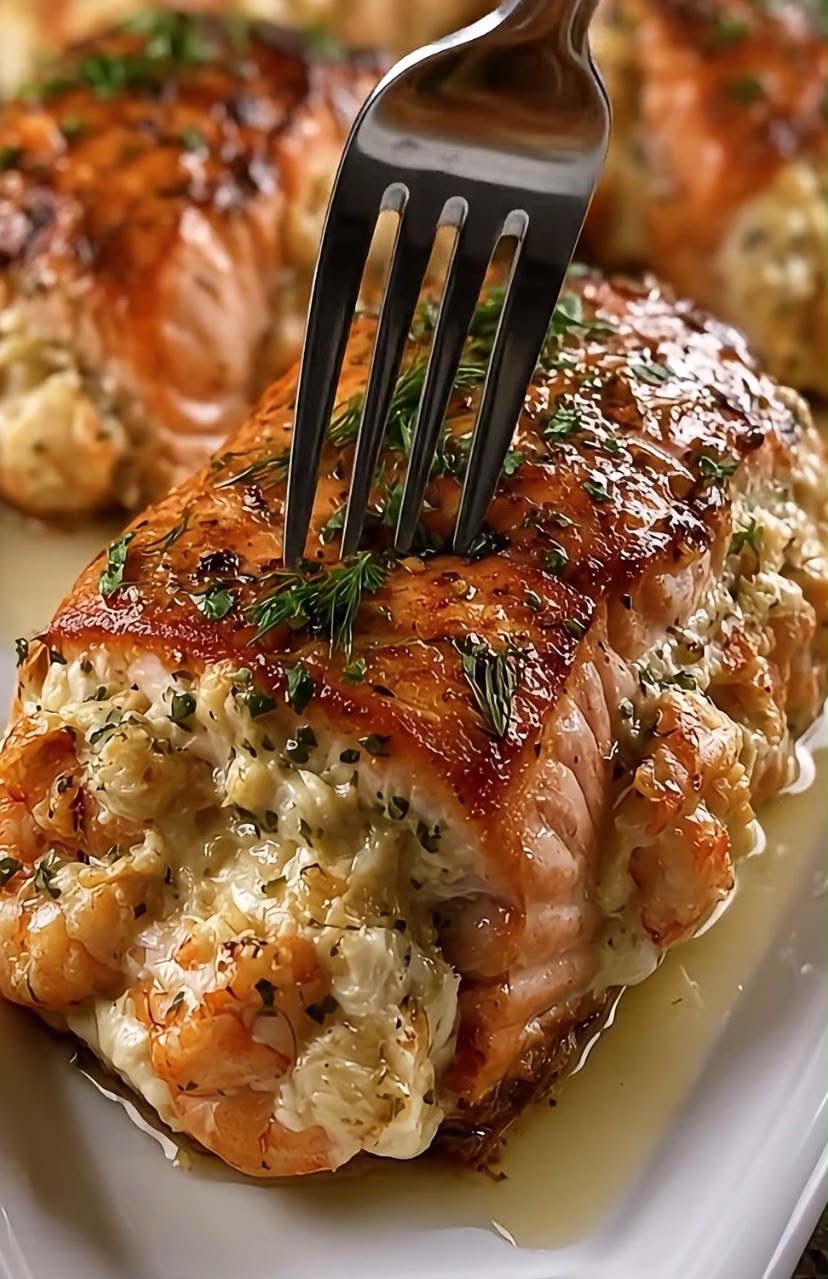
If you are looking for a restaurant-quality meal that you can easily recreate in your own kitchen, this Gourmet Cream Cheese and Seafood Stuffed Salmon is an excellent choice. Thick, tender salmon fillets are filled with a creamy mixture of cream cheese, seafood, Parmesan, spinach, garlic, and lemon, then seared until beautifully golden before finishing in the oven.
The combination of flaky salmon and rich seafood filling makes this dish feel luxurious without requiring complicated culinary techniques. The creamy center provides a wonderful contrast to the lightly crisp, seasoned exterior of the salmon.
Whether you are hosting a dinner party, preparing a special weekend meal, or simply want to elevate an ordinary weeknight dinner, this stuffed salmon is an impressive option. It is also naturally low in carbohydrates and high in protein, making it suitable for many low-carb and keto-friendly meal plans.
Recipe Overview
| Recipe Details | Information |
| Prep Time | 15 Minutes |
| Cook Time | 20 Minutes |
| Resting Time | 2 Minutes |
| Total Time | 37 Minutes |
| Servings | 4 Portions |
| Dietary Focus | Low Carb, Keto-Friendly, High Protein |
| Skill Level | Beginner to Intermediate |
| Cooking Method | Searing and Baking |
| Oven Temperature | 375°F (190°C) |
Why You’ll Love This Recipe
You will love how this recipe brings gourmet home cooking directly to your dining table without requiring hours of preparation. The filling can be mixed in minutes, while a quick stovetop sear gives the salmon a beautiful golden crust before it finishes cooking in the oven.
The creamy seafood filling is rich without being overly complicated. Cream cheese creates the smooth base, Parmesan adds savory depth, while seafood, spinach, garlic, lemon, and Old Bay seasoning create a balanced combination of flavors.
This recipe is also naturally low in carbohydrates and provides a generous amount of protein, making it a satisfying option for anyone looking for healthy seafood recipes or easy low-carb dinners.
Ingredients
Salmon and Seasoning
| Ingredient | Quantity | Notes |
| Center-Cut Salmon Fillets | 4 × 6 oz | Skinless preferred |
| Extra-Virgin Olive Oil | 1 tablespoon | For searing |
| Smoked Paprika | 1 teaspoon | Adds color and smoky flavor |
| Garlic Powder | 1 teaspoon | For seasoning the salmon |
| Kosher Salt | To taste | Adjust according to seafood seasoning |
| Black Pepper | To taste | Freshly ground |
| Fresh Dill or Parsley | 1 tablespoon | Chopped, for garnish |
Creamy Seafood Filling
| Ingredient | Quantity | Notes |
| Cream Cheese | 4 oz | Softened |
| Lump Crab Meat or Shrimp | 4 oz | Well drained and finely chopped |
| Parmesan Cheese | 2 tablespoons | Freshly grated |
| Fresh Spinach | ¼ cup | Finely chopped |
| Garlic | 2 cloves | Freshly minced |
| Fresh Lemon Juice | 1 teaspoon | Use fresh lemon |
| Old Bay Seasoning | ½ teaspoon | Adjust to taste |
| Black Pepper | Small pinch | Optional |
| Salt | Small pinch | Only if needed |
Step-by-Step Instructions
1. Prepare the Oven
Preheat your oven to 375°F (190°C).
If you are using an oven-safe skillet, there is no need to transfer the salmon later. Otherwise, lightly grease a baking dish and keep it nearby.
Pat the salmon fillets thoroughly dry with paper towels. Removing surface moisture helps the fish develop a better sear.
2. Prepare the Creamy Seafood Filling
Place the softened cream cheese in a medium bowl.
Add the crab meat or finely chopped shrimp, Parmesan cheese, chopped spinach, minced garlic, lemon juice, and Old Bay seasoning.
Mix thoroughly until the ingredients are evenly incorporated and the filling has a creamy, spreadable consistency.
Taste a small amount and adjust the seasoning if necessary.
3. Cut the Salmon Pockets
Place the salmon fillets on a clean cutting board.
Using a sharp, thin knife, carefully make a horizontal cut through the thickest side of each fillet. Cut approximately three-quarters of the way through the salmon, creating a pocket without cutting completely through the opposite side.
Take your time during this step. A deep but intact pocket will hold the filling securely during cooking.
4. Stuff the Salmon
Divide the cream cheese and seafood filling evenly among the four salmon fillets.
Gently spoon the filling into each pocket without forcing too much inside.
Press the salmon edges together gently to help close the opening. Do not overstuff the fillets, as excessive filling can cause the salmon to split while cooking.
5. Season the Salmon
Brush the exterior of each stuffed salmon fillet lightly with olive oil.
Combine the smoked paprika and garlic powder, then season the salmon evenly on the exposed surfaces.
Add kosher salt and freshly cracked black pepper according to taste.
6. Sear the Salmon
Heat a large oven-safe skillet over medium-high heat.
Once the skillet is hot, carefully place the stuffed salmon into the pan.
Sear for approximately 2 to 3 minutes on the first side, or until the salmon develops a beautiful golden-brown crust.
Carefully turn the salmon using a wide spatula or fish turner.
7. Transfer to the Oven
Place the skillet directly into the preheated oven.
Bake for approximately 10 to 12 minutes, depending on the thickness of the salmon fillets.
The fish should become opaque and should flake easily when gently pressed with a fork.
For food safety, the thickest portion of the salmon should reach 145°F (63°C) when measured with an instant-read thermometer.
8. Rest and Garnish
Remove the skillet from the oven and allow the salmon to rest for approximately 2 minutes.
Garnish with fresh dill or parsley and serve immediately with your favorite vegetables or side dishes.
Best Tips
Always soften the cream cheese before preparing the filling. Room-temperature cream cheese blends much more easily with the seafood and spinach, producing a smooth filling rather than a lumpy mixture.
Use a sharp knife when creating the pockets. A dull knife can tear the delicate salmon instead of creating a clean opening. Make the pocket deep enough to hold the filling while leaving the opposite side intact.
Do not overfill the salmon. It is better to have a small amount of filling left over than to force too much into the fish and cause the fillet to split.
Pat the salmon very dry before seasoning and searing. Excess moisture on the surface prevents proper browning and can cause the fish to steam instead of sear.
For the best texture, use an instant-read thermometer. Salmon can quickly go from tender to overcooked, particularly when using thick fillets.
Best Ingredient Options
| Ingredient | Best Option | Alternative | Notes |
| Salmon | Wild-caught King or Sockeye | Atlantic salmon | Thick fillets are easiest to stuff |
| Seafood | Lump crab meat | Chopped shrimp | Both work beautifully |
| Cream Cheese | Full-fat cream cheese | Neufchâtel | Full-fat provides the creamiest filling |
| Parmesan | Freshly grated Parmesan | Pecorino Romano | Pecorino has a stronger flavor |
| Spinach | Fresh baby spinach | Frozen spinach | Frozen spinach must be squeezed very dry |
| Herbs | Fresh dill | Fresh parsley | Both complement salmon |
Wild-caught salmon offers excellent flavor, while farmed Atlantic salmon is often thicker and particularly easy to cut and stuff.
Lump crab meat gives the filling an elegant, sweet seafood flavor. Finely chopped shrimp is a more affordable alternative and adds excellent texture.
Recipe Variations
For a Mediterranean-inspired version, replace the crab and Old Bay seasoning with chopped sun-dried tomatoes, finely chopped artichoke hearts, Kalamata olives, and a pinch of dried oregano.
For a spicy Cajun version, replace the smoked paprika with a Cajun or Creole seasoning blend. You can also mix finely diced jalapeño into the cream cheese filling for additional heat.
For a lemon-herb version, add extra lemon zest, fresh dill, parsley, and a small amount of finely chopped green onion to the filling.
For a mushroom version, sauté finely chopped mushrooms until all excess moisture has evaporated. Allow them to cool before mixing them into the cream cheese filling.
If you do not enjoy shellfish, omit the crab or shrimp and increase the spinach. Adding sautéed mushrooms, caramelized onions, and Parmesan creates a rich vegetarian-style filling.
What to Serve With
For an easy low-carb dinner, serve the stuffed salmon with roasted asparagus, garlic-butter green beans, roasted broccoli, or sautéed zucchini.
A crisp salad with mixed greens, cucumber, cherry tomatoes, and lemon vinaigrette provides a refreshing contrast to the rich cream cheese filling.
If carbohydrates are part of your meal plan, serve the salmon over fluffy jasmine rice, wild rice pilaf, quinoa, or creamy mashed potatoes. These sides are particularly good for soaking up any flavorful juices from the salmon.
Roasted baby potatoes and steamed vegetables also make excellent options for a more substantial family dinner.
Make-Ahead Instructions
The seafood cream cheese filling can be prepared up to 2 days ahead.
Store it in an airtight container in the refrigerator until you are ready to use it.
The salmon pockets can also be cut and filled several hours before cooking. Place the stuffed fillets in a covered container or wrap them tightly and refrigerate.
For food safety, keep raw seafood properly refrigerated and cook it within the recommended storage period. Season the exterior shortly before cooking for the best texture and browning.
Storage
Allow leftover salmon to cool before transferring it to a shallow airtight container.
Refrigerate promptly and use within 3 days.
Keep the salmon refrigerated at all times when it is not being served.
Because the filling contains cream cheese and seafood, avoid leaving the cooked salmon at room temperature for extended periods.
Reheating
The oven provides the gentlest reheating method.
Place the leftover stuffed salmon in a small baking dish and cover it loosely with aluminum foil.
Reheat in a 275°F (135°C) oven for approximately 12 to 15 minutes, or until the center is warmed through.
Avoid using excessively high heat because it can dry out the salmon and cause the cream cheese filling to separate.
If using a microwave, heat the salmon at reduced power in short intervals, checking frequently. The texture will not be quite as good as oven reheating.
Freezing
Freezing is not recommended for the best possible texture because cream cheese-based fillings can become grainy or separate after thawing.
If you do need to freeze cooked leftovers, allow them to cool completely before wrapping each portion tightly in freezer-safe wrapping.
Place the wrapped portions in a freezer-safe container or bag and freeze for up to 1 month.
Thaw overnight in the refrigerator before reheating gently in the oven.
Common Mistakes to Avoid
Overcooking is the biggest mistake when preparing stuffed salmon. Because the fillets are already cut open and filled, they can cook quickly. Use an instant-read thermometer rather than relying solely on cooking time.
Another common mistake is making the salmon pocket too deep. Cutting completely through the fillet allows the filling to escape during cooking. Leave the back wall of the salmon intact.
Avoid using watery seafood in the filling. If you are using canned crab or frozen shrimp, drain them thoroughly and pat them dry. Excess moisture can make the filling loose and watery.
Do not forget to season the filling itself. The cream cheese can be mild, so lemon juice, Parmesan, garlic, Old Bay, and appropriate seasoning are important for creating flavor throughout the dish.
Finally, avoid putting cold, wet salmon directly into the skillet. Patting the fish dry before searing helps produce a more attractive golden crust.
Nutrition Estimate
| Nutrient | Amount per Serving |
| Calories | Approximately 420 kcal |
| Protein | 42 g |
| Fat | 26 g |
| Saturated Fat | 10 g |
| Carbohydrates | 3 g |
| Fiber | 0.5 g |
| Sugar | 1 g |
| Sodium | 450 mg |
Nutrition values are estimates and can vary depending on the salmon, seafood, cream cheese, and seasoning brands used.
Frequently Asked Questions
Can I use frozen salmon?
Yes. Frozen salmon works well, but it must be completely thawed before you attempt to cut the pockets.
Thaw the salmon safely in the refrigerator, preferably overnight. Once thawed, pat the fillets very dry with paper towels before stuffing and cooking.
Do I have to remove the salmon skin?
Skinless salmon is easiest for this particular recipe because it allows you to season and handle the entire fillet easily.
However, skin-on salmon can still be used. The skin can become crisp during searing and may be removed when serving if desired.
Can I use shrimp instead of crab?
Absolutely. Finely chopped shrimp is an excellent alternative to crab. Make sure the shrimp is properly cleaned, peeled, and finely chopped before mixing it into the filling.
Can I prepare the filling ahead of time?
Yes. The cream cheese seafood filling can be prepared up to 2 days in advance and stored covered in the refrigerator.
How do I know when the salmon is done?
The salmon should appear opaque and should flake easily when gently pressed with a fork. For food safety, the thickest portion should reach 145°F (63°C).
Can I make this recipe without seafood in the filling?
Yes. Omit the crab or shrimp and replace it with additional spinach, sautéed mushrooms, caramelized onions, or another vegetable of your choice.
What if my salmon fillets are very thin?
Very thin fillets can be difficult to stuff without tearing. Choose thick, center-cut fillets whenever possible. If your fillets are thin, use a smaller amount of filling and reduce the cooking time while monitoring the internal temperature carefully.
Final Thoughts
Gourmet Cream Cheese and Seafood Stuffed Salmon proves that an impressive restaurant-style dinner can be surprisingly simple to prepare at home. Thick salmon fillets are transformed with a creamy filling of seafood, cream cheese, Parmesan, spinach, garlic, lemon, and herbs, while a quick sear creates a beautifully golden exterior.
The result is rich, tender, flavorful, and satisfying without relying on a complicated preparation process. Pair it with roasted vegetables for an easy low-carb dinner, or add rice or potatoes when you want a more substantial meal.
With its elegant presentation and luxurious flavor, this stuffed salmon is equally suitable for a special occasion and an elevated weeknight dinner.