Introduction
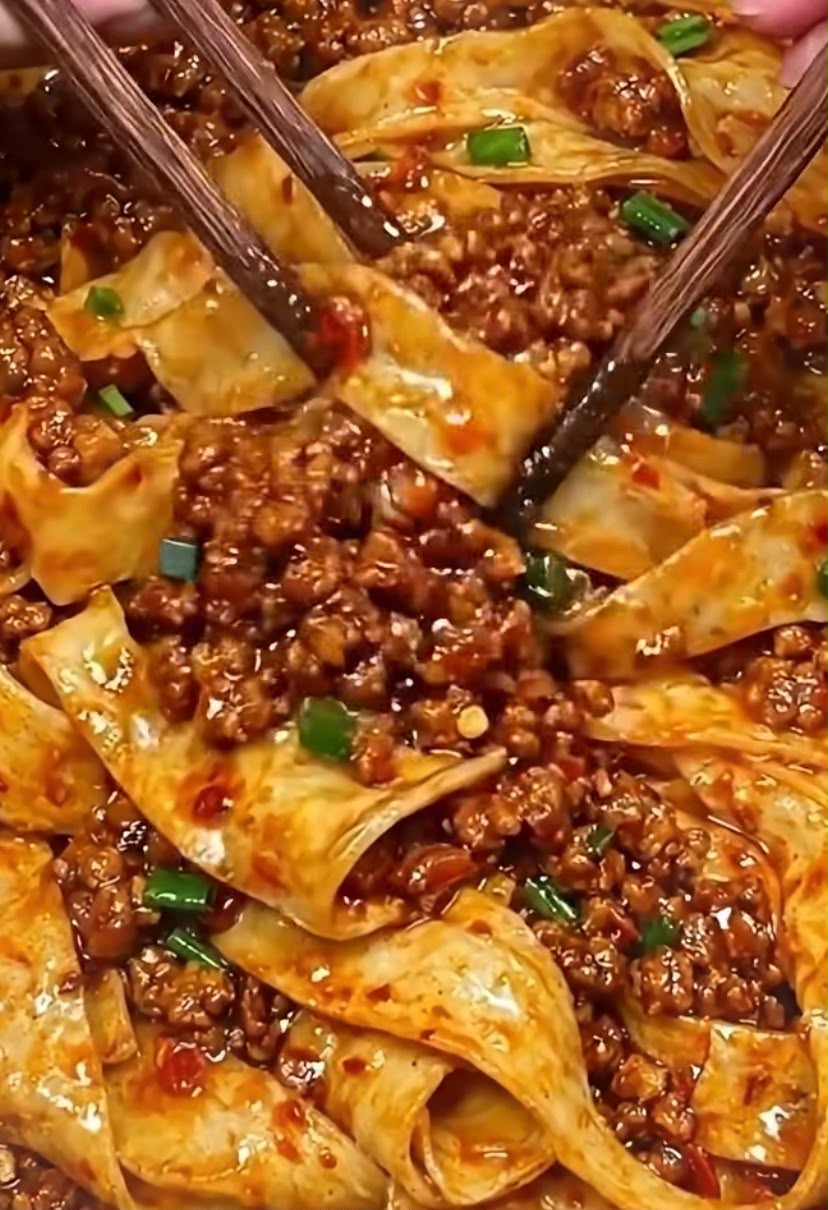
If you love bold, spicy dinners that come together quickly, these Spicy Minced Beef and Chili Oil Noodles are about to become a new favorite. Wide, chewy noodles are tossed with deeply browned ground beef, fragrant garlic and ginger, savory soy sauce, Chinese black vinegar, and plenty of chili oil for a rich, glossy sauce that coats every bite.
This easy Asian-inspired dinner delivers the satisfying combination of tender noodles, juicy beef, aromatic vegetables, and fiery chili flavor without requiring complicated cooking techniques. Everything comes together in one skillet or wok in about 25 minutes, making it perfect for busy weeknights.
Whether you are looking for high-protein meals, quick family dinners, or an easy comfort-food recipe with restaurant-style flavor, this spicy beef noodle recipe is an excellent choice.
Recipe Overview
| Category | Details |
| Prep Time | 10 minutes |
| Cook Time | 15 minutes |
| Total Time | 25 minutes |
| Servings | 4 |
| Cuisine | Chinese / Sichuan-inspired |
| Course | Dinner |
| Difficulty | Easy |
| Dietary Style | High Protein |
| Main Protein | Ground Beef |
Why You’ll Love This Recipe
You are going to love these noodles because they combine simple pantry ingredients with big, restaurant-quality flavor. The ground beef is browned until deeply caramelized, creating a rich savory foundation that pairs beautifully with spicy chili oil and aromatic ginger and garlic.
The wide noodles are especially delicious because their chewy texture gives the glossy beef sauce plenty of surface area to cling to. Every forkful delivers a combination of spicy, salty, tangy, savory, and slightly rich flavors.
This is also one of those easy dinner ideas that feels much more impressive than the amount of effort required. From start to finish, the meal can be on the table in around 25 minutes.
Ingredients
The Noodle and Beef Base
| Ingredient | Quantity | Notes |
| Wide Wheat or Rice Noodles | 16 oz (450 g) | Fresh or dried |
| Ground Beef | 1 lb (450 g) | 80/20 or 85/15 recommended |
| Green Onions | 4 stalks | Separate white and green parts |
| Neutral Cooking Oil | 2 tbsp | Canola, vegetable, or avocado oil |
Spicy Umami Sauce
| Ingredient | Quantity | Notes |
| Fresh Garlic | 4 cloves | Finely minced |
| Fresh Ginger | 1 tbsp | Finely grated |
| Light Soy Sauce | 3 tbsp | Main savory seasoning |
| Dark Soy Sauce | 1 tbsp | Adds color and depth |
| Chinese Black Vinegar | 1 tbsp | Adds acidity |
| Chili Oil with Chili Flakes | 3 tbsp | Adjust according to heat preference |
| Beef or Chicken Broth | ½ cup | Helps create the glossy sauce |
Optional Garnishes
| Ingredient | Quantity | Purpose |
| Sesame Seeds | 1 tbsp | Nutty finishing flavor |
| Crushed Peanuts | 2 tbsp | Adds crunch |
| Extra Chili Oil | To taste | For additional heat |
| Fresh Cilantro | 2 tbsp | Adds freshness |
| Sliced Green Onions | As needed | Fresh finishing garnish |
Step-by-Step Instructions
Step 1: Prepare the Noodles
Bring a large pot of water to a boil. Cook the wide noodles according to the package directions until tender but still pleasantly chewy.
Fresh noodles may only require a few minutes, while dried noodles can take slightly longer. Avoid overcooking because the noodles will finish cooking briefly in the beef sauce.
Drain the noodles well. If they tend to stick, give them a quick rinse under warm water and set them aside.
Step 2: Brown the Ground Beef
Heat a large wok or skillet over medium-high heat. Add the neutral cooking oil and allow it to become hot.
Add the ground beef and spread it across the pan. Let it cook undisturbed for about 1–2 minutes before stirring. Continue breaking the beef into small pieces as it cooks.
Cook for approximately 5–7 minutes, or until the beef is thoroughly cooked and has developed deep brown, caramelized edges.
Do not constantly stir the beef. Allowing it to remain in contact with the hot pan is what creates the flavorful browned crust.
Step 3: Cook the Aromatics
Push the cooked beef toward one side of the skillet.
Reduce the heat to medium and add the minced garlic, grated ginger, and the white portions of the green onions to the open area of the pan.
Cook for about 1 minute, stirring frequently, until the garlic and ginger become fragrant.
Be careful not to burn the garlic, as it can become bitter very quickly.
Step 4: Build the Spicy Beef Sauce
Stir the aromatics into the browned beef.
Add the light soy sauce, dark soy sauce, Chinese black vinegar, chili oil, and broth.
Stir thoroughly so the liquid combines with the browned beef and the flavorful bits stuck to the bottom of the pan.
Allow the mixture to simmer for approximately 3 minutes. The sauce should reduce slightly and become glossy while remaining loose enough to coat the noodles.
Step 5: Add the Noodles
Add the cooked noodles directly to the skillet.
Reduce the heat to low and toss everything together for 1–2 minutes. Use tongs or chopsticks to lift and turn the noodles so the spicy beef sauce coats them evenly.
If the sauce seems too thick, add a tablespoon or two of broth or noodle cooking water until you reach your preferred consistency.
Step 6: Garnish and Serve
Remove the skillet from the heat.
Scatter the green portions of the sliced green onions over the noodles. Add sesame seeds, crushed peanuts, cilantro, or an additional drizzle of chili oil if desired.
Serve immediately while the noodles are hot and glossy.
Best Tips
For the deepest flavor, give the ground beef enough time to properly brown before adding the aromatics. A little patience at this stage makes a noticeable difference because the caramelized beef creates the foundation for the entire sauce.
Have all of your ingredients measured before starting. Once the pan is hot, the garlic, ginger, soy sauce, vinegar, chili oil, and broth come together very quickly.
Choose noodles with plenty of texture. Wide wheat noodles, hand-cut noodles, knife-cut noodles, and wide rice noodles all work particularly well because they hold onto the beef sauce.
If your ground beef releases a large amount of fat, remove some of it before making the sauce. You want enough rendered fat to provide richness without making the finished noodles greasy.
Best Ingredient Options
Ground Beef: An 80/20 ground beef blend provides excellent flavor and tenderness. An 85/15 blend is slightly leaner while still remaining juicy.
Noodles: Fresh wide wheat noodles provide an especially chewy texture, but dried wide noodles or wide rice noodles work beautifully too.
Chili Oil: Use a chili oil containing visible chili flakes for a more intense flavor and texture. Garlic chili crisp can also be used for extra crunch.
Soy Sauce: Light soy sauce provides the main seasoning, while dark soy sauce contributes color and deeper flavor. If you only have regular soy sauce, you can use it in place of both, although the finished color will be lighter.
Chinese Black Vinegar: Chinkiang vinegar is ideal because it has a pleasantly complex, slightly sweet acidity. Rice vinegar can be substituted if necessary.
Recipe Variations
For a vegetable-packed version, add thinly sliced bell peppers, shredded carrots, bok choy, mushrooms, or snap peas. Stir-fry the vegetables before browning the beef or cook them separately and combine everything at the end.
For an extra-spicy version, increase the chili oil and add a pinch of crushed dried red pepper flakes. A spoonful of chili crisp can also add both heat and texture.
For a slightly sweeter sauce, add 1–2 teaspoons of brown sugar or honey. This balances the heat and creates a beautifully glossy coating.
For a nutty variation, finish the noodles with toasted sesame seeds or crushed roasted peanuts.
For a gluten-free meal, use wide rice noodles and replace the soy sauce with gluten-free tamari. Make sure the chili oil and other packaged ingredients are also certified gluten-free.
What to Serve With
Because these noodles are rich, spicy, and savory, fresh and crunchy side dishes work especially well.
An Asian-inspired cabbage slaw with carrots, green onions, and a light ginger-lime dressing provides a refreshing contrast to the rich beef.
Steamed broccoli, garlic green beans, bok choy, or snap peas are also excellent choices when you want to add more vegetables to the meal.
For a lighter dinner, simply serve the noodles with a crisp cucumber salad dressed with rice vinegar and sesame oil.
Make-Ahead Instructions
The sauce components can be prepared ahead of time. Combine the light soy sauce, dark soy sauce, black vinegar, and broth in a sealed container and refrigerate for up to 3 days.
The garlic and ginger can also be minced and grated in advance. Store them in an airtight container in the refrigerator and use within 1–2 days for the freshest flavor.
For the best texture, cook the noodles shortly before serving rather than preparing them several days in advance.
Storage
Allow leftover noodles to cool before transferring them to an airtight food-safe container.
Refrigerate for up to 3 days.
Because the noodles absorb some of the sauce as they sit, you may need to add a small amount of water or broth when reheating.
Reheating
Stovetop
Place the leftover noodles in a skillet over medium-low heat. Add 1–2 tablespoons of water or broth.
Toss gently and heat until the noodles are hot throughout and the sauce becomes glossy again.
Microwave
Place a serving in a microwave-safe bowl and cover loosely with a damp paper towel.
Microwave in 45-second intervals, stirring between each interval, until heated through.
Add a small splash of water or broth if the noodles appear dry.
Freezing
Freezing the completed noodle dish is not recommended because the noodles can lose their chewy texture after freezing and thawing.
The spicy minced beef sauce, however, freezes well. Allow the cooked beef sauce to cool completely, then transfer it to an airtight freezer-safe container or freezer bag.
Freeze for up to 2 months.
Thaw overnight in the refrigerator, reheat gently in a skillet, and combine with freshly cooked noodles.
Common Mistakes to Avoid
One of the biggest mistakes is failing to brown the ground beef properly. If you stir it constantly from the moment it enters the pan, it can release moisture and steam rather than develop the flavorful caramelized edges you want.
Another common mistake is adding too much salt. Soy sauce and chili oil can both contain significant amounts of sodium, so taste the finished sauce before adding any additional seasoning.
Avoid overcooking the noodles. They should remain chewy because they will spend another minute or two in the skillet absorbing the beef sauce.
Finally, do not burn the garlic and ginger. They only need about a minute in the hot pan before the liquid ingredients are added.
Nutrition Estimate
Nutrition values are approximate and will vary depending on the ground beef, noodles, chili oil, and specific brands used.
| Nutrient | Amount per Serving |
| Calories | Approximately 610 kcal |
| Protein | Approximately 30 g |
| Carbohydrates | Approximately 54 g |
| Fat | Approximately 29 g |
| Sodium | Approximately 970 mg |
| Fiber | Approximately 3 g |
Frequently Asked Questions
Can I use lean ground beef?
Yes. You can use 90/10 or 93/7 ground beef for a leaner version. Since lean beef contains less fat, you may want to add an extra teaspoon of neutral oil to keep the sauce rich and flavorful.
Can I use regular noodles instead of wide noodles?
Absolutely. Spaghetti, udon, ramen-style noodles, lo mein noodles, or other sturdy noodles can work. Wide noodles are preferred because they provide more surface area for the sauce.
Can I make these noodles less spicy?
Yes. Reduce the chili oil from 3 tablespoons to 1 tablespoon or use a mild chili oil. You can also add more broth to dilute the heat.
What can I use instead of Chinese black vinegar?
Rice vinegar is the easiest substitute. If you want a slightly deeper flavor, combine rice vinegar with a small splash of balsamic vinegar.
Can I make this recipe gluten-free?
Yes. Use wide rice noodles and gluten-free tamari instead of wheat noodles and traditional soy sauce. Also check the labels on your chili oil and other packaged ingredients.
Can I add vegetables?
Definitely. Bell peppers, bok choy, mushrooms, broccoli, carrots, cabbage, and snap peas are all excellent additions.
Can I prepare the beef sauce ahead of time?
Yes. The beef sauce can be prepared ahead and refrigerated for up to 3 days or frozen for up to 2 months. Prepare fresh noodles when you are ready to serve.
What is the best ground beef for this recipe?
An 80/20 ground chuck blend is an excellent choice because the higher fat content keeps the beef juicy while adding richness to the sauce.
Final Thoughts
These Spicy Minced Beef and Chili Oil Noodles prove that an unforgettable dinner does not need to take hours to prepare. Deeply browned ground beef, chewy noodles, fragrant garlic and ginger, savory soy sauce, tangy black vinegar, and spicy chili oil come together to create an incredibly satisfying meal.
With simple ingredients and a few essential cooking techniques, you can create a quick high-protein dinner with the bold flavors of your favorite Asian-inspired noodle dishes.
Serve the noodles piping hot with plenty of fresh green onions and your favorite crunchy toppings, and you have an easy 25-minute beef dinner that is perfect for busy weeknights.