Welcome to your new favorite weeknight dinner! If you are looking for healthy dinner ideas or easy seafood recipes, this Mediterranean-inspired dish is exactly what you need.
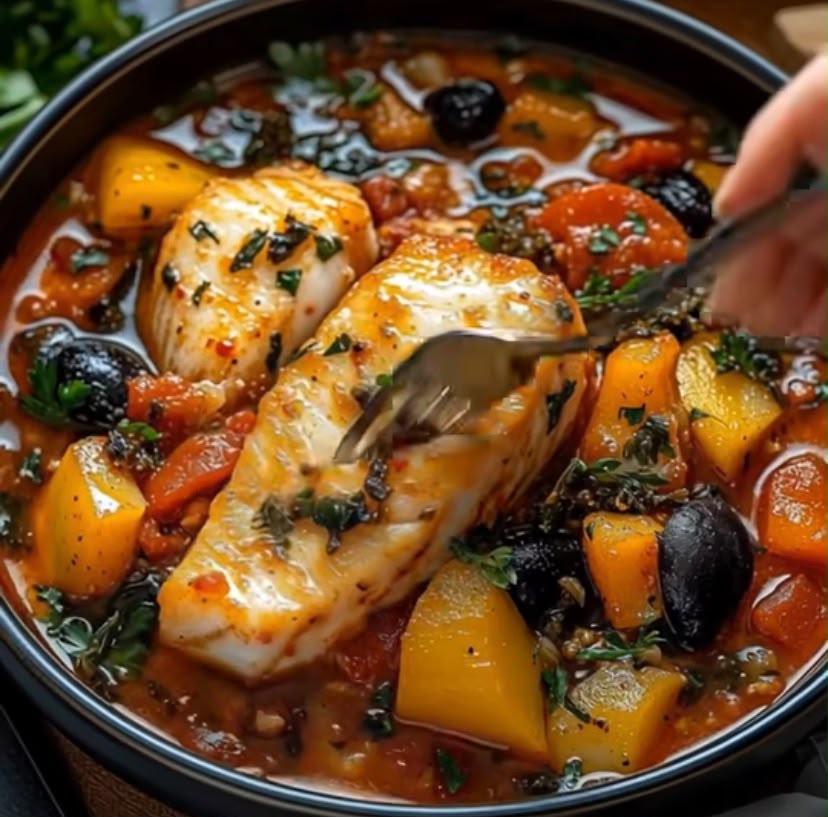
As you can see in the delicious meal pictured in image.png, this recipe features tender, flaky white fish simmered in a rich tomato broth with vibrant vegetables and savory black olives.
It is a fantastic high-protein meal that fits perfectly into a Mediterranean diet meal plan, offering both incredible flavor and fantastic nutritional benefits.
Recipe Overview
| Feature | Details |
| Prep Time | 15 minutes |
| Cook Time | 25 minutes |
| Total Time | 40 minutes |
| Servings | 4 |
| Dietary Profile | Gluten-Free, Pescatarian, Low-Carb Option |
| Difficulty | Easy |
Why You’ll Love This Recipe
You will absolutely love this dish because it delivers gourmet restaurant-quality flavors right in your own kitchen with very minimal effort. It is one of those easy seafood dinner ideas that looks impressive but takes less than an hour to put together.
The combination of the savory tomato broth, the briny kick from the black olives, and the subtle sweetness of the squash creates a perfectly balanced flavor profile. It is a fantastic option for anyone seeking healthy weight loss dinner recipes that do not sacrifice taste or satisfaction.
Furthermore, this one-pan weeknight meal means you will spend less time washing dishes and more time enjoying your evening. The cleanup is a breeze, making it ideal for busy families or professionals looking for quick, nutritious meals after a long day at work.
Ingredients
| Ingredient | Quantity | Notes |
| Thick White Fish Fillets (Cod or Halibut) | 4 fillets (approx. 150g each) | Skinless and boneless |
| Olive Oil | 2 tablespoons | Extra virgin is best for flavor |
| Butternut Squash or Yellow Potatoes | 2 cups | Peeled and diced into 1-inch cubes |
| Canned Diced Tomatoes | 1 can (400g) | Include the juices |
| Pitted Black Olives | 1/2 cup | Kalamata or standard black olives |
| Garlic Cloves | 3 cloves | Minced finely |
| Yellow Onion | 1 medium | Finely chopped |
| Vegetable or Seafood Broth | 1 cup | Low sodium preferred |
| Fresh Parsley | 1/4 cup | Chopped for garnish |
| Dried Thyme | 1 teaspoon | Or 1 tablespoon fresh thyme |
| Salt and Black Pepper | To taste | Freshly cracked pepper is best |
| Red Pepper Flakes (Optional) | 1/2 teaspoon | For a slight spicy kick |
Step-by-Step Instructions
- Prepare the Base: Heat the olive oil in a large, deep skillet or Dutch oven over medium heat. Add the chopped onion and sauté for about 5 minutes until soft and translucent. Add the minced garlic and dried thyme, cooking for another 60 seconds until fragrant.
- Simmer the Vegetables: Stir in the diced butternut squash (or potatoes), diced tomatoes with their juices, and the broth. Bring the mixture to a gentle boil.
- Cook the Squash: Reduce the heat to medium-low, cover the skillet, and let it simmer for 12 to 15 minutes, or until the squash is just starting to become tender when pierced with a fork.
- Add the Olives and Seasoning: Stir in the black olives, salt, black pepper, and red pepper flakes if using. Taste the broth and adjust the seasoning if necessary.
- Poach the Fish: Gently nestle the fish fillets into the tomato and vegetable broth. Spoon a little bit of the warm broth over the top of each fillet.
- Final Simmer: Cover the skillet again and let everything simmer for 8 to 10 minutes. The fish is done when it is completely opaque and flakes easily with a fork, reaching an internal temperature of 63°C.
- Garnish and Serve: Remove from the heat. Garnish generously with fresh chopped parsley before serving warm.
Best Tips
For the absolute best results, make sure you choose thick cuts of fish like cod, halibut, or sea bass. Thinner fillets like tilapia will cook much too quickly and might fall apart in the rich tomato broth. Getting fresh, high-quality seafood is the secret to elevating healthy Mediterranean diet recipes.
Do not rush the simmering process for the squash or potatoes. You want the vegetables to be perfectly fork-tender before you add the fish. If you add the fish too early, it will overcook and become rubbery by the time the vegetables are soft enough to eat.
Best Ingredient Options
- Fish: Pacific Cod, Alaskan Halibut, or Chilean Sea Bass.
- Tomatoes: Fire-roasted canned tomatoes add a wonderful smoky depth of flavor.
- Olives: Kalamata olives offer a more authentic Mediterranean taste, but standard black olives work wonderfully if you prefer a milder flavor.
- Squash: Sweet potatoes can easily replace butternut squash for a different nutritional profile.
Recipe Variations
If you want to switch things up, you can easily turn this into a spicy seafood stew by doubling the red pepper flakes and adding a dash of smoked paprika. This is a great way to boost metabolism if you are searching for fat-burning dinner recipes.
You can also make this a mixed seafood delight by adding large peeled shrimp or fresh mussels during the last 5 minutes of cooking. Adding shellfish turns this simple weeknight dinner into an elegant meal perfect for entertaining guests.
What to Serve With
This dish is incredibly flavorful and saucy, so you will definitely want something to soak up all that delicious tomato broth. A slice of crusty sourdough bread or a warm whole wheat baguette is absolutely perfect for dipping.
If you prefer to keep the meal entirely gluten-free or are focusing on low-carb fish recipes, serving this stew over a bed of cauliflower rice or zucchini noodles is a fantastic, healthy alternative. A crisp, simple green salad with a lemon vinaigrette on the side also cuts through the richness beautifully.
Make-Ahead Instructions
- Chop all vegetables (onions, garlic, squash) up to 2 days in advance and store them in airtight containers in the fridge.
- You can prepare the tomato and vegetable broth base completely ahead of time. Simply cook the recipe up to step 4, let it cool, and refrigerate it for up to 3 days.
- When ready to eat, bring the broth back to a simmer on the stove, add the fresh fish fillets, and cook as directed.
Storage
Store any leftover fish and stew in an airtight container in the refrigerator. It will stay fresh and safe to eat for up to 3 days. Ensure the fish is fully submerged in the broth to keep it moist.
Reheating
To reheat, place the stew in a saucepan over medium-low heat. Heat gently for about 5 to 7 minutes until warmed through. Avoid boiling, as this will cause the fish to overcook and become tough. You can also microwave individual portions on 50% power for 2 to 3 minutes, checking frequently.
Freezing
While the tomato and vegetable broth freezes beautifully for up to 3 months, it is not recommended to freeze the cooked fish in the stew, as the texture can become mushy upon thawing. If you plan to freeze this meal, freeze the sauce base only, and poach fresh fish when you reheat the thawed broth.
Common Mistakes to Avoid
One of the biggest mistakes home cooks make with seafood recipes is walking away while the fish is simmering. Fish cooks incredibly quickly, and even just two extra minutes in the hot broth can turn a perfectly tender cod fillet into a dry, chewy disappointment. Always keep a close eye on the pan during the final cooking steps.
Another common error is not seasoning the broth adequately before adding the fish. The fish itself absorbs the flavors of the liquid it cooks in. If your tomato broth is bland and under-salted, your entire meal will lack depth. Always taste and adjust your salt, pepper, and herbs before you nestle the fillets into the pan.
Nutrition Estimate
| Nutrient | Amount per Serving |
| Calories | 310 kcal |
| Protein | 32 g |
| Carbohydrates | 18 g |
| Dietary Fiber | 4 g |
| Total Fat | 12 g |
| Saturated Fat | 2 g |
| Cholesterol | 65 mg |
| Sodium | 480 mg |
Frequently Asked Questions
Can I use frozen fish for this recipe? Yes, you can absolutely use frozen fish. However, for the best texture and flavor, you must thaw the fish completely in the refrigerator overnight before cooking. Pat the thawed fish dry with paper towels to remove excess moisture before adding it to the stew.
Is this recipe dairy-free? Yes! This Mediterranean seafood stew naturally contains no dairy products, making it a wonderful option for those with lactose intolerance or dairy allergies.
How do I know when the squash is done? The squash is ready when you can easily pierce a cube with a fork without any resistance. It should hold its shape but be soft all the way through.
Final Thoughts
Cooking healthy, high-protein meals at home does not have to be complicated or time-consuming. As perfectly captured in image.png, this vibrant, nutrient-dense recipe brings all the comforts of a slow-cooked stew into a fast, manageable weeknight format.
By keeping easy seafood dinner ideas like this one in your rotation, you can consistently enjoy delicious, restaurant-quality food while staying perfectly on track with your health and wellness goals.