Introduction
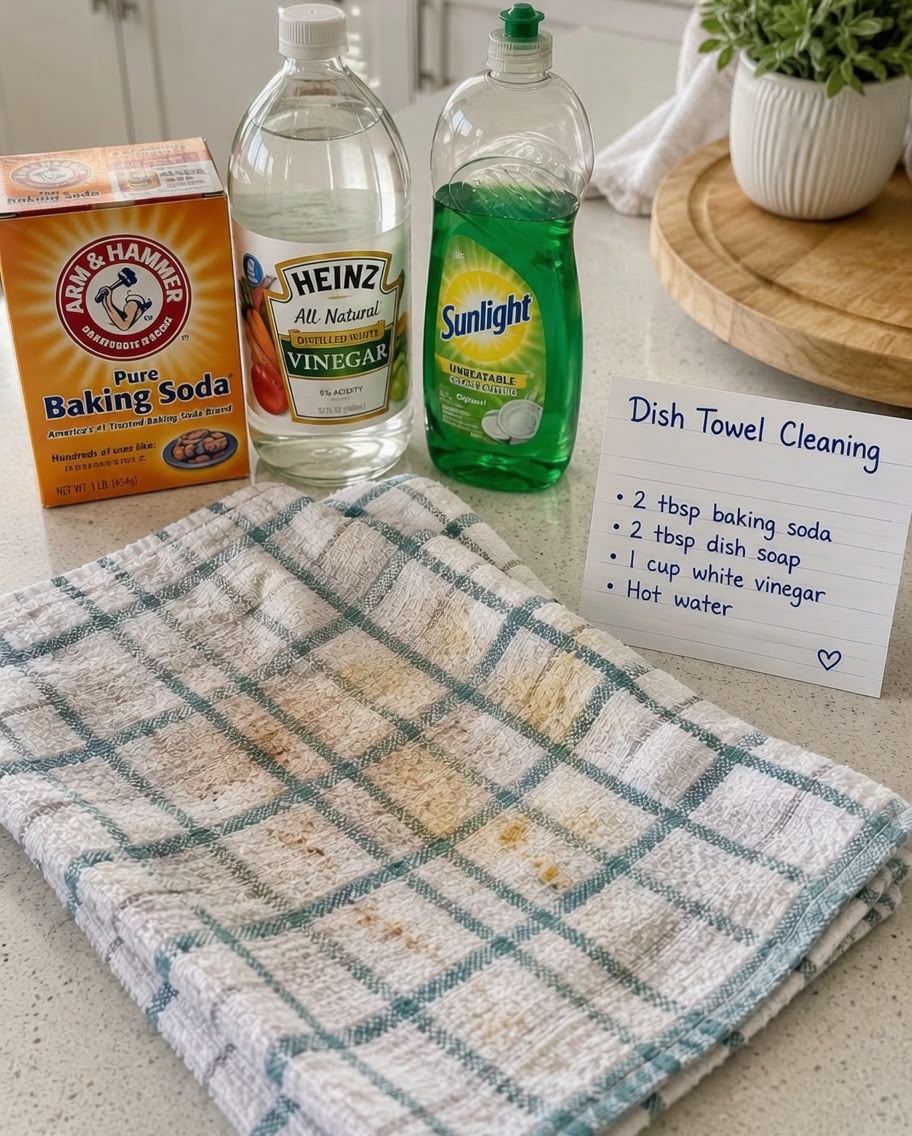
Kitchen towels are among the hardest-working items in any home. They absorb spills, wipe greasy hands, dry dishes, and clean countertops, making them prone to stubborn stains, unpleasant odors, and bacteria buildup. Fortunately, you don’t need expensive commercial cleaners to restore them. This natural dish towel cleaning method uses common household ingredients like baking soda, white vinegar, and dish soap to lift grease, remove stains, and refresh your towels.
If you’re looking for an easy homemade cleaning solution, this guide will help you keep your kitchen towels fresh, clean, and soft while saving money.
Cleaning Method Overview
| Category | Details |
| Method Name | Natural Dish Towel Cleaning Solution |
| Purpose | Remove stains, grease, and odors |
| Difficulty | Easy |
| Preparation Time | 5 minutes |
| Soaking Time | 30–60 minutes |
| Total Time | About 1 hour |
| Best For | Cotton and microfiber kitchen towels |
Why You’ll Love This Cleaning Method
This homemade cleaner uses inexpensive ingredients that are already found in most kitchens, making it a budget-friendly alternative to specialty stain removers.
Baking soda helps loosen grease and neutralize odors, while white vinegar breaks down mineral deposits and detergent residue, leaving towels feeling softer.
Dish soap is excellent at cutting through oily food stains, making this combination especially effective for heavily used kitchen towels.
Unlike many harsh cleaning chemicals, this method is simple, economical, and suitable for routine household cleaning when used correctly.
Ingredients
| Ingredient | Quantity |
| Baking soda | 2 tablespoons |
| Liquid dish soap | 2 tablespoons |
| White vinegar | 1 cup |
| Hot water | Enough to fully cover the towels |
Step-by-Step Instructions
Step 1
Fill a large bucket, sink, or basin with hot (not boiling) water.
Step 2
Add the baking soda and stir until completely dissolved.
Step 3
Mix in the dish soap.
Step 4
Slowly pour in the white vinegar. Some fizzing is normal.
Step 5
Submerge the dirty dish towels completely.
Step 6
Allow them to soak for 30 to 60 minutes.
Step 7
Gently rub any stubborn stains before washing.
Step 8
Machine wash the towels using your regular laundry detergent.
Step 9
Dry completely before storing to prevent mildew and odors.
Best Tips
Use the hottest water that is safe for your towel fabric.
Treat fresh stains as soon as possible for the best results.
Wash kitchen towels separately from clothing to avoid transferring grease.
Air-drying in direct sunlight can naturally help brighten white towels.
For heavily stained towels, repeat the soaking process before washing.
Best Ingredient Options
Fresh lemon juice can provide extra deodorizing power and a pleasant scent.
Oxygen-based laundry booster may be added for white towels with stubborn stains.
A few drops of tea tree essential oil may help reduce lingering odors, though it is optional.
For colored towels, test any additional cleaning ingredients on a small hidden area first.
Cleaning Variations
For greasy barbecue towels, increase the soaking time to one hour.
For musty-smelling towels, allow them to soak overnight in plain water with baking soda, then wash as usual.
To brighten white towels, use an oxygen bleach product according to the manufacturer’s instructions rather than chlorine bleach for routine cleaning.
For everyday maintenance, simply add half a cup of white vinegar to the rinse cycle.
What to Use Clean Dish Towels For
Freshly cleaned towels are ideal for drying dishes, wiping countertops, handling freshly washed produce, and general kitchen cleanup.
Keep separate towels for drying hands and cleaning surfaces to improve kitchen hygiene.
Make-Ahead Instructions
You can prepare the soaking solution immediately before use.
Because vinegar and baking soda react together, it is best not to mix and store the solution for later use.
Storage
Store clean towels in a dry, well-ventilated cabinet.
Ensure towels are completely dry before folding to help prevent mildew.
Reusing the Cleaning Solution
Discard the soaking solution after use. For the best cleaning performance, prepare a fresh batch each time.
Common Mistakes to Avoid
Avoid using boiling water on delicate fabrics, as it may damage fibers.
Do not overload the washing machine, as towels need room to rinse thoroughly.
Leaving damp towels in a pile encourages mildew and unpleasant odors.
Remember that baking soda and vinegar react when combined; while they’re commonly used together in home cleaning, using them sequentially rather than mixing them all at once may provide more sustained cleaning action.
Cleaning Effectiveness Estimate
| Feature | Rating |
| Grease Removal | ⭐⭐⭐⭐⭐ |
| Odor Removal | ⭐⭐⭐⭐⭐ |
| Stain Removal | ⭐⭐⭐⭐☆ |
| Ease of Use | ⭐⭐⭐⭐⭐ |
| Cost | $ |
| Eco-Friendly | ⭐⭐⭐⭐☆ |
Frequently Asked Questions
Can I use this method on colored towels?
Yes, but test it on an inconspicuous area first if the towels are brightly colored.
Does this remove old stains?
It can significantly reduce many food and grease stains, though older or set-in stains may require repeated treatments.
Is this safe for microfiber towels?
Check the care label first. Hot water may not be suitable for some microfiber products.
Can I use apple cider vinegar instead?
White vinegar is recommended because it is clear, inexpensive, and less likely to leave residue or color.
How often should I deep-clean kitchen towels?
For frequently used towels, a deep clean every one to two weeks is a good routine, along with regular washing after use.
Conclusion
Keeping your kitchen towels clean doesn’t require expensive stain removers or harsh chemicals. With baking soda, white vinegar, dish soap, and hot water, you can refresh stained towels, reduce odors, and maintain a cleaner kitchen using affordable household ingredients. For the best results, combine this deep-cleaning method with regular laundering and allow towels to dry completely before storing.
Note: This method is intended for general household cleaning. Always follow the care instructions on your towels, and test any cleaning method on a small, inconspicuous area first if you’re concerned about fabric compatibility.