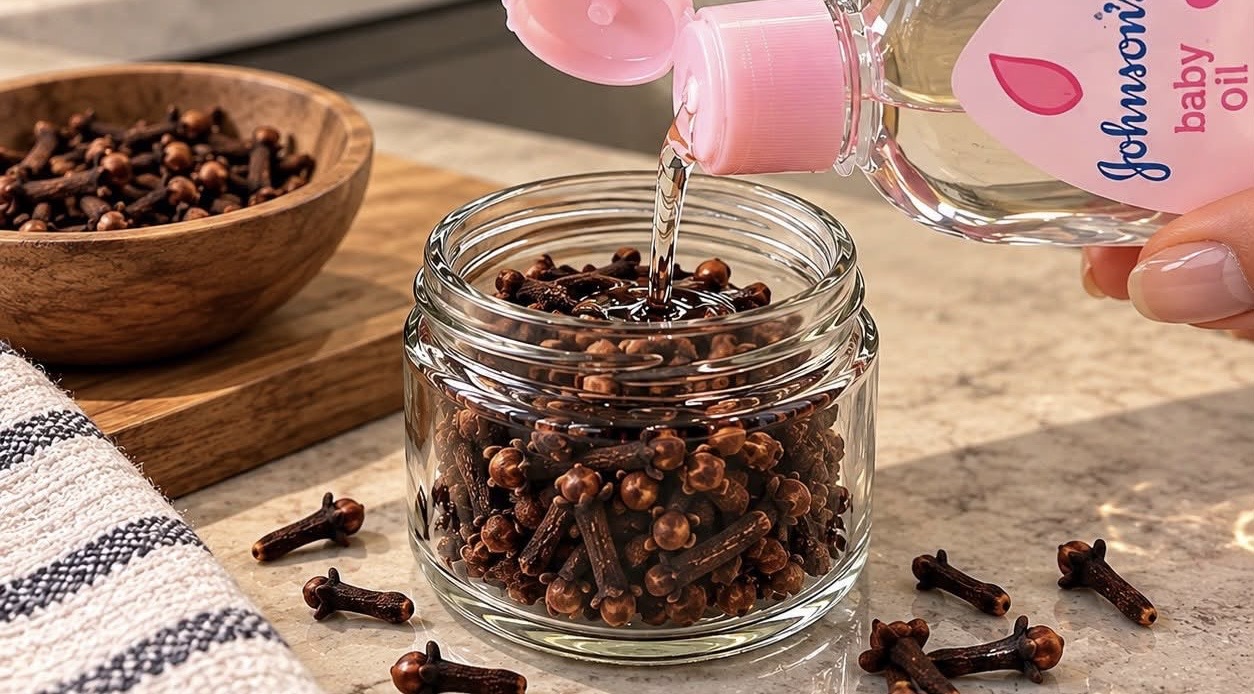
Homemade clove face oil is a popular DIY skincare preparation made by infusing whole cloves in a carrier oil, such as baby oil or jojoba oil. Often nicknamed “Botox Oil” on social media, this mixture is promoted for moisturizing the skin and improving the appearance of fine lines.
However, there is no reliable scientific evidence that clove-infused oil works like Botox, eliminates wrinkles, or tightens facial skin. Cloves may also cause irritation or allergic reactions, so it is important to use caution when considering this homemade preparation.
Recipe Overview
| Details | Information |
| Preparation Time | 5 minutes |
| Infusion Time | 15–20 minutes (warm method) or 7–10 days (cold method) |
| Total Time | Depends on the method |
| Yield | Approximately 1/2 cup, depending on the amount of oil used |
| Category | DIY Skincare |
| Main Ingredients | Whole cloves and carrier oil |
| Intended Use | External skincare only |
Why You’ll Love This Recipe
This simple DIY preparation requires just two ingredients and minimal equipment. A suitable carrier oil can help soften dry skin and reduce moisture loss, leaving the skin feeling smoother and more supple. However, these effects come primarily from the moisturizing oil itself, and the mixture is not a proven anti-aging treatment.
Ingredients
| Ingredient | Quantity | Purpose |
| Whole cloves | 2–3 tablespoons | Provides aromatic plant compounds |
| Baby oil or a suitable carrier oil | Approximately 1/2 cup (120 ml), or enough to cover the cloves | Helps soften the skin |
Recommended carrier oils: Fragrance-free mineral oil, jojoba oil, or sweet almond oil may be options, depending on your skin type. Avoid sweet almond oil if you have an almond allergy. Fragranced baby oil may irritate sensitive skin.
Step-by-Step Instructions
Step 1: Prepare the Jar
Choose a clean, completely dry glass jar. Add 2–3 tablespoons of whole cloves, spreading them across the bottom of the jar.
Step 2: Add the Oil
Pour approximately 1/2 cup (120 ml) of your chosen carrier oil over the cloves, adding enough to cover them completely. Stir gently with a clean, dry utensil.
Step 3: Infuse the Oil
Warm infusion method: Place the heat-safe jar in a warm water bath and heat gently for 15–20 minutes. Do not allow the oil to become excessively hot. Never heat a tightly sealed jar, and keep the container stable throughout the process.
Cold infusion method: Cover the jar and place it in a cool, dark location for 7–10 days, gently shaking it once daily. Use clean, dry equipment and avoid introducing water into the oil.
Neither method guarantees a standardized concentration of clove compounds or a safe, established shelf life.
Step 4: Strain the Mixture
Allow the oil to cool completely if you used the warm method. Strain it through a clean, fine-mesh strainer or suitable filter to remove all the cloves and solid particles.
Step 5: Transfer and Store
Transfer the strained oil into a clean, dry bottle. Label it with the preparation date and keep it away from direct sunlight and heat. Because the stability of homemade clove oil has not been established, prepare small quantities and discard the mixture if its smell, color, or texture changes.
How to Use
Before considering facial application, test the product on a small area of skin and monitor for irritation. A negative patch test does not guarantee that an allergic reaction will not occur later.
If you decide to use the mixture, begin with a very small amount on a limited area of skin. Avoid the eyes, lips, broken skin, and irritated areas. Do not apply it every night initially, and discontinue use immediately if you experience burning, redness, itching, swelling, or a rash.
For routine facial hydration, a fragrance-free moisturizer formulated for the face is generally a more predictable option, particularly for sensitive skin.
Best Tips
Always use clean, dry equipment and a suitable carrier oil. Avoid adding water, fresh plant materials, or concentrated essential oils to the preparation. Do not rub the face aggressively, and remember that natural ingredients can still cause irritation or allergic reactions.
Best Ingredient Options
Fragrance-free mineral oil can help reduce moisture loss from the skin. Jojoba oil is another option for people who tolerate it well. If you have acne-prone skin, choose a facial moisturizer formulated for your skin type. If you have sensitive skin, eczema, or rosacea, it is best to avoid experimenting with clove-infused facial oil without professional advice.
Recipe Variations
For a simpler skincare routine, use a fragrance-free moisturizer instead of preparing an infused oil. You can also choose a commercially formulated facial oil designed for your skin type. Avoid adding extra spices, fragrances, or essential oils, as these may increase the risk of irritation.
What to Know Before Using It
The term “Botox Oil” is a social media nickname rather than a medically recognized treatment. Clove-infused oil has not been proven to relax facial muscles, remove wrinkles, or produce results comparable to Botox injections. Any temporary improvement in skin smoothness may simply result from moisturizing the skin.
Storage
Store the oil in a clean, dry, tightly closed bottle in a cool, dark place. Avoid contact with water and do not use the mixture if it develops an unusual odor, appearance, or texture. There is no established shelf life for this particular homemade preparation, so making a small batch is preferable.
Reheating
Reheating is unnecessary after the oil has been strained. If the mixture changes consistency or appearance, do not assume that warming it will make it safe to use.
Freezing
Freezing is not recommended as a preservation method for this homemade facial oil. Instead, prepare a small quantity and store it appropriately.
Common Mistakes to Avoid
Applying the oil directly to the entire face without testing it first can cause irritation. Other mistakes include using too much product, applying it close to the eyes, combining it with other irritating skincare products, and assuming that it will deliver Botox-like results. Stop using it if your skin reacts negatively.
Frequently Asked Questions
Does homemade clove oil work like Botox?
No. There is no reliable clinical evidence that clove-infused oil relaxes facial muscles or produces effects comparable to Botox.
Can clove oil reduce wrinkles?
It has not been proven to remove wrinkles. A carrier oil may temporarily make dry skin appear smoother by reducing moisture loss, but this is different from reversing skin aging.
Can I use clove oil on my face every night?
Regular nightly use is not recommended without knowing how your skin will react. Clove compounds can be irritating, and a gentle, fragrance-free moisturizer is generally a safer choice for everyday hydration.
Is this preparation suitable for sensitive skin?
Not necessarily. People with sensitive skin, eczema, rosacea, or a history of skin allergies should be particularly cautious and may prefer to avoid it.
Can I leave the oil on overnight?
Leaving a homemade clove preparation on the face overnight may increase the duration of exposure to potentially irritating compounds. It is safer to choose a facial moisturizer designed for leave-on use.
How long does homemade clove oil last?
Its shelf life depends on the carrier oil, preparation hygiene, and storage conditions. No specific shelf life has been established for this recipe, so prepare small batches and discard them if any changes occur.
Final Thoughts
Homemade clove face oil is a simple two-ingredient DIY preparation, but its skincare benefits should not be exaggerated. Although a suitable carrier oil can help soften dry skin, clove-infused oil has not been shown to eliminate wrinkles or tighten the face like Botox.
For healthier-looking skin, focus on gentle cleansing, regular moisturizing, and broad-spectrum sunscreen with SPF 30 or higher during the day.
Important safety note: This preparation may not be suitable for everyone. Consult a dermatologist before trying it if you have sensitive skin, an existing skin condition, or concerns about irritation or persistent facial wrinkles.
: ⚠️ This recipe may not be suitable for everyone, so it is advisable to consult a doctor.