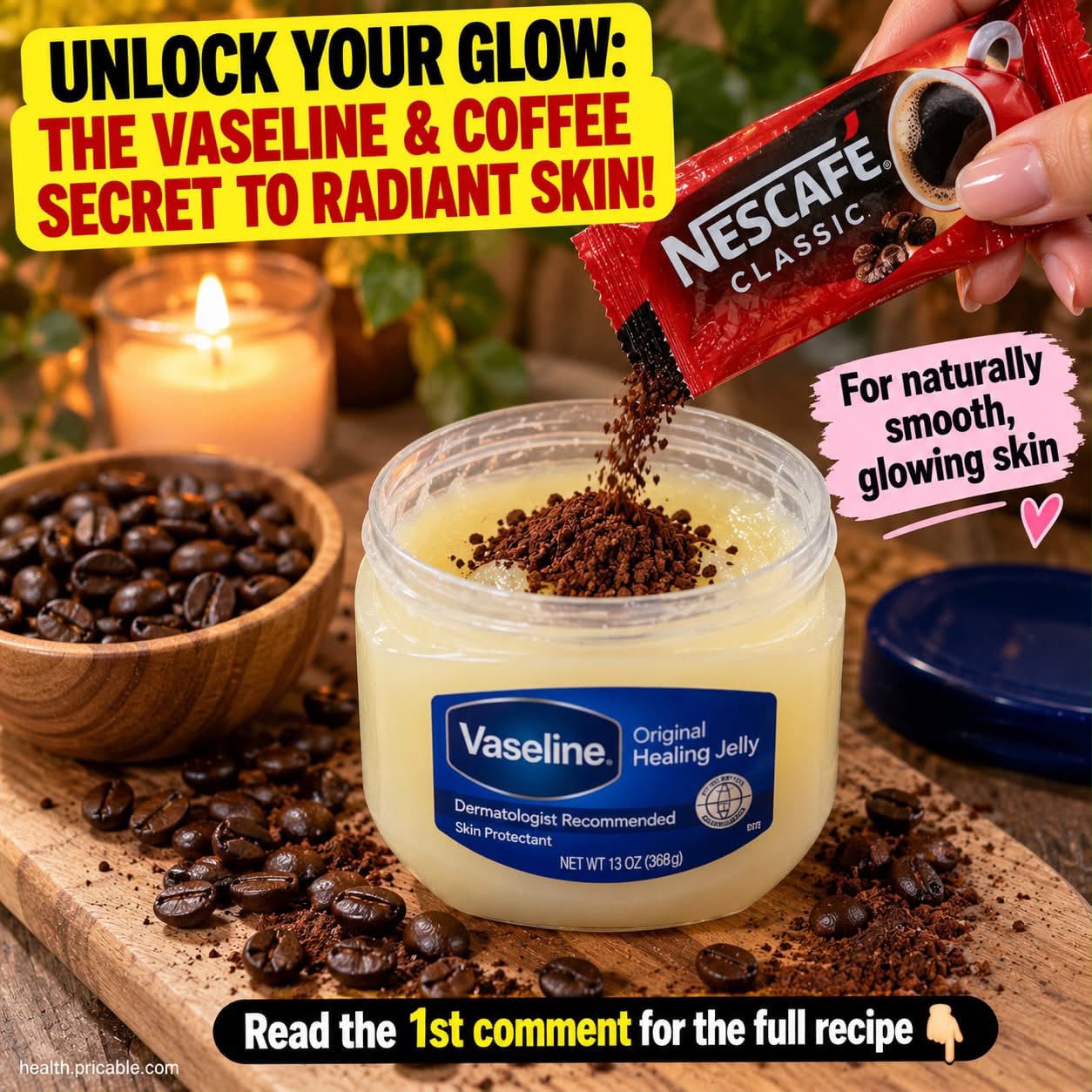
A homemade coffee and Vaseline scrub is a simple skincare mixture made with coffee and petroleum jelly. Coffee grounds provide physical exfoliation, while Vaseline helps seal moisture into the skin, making this combination particularly useful for areas that tend to feel dry and rough, such as the elbows, knees, hands, and heels.
This easy DIY skincare recipe requires only a few ingredients and takes just minutes to prepare. However, gentle application is important because coffee particles can irritate sensitive skin, and petroleum jelly is best used according to your skin’s individual needs.
Recipe Overview
| Detail | Information |
| Prep Time | 5 minutes |
| Application Time | 2–3 minutes |
| Optional Resting Time | 10–15 minutes |
| Total Time | Approximately 20–25 minutes |
| Yield | 1 small batch |
| Category | DIY Skincare |
| Best For | Dry areas of the body |
| Difficulty | Easy |
Why You’ll Love This DIY Skincare Recipe
Simple ingredients: This mixture uses coffee and petroleum jelly, two widely available ingredients that are easy to combine.
Helps soften rough areas: Petroleum jelly forms a protective barrier that reduces moisture loss, helping dry skin feel softer.
Gentle exfoliation when used carefully: Fine coffee grounds can help remove some loose dead skin cells from thicker areas of the body.
Quick to prepare: The mixture takes only a few minutes to make, with no heating or special equipment required.
Customizable consistency: You can adjust the amount of petroleum jelly to create a thicker or softer mixture.
Ingredients
| Ingredient | Amount | Purpose |
| Instant coffee powder or very fine coffee grounds | 1 tablespoon | Provides the exfoliating particles |
| Petroleum jelly, such as Vaseline | 1–2 tablespoons | Helps seal moisture into the skin |
| Olive oil or sweet almond oil (optional) | 1 teaspoon | Makes the mixture easier to spread |
Important: Choose finely ground coffee rather than coarse grounds to reduce friction. Instant coffee dissolves differently from coffee grounds and does not provide the same physical exfoliation.
Step-by-Step Instructions
Step 1: Prepare Your Ingredients
Gather a clean, dry bowl, a small spoon, your coffee, and petroleum jelly.
Make sure your hands and utensils are clean before preparing the mixture.
Step 2: Combine the Coffee and Vaseline
Add 1 tablespoon of coffee powder or fine coffee grounds to the bowl.
Add 1–2 tablespoons of petroleum jelly and mix thoroughly until the ingredients are evenly combined.
If the mixture feels too thick, add up to 1 teaspoon of olive oil or sweet almond oil, provided you know your skin tolerates that oil.
Step 3: Prepare Your Skin
Wash the area you want to treat with lukewarm water and a gentle cleanser.
Pat the skin dry. Do not apply the scrub to irritated, sunburned, cracked, freshly shaved, or wounded skin.
For your first use, test a small amount of the mixture on a limited area and monitor for irritation.
Step 4: Apply Gently
Spread a thin layer over the desired area, such as the elbows, knees, or heels.
If using coffee grounds, avoid vigorous rubbing. Because petroleum jelly is thick and occlusive, the mixture may be more suitable as a moisturizing treatment than as a traditional rinse-off scrub.
Avoid using this mixture on the face, around the eyes, or on acne-prone or easily irritated skin. Coffee particles can cause irritation, and the greasy mixture may not suit everyone.
Step 5: Leave on Briefly, If Comfortable
If your skin tolerates the mixture well, you may leave a thin layer on for up to 10 minutes as an optional moisturizing step.
There is no established evidence that leaving coffee and petroleum jelly on the skin for 10–15 minutes provides additional benefits beyond the moisturizing effect of petroleum jelly itself.
Rinse sooner if you notice itching, burning, redness, or discomfort.
Step 6: Rinse and Moisturize
Rinse the area gently with lukewarm water and a mild cleanser to remove the coffee and excess petroleum jelly.
Pat dry with a clean towel rather than rubbing the skin.
If the area still feels dry, apply a small amount of plain petroleum jelly to slightly damp skin to help retain moisture.
Best Tips for Better Results
Use a light touch: Scrubbing harder does not make exfoliation more effective and may damage the skin barrier.
Focus on dry body areas: Elbows, knees, and heels generally tolerate physical exfoliation better than delicate facial skin, although individual sensitivity varies.
Avoid daily exfoliation: Repeated scrubbing can cause dryness and irritation. If you choose to exfoliate, keep it occasional and stop if your skin becomes sensitive.
Use petroleum jelly separately when appropriate: For very dry skin, plain petroleum jelly applied to damp skin may provide moisture protection without the unnecessary friction of coffee particles.
Keep the mixture away from clothing: Petroleum jelly can leave greasy marks on fabrics, so use a small amount and rinse thoroughly.
Best Ingredient Options
Instant coffee: Convenient and easy to mix, although it may not create the same scrub texture as coffee grounds.
Fine coffee grounds: Provide physical exfoliation but should be used cautiously because particles can irritate the skin.
Plain petroleum jelly: A fragrance-free option that helps protect the skin barrier and reduce moisture loss.
Olive oil: An optional ingredient that changes the consistency, but it is not necessary for the mixture to work as a moisturizer.
Sweet almond oil: Another optional oil. Avoid it if you have an almond allergy or have previously reacted to similar products.
DIY Skincare Variations
Simple Moisturizing Treatment: Skip the coffee and apply a thin layer of plain petroleum jelly to dry skin. This is often the gentler option for rough or sensitive areas.
Coffee Body Scrub: Mix a small amount of fine coffee grounds with a gentle, fragrance-free body cleanser immediately before use. Massage lightly and rinse thoroughly. Avoid using it on irritated skin.
Overnight Dry-Heel Care: After washing your feet, apply plain petroleum jelly to dry heels and wear clean cotton socks. Do not wear socks that make walking slippery, and avoid this approach on wet or infected skin.
What to Use With This Skincare Routine
Gentle cleanser: Helps remove dirt and excess product without unnecessarily stripping the skin.
Fragrance-free moisturizer: Ingredients such as glycerin and ceramides can help support the skin barrier.
Sunscreen: Use broad-spectrum SPF 30 or higher on exposed skin during the day. Exfoliation does not protect against sun damage.
Soft cotton towel: Patting the skin dry helps minimize unnecessary friction.
Make-Ahead Instructions
For hygiene reasons, it is best to prepare only the amount you need for one application.
If you choose to prepare a batch in advance, use clean, completely dry utensils and a clean, airtight container. Keep water out of the mixture, as introducing moisture can increase contamination risk.
Discard the mixture if its smell, appearance, or texture changes. Homemade mixtures do not have professionally established preservation or shelf-life testing.
Storage Instructions
Store any unused mixture in a clean, sealed container in a cool, dry place, following the storage guidance for the petroleum jelly you use.
Because this homemade mixture has not been tested for microbial stability, preparing a fresh, single-use portion is the safest option. Do not dip wet fingers into stored product or use a batch that may have become contaminated.
How Often Should You Use It?
There is no scientifically established schedule for this particular coffee and petroleum jelly mixture.
If you choose to use it on thicker areas of the body, avoid frequent scrubbing and pay attention to your skin’s response. Stop if you notice redness, dryness, stinging, or increased sensitivity.
For persistent roughness, regular use of a fragrance-free moisturizer is generally a more reliable approach than repeated physical exfoliation.
Common Mistakes to Avoid
Scrubbing too aggressively: Excessive friction can damage the skin barrier and lead to irritation.
Using coarse coffee grounds: Large, rough particles may scratch or irritate sensitive skin.
Applying it to broken skin: Avoid cuts, cracks, rashes, sunburn, and inflamed areas.
Using it as a facial treatment: Facial skin is often more sensitive, and this gritty, greasy mixture may aggravate irritation or blemishes in some people.
Assuming coffee removes body fat or cellulite: There is no good evidence that this homemade mixture permanently removes cellulite, burns fat, or reshapes the body.
Ignoring an adverse reaction: Wash the product off promptly if discomfort develops and discontinue use.
Keeping the mixture indefinitely: Homemade skincare mixtures are not professionally preserved or tested for long-term storage.
Benefits and Limitations
| Potential Effect | What to Know |
| Temporary softness | Petroleum jelly helps reduce moisture loss |
| Removal of loose dead skin | Coffee grounds may provide physical exfoliation |
| Dry-skin protection | Petroleum jelly forms a protective barrier |
| Permanent skin whitening | Not established |
| Removal of dark spots | Not established |
| Permanent cellulite reduction | Not established |
| Fat loss or body reshaping | Not established |
This mixture should be viewed as an optional cosmetic treatment, not a medical remedy. Petroleum jelly’s moisturizing and protective properties are better established than claims about coffee scrubs producing dramatic skin changes.
Frequently Asked Questions
Can coffee and Vaseline make the skin softer?
Yes, the petroleum jelly can help reduce moisture loss and leave dry skin feeling softer. Coffee grounds may exfoliate some loose dead skin cells, but excessive rubbing can cause irritation.
Can I use this mixture on my face?
It is generally better to avoid this mixture on the face because coffee particles can irritate delicate skin. If you are prone to acne or clogged pores, the thick formulation may also be unsuitable for you.
Does coffee and Vaseline remove dark spots?
There is no reliable evidence that this mixture removes pigmentation or permanently lightens dark spots. For persistent discoloration, sunscreen and appropriate evidence-based skincare ingredients are more reliable options.
Can this mixture remove cellulite?
No. There is no good evidence that coffee and petroleum jelly permanently eliminate cellulite. Any temporary change in the appearance of the skin should not be confused with lasting treatment.
Can I leave the mixture on overnight?
It is better not to leave a homemade coffee scrub on overnight. Coffee particles can cause irritation, and the mixture may stain clothing or bedding. For dry areas, plain petroleum jelly is a simpler option for overnight moisturizing.
How long does it take to see results?
You may notice softer-feeling skin after one application because petroleum jelly reduces moisture loss. However, lasting improvements in roughness or skin texture depend on the underlying cause and consistent, gentle skincare.
Is this mixture suitable for sensitive skin?
Not necessarily. Coffee particles and optional oils can cause irritation or reactions in some people. If your skin is sensitive, consider skipping the scrub and using a fragrance-free moisturizer instead.
Should I do a patch test first?
Yes. Test a small amount on a limited area of skin and monitor for redness, itching, swelling, or burning. A home patch test cannot guarantee that a reaction will not occur later.
Final Thoughts
Homemade Coffee and Vaseline Scrub is a simple DIY skincare mixture that combines the physical exfoliating action of coffee grounds with the moisture-protecting properties of petroleum jelly.
Although it may temporarily leave thicker areas of the body feeling smoother, it is not a proven treatment for dark spots, cellulite, or permanent skin whitening. Gentle application and realistic expectations are essential.
For dry elbows, knees, and heels, plain petroleum jelly applied to slightly damp skin may offer similar moisturizing benefits with less risk of friction-related irritation.
Skincare safety note: This recipe may not be suitable for everyone. Consult a dermatologist or healthcare professional if you have a skin condition, persistent irritation, or concerns about whether the ingredients are appropriate for your skin.