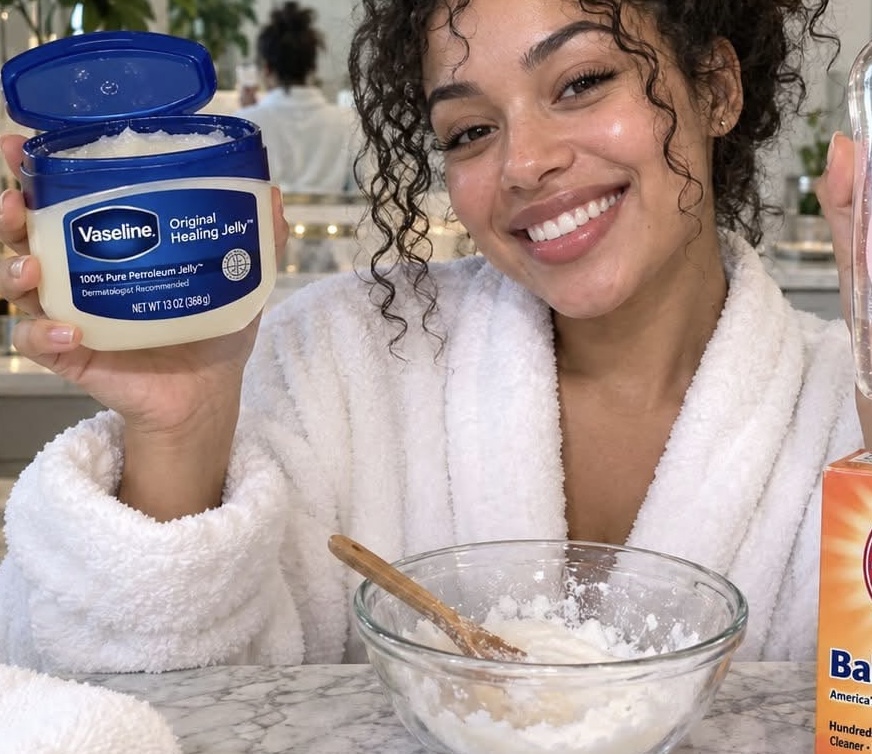
This homemade Vaseline, baby oil, and baking soda mixture is a DIY body-care recipe intended to moisturize dry areas and provide physical exfoliation. It combines petroleum jelly, baby oil, and baking soda into a thick balm that can be spread over rough areas such as the elbows, knees, hands, and heels.
However, baking soda is alkaline and can disrupt the skin’s natural protective barrier, potentially causing dryness, redness, or irritation. For this reason, a baking soda scrub is not recommended, particularly for sensitive skin. A simpler moisturizer made with petroleum jelly and a suitable fragrance-free product is generally a gentler option.
Recipe Overview
| Detail | Information |
| Prep Time | 5 minutes |
| Application Time | 1–2 minutes |
| Optional Resting Time | 5–10 minutes |
| Total Time | Approximately 10–17 minutes |
| Yield | 1 small batch |
| Category | DIY Body Care |
| Intended Use | Dry areas of the body |
| Difficulty | Easy |
Why You’ll Love This Body-Care Recipe
Simple ingredients: The original mixture uses three common ingredients that are easy to find in many stores.
Moisture protection: Petroleum jelly helps reduce water loss from the skin, making it useful for dry areas.
Easy to prepare: The ingredients can be combined in a few minutes without heating or special equipment.
Suitable for targeted care: A properly formulated moisturizing balm can help soften rough elbows, knees, hands, and heels.
Easy to customize: You can leave out the baking soda and use a simpler moisturizing mixture to reduce the risk of irritation.
Ingredients
Original Recipe Ingredients
| Ingredient | Amount | Purpose |
| Petroleum jelly (Vaseline) | 1 tablespoon | Helps seal in moisture |
| Baby oil | 1 tablespoon | Adds slip and softens the feel of the mixture |
| Baking soda | 1/2 tablespoon | Abrasive ingredient in the original scrub |
Important safety note: The original proportions are provided for reference, but the baking soda is not recommended for application to the skin. Its alkalinity can irritate the skin barrier, and combining it with oily ingredients does not make it safer.
A Gentler Alternative
| Ingredient | Amount |
| Plain petroleum jelly | 1 tablespoon |
| Fragrance-free moisturizer | A small amount, if desired |
This simpler option avoids abrasive baking soda. Use a fragrance-free moisturizer according to its product instructions, and apply a thin layer of petroleum jelly over dry skin when additional moisture protection is needed.
Step-by-Step Instructions
Step 1: Prepare a Clean Workspace
Wash your hands and use a clean, dry bowl and spoon.
Check the ingredient labels, especially the baby oil, to identify fragrances or other ingredients that may not suit your skin.
Step 2: Combine the Moisturizing Ingredients
Place 1 tablespoon of petroleum jelly in the bowl.
Add 1 tablespoon of baby oil and mix until the ingredients are evenly combined.
The mixture should become softer and easier to spread. Avoid adding water, as it can affect the cleanliness and stability of a homemade mixture.
Step 3: Leave Out the Baking Soda
Although the original recipe calls for 1/2 tablespoon of baking soda, it is safer to omit this ingredient.
Baking soda is not a skin-neutral exfoliant. Its alkaline pH may disturb the skin’s natural acidity and contribute to irritation, particularly when combined with rubbing.
For a gentler routine, use the moisturizing mixture without baking soda or choose a commercially formulated exfoliating product designed for your skin type.
Step 4: Clean the Target Area
Wash the area with lukewarm water and a gentle cleanser.
Pat the skin dry without rubbing. Do not apply the mixture to cuts, scratches, rashes, sunburn, cracked skin, or areas that are already irritated.
Step 5: Apply a Thin Layer
Spread a small amount of the moisturizing mixture over the dry area.
Massage very gently without vigorous circular scrubbing. Petroleum jelly and baby oil provide lubrication, but neither requires abrasive particles to moisturize the skin.
Avoid the face, eye area, and other delicate areas.
Step 6: Finish the Routine
There is no need to leave the mixture on for a specific 5–10-minute period. You can allow the moisturizing ingredients to remain on dry skin if they feel comfortable and the product is suitable for your skin.
Remove excess product with a soft cloth if it feels too greasy. Stop using it if redness, itching, burning, or discomfort develops.
Best Tips for Softer Skin
Choose plain petroleum jelly: A simple, fragrance-free formula is often a good option for protecting dry skin.
Avoid harsh exfoliation: Scrubbing with baking soda can cause irritation rather than improve skin texture.
Apply moisturizer after washing: Applying a suitable moisturizer to slightly damp skin helps support hydration.
Use a small amount: A thin layer of petroleum jelly is often enough to protect dry areas without leaving excessive residue.
Be careful with baby oil: Some formulations contain fragrance, which may irritate sensitive skin. Choose a suitable product and follow its label.
Keep your expectations realistic: Moisturizing can improve the feel of dry skin, but it does not guarantee permanent skin whitening or removal of dark spots.
Best Ingredient Options
Plain petroleum jelly: Helps form a protective barrier that reduces moisture loss.
Fragrance-free moisturizer: Products containing glycerin or ceramides can help hydrate the skin and support its protective barrier.
Fragrance-free baby oil: May improve spreadability, although it is not essential if petroleum jelly already provides sufficient protection.
Gentle exfoliating products: If exfoliation is necessary, consider a commercially formulated product appropriate for your body area and skin type rather than household baking soda.
Body-Care Variations
Simple Overnight Moisturizing Balm: Apply a thin layer of plain petroleum jelly to dry heels before bed and wear comfortable cotton socks. Ensure the socks and floor are not slippery.
Soft-Hand Treatment: Apply a fragrance-free hand cream after washing your hands. A small amount of petroleum jelly can be layered over particularly dry areas.
Dry-Elbow and Knee Care: Use a moisturizer regularly and apply petroleum jelly over dry patches when additional moisture protection is needed.
Gentle Foot-Care Routine: Wash your feet, dry them carefully, and apply a suitable foot moisturizer. Avoid aggressive scrubbing, especially if your skin is cracked or irritated.
What to Use With This Skincare Routine
Gentle cleanser: Helps clean the skin without unnecessary stripping.
Fragrance-free body lotion: Provides hydration and may help improve roughness with regular use.
Cotton gloves or socks: Can help keep moisturizer in contact with dry hands or heels overnight.
Broad-spectrum sunscreen: SPF 30 or higher on exposed skin helps protect against sun damage and worsening pigmentation.
Make-Ahead Instructions
For best hygiene, prepare only a small amount of the moisturizing mixture when needed.
Use clean, dry utensils and avoid introducing water or other contaminants into the container. Do not mix homemade skincare products directly into their original commercial packaging.
Storage Instructions
Store commercial products according to their labels.
Because homemade mixtures have not been tested for stability or preservation, preparing a fresh, small amount is preferable. Discard any mixture that changes in smell, appearance, or texture, or that may have become contaminated.
How Often Should You Use It?
A baking soda scrub should not be part of a regular skincare routine because it may irritate or disrupt the skin barrier.
A suitable moisturizer can generally be used regularly according to its product directions. Plain petroleum jelly may also be applied to dry areas as needed, provided your skin tolerates it.
If dryness persists despite regular moisturizing, consider seeking advice from a dermatologist or healthcare professional.
Common Mistakes to Avoid
Applying baking soda directly to the skin: Its alkalinity can cause irritation and interfere with the skin’s protective barrier.
Using the mixture on the face: Facial skin is delicate, and this homemade mixture is not a suitable facial exfoliant.
Scrubbing too hard: Excessive friction can worsen dryness and cause redness or small abrasions.
Applying to broken skin: Avoid cuts, scratches, cracked areas, and active irritation.
Ignoring fragrance sensitivity: Baby oil may contain fragrance or other ingredients that can trigger reactions in susceptible people.
Expecting dramatic results: This mixture has not been proven to permanently lighten skin, erase dark spots, or remove scars.
Storing the mixture indefinitely: Homemade preparations are not professionally tested for long-term stability or contamination.
Benefits and Limitations
| Potential Effect | What to Know |
| Reducing moisture loss | Petroleum jelly helps protect the skin barrier |
| Improving the feel of dry skin | Regular moisturizing may help soften rough areas |
| Exfoliation from baking soda | Not recommended because of irritation risk |
| Permanent skin whitening | Not established |
| Removal of dark spots | Not established |
| Treatment of skin conditions | Not a substitute for appropriate medical care |
Frequently Asked Questions
Can I mix Vaseline and baby oil?
These products can be combined into an oily moisturizing mixture. However, the result may feel greasy, and individual baby oil formulations may contain fragrances or other ingredients that irritate some skin types.
Does baking soda help exfoliate the skin?
Baking soda can create physical friction, but it is alkaline and may disrupt the skin barrier. It is not a preferred skincare exfoliant.
Can I use this mixture on my face?
No. This recipe is not recommended for facial use, particularly because of the baking soda and the possibility of irritation. Choose facial products formulated for your skin type instead.
Can this balm lighten dark elbows and knees?
It may help dry areas look and feel smoother through moisturization, but it has not been proven to lighten pigmentation. Persistent dark patches may have several causes and may require a different approach.
How long should I leave it on?
There is no established treatment time for this homemade mixture. If using a suitable moisturizing alternative, follow the product instructions and stop if irritation occurs.
Is the mixture suitable for sensitive skin?
Not necessarily. Baking soda and fragranced baby oil may cause irritation. For sensitive skin, a fragrance-free moisturizer or plain petroleum jelly is generally a simpler option.
Can I use it every day?
Do not use the baking soda scrub regularly. A suitable moisturizer can often be used daily according to its label and your skin’s needs.
What is the safest alternative for dry heels?
Apply a suitable foot moisturizer regularly. For very dry heels, plain petroleum jelly can be applied over the moisturizer, provided there are no open cracks or signs of infection.
Final Thoughts
The original Vaseline, baby oil, and baking soda recipe is easy to mix, but adding baking soda does not make it a safer or more effective skincare treatment.
Petroleum jelly can help protect dry skin by reducing moisture loss, while baby oil may make the mixture easier to spread. However, baking soda can irritate the skin and is best omitted from this homemade balm.
For a gentler routine, focus on fragrance-free moisturizing products, avoid vigorous scrubbing, and use sunscreen on exposed skin.
⚠️ Important Health Warning: This homemade skincare mixture may not be suitable for everyone. Avoid applying baking soda to your skin, especially if you have sensitive or damaged skin. If you experience persistent irritation, redness, swelling, or discomfort, stop using the product and consult a dermatologist or healthcare professional.