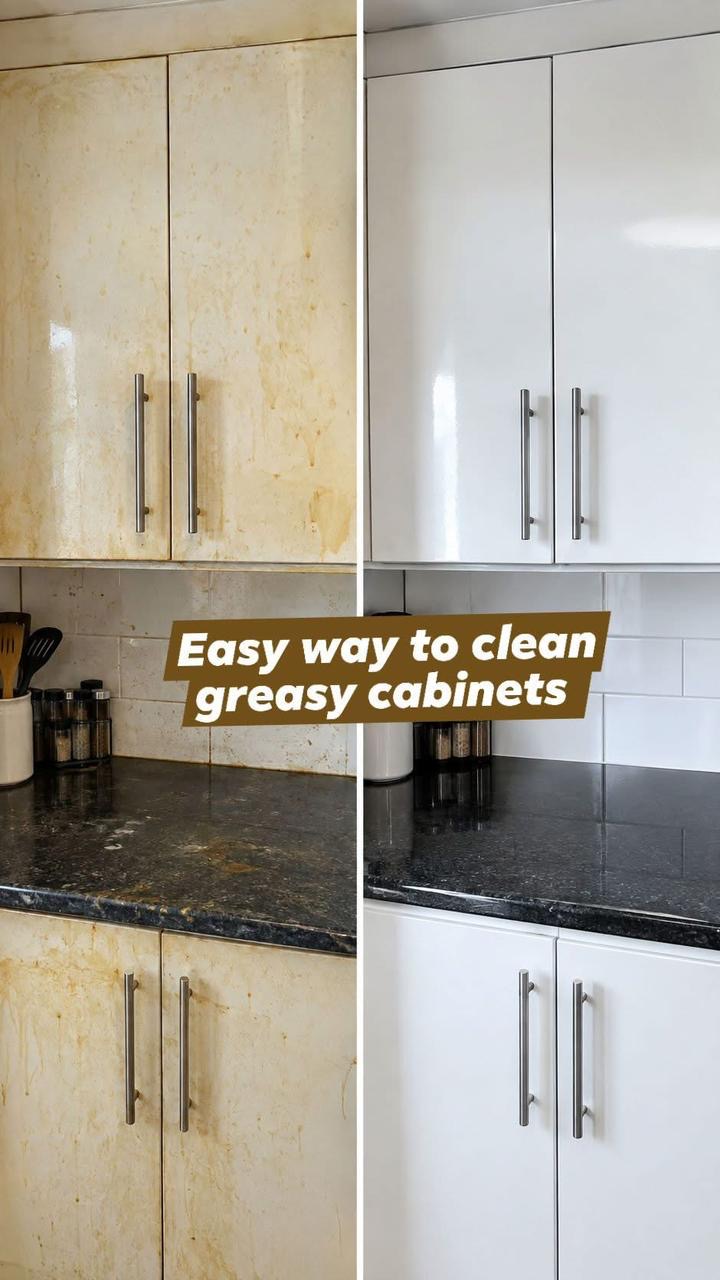
Introduction
Kitchen cabinets, especially those located near the stove, can gradually develop a stubborn layer of cooking grease, dust, and food residue.
The buildup may leave white cabinets looking yellow, dull, or sticky. Fortunately, many greasy surfaces can be cleaned effectively with a simple homemade cleaning solution and the right technique.
This method combines a gentle baking-soda paste for stubborn spots with a diluted dish-soap wash for the rest of the cabinet.
The most important rule is to clean gently and avoid excessive moisture, because different cabinet finishes can react differently to water and household cleaners.
What You’ll Need
For the Degreasing Paste
🧂 ½ cup baking soda
🫧 2 tablespoons grease-cutting liquid dish soap
💧 1–3 tablespoons warm water, added gradually if needed
For the Cleaning Solution
💧 2 cups warm water
🫧 1 tablespoon grease-cutting liquid dish soap
Cleaning Tools
🧽 2–3 clean microfiber cloths
🪥 1 soft-bristled toothbrush, optional for grooves and corners
🥣 1 small bowl
🧴 1 clean spray bottle, optional
🧤 Household cleaning gloves, optional
Before You Start
Before applying any homemade cleaner to the entire cabinet, test it on a small, hidden area.
Wait until the area is completely dry and inspect the finish.
If you notice discoloration, dullness, swelling, peeling, or another change, do not continue.
This is particularly important with painted, lacquered, veneered, MDF, and high-gloss finishes.
Step-by-Step Instructions
Remove Surface Dust
Start with a clean, dry microfiber cloth.
Gently wipe the cabinet doors and frames to remove loose dust and crumbs.
Removing this layer first prevents unnecessary rubbing against the finish.
Make the Baking Soda Paste
Place ½ cup baking soda in a small bowl.
Add approximately 2 tablespoons of liquid dish soap.
Mix thoroughly.
Add warm water one tablespoon at a time until you have a thick, spreadable paste.
The mixture should be creamy rather than watery.
Apply to Stubborn Grease
Use a soft cloth or your fingertips with gloves to apply a small amount of paste directly to heavily greasy areas.
Focus on areas around:
🔥 The stove
🚪 Cabinet handles
🍳 Lower edges of upper cabinets
🧴 Areas surrounding cooking appliances
Do not cover the entire cabinet with a thick layer of paste.
Let It Sit Briefly
Allow the paste to remain on the greasy area for approximately 3–5 minutes.
Do not allow it to dry completely on the surface.
The short contact time gives the dish soap an opportunity to loosen the greasy residue.
Gently Clean
Dampen a microfiber cloth with warm water.
Wring it out thoroughly so that it is damp rather than dripping wet.
Gently wipe the treated area.
For detailed grooves or corners, use a soft-bristled toothbrush with very light pressure.
Avoid aggressive scrubbing, particularly on painted or glossy finishes.
Prepare the Soapy Wash
Add 1 tablespoon of grease-cutting dish soap to 2 cups of warm water.
Mix gently.
Dip a clean microfiber cloth into the solution and wring it out very well.
Wipe the Cabinets
Work on a small section at a time.
Wipe the cabinet in gentle strokes, paying particular attention to areas where grease has accumulated.
For severe buildup, repeat the cleaning process rather than applying excessive pressure.
Rinse Away Residue
Take a separate microfiber cloth and dampen it with clean water.
Wring it thoroughly.
Wipe the cabinet to remove remaining soap and baking-soda residue.
Avoid repeatedly saturating the surface.
Dry Immediately
Use a clean, dry microfiber cloth to thoroughly dry the cabinet.
Pay special attention to:
Edges
Corners
Seams
Around handles
Areas near hinges
Keeping moisture away from seams is particularly important for engineered-wood and MDF cabinets.
For Extremely Stubborn Grease
If one cleaning pass doesn’t remove the buildup, don’t immediately reach for a stronger chemical.
Instead:
Apply a small amount of the paste again.
Allow it to sit for another 3 minutes.
Gently wipe with a damp microfiber cloth.
Rinse with a clean damp cloth.
Dry immediately.
Several gentle cleaning passes are generally safer for a delicate finish than one aggressive scrubbing session.
Important Safety Tips
Always Test First
Cabinet finishes vary considerably.
A solution that works well on one surface may damage another.
Always perform a hidden-area test first.
Never Soak Cabinets
Do not spray large quantities of water directly onto cabinet doors.
Excess moisture can penetrate seams and unfinished edges and may contribute to swelling, bubbling, or finish damage.
Avoid Abrasive Scrubbing
Baking soda can provide mild abrasive action, but excessive rubbing can dull some glossy or delicate finishes.
Use light pressure.
Don’t Mix Cleaning Chemicals
Never combine homemade cleaning solutions with bleach, ammonia, drain cleaners, or other chemical products.
If you have already used a commercial cleaner, rinse the surface appropriately according to its label before trying another product.
Protect Yourself
Wear gloves if your skin is sensitive to cleaning products.
Keep the area ventilated while cleaning.
Keep cleaning solutions away from children and pets.
Cabinet-Specific Advice
Painted Wood Cabinets
Use minimal water and gentle pressure.
Aggressive scrubbing can damage paint or leave visible dull spots.
Laminate Cabinets
Laminate surfaces are often easier to clean, but moisture should still be kept away from seams and edges.
High-Gloss Acrylic Cabinets
Use extra caution.
Avoid abrasive powders and aggressive scrubbing because they can potentially create micro-scratches or reduce the glossy appearance.
For high-gloss finishes, a soft microfiber cloth and an appropriate manufacturer-approved cleaner are often preferable.
MDF Cabinets
MDF and similar engineered materials can be particularly vulnerable to moisture at exposed edges and seams.
Use a well-wrung cloth and dry the surface immediately.
Best Cleaning Routine
For everyday maintenance, wipe cabinet surfaces regularly with a soft, slightly damp microfiber cloth.
For areas exposed to cooking grease, clean them more frequently.
A small amount of buildup is much easier to remove than years of hardened grease.
Common Mistakes to Avoid
❌ Soaking cabinet doors
❌ Scrubbing aggressively
❌ Leaving the cleaning paste to dry
❌ Using rough scouring pads
❌ Applying strong chemicals without checking the cabinet manufacturer’s recommendations
❌ Ignoring cabinet seams and edges
❌ Skipping the hidden-area test
How Often Should You Degrease Kitchen Cabinets?
The ideal frequency depends on how often you cook.
Lightly used kitchens may only need occasional deep cleaning.
Frequently used kitchens, particularly those with a lot of frying or sautéing, may benefit from more regular degreasing around the stove and cooking area.
Regular light cleaning helps prevent thick, sticky grease from accumulating.
Frequently Asked Questions
Can baking soda damage kitchen cabinets?
Baking soda is mildly abrasive. While it can be useful for stubborn grime, excessive rubbing may damage or dull certain finishes.
Always test first and use gentle pressure.
Can I use vinegar instead?
It depends on the cabinet finish. Some manufacturers recommend specific cleaners and advise against acidic products.
For that reason, check the cabinet manufacturer’s care instructions before using vinegar.
Can I use this on white cabinets?
The method can work on many washable cabinet finishes, but the finish matters more than the color.
Always test an inconspicuous area first.
How do I remove sticky grease from cabinet handles?
Apply a small amount of the diluted dish-soap solution to a microfiber cloth and gently clean the handles.
For removable hardware, follow the manufacturer’s cleaning recommendations.
Why are my cabinets still yellow after cleaning?
The discoloration may not be surface grease. It could be aging, staining, finish deterioration, smoke exposure, or changes in the coating.
If repeated gentle cleaning does not improve the appearance, avoid increasingly abrasive cleaners.
Final Thoughts
Heavy grease buildup can make even clean kitchen cabinets look dull and neglected.
This simple combination of grease-cutting dish soap, baking soda, warm water, microfiber cloths, and gentle cleaning can help tackle many common kitchen messes without immediately resorting to harsh chemicals.
The key is not simply the cleaning solution—it is the technique.
Work in small sections, use gentle pressure, keep moisture under control, rinse away residue, and dry the cabinets immediately.
For painted, high-gloss, laminate, MDF, or specialty finishes, always prioritize the manufacturer’s care instructions over any homemade cleaning recipe.