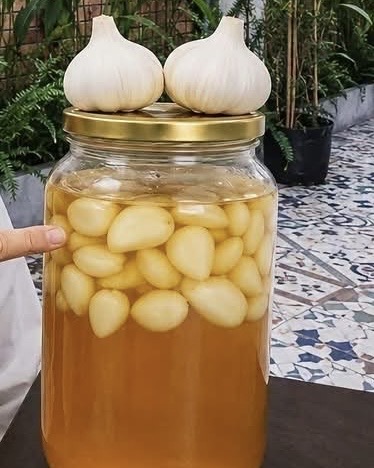
Prep Time: 15 minutes · Fermentation Time: 2–4 weeks · Yield: 1 small jar
Garlic fermented in honey is a traditional homemade preparation that combines the pungent flavor of fresh garlic with the natural sweetness of honey. As the mixture develops, the honey becomes thinner, the garlic softens, and the flavors blend into a sweet, savory, and slightly tangy condiment.
This simple preparation requires just two ingredients. However, garlic-in-honey fermentation requires careful food-safety practices, and the mixture should not automatically be considered safe simply because it has fermented for several weeks.
Recipe Overview
| Detail | Information |
| Recipe Name | Garlic Fermented in Honey |
| Preparation Time | 15 minutes |
| Fermentation Time | 2–4 weeks or longer, depending on conditions |
| Total Time | At least 2–4 weeks |
| Cuisine | Traditional homemade preparation |
| Main Ingredients | Fresh garlic and honey |
| Difficulty | Easy to assemble |
| Yield | 1 small jar |
| Best For | A sweet and savory condiment |
Why You’ll Love This Recipe
Only two ingredients: You need fresh garlic and honey to prepare this traditional combination.
Simple preparation: There is no cooking involved, and the ingredients require very little preparation.
A unique flavor: Honey softens the sharp taste of garlic, creating a milder and sweeter result over time.
Versatile uses: The flavored honey can inspire dressings, marinades, and savory sauces when handled and stored safely.
Easy to customize: You can prepare a small batch to experiment with the flavor without purchasing special equipment.
Ingredients
| Ingredient | Quantity | Notes |
| Fresh garlic | 1–2 heads | Firm, fresh cloves without mold or damage |
| Honey | Enough to cover the garlic completely | Use good-quality honey from a reliable source |
Equipment Needed
| Equipment | Purpose |
| Clean glass jar | Holds the garlic and honey |
| Clean spoon | Helps transfer and handle ingredients |
| Garlic peeler or small knife | Removes the garlic skins |
| Kitchen scale or measuring cup | Optional, for measuring ingredients |
Important food-safety note: Honey is acidic in some circumstances, but its acidity alone does not guarantee that garlic submerged in honey is safe. Garlic is a low-acid food, and moisture from fresh garlic changes the mixture. Traditional room-temperature fermentation instructions are not a substitute for a tested food-preservation process.
Step-by-Step Instructions
Step 1: Prepare the garlic
Separate the garlic bulbs into individual cloves. Peel away the papery skins and discard any cloves that are soft, moldy, or damaged. Keep the cloves whole rather than crushing them.
Step 2: Prepare the jar
Wash the jar and lid thoroughly with hot soapy water, rinse well, and allow them to dry completely. Use clean utensils throughout preparation.
Step 3: Add the honey
Place the peeled garlic cloves in the jar and add enough honey to cover them. Leave some headspace at the top so the jar is not filled to the brim.
Step 4: Check the ingredients
Make sure the cloves are covered with honey. Do not add water or other ingredients unless following a tested recipe designed for safe fermentation.
Step 5: Follow a validated preservation method
Do not assume that leaving raw garlic submerged in honey at room temperature for two to four weeks makes it safe. Use a food-safety-tested recipe with specific acidity, handling, and storage instructions. If you do not have a validated method, refrigerate the mixture promptly and treat it as a perishable preparation rather than a shelf-stable ferment.
Best Tips
Choose fresh garlic. Fresh, firm cloves are preferable to cloves with bruises, soft spots, or signs of spoilage.
Use good-quality honey. Choose honey from a reliable supplier. Raw honey is not necessarily safer for fermentation than pasteurized honey.
Keep everything clean. Clean jars, lids, and utensils help reduce contamination during preparation.
Avoid relying on appearance alone. Bubbles, changes in color, and a thinner honey consistency do not prove that a preparation is safe to eat.
Never taste a questionable batch. Discard the mixture if you notice mold, unusual spoilage, or other concerning changes. The absence of visible spoilage does not guarantee safety.
Best Ingredient Options
| Ingredient | Recommended Option | Why It Works |
| Garlic | Fresh, firm garlic | Provides the characteristic savory flavor |
| Honey | Pure honey from a reliable supplier | Adds sweetness and coats the garlic |
| Jar | Clean glass container with a suitable lid | Makes the mixture easy to inspect and handle |
Recipe Variations
Milder garlic flavor: Use small, whole cloves for a gentler flavor profile. The final result will still depend on the ingredients and preparation conditions.
A sweeter condiment: Choose a mild-flavored honey if you prefer less pronounced floral or earthy notes.
Savory honey dressing: Use a small amount of honey to flavor a freshly prepared salad dressing, rather than relying on a homemade ferment of uncertain safety.
Garlic-honey marinade: Combine fresh garlic and honey with suitable seasonings when preparing a marinade, and follow standard food-safety guidance for raw ingredients.
What to Serve With
Garlic honey can inspire a flavorful glaze for roasted vegetables, provided it is prepared and handled safely.
It can also be used in freshly made salad dressings, savory sauces, or marinades for chicken and beef.
For a simple meal, pair a garlic-honey-inspired sauce with roasted potatoes, steamed vegetables, or grilled chicken.
Make-Ahead Instructions
Because this recipe is traditionally described as a long fermentation, it is tempting to prepare a large jar in advance. However, the fermentation period alone does not establish food safety.
If you plan to make a garlic-and-honey preparation, use a validated recipe that specifies the correct process and storage conditions. For an untested mixture, do not leave it at room temperature for weeks on the assumption that it will become safe.
Storage
Store an unvalidated fresh garlic-and-honey mixture in the refrigerator promptly, in a clean, covered container. Refrigeration slows microbial growth but does not eliminate every food-safety risk.
Do not treat homemade garlic in honey as shelf-stable or assume that it can be stored indefinitely at room temperature.
Discard the mixture if its safety is uncertain. Do not rely on smell, appearance, or taste to rule out dangerous contamination.
Reheating
This preparation is generally used as a condiment rather than a dish that requires reheating.
If you want to use honey and garlic in a cooked sauce, prepare the sauce fresh and cook it as part of the recipe. Heating a questionable batch should not be considered a reliable way to make it safe.
Freezing
Freezing is not necessary for this preparation. If you want to preserve a garlic-and-honey mixture for longer, follow a tested recipe with appropriate storage instructions rather than relying on an improvised freezing or preservation method.
Common Mistakes to Avoid
Using damaged garlic: Damaged or spoiled cloves can compromise the quality of the preparation.
Filling the jar to the top: Leaving suitable headspace helps prevent overflow if the mixture produces gas.
Assuming bubbles mean safe fermentation: Bubbles may indicate microbial activity, but they do not establish that the mixture is safe to consume.
Leaving the mixture unrefrigerated for weeks without a tested method: Fresh garlic introduces moisture and creates food-safety considerations that honey alone does not resolve.
Using honey as a treatment for serious illness: Honey and garlic are foods, not proven cures for infections or other medical conditions.
Nutrition Estimate
The nutritional values below are approximate for 1 teaspoon of honey, excluding the garlic. Actual values vary with the honey used.
| Nutrient | Approximate Amount |
| Calories | 21 |
| Carbohydrates | 5.7 g |
| Sugars | 5.7 g |
| Protein | 0 g |
| Fat | 0 g |
| Fiber | 0 g |
| Sodium | 0–1 mg |
These values do not represent a full serving containing a garlic clove, and the nutritional composition of the finished mixture will vary.
Frequently Asked Questions
1. What is garlic fermented in honey?
It is a traditional preparation made by placing peeled garlic cloves in honey. Over time, the flavor and texture may change, but the mixture’s safety depends on the preparation and storage conditions.
2. How long does garlic in honey take to ferment?
Traditional recipes often suggest two to four weeks or longer. However, elapsed time alone does not guarantee safe fermentation.
3. Can I use regular honey instead of raw honey?
Yes, regular honey can be used in culinary combinations. Raw honey is not proven to make a homemade garlic ferment safer.
4. Why does the honey become thinner?
Moisture from the garlic can dilute the honey, changing its consistency. This change does not, by itself, confirm that fermentation is safe or complete.
5. Do I need to open the jar every day?
Some traditional recipes recommend releasing accumulated gas. However, daily opening does not make an untested fermentation process safe. Follow the instructions of a validated recipe instead.
6. Can garlic fermented in honey boost the immune system?
Garlic and honey contain various compounds of nutritional interest, but there is insufficient evidence that this specific homemade preparation prevents infections or reliably strengthens immunity.
7. Can it soothe a sore throat?
Honey may provide temporary relief from coughing associated with upper respiratory infections in some people. It does not treat the underlying cause of an infection. Never give honey to a child younger than 12 months.
8. Who should be cautious about consuming it?
People with honey or garlic allergies, those who need to monitor sugar intake, and people with relevant medical conditions or dietary restrictions should seek individualized advice. People who are pregnant, immunocompromised, or otherwise at increased risk from foodborne illness should be particularly cautious about unvalidated fermented foods.
9. Can I eat a garlic clove every morning?
There is no established daily dose of garlic fermented in honey that has been proven to prevent illness. Consider it a food rather than a medicinal treatment, and seek medical advice if you take medication that may interact with garlic or have concerns about regular consumption.
Final Thoughts
Garlic fermented in honey is an interesting traditional combination with a sweet, savory flavor and many possible culinary uses. With only two ingredients, it may seem simple to prepare, but safe fermentation requires more than placing garlic in a jar of honey and waiting several weeks.
Choose fresh ingredients, use a validated food-safety method, and avoid claims that this preparation can cure disease or replace medical treatment.
⚠️ This preparation may not be suitable for everyone. Consult a healthcare professional if you have medical conditions, take medication, or are considering using it for a health concern.