Introduction
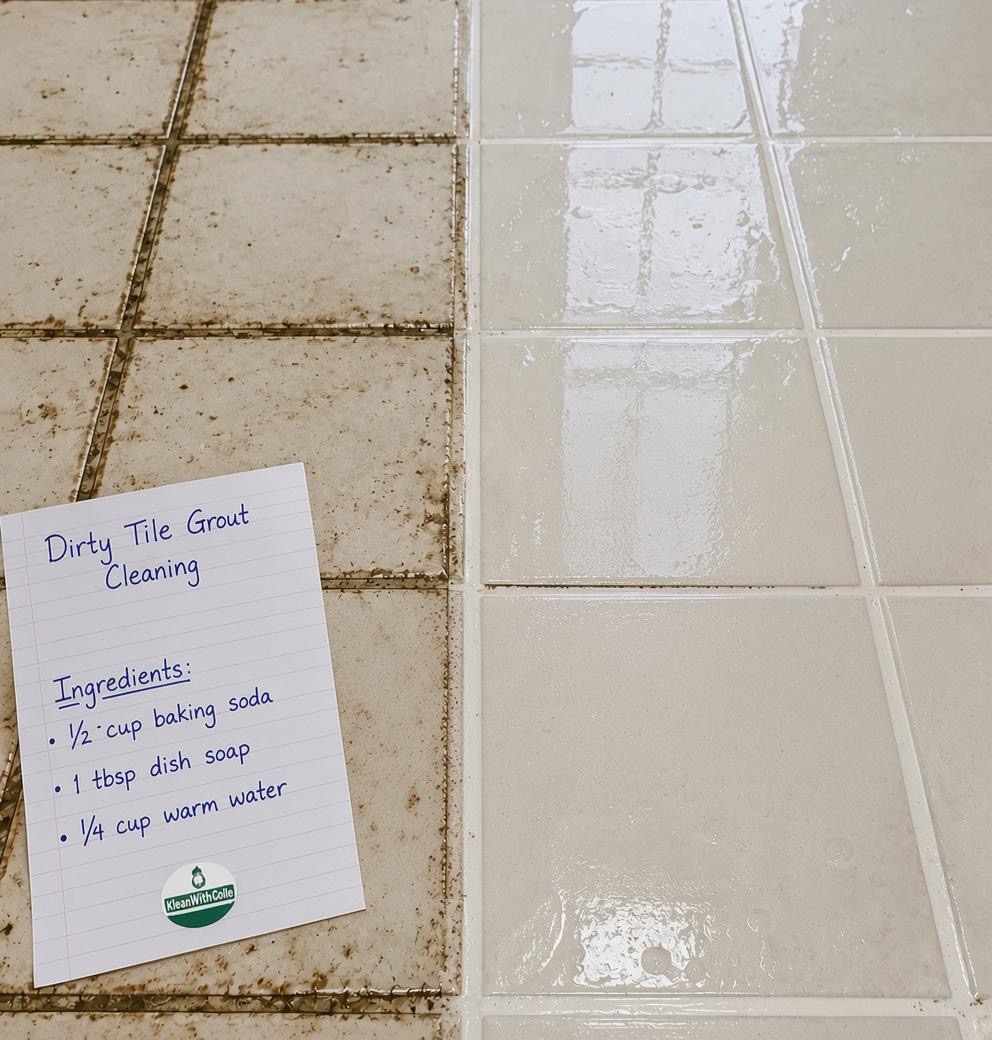
Over time, tile grout can become gray, dull, stained, or even blackened.
Dust, food splashes, soap residue, grease, and moisture can become trapped in the small spaces between tiles.
Fortunately, you can make a simple homemade grout cleaner using a few common household ingredients.
This easy method combines baking soda, dish soap, and warm water to create a gentle cleaning paste that can help loosen everyday dirt and buildup.
Recipe Overview
| Feature | Details |
| 🧽 Type | Household cleaning |
| ⏱️ Prep Time | 5 minutes |
| 🕐 Resting Time | 5–10 minutes |
| 🧹 Scrubbing Time | 10–15 minutes |
| ⏰ Total Time | About 25 minutes |
| 🎯 Difficulty | Easy |
| 🏠 Best For | Tile grout |
| 🧴 Method | Homemade cleaning paste |
🧴 Ingredients & Supplies
| Ingredient / Supply | Amount |
| 🥄 Baking soda | 1/2 cup |
| 🧼 Dish soap | 1 tablespoon |
| 💧 Warm water | 1/4 cup |
| 🪥 Old toothbrush | 1 |
| 🧽 Sponge or cleaning cloth | 1 |
| 🧺 Clean dry towel | 1 |
🥄 How to Make the Homemade Grout Cleaner
Add 1/2 cup of baking soda to a small bowl.
Add 1 tablespoon of dish soap and mix gently.
Gradually add 1/4 cup of warm water, stirring as you go.
The goal is to create a thick, spreadable paste that will stay on the grout rather than immediately running across the tiles.
If the mixture is too thin, add a little more baking soda.
If it is too thick, add a few drops of warm water until you reach the desired consistency.
🧽 Step-by-Step Instructions
Step 1: Prepare the Tile Surface
Before applying the cleaning paste, remove loose dust, hair, crumbs, and other debris from the tiled area.
You can use a broom, vacuum cleaner, or dry cloth.
Starting with a relatively clean surface allows you to focus on the dirt trapped inside the grout.
Step 2: Apply the Cleaning Paste
Use an old toothbrush, small cleaning brush, or sponge to apply the paste directly to the dirty grout lines.
Cover the areas where you can see dark stains, grease, soap residue, or accumulated dirt.
Working in small sections makes the cleaning process easier and more manageable.
Step 3: Let It Sit
Allow the paste to sit on the grout for approximately 5 to 10 minutes.
This gives the mixture time to soften some of the surface buildup before you start scrubbing.
Do not allow the paste to completely dry onto the tile.
Step 4: Scrub the Grout
Take your old toothbrush and scrub the grout using back-and-forth motions.
Focus on particularly dirty sections and make several gentle passes when necessary.
Avoid using excessive force. A controlled scrubbing motion is usually more effective and helps reduce the risk of damaging the grout or surrounding surface.
Step 5: Rinse the Area
Once you have finished scrubbing, dampen a clean sponge or microfiber cloth with fresh water.
Wipe the tiles and grout thoroughly to remove the cleaning paste, loosened dirt, and soap residue.
Rinse the sponge or cloth frequently as you work.
Step 6: Dry the Tiles and Grout
Use a clean, dry towel to wipe the surface.
Pay particular attention to the grout lines and corners where moisture can remain.
Once everything is dry, you can inspect the area and repeat the process on any sections that still need additional cleaning.
✨ Best Cleaning Tips
Work in Small Sections
Instead of covering the entire floor or wall at once, clean one small section at a time.
This makes it easier to apply the paste, scrub thoroughly, rinse, and dry the area.
Use a Soft-to-Medium Brush
An old toothbrush is useful for narrow grout lines because it can reach small spaces.
Avoid metal brushes or extremely abrasive tools that could damage the grout or scratch certain tile surfaces.
Don’t Scrub Too Aggressively
Baking soda provides mild abrasive action, but harder scrubbing is not always better.
Start gently and increase the pressure only when necessary.
Rinse Thoroughly
After cleaning, remove all remaining paste and soap residue with clean water.
Leaving cleaning products behind can result in a dull or sticky surface.
🌿 Ingredient Alternatives
Baking Soda and Water
For lightly dirty grout, you can make a simpler paste using baking soda and a small amount of water.
Apply it to the grout, scrub gently, rinse, and dry.
Dish Soap for Greasy Grout
Kitchen grout can accumulate grease and food residue.
Dish soap can help loosen greasy buildup and is particularly useful when cleaning grout around kitchen tiles.
Apply a small amount, scrub with a suitable brush, and rinse thoroughly.
🧼 Where Can You Use This Method?
This homemade grout-cleaning method can be useful for many tiled areas around the home, including:
- 🚿 Bathroom floors
- 🛁 Shower areas
- 🍳 Kitchen backsplashes
- 🏠 Entryways
- 🧹 Tiled floors
- 🚪 Tiled walls
Always check the manufacturer’s recommendations for your particular tile and grout before using any homemade cleaning solution.
⚠️ Important Cleaning Precautions
Always test the mixture on a small, inconspicuous area before cleaning a large surface.
Different tile materials and grout types can react differently to cleaning products and scrubbing.
Avoid using metal brushes, harsh abrasives, or excessive pressure.
Never mix this homemade cleaner with bleach, acidic cleaners, or other chemical cleaning products.
If dark staining remains after repeated cleaning, the discoloration may not simply be surface dirt. In some cases, the grout may be permanently stained, damaged, or affected by mold or mildew.
🏡 How to Keep Grout Cleaner for Longer
Regular maintenance can make grout cleaning much easier.
Wipe up spills as soon as possible, especially in the kitchen.
In bathrooms, keep surfaces as dry as practical and provide adequate ventilation to reduce excess moisture.
Clean small areas regularly instead of waiting until dirt and buildup become deeply embedded.
A few minutes of routine cleaning can help reduce the need for intensive grout scrubbing later.
❓ Frequently Asked Questions
How long should I leave the grout cleaner on?
For this method, allow the paste to sit for approximately 5 to 10 minutes before scrubbing.
Avoid letting it dry completely onto the surface.
Can I use a toothbrush to clean grout?
Yes. An old toothbrush is a convenient tool for narrow grout lines because its small head can reach difficult areas.
Does baking soda make grout white again?
Baking soda can help remove surface dirt and buildup, which may make grout look cleaner and brighter.
However, deeply discolored or permanently stained grout may not return to its original color through cleaning alone.
Can I use this cleaner on every type of tile?
Not necessarily.
Tile and grout materials vary, so check the manufacturer’s care instructions and test the solution on a hidden area first.
Why does my grout get dirty again so quickly?
Grout can collect dust, soap residue, grease, and moisture because of its porous and textured surface.
Regular cleaning and keeping tiled areas reasonably dry can help reduce buildup.
Should I rinse grout after cleaning?
Yes.
Rinsing removes loosened dirt and leftover cleaning solution. Follow the rinse with thorough drying.
🧽 Common Mistakes to Avoid
Using Too Much Water
A very wet mixture can spread across the tiles without staying on the grout.
A thick paste is easier to control.
Leaving the Cleaner to Dry Completely
Allowing the mixture to sit for a few minutes is sufficient for this method.
If it dries completely, removing the residue can become more difficult.
Using Excessive Pressure
Aggressive scrubbing can wear down some grout surfaces.
Use a suitable brush and controlled movements instead.
Skipping the Rinse
Even after the dirt has been removed, cleaning residue can remain on the tiles.
Always wipe the area thoroughly with clean water.
🧺 Make Cleaning Easier
For heavily used areas, consider keeping a small cleaning brush specifically for grout.
A microfiber cloth is also useful for removing residue and drying tiled surfaces without leaving excessive moisture behind.
Keeping these basic supplies together makes routine bathroom and kitchen cleaning much quicker.
Final Thoughts
Dirty grout can make an otherwise clean tiled surface look dull and neglected.
This simple homemade cleaning paste combines baking soda, dish soap, and warm water to help loosen everyday dirt and buildup.
Apply the paste, let it sit for a few minutes, scrub gently, rinse thoroughly, and dry the surface.
For the best long-term results, regular maintenance is more effective than waiting until grout becomes heavily soiled.