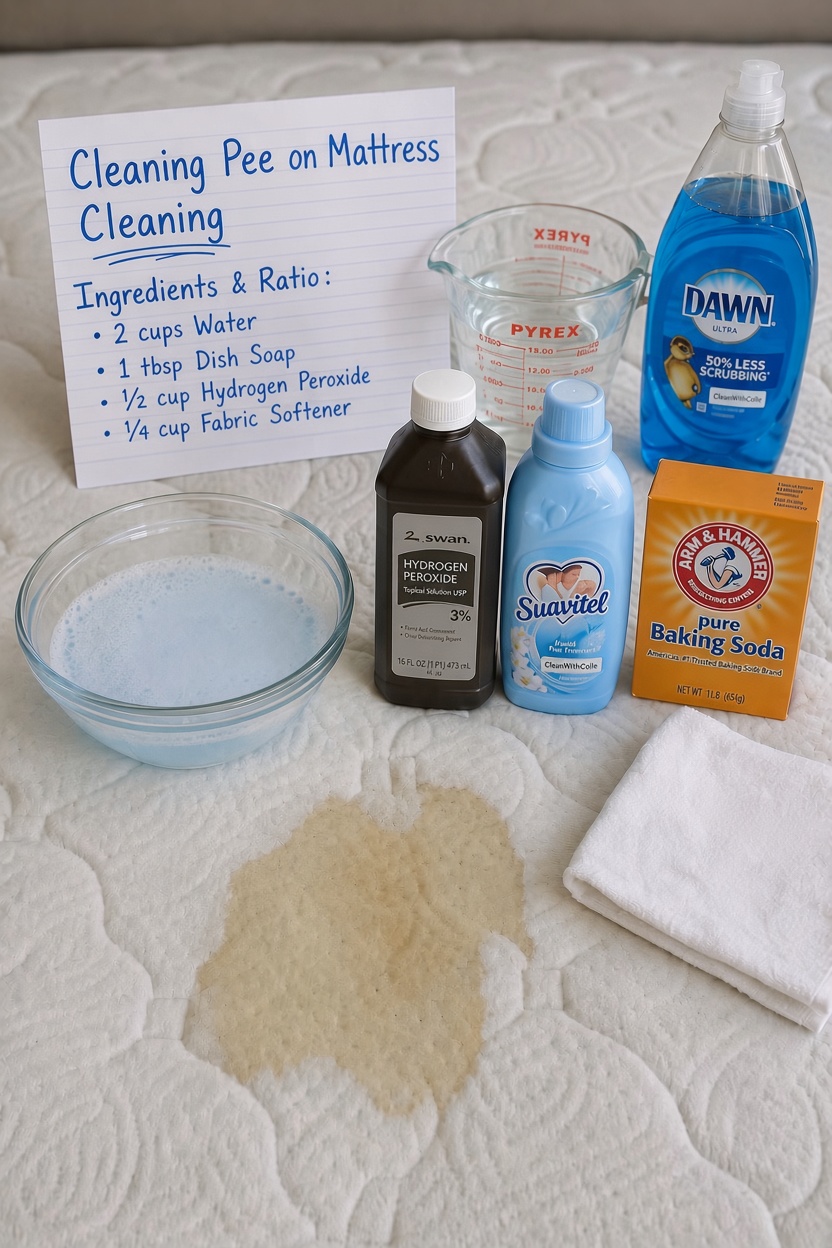
Welcome to the ultimate solution for one of the most frustrating household accidents. If you are dealing with unexpected spills or accidents, this guide will save your bedding.
As shown in the helpful reference file image.png, you do not need to hire expensive professional mattress cleaning services to get your bed looking brand new.
This DIY cleaning remedy uses common household items to lift tough stains and neutralize odors quickly and effectively.
Recipe Overview
| Detail | Time / Amount |
| Prep Time | 5 minutes |
| Active Cleaning Time | 15 minutes |
| Drying Time | 4 to 6 hours |
| Total Time | ~ 6 hours |
| Yield | 1 application |
Why You’ll Love This Recipe
You will absolutely love this DIY mattress cleaning solution because it works rapidly to break down organic enzymes without harsh, expensive chemicals. Instead of voiding your mattress warranty with heavy bleach products, this gentle yet powerful concoction relies on oxygenating action to lift discoloration right before your eyes. It is an incredibly cost-effective alternative to professional upholstery cleaning services, giving you professional-grade results using basic pantry staples. Plus, the fast-acting formula eliminates deep-set odors, ensuring your bedroom remains a fresh, hygienic sanctuary for restful sleep.
Ingredients
| Ingredient | Quantity | Purpose |
| Warm Water | 2 cups | Dilutes and activates |
| Dish Soap (Dawn recommended) | 1 tbsp | Cuts through grease and proteins |
| Hydrogen Peroxide (3%) | 1/2 cup | Lifts stains and brightens fabric |
| Fabric Softener | 1/4 cup | Leaves a fresh, pleasant scent |
| Baking Soda | Generous sprinkle | Absorbs lingering moisture and odors |
Step-by-Step Instructions
- Mix the Liquids: In a medium-sized bowl or spray bottle, combine the warm water, dish soap, hydrogen peroxide, and fabric softener. Stir gently to avoid creating too many bubbles.
- Apply to the Stain: Lightly spray or dab the solution directly onto the soiled area on the mattress. Do not completely soak the mattress; just dampen the stained surface.
- Blot the Area: Using a clean, dry white cloth, gently press down on the treated area to lift the stain and absorb the liquid. Repeat this process until the stain fades away.
- Apply Baking Soda: Once the stain is removed, sprinkle a generous layer of baking soda over the entire damp area. This will draw out the remaining moisture and trap any lingering odors.
- Dry and Vacuum: Allow the mattress to air dry completely, which usually takes about 4 to 6 hours. Once dry, vacuum up the baking soda using an upholstery attachment.
Best Tips
To achieve the best possible results with this stain removal technique, always act as quickly as possible when an accident occurs, as fresh spills are significantly easier to extract than set-in stains. Use a pure white cloth for blotting to prevent any accidental color transfer from a dyed towel onto your pristine mattress cover. Additionally, ensure the room is well-ventilated by opening windows or turning on a ceiling fan, which dramatically speeds up the drying process and prevents moisture from being trapped deep within the foam layers.
Best Ingredient Options
| Alternative | Replacement For | Notes |
| White Vinegar | Fabric Softener | Better for heavy odor neutralization, though less fragrant. |
| Clear Liquid Laundry Detergent | Dish Soap | Works well if you do not have Dawn dish soap on hand. |
| Essential Oils (Lavender) | Fabric Softener | Add 5-10 drops for a natural, calming scent without artificial chemicals. |
Recipe Variations
If you are dealing with purely liquid spills that do not contain heavy proteins, you can easily adapt this formula by omitting the dish soap and increasing the water ratio for a lighter surface refresh. For those sensitive to strong artificial fragrances, swapping the fabric softener for a splash of distilled white vinegar and a few drops of eucalyptus essential oil provides a natural antibacterial boost. You can also create a heavy-duty paste by mixing just the hydrogen peroxide and baking soda together for stubborn, older stains that require intense, localized scrubbing.
What to Serve With
While you cannot eat this cleaning solution, this freshly revitalized mattress pairs perfectly with a brand new set of high-thread-count Egyptian cotton sheets and a freshly laundered waterproof mattress protector. To complete your bedroom transformation, serve this deep-cleaning routine alongside thoroughly washed pillows, a freshly vacuumed rug, and a calming aromatherapy diffuser to guarantee an incredibly relaxing and hygienic night of sleep.
Make-Ahead Instructions
This specific cleaning solution is not ideal for making ahead of time because hydrogen peroxide rapidly loses its oxidizing power once it is exposed to light and mixed with other ingredients like water and soap. For maximum stain-lifting efficacy, you should only mix these specific ingredients together right before you plan to tackle the soiled mattress.
Storage
If you have leftover dry baking soda, simply fold the top of the cardboard box or transfer it to an airtight container to keep it clump-free for your next deep cleaning session. Do not attempt to store the mixed liquid solution in a sealed bottle, as the hydrogen peroxide can release oxygen gases that might cause the container to expand or leak.
Reheating
Because this is a home remedy for upholstery care, you will never need to reheat this mixture. However, starting your initial preparation with moderately warm water helps the dish soap dissolve more effectively and accelerates the chemical reaction needed to break down tough organic stains.
Freezing
You should absolutely never freeze this mixture, as freezing will alter the chemical structure of the hydrogen peroxide and fabric softener, rendering the solution completely useless for future stain removal tasks.
Common Mistakes to Avoid
The absolute biggest mistake people make when cleaning a mattress is aggressively rubbing or scrubbing the stain with a brush, which forces the liquid deeper into the padding and permanently damages the fabric fibers. Another highly common error is over-saturating the bed with liquid; applying too much water creates a breeding ground for mold and mildew deep inside the memory foam. Finally, failing to let the mattress dry completely before putting the bedsheets back on will trap moisture and completely ruin all your hard work.
Nutrition Estimate
| Nutrient / Element | Amount |
| Calories | 0 kcal (Do not consume) |
| Cleanliness | 100% |
| Odor Reduction | Maximum |
| Stain Removal | Excellent |
Frequently Asked Questions
Can I use this on memory foam? Yes, but you must use the solution extremely sparingly. Memory foam acts like a sponge, so rely more heavily on the dry baking soda step to pull moisture out.
Is hydrogen peroxide safe for all mattresses? Hydrogen peroxide is a mild bleaching agent. It is completely fine for standard white mattresses, but if your mattress has a dark or colorful pattern, test a small hidden area first to ensure it does not cause discoloration.
How long can I leave the baking soda on? You can leave the baking soda on for as little as 4 hours, or up to a full 24 hours. The longer it sits, the more odors and moisture it will absorb.
Final Thoughts
Accidents happen, but they do not have to ruin your expensive bedroom furniture or force you to file complicated home insurance claims for property damage. By using this straightforward, highly effective household remedy, you can easily maintain a pristine, odor-free sleeping environment. Keep this recipe handy, and you will always be prepared to tackle tough stains with confidence and ease.