Introduction
Kitchen towels absorb grease, food residue, sauces, and unpleasant odors every day. Over time, a regular wash may not be enough to make them feel truly clean.
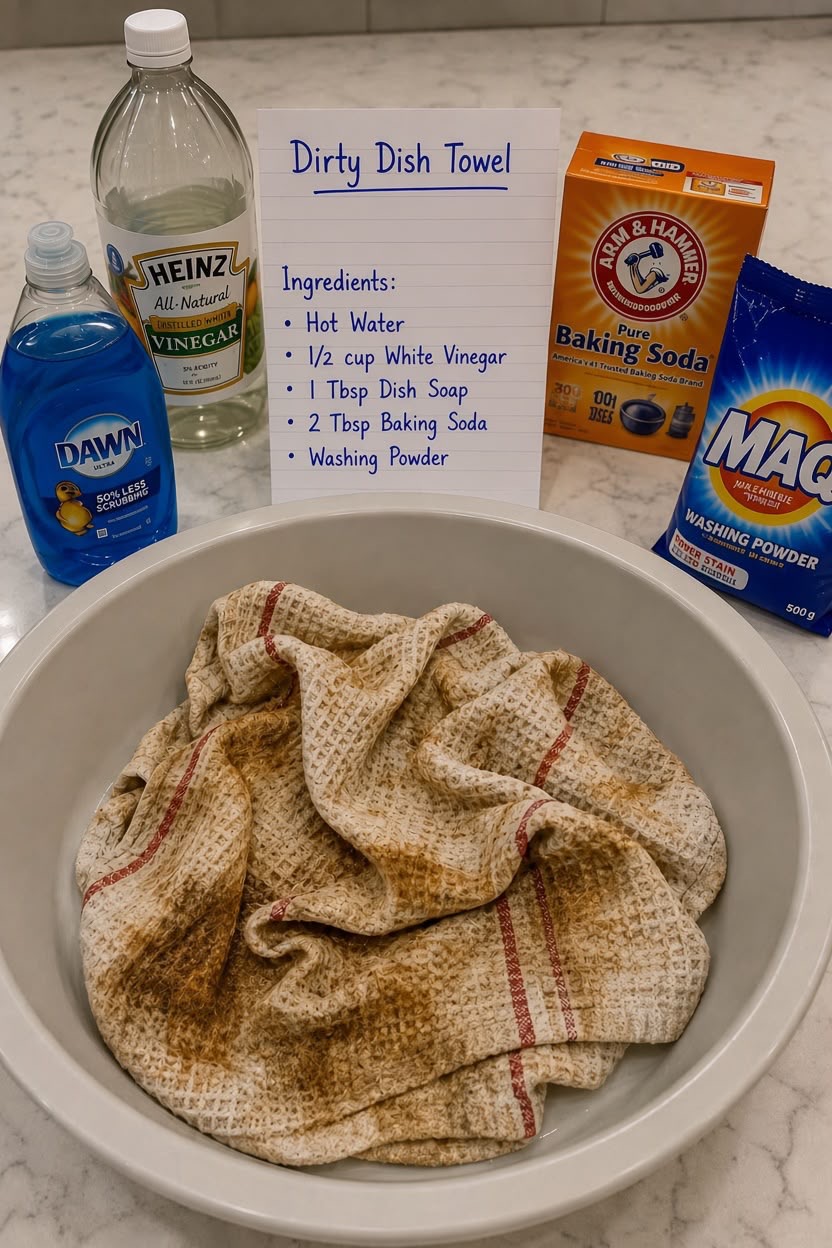
This simple dish towel deep-cleaning method uses hot water, white vinegar, baking soda, dish soap, and washing powder to help loosen stubborn grime and refresh heavily soiled towels.
Recipe Overview
| Details | Information |
| Prep Time | 5 minutes |
| Soak Time | 2–4 hours |
| Overnight Option | Yes |
| Washing Time | Standard machine cycle |
| Total Time | About 2–5 hours |
| Difficulty | Easy |
| Best For | Kitchen and dish towels |
Ingredients 🧼
- ♨️ Hot water — enough to completely submerge the towel
- 🥛 White vinegar — ½ cup
- 🫧 Liquid dish soap — 1 tablespoon
- 🥄 Baking soda — 2 tablespoons
- 🧺 Washing powder — 1 scoop, according to the product’s recommended amount
Instructions
Prepare the Basin
Place the heavily soiled dish towel into a large heat-safe bowl, bucket, or basin.
Make sure the container is large enough to hold the towel and enough water to completely cover it.
Add the Cleaning Ingredients
Sprinkle the baking soda and washing powder over the towel.
Add the liquid dish soap directly on top.
Add the Vinegar
Slowly pour the white vinegar over the ingredients.
The vinegar and baking soda will fizz when they come into contact. Allow the initial reaction to settle before adding the water.
Add Hot Water
Carefully pour hot water into the basin until the towel is completely submerged.
Use a wooden spoon or another suitable utensil to gently move the towel around, helping the cleaning ingredients dissolve and distribute through the fabric.
Soak the Towel
Allow the towel to soak for 2–4 hours.
For particularly greasy or heavily soiled towels, you can leave them soaking overnight.
Keep the container somewhere safe and away from children and pets.
Rinse and Wash
Once the soaking water has cooled, remove the towel carefully.
Wring out excess water, then place the towel in the washing machine.
Wash according to the towel’s care label and the detergent manufacturer’s instructions.
After washing, dry the towel completely before using it again.
Why This Method Works
Hot water helps loosen oils, food residue, and grime trapped in the fibers.
Dish soap is designed to break down grease, making it useful for kitchen towels that have absorbed cooking oils.
Baking soda can help deodorize and loosen accumulated residue.
Washing powder provides additional cleaning power during the final washing cycle.
White vinegar can help with odors and mineral residue, although it should be used carefully with laundry products.
Important Cleaning Tip ⚠️
Do not mix vinegar with chlorine bleach or products containing bleach. This can produce dangerous chlorine gas.
For best results, use this soaking method as an occasional deep-cleaning treatment rather than replacing your normal laundry routine.
Best Tips
- Wash kitchen towels regularly, especially when they become visibly dirty or develop an odor.
- Do not overcrowd the soaking basin.
- Check the towel’s care label before using very hot water.
- Wash heavily greasy towels separately when possible.
- Make sure towels are completely dry before storing them.
- Replace towels that remain stained, greasy, or unpleasant-smelling after repeated washing.
Common Mistakes to Avoid
Using too much detergent: More product does not necessarily mean cleaner towels and can leave residue behind.
Using boiling water on delicate fabrics: Extremely hot water can damage or shrink some materials.
Mixing vinegar with bleach: Never do this.
Skipping the final wash: The soaking process loosens grime, but the towel should still go through a proper washing cycle afterward.
Frequently Asked Questions
Can I leave the towel soaking overnight?
Yes, for sturdy, washable kitchen towels, an overnight soak can be used for particularly stubborn buildup. Always consider the fabric’s care instructions.
Can I use this method on colored towels?
Generally, but check the care label first. For a new or strongly colored towel, testing an inconspicuous area is a good precaution.
How often should I deep-clean dish towels?
There is no universal schedule. Deep-clean them when they develop persistent odors, greasy buildup, or stains that remain after normal washing.
Does the dark soaking water mean the method worked?
Dark or cloudy water can indicate that dirt, oils, and other residues have been released from the towel, but the appearance of the water alone is not a precise measure of cleaning effectiveness.
Final Thoughts
This easy dish towel deep-cleaning routine is a practical way to refresh towels that have accumulated grease, food residue, and odors. A hot-water soak followed by a proper washing-machine cycle can help give hardworking kitchen towels a cleaner, fresher feel.
Safety note: Never combine vinegar with bleach or other incompatible cleaning chemicals. Always follow the instructions on your cleaning-product labels.