Introduction
There is nothing better than pulling a bubbling, golden-brown lasagna from the oven after a long day.
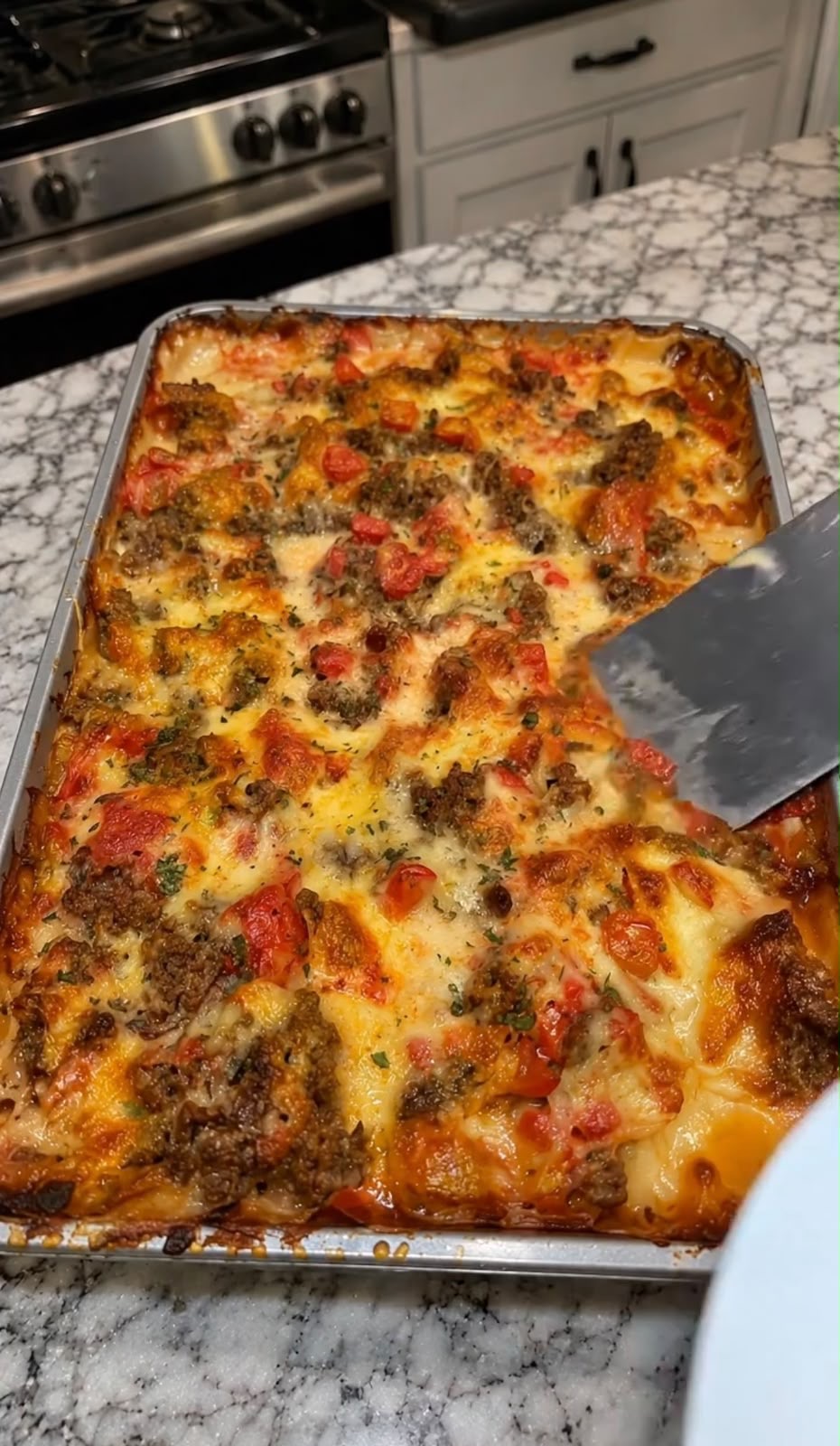
This Sheet Pan Lasagna takes everything you love about classic lasagna and makes it easier, faster, and perfect for a family dinner.
Instead of using a deep casserole dish, this recipe uses a large rimmed baking sheet. The result is more crispy edges, golden cheese, savory meat sauce, and tender pasta in every serving.
It is an excellent easy dinner recipe, family-friendly comfort food, and crowd-pleasing Italian-inspired meal for busy weeknights.
Recipe Overview
| Metric | Detail |
| Prep Time | 20 minutes |
| Cook Time | 35 minutes |
| Resting Time | 15 minutes |
| Total Time | 1 hour 10 minutes |
| Servings | 8 servings |
| Course | Main Course |
| Cuisine | Italian-American |
| Difficulty | Easy |
Why You’ll Love This Recipe
This sheet pan lasagna delivers all the comforting flavors of traditional lasagna without requiring a deep casserole dish.
The large baking surface creates plenty of delicious crispy, cheesy edges.
Every serving gets tender noodles, creamy ricotta, flavorful meat sauce, Parmesan, and plenty of melted mozzarella.
It is also a practical budget-friendly dinner recipe that can be prepared ahead of time.
With simple ingredients and minimal cleanup, it is ideal for busy families, weekend dinners, potlucks, and casual entertaining.
Ingredients
Pasta
| Ingredient | Amount |
| Lasagna noodles | 12 noodles |
| Olive oil or non-stick spray | For greasing |
Meat Sauce
| Ingredient | Amount |
| Italian sausage | 1 lb |
| Lean ground beef | 1 lb |
| Yellow onion, finely diced | 1 medium |
| Garlic, minced | 4 cloves |
| Marinara sauce | 2 × 24 oz jars |
| Italian seasoning | 1 teaspoon |
| Salt | ½ teaspoon |
| Black pepper | ¼ teaspoon |
Ricotta Filling
| Ingredient | Amount |
| Whole-milk ricotta cheese | 15 oz |
| Large eggs | 2 |
| Grated Parmesan cheese | ½ cup |
| Fresh parsley, chopped | ¼ cup |
Cheese Topping
| Ingredient | Amount |
| Shredded mozzarella cheese | 4 cups |
Step-by-Step Instructions
Prepare the Oven and Baking Sheet
Preheat your oven to 375°F (190°C).
Lightly grease a 12 × 17-inch rimmed baking sheet with olive oil or non-stick cooking spray.
Make sure the baking sheet has raised edges to keep the sauce and cheese contained.
Prepare the Lasagna Noodles
Bring a large pot of salted water to a boil.
Add the lasagna noodles and cook for approximately 5 minutes, or until they become flexible but remain firm.
Do not cook them until completely tender.
Drain the noodles carefully and place them flat on parchment paper so they do not stick together.
Brown the Meat
Heat a large skillet over medium-high heat.
Add the Italian sausage and ground beef.
Cook for approximately 7–9 minutes, breaking the meat apart with a wooden spoon as it cooks.
Continue cooking until the meat is completely browned.
Drain excess grease if necessary.
Add the Onion and Garlic
Add the diced onion to the browned meat.
Cook for approximately 4 minutes, stirring occasionally.
Add the minced garlic and cook for another 30–60 seconds.
The onion should become soft and fragrant.
Make the Meat Sauce
Pour the marinara sauce into the skillet.
Add the Italian seasoning, salt, and black pepper.
Stir everything together until well combined.
Reduce the heat and simmer for approximately 5 minutes.
Remove the skillet from the heat.
Prepare the Ricotta Filling
In a medium bowl, add the ricotta cheese, beaten eggs, Parmesan cheese, and fresh parsley.
Mix until the ingredients are evenly combined.
The filling should be creamy and smooth.
Assemble the Lasagna
Spread a thin layer of meat sauce across the bottom of the prepared baking sheet.
This helps prevent the noodles from sticking and keeps them moist while baking.
Arrange the partially cooked lasagna noodles across the baking sheet.
Overlap the noodles slightly so the entire surface is covered.
Spoon the ricotta mixture over the noodles.
Spread it gently into an even layer using the back of a spoon or an offset spatula.
Add the remaining meat sauce over the ricotta layer.
Spread it evenly so that the noodles are completely covered.
Sprinkle the shredded mozzarella evenly over the entire surface.
Make sure the cheese reaches close to the edges for maximum golden, crispy goodness.
Bake
Place the baking sheet in the preheated oven.
Bake uncovered at 375°F (190°C) for 25–30 minutes.
The lasagna is ready when the cheese is completely melted, bubbling, and lightly golden.
For an extra-golden top, you can broil it for 1–2 minutes, watching carefully.
Rest and Serve
Remove the lasagna from the oven.
Allow it to rest for 15 minutes before cutting.
This resting time helps the layers set and makes the lasagna easier to slice.
Cut into squares and serve warm.
Best Tips
Do not fully cook the noodles before assembling the lasagna.
They should remain slightly firm because they will continue cooking in the oven.
Use a sturdy rimmed baking sheet with at least a 1-inch edge.
This helps prevent sauce and melted cheese from spilling into your oven.
Freshly shredded mozzarella generally melts more smoothly than many pre-shredded varieties.
Do not skip the resting period.
Allowing the lasagna to rest for 15 minutes helps create cleaner slices that hold their shape.
Best Ingredient Options
Whole-milk ricotta creates an especially creamy and rich filling.
Part-skim ricotta can be used if you prefer a slightly lighter option.
Ground turkey can replace the ground beef for a leaner variation.
You can also use plant-based ground crumbles for a vegetarian-friendly version.
For extra flavor, use a high-quality marinara sauce or homemade tomato sauce.
If you cannot find regular lasagna noodles, wide pasta sheets can work as an alternative.
Recipe Variations
White Garlic Sheet Pan Lasagna
Replace the marinara sauce with a creamy garlic Alfredo sauce.
Add sautéed mushrooms and spinach for an extra-rich variation.
Spicy Lasagna
Use hot Italian sausage instead of mild sausage.
Add crushed red pepper flakes and a spicy marinara sauce for extra heat.
Vegetable Lasagna
Replace the meat with sautéed zucchini, mushrooms, spinach, and bell peppers.
Drain excess moisture from the vegetables before assembling.
Supreme Sheet Pan Lasagna
Add sliced pepperoni, diced bell peppers, mushrooms, and black olives to the meat sauce.
Finish with plenty of mozzarella for a loaded, cheesy dinner.
Spinach Ricotta Lasagna
Mix fresh baby spinach directly into the ricotta filling.
This is an easy way to add vegetables while maintaining the creamy texture of the classic recipe.
What to Serve With
Serve this hearty lasagna with a crisp green salad tossed in Italian vinaigrette.
Garlic bread is another excellent choice for soaking up the flavorful tomato sauce.
Roasted green beans or steamed broccoli can add a fresh vegetable side to the meal.
Crusty French bread brushed with olive oil and roasted garlic also pairs beautifully with the cheesy lasagna.
For an adult dinner, a medium-bodied red wine can complement the rich tomato and cheese flavors.
Make-Ahead Instructions
You can assemble the lasagna up to 24 hours in advance.
Cover the prepared baking sheet tightly with foil or plastic wrap.
Store it in the refrigerator until you are ready to bake.
When ready, remove the plastic wrap and bake according to the recipe.
Because the lasagna will be cold from the refrigerator, you may need to add approximately 5–10 minutes to the baking time.
Do not leave the assembled lasagna at room temperature for an extended period before baking.
Storage
Allow leftover lasagna to cool before transferring it to an airtight container.
Store leftovers in the refrigerator for approximately 3–4 days.
Keep individual portions sealed properly to maintain their texture and flavor.
For best food safety, refrigerate cooked leftovers promptly rather than leaving them at room temperature for several hours.
Reheating
For a quick option, place one serving on a microwave-safe plate.
Cover loosely and microwave for approximately 1–2 minutes, checking halfway through.
For better texture, reheat the lasagna in a 350°F (175°C) oven for approximately 15 minutes.
Cover loosely with foil during the first part of reheating to prevent the cheese from becoming too dark.
Remove the foil near the end if you want the cheese to become crispy again.
Freezing
Sheet pan lasagna can be frozen either before or after baking.
For unbaked lasagna, wrap the prepared pan tightly with freezer-safe plastic wrap followed by heavy-duty aluminum foil.
Freeze for up to approximately 2 months for the best quality.
You can also freeze baked individual portions.
Wrap each cooled square tightly and place the portions in a freezer-safe container or bag.
For best results, thaw individual portions overnight in the refrigerator before reheating.
Common Mistakes to Avoid
Avoid completely cooking the noodles before assembling the lasagna.
Overcooked noodles can become soft and mushy during baking.
Do not use a flat baking sheet without raised edges.
The sauce can bubble over and create a mess in your oven.
Do not use too little sauce.
The pasta needs enough moisture to finish cooking properly.
Avoid cutting the lasagna immediately after removing it from the oven.
The layers need time to set.
Do not add the mozzarella in one extremely thick pile.
Spread it evenly across the entire surface for consistent melting and browning.
Finally, avoid overbaking the lasagna.
Once the cheese is bubbling and lightly golden and the center is hot, it is ready to rest.
Nutrition Estimate
The following values are approximate and can vary depending on the ingredients and brands used.
| Nutrient | Approx. Per Serving |
| Calories | 650–720 kcal |
| Protein | 35–40 g |
| Carbohydrates | 45–50 g |
| Fat | 35–42 g |
| Saturated Fat | 16–20 g |
| Fiber | 4–6 g |
| Sugar | 8–11 g |
| Sodium | 1,300–1,600 mg |
| Calcium | 400–500 mg |
Frequently Asked Questions
Can I use only ground beef?
Yes.
Replace the Italian sausage with an additional pound of ground beef.
For more flavor, increase the Italian seasoning and garlic slightly.
Can I use cottage cheese instead of ricotta?
Yes.
Cottage cheese is a good substitute for ricotta.
For a smoother texture, blend the cottage cheese before mixing it with the eggs and Parmesan.
Can I make this lasagna vegetarian?
Absolutely.
Replace the meat with sautéed mushrooms, spinach, zucchini, bell peppers, or plant-based meat alternatives.
Make sure vegetables are cooked and excess moisture is removed before assembling.
Can I use oven-ready noodles?
Yes.
Oven-ready lasagna noodles can work, but make sure there is sufficient sauce to provide the moisture needed for them to cook.
Why is my lasagna watery?
Watery lasagna can result from excess liquid in the sauce, ricotta, or vegetables.
Use a thick marinara sauce and drain cooked vegetables thoroughly before assembly.
How do I get crispy edges?
The sheet pan itself helps create crispy edges because more of the lasagna is exposed to the hot baking surface.
Using freshly shredded mozzarella and baking until lightly golden also helps.
How long should I let the lasagna rest?
Allow it to rest for approximately 15 minutes.
This gives the cheese and ricotta filling time to firm up and makes slicing much easier.
Can I prepare this recipe the night before?
Yes.
Assemble it, cover it tightly, and refrigerate it for up to 24 hours before baking.
Add approximately 5–10 minutes to the baking time if baking directly from the refrigerator.
Final Thoughts
This easy Sheet Pan Lasagna is a delicious alternative to traditional lasagna when you want a comforting homemade dinner without complicated preparation.
The combination of tender pasta, rich meat sauce, creamy ricotta, Parmesan, and melted mozzarella creates an irresistible family meal.
The sheet pan method also gives you something traditional lasagna often lacks: lots of golden, crispy, cheesy edges.
It is perfect for easy weeknight dinners, family meals, meal prep, comfort food recipes, Italian-inspired dinners, and crowd-friendly recipes.
Prepare it ahead, bake it until bubbling and golden, let it rest, and serve it with garlic bread and a fresh salad for a satisfying homemade dinner.
.