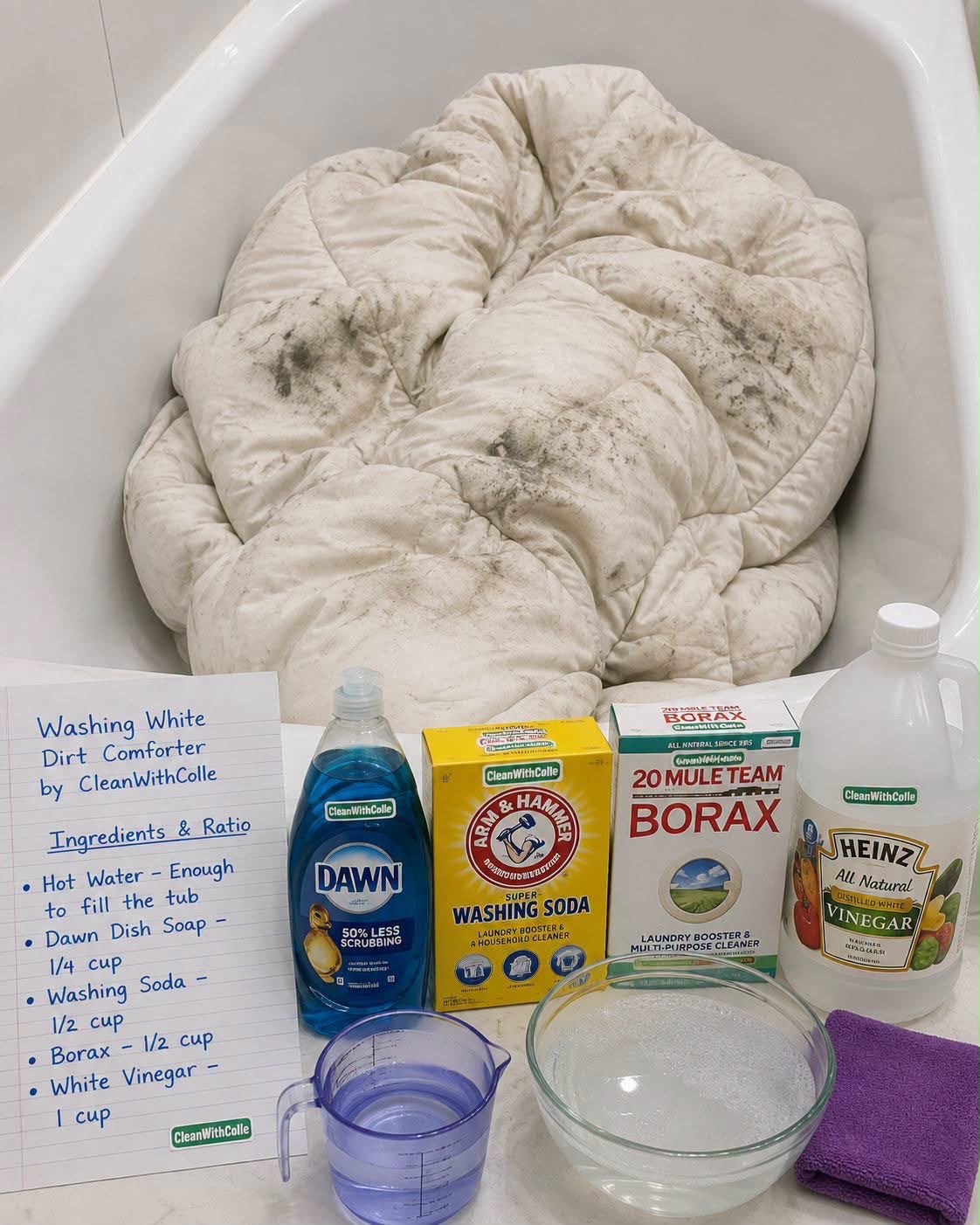
Introduction
Welcome to the ultimate guide to deep cleaning and laundry stripping, a powerful DIY method for refreshing heavily soiled comforters, blankets, towels, and other washable household textiles.
This deep-cleaning technique combines hot water with washing soda, Borax, detergent, and careful soaking to help loosen accumulated body oils, sweat, odors, detergent residue, and everyday grime.
Recipe Overview
| Detail | Information |
| Prep Time | 5 minutes |
| Soaking Time | 2–4 hours |
| Water Temperature | Hot, according to care label |
| Final Wash Time | 1 regular cycle |
| Yield | 1 freshly cleaned comforter |
| Difficulty | Easy |
Why You’ll Love This Method
This laundry stripping method is an affordable way to give washable bedding a thorough refresh at home.
It is particularly useful for older comforters and blankets that have accumulated odors, body oils, and detergent buildup over time.
You also have complete control over the process, allowing you to adjust the water temperature and cleaning products according to the fabric-care instructions.
Ingredients
| Cleaning Agent | Amount |
| Very Hot Water | Enough to fill the bathtub |
| Liquid Laundry Detergent | 1/4 cup |
| Washing Soda | 1/2 cup |
| Borax | 1/2 cup |
| White Vinegar | 1 cup |
Important: Do not mix vinegar directly with Borax, washing soda, or other alkaline cleaning products in the same concentrated mixture. For a safer routine, use the detergent, washing soda, and Borax during the soak, then use vinegar separately in the rinse if desired.
Step-by-Step Instructions
Prepare the bathtub
Clean the bathtub thoroughly before starting. Make sure there is enough room for the comforter to move freely in the water.
Fill with hot water
Fill the tub with hot water that is appropriate for the comforter’s care label. Extremely hot water can damage some synthetic fibers, dyes, elastic materials, and delicate fabrics.
Add the cleaning ingredients
Add the liquid laundry detergent, washing soda, and Borax to the water. Stir thoroughly until the powders are completely dissolved.
Submerge the comforter
Place the comforter into the solution and press it gently under the water until the entire fabric is saturated.
Soak
Allow the comforter to soak for approximately 2–4 hours. Every 30–60 minutes, gently agitate the bedding using clean hands or a suitable long-handled tool.
Drain the dirty water
Once the soaking period is finished, drain the tub. The water may appear cloudy or dark because of loosened dirt, oils, and residue.
Rinse thoroughly
Remove the comforter carefully because wet bedding can become extremely heavy. Transfer it to the washing machine.
Run a complete wash cycle
Wash the comforter according to its care label. Use an appropriate amount of detergent and select an extra-rinse cycle if available.
Dry completely
Dry the comforter according to the manufacturer’s instructions. Make sure the filling is completely dry before storing or using it.
Best Tips
Always check the care label before using hot water. Some comforters require cold or warm water only.
Avoid overcrowding the bathtub or washing machine. Bedding needs enough room for water and detergent to circulate properly.
For colored fabrics, test the cleaning solution on a small, inconspicuous area first.
Do not use laundry stripping as an everyday washing method. It is better suited to occasional deep cleaning.
Best Ingredient Options
A quality liquid laundry detergent can replace dish soap in this method and is generally a more appropriate choice for washable bedding.
Washing soda helps boost cleaning performance and can be particularly useful for removing oily residue.
Borax is an optional laundry booster. If you prefer not to use it, you can omit it and use a suitable commercial laundry booster instead.
Recipe Variations
For towels: Use the same general method, provided the care labels allow hot water.
For white cotton bedding: An oxygen-based laundry whitener can be used according to its package directions.
For delicate fabrics: Skip the stripping process and follow the manufacturer’s recommended washing instructions instead.
For machine soaking: If your washing machine has a soak function, you can use it instead of a bathtub, provided the machine manufacturer permits this type of load.
What to Do While the Comforter Soaks
This is an excellent opportunity to refresh the rest of the bedroom.
Vacuum underneath the bed, clean the mattress surface according to its care instructions, wash pillowcases, and dust bedside furniture.
A freshly cleaned comforter paired with clean sheets can make the entire bedroom feel noticeably fresher.
Make-Ahead Instructions
For convenience, you can prepare a dry mixture of washing soda and Borax and store it in a clearly labeled, airtight container.
Keep cleaning products away from children and pets, and never store mixed cleaning powders in food containers.
Storage
Never store a comforter while it is even slightly damp.
Once completely dry, fold it loosely and place it in a breathable cotton or linen storage bag.
Avoid airtight plastic storage for long periods if there is any possibility that moisture remains inside the bedding.
Important Note About “Reheating”
You should not add boiling water to the bathtub to maintain the soaking temperature.
If the water cools during the soak, simply allow the process to continue. The cleaning action does not require the water to remain extremely hot for several hours.
More importantly, never handle extremely hot water in a way that could cause burns.
Seasonal Storage
Before storing heavy winter bedding, make sure every part of the comforter—including the inner filling—is completely dry.
Any trapped moisture can contribute to unpleasant odors and mold or mildew growth during storage.
Common Mistakes to Avoid
Using water that is too hot: Always follow the fabric-care label.
Skipping the final wash: The comforter should be thoroughly washed after stripping to remove loosened dirt and cleaning-product residue.
Overloading the washing machine: A comforter needs sufficient space to rinse properly.
Mixing cleaning chemicals: Never combine bleach with vinegar, ammonia, or other incompatible cleaning products.
Using too much detergent: Excess detergent can leave residue and make fabrics feel stiff.
Ignoring colorfastness: Always test an inconspicuous area when using a new cleaning product.
Cleaning Results
| Cleaning Goal | Expected Result |
| Odor Reduction | Improved |
| Removal of Residue | Improved |
| Removal of Body Oils | Improved |
| Overall Freshness | High |
| Fabric Brightness | May improve |
Results will vary depending on the fabric, age of the bedding, type of stains, previous washing habits, and condition of the comforter.
Frequently Asked Questions
Is laundry stripping safe for colored bedding?
It can be appropriate for some durable, colorfast fabrics, but it is not universally safe. Always check the care label and perform a small colorfastness test first.
Can I use dish soap on my comforter?
It is generally better to use a laundry detergent formulated for fabrics. Dish soap creates a lot of suds and may be difficult to rinse completely from large bedding.
How often should I strip laundry?
Laundry stripping should be considered an occasional deep-cleaning technique rather than a replacement for normal laundering.
Can I use this method on a down comforter?
Not without checking the manufacturer’s instructions. Down and feather bedding can require specialized washing and drying procedures.
Can I use bleach during laundry stripping?
Avoid adding chlorine bleach to this mixture. In particular, never mix chlorine bleach with vinegar or other acidic cleaners, because dangerous chlorine gas can be produced.
Why does the soaking water become dark?
The water can become cloudy or discolored as accumulated oils, dirt, detergent residue, and other materials are loosened from the fabric. Dark water does not necessarily mean the comforter was dangerously dirty.
Final Thoughts
Laundry stripping can be a useful occasional deep-cleaning technique for suitable washable bedding. With the right products, adequate rinsing, and careful attention to fabric-care instructions, you can refresh an older comforter without immediately replacing it.
For the best results, focus on proper washing and complete drying rather than simply using the strongest possible cleaning solution.