Introduction
If you are dealing with dry heels, rough skin, or a small corn caused by repeated friction and pressure, a simple moisturizing foot treatment can help soften the thickened skin and make your feet feel smoother.
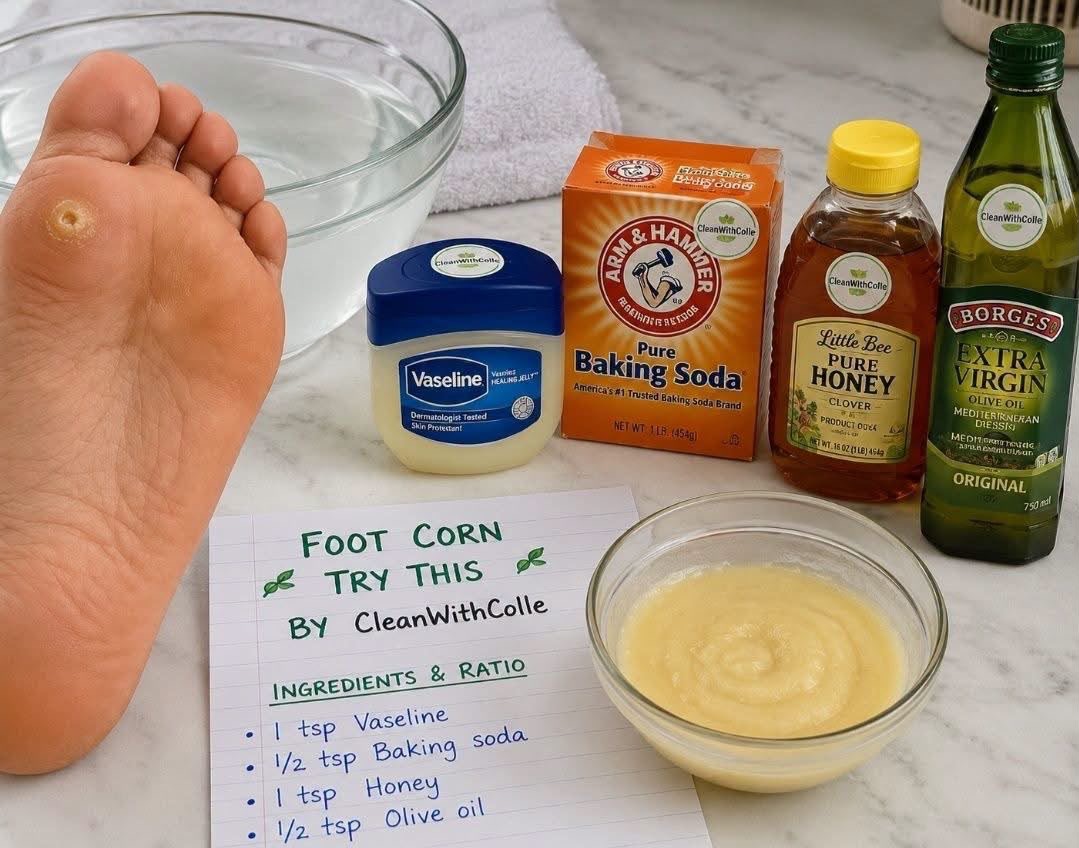
This homemade foot-care paste combines petroleum jelly, honey, olive oil, and a small amount of baking soda. The petroleum jelly helps reduce moisture loss, while honey and olive oil provide additional conditioning. A warm foot soak before application helps soften the outer layer of hardened skin.
This treatment is best viewed as a moisturizing and softening routine, not a cure for the underlying cause of a corn. Comfortable footwear and reducing friction or pressure are important for preventing corns from coming back.
Recipe Overview
| Detail | Information |
| Prep Time | 3 minutes |
| Foot Soak | 10–15 minutes |
| Application Time | 5 minutes |
| Treatment Time | 20–30 minutes |
| Yield | 1 single-use treatment |
| Difficulty | Very Easy |
| Treatment Type | DIY Foot Care |
| Best For | Dry, rough, callused skin |
| Main Benefit | Softens and moisturizes hardened skin |
Why You’ll Love This Treatment
This foot-care treatment uses inexpensive ingredients that are easy to find at home. The combination creates a rich moisturizing paste that can be useful for dry heels and rough areas of the feet.
Petroleum jelly is particularly useful for dry skin because it forms an occlusive barrier that helps reduce water loss from the skin. Honey and olive oil add a smooth, conditioning texture to the treatment.
The warm-water soak is also an important part of the routine because it temporarily softens the outermost layer of the skin, making subsequent moisturizing easier.
Ingredients
For the Foot Soak
| Ingredient | Amount | Purpose |
| Warm water | 1 large basin | Softens the outer skin |
| Mild soap | Optional | Cleanses the feet |
For the Softening Paste
| Ingredient | Amount | Purpose |
| Petroleum jelly | 1 teaspoon | Helps lock in moisture |
| Pure honey | 1 teaspoon | Adds moisture and conditioning |
| Extra-virgin olive oil | 1/2 teaspoon | Helps soften dry skin |
| Baking soda | 1/2 teaspoon | Provides mild physical exfoliation |
Step-by-Step Instructions
Prepare the Warm Foot Soak
Fill a clean basin with comfortably warm water. The water should feel pleasant rather than hot, approximately 38–40°C (100–104°F).
Soak your feet for 10–15 minutes.
Do not use very hot water, particularly if you have reduced sensation in your feet.
Dry Your Feet
Remove your feet from the water and gently pat them dry with a clean towel.
Make sure the areas between your toes are thoroughly dried.
Prepare the Paste
Add 1 teaspoon petroleum jelly, 1 teaspoon honey, 1/2 teaspoon olive oil, and 1/2 teaspoon baking soda to a small clean bowl.
Mix until the ingredients form a relatively smooth paste.
Because petroleum jelly does not truly dissolve into water-based ingredients, the mixture may separate slightly. Simply stir it again immediately before application.
Apply to Rough Areas
Apply a thin layer to the dry, rough, or callused areas of the foot.
For a corn, concentrate the product around the affected area rather than aggressively rubbing it into the skin.
Do not apply the mixture to open wounds, bleeding cracks, infected areas, or broken skin.
Let It Sit
Leave the treatment on for approximately 20–30 minutes.
For general dry heels, you may use petroleum jelly alone as an overnight moisturizer. There is no need to keep a baking-soda mixture underneath an occlusive covering overnight.
Rinse and Moisturize
Rinse the feet with lukewarm water and gently pat them dry.
For particularly dry heels, finish with a thin layer of plain petroleum jelly and put on clean cotton socks.
Best Tips
The most important part of caring for a corn is reducing the pressure and friction that caused it. A moisturizing treatment may soften the surrounding skin, but it cannot correct poorly fitting footwear or repeated mechanical pressure.
Choose shoes with adequate room around the toes and avoid footwear that repeatedly rubs the same area.
Use gentle foot care rather than aggressively scraping or cutting thickened skin.
A pumice stone can sometimes be used gently on ordinary callused skin after soaking, but avoid aggressive filing directly over a painful corn.
Best Ingredient Options
Petroleum Jelly
Plain petroleum jelly is the preferred option when the goal is intensive moisturization. Fragrance-free products are generally preferable for sensitive skin.
Honey
Use plain honey rather than honey-flavored syrups or products containing added fragrances.
Olive Oil
Extra-virgin olive oil works well for the texture of this treatment. If you do not have it, you can simply omit it rather than adding multiple oils.
Baking Soda
Baking soda is optional. If your skin is sensitive, irritated, or prone to dryness, leave it out and use petroleum jelly as the primary moisturizer.
Recipe Variations
Extra-Moisturizing Heel Treatment
For very dry heels, skip the baking soda and combine 1 teaspoon petroleum jelly with 1/2 teaspoon olive oil.
Apply after bathing or showering and wear clean cotton socks overnight.
Simple Petroleum Jelly Treatment
The simplest option is also one of the most practical: apply a thin layer of plain petroleum jelly to clean, dry heels before bedtime.
Honey-Free Version
If you prefer not to use honey, simply combine petroleum jelly with a small amount of olive oil.
What to Pair With This Treatment
The most effective long-term approach is to combine moisturizing foot care with pressure reduction.
Choose comfortable shoes with adequate toe room and well-cushioned socks. If a particular shoe repeatedly causes rubbing, changing the footwear is more important than repeatedly treating the corn.
For persistent corns, commercially available salicylic-acid corn treatments may be an option for some people, but they should be used according to the product directions and are not appropriate for everyone.
Make-Ahead Instructions
For hygiene and stability, it is better to prepare this treatment fresh each time.
If you want to save time, measure the dry ingredients in advance, but mix the complete paste immediately before use.
Storage
Because this homemade mixture contains food ingredients and has no preservative system, avoid storing a large batch for repeated use.
Prepare a small amount for each application and use clean utensils and containers.
Reheating
No reheating is necessary.
If the petroleum jelly is particularly firm, allow it to reach room temperature naturally before mixing.
Never heat the mixture in a microwave or apply a hot mixture to the feet.
Freezing
Freezing is not recommended. It can alter the consistency of the petroleum jelly and produce an unpleasant texture after thawing.
Common Mistakes to Avoid
Do not cut a corn with a razor or blade. Removing thickened skin yourself can cause cuts, infection, and further irritation.
Do not scrub aggressively. Excessive friction can make irritated skin more painful and may encourage additional thickening.
Do not use very hot water. Warm water is sufficient for softening the outer skin.
Do not apply baking soda to damaged skin. It can sting or irritate cracked or sensitive areas.
Do not cover the feet with airtight plastic for prolonged periods. Excessive occlusion can trap moisture and irritate the skin.
Do not ignore persistent pain. A painful or recurring corn may require professional assessment, especially when footwear changes do not solve the problem.
Treatment Schedule
| Situation | Suggested Approach |
| Mildly dry feet | Moisturize once daily |
| Rough heels | Moisturize nightly |
| Thick callused areas | Regular moisturizing + gentle foot care |
| Recurrent corn | Reduce pressure/friction and consider professional advice |
| Painful corn | Seek assessment rather than aggressively treating it at home |
Frequently Asked Questions
Can this completely remove a corn?
Not necessarily. This treatment primarily moisturizes and softens dry, thickened skin. A true corn is usually caused by repeated pressure or friction, so removing the source of pressure is essential.
How often can I use this treatment?
For ordinary dry skin, a moisturizing routine can be used regularly. If you include baking soda, start with 1–2 applications per week and discontinue it if you experience dryness, redness, burning, or irritation.
Can I leave the mixture on overnight?
It is preferable to use the baking-soda mixture for a short treatment of approximately 20–30 minutes. For overnight care, use plain petroleum jelly instead and wear clean cotton socks.
Can I use this on cracked heels?
Plain petroleum jelly can be helpful for dry, non-bleeding cracked heels. Avoid applying the baking-soda mixture to deep, painful, bleeding, or open cracks.
Can people with diabetes use this treatment?
People with diabetes, reduced foot sensation, poor circulation, or a history of foot ulcers should consult a healthcare professional or podiatrist before treating corns or calluses at home. Foot problems can require specialized care.
When should I see a podiatrist or doctor?
Seek professional advice if the corn is very painful, repeatedly returns, becomes red or swollen, produces discharge, develops an open wound, or does not improve after reducing pressure and friction.
Important Safety Note
This is a cosmetic foot-care treatment rather than a medical treatment for corns. Stop using it if you develop burning, redness, swelling, itching, or other irritation.
Never cut or chemically remove a corn yourself if you have diabetes, poor circulation, reduced sensation, or another condition that affects wound healing.
Final Thoughts
A simple foot-care routine can make dry, rough feet feel considerably more comfortable. The combination of a warm soak and gentle moisturizing can help soften hardened skin, while petroleum jelly provides an effective moisture barrier.
For genuine corns, however, the key is not simply softening the skin. Reducing pressure and friction is essential. Comfortable footwear, regular moisturizing, and gentle foot care can help maintain smoother, healthier-looking feet without aggressive scraping or cutting.
write this text for me: ⚠️This recipe may not be suitable for everyone, so it is advisable to consult a doctor.