Introduction
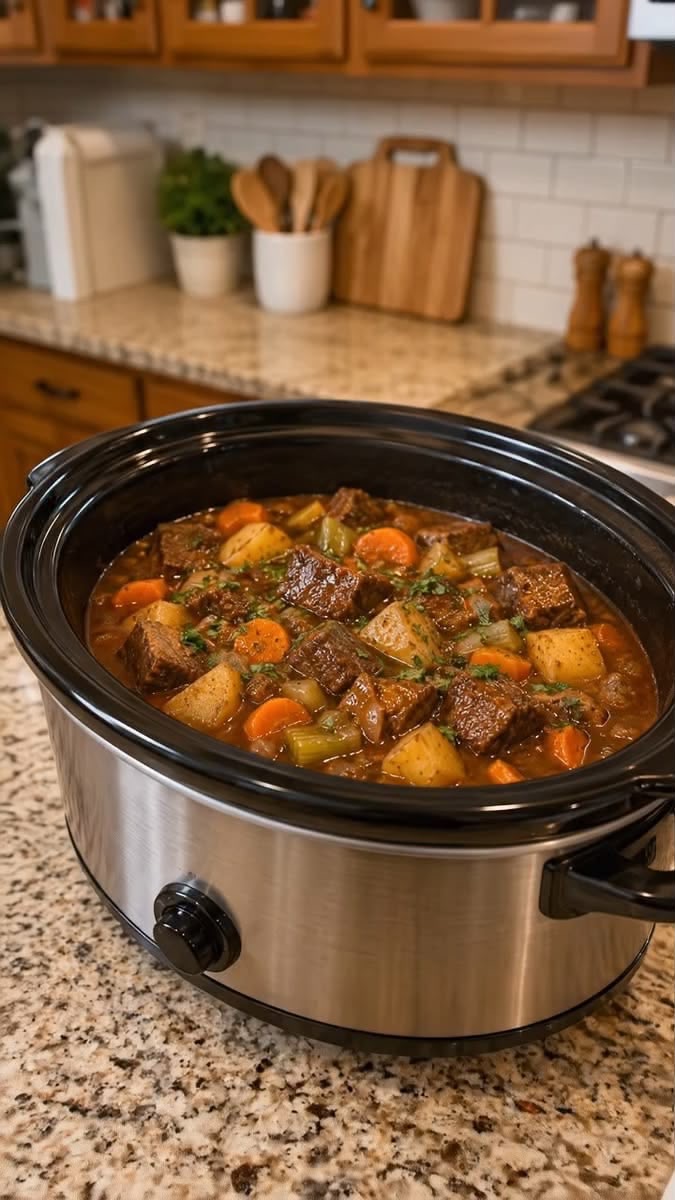
This Slow Cooker Beef Stew is the kind of comforting dinner that makes the whole kitchen smell incredible. Tender chunks of beef are slowly cooked with potatoes, carrots, celery, onions, garlic, and herbs in a rich, savory gravy.
The slow cooker does most of the work, turning affordable beef into incredibly tender pieces while the vegetables absorb the deep, hearty flavor of the broth.
This easy beef stew recipe is perfect for busy weeknights, Sunday dinner, cold-weather meals, and cozy family gatherings. Serve it with crusty bread to soak up every drop of the delicious gravy.
Recipe Overview
| Category | Details |
| Recipe | Slow Cooker Beef Stew |
| Cuisine | American Comfort Food |
| Preparation Time | 25 minutes |
| Cooking Time | 7–8 hours on LOW or 4–5 hours on HIGH |
| Total Time | About 8 hours 25 minutes |
| Servings | 6–8 |
| Difficulty | Easy |
| Cooking Method | Slow Cooker |
| Main Ingredient | Beef chuck |
| Best For | Family dinner, meal prep, Sunday dinner |
| Texture | Tender beef with soft vegetables and rich gravy |
Why You’ll Love This Recipe
This slow cooker beef stew is incredibly hearty and satisfying. Every spoonful combines tender beef, creamy potatoes, sweet carrots, aromatic celery, and a deeply flavorful gravy.
The beef is browned before going into the slow cooker, which adds an extra layer of savory flavor and gives the finished stew a richer taste.
The recipe is also wonderfully convenient. After a little preparation, everything cooks slowly together, making it an excellent easy dinner for busy days.
It is naturally comforting and filling without requiring complicated ingredients. A warm bowl of homemade beef stew is especially delicious with fresh bread, biscuits, or mashed potatoes.
Ingredients
For the Beef
| Ingredient | Amount |
| Beef chuck roast, cut into 1½-inch cubes | 2½ lb |
| All-purpose flour | ¼ cup |
| Salt | 1½ teaspoons |
| Black pepper | 1 teaspoon |
| Olive oil | 2 tablespoons |
For the Vegetables
| Ingredient | Amount |
| Yukon Gold or russet potatoes, cubed | 2 lb |
| Carrots, sliced | 4 medium |
| Celery stalks, sliced | 3 |
| Yellow onion, chopped | 1 large |
| Garlic, minced | 4 cloves |
For the Stew Liquid
| Ingredient | Amount |
| Beef broth | 3 cups |
| Tomato paste | 2 tablespoons |
| Worcestershire sauce | 2 tablespoons |
| Red wine | ½ cup |
| Dried thyme | 1 teaspoon |
| Dried rosemary | ½ teaspoon |
| Bay leaves | 2 |
| Paprika | ½ teaspoon |
For Finishing
| Ingredient | Amount |
| Fresh parsley, chopped | 2 tablespoons |
| Salt | To taste |
| Black pepper | To taste |
Step-by-Step Instructions
1. Prepare the Beef
Pat the beef cubes dry with paper towels. Removing excess moisture helps the beef brown properly.
Place the flour, salt, and black pepper in a large bowl.
Add the beef cubes and toss until they are lightly coated.
2. Brown the Beef
Heat the olive oil in a large skillet over medium-high heat.
Working in batches, add the beef and sear for approximately 2–3 minutes per side.
The goal is to develop a deep brown crust rather than cook the beef completely.
Transfer the browned beef to the slow cooker.
Avoid overcrowding the skillet. Browning the beef in batches gives it much better color and flavor.
3. Cook the Aromatics
Using the same skillet, add the chopped onion and cook for approximately 2–3 minutes.
Add the minced garlic and cook for another 30–60 seconds, stirring constantly.
Pour in the red wine and scrape the bottom of the skillet with a wooden spoon to loosen the browned bits.
Let the wine simmer for approximately 2 minutes.
4. Prepare the Slow Cooker
Add the potatoes, carrots, and celery to the slow cooker around the browned beef.
Pour the onion, garlic, and wine mixture over everything.
In a bowl, whisk together the beef broth, tomato paste, Worcestershire sauce, thyme, rosemary, and paprika.
Pour the seasoned broth into the slow cooker.
Add the bay leaves.
5. Slow Cook the Beef Stew
Cover the slow cooker with the lid.
Cook on LOW for 7–8 hours or HIGH for 4–5 hours.
The beef should be fork-tender, and the potatoes and carrots should be completely cooked.
For the best texture, avoid opening the lid repeatedly during cooking.
6. Check the Seasoning
About 20–30 minutes before serving, carefully taste the stew.
Remove the bay leaves.
Add additional salt and black pepper if needed.
If the gravy needs more richness, you can stir in another teaspoon of Worcestershire sauce.
7. Thicken the Gravy if Needed
The stew should naturally develop a thick, flavorful gravy from the flour-coated beef and vegetables.
If you prefer a thicker consistency, mix 2 tablespoons cornstarch with 2 tablespoons cold water.
Stir the mixture into the slow cooker during the final 15–20 minutes of cooking.
Keep the lid on and allow the gravy to thicken before serving.
8. Garnish and Serve
Turn off the slow cooker and allow the stew to rest for approximately 5–10 minutes.
Sprinkle freshly chopped parsley over the top.
Serve the beef stew hot with crusty bread, dinner rolls, biscuits, or your favorite side dish.
Best Tips
Choose beef chuck roast whenever possible. It contains enough marbling and connective tissue to become exceptionally tender during slow cooking.
Cut the beef into similarly sized pieces so everything cooks evenly.
Do not skip browning the beef. This simple step creates a much deeper flavor and gives the finished stew a more appetizing appearance.
Avoid adding too much liquid. The vegetables release moisture while cooking, so the stew does not need to be completely covered with broth.
For the best vegetables, cut the potatoes and carrots into relatively large pieces. Smaller pieces can become overly soft during a long cooking time.
Keep the slow cooker covered throughout cooking. Removing the lid repeatedly allows heat to escape and can significantly extend the cooking time.
Best Ingredient Options
Beef: Beef chuck roast is ideal because it becomes tender and flavorful during slow cooking. Beef stew meat can also be used for convenience.
Potatoes: Yukon Gold potatoes provide a creamy texture while holding their shape well. Russet potatoes work too but tend to become softer.
Carrots: Fresh carrots provide natural sweetness and hold their texture beautifully during slow cooking.
Broth: Use a good-quality beef broth for the richest flavor. Low-sodium broth gives you better control over the final salt level.
Wine: Dry red wine adds depth and richness. Cabernet Sauvignon, Merlot, or Pinot Noir can all work well.
Herbs: Thyme and rosemary provide classic beef stew flavor. Fresh herbs can be substituted for dried herbs if desired.
Recipe Variations
For a mushroom beef stew, add 8 ounces of sliced mushrooms during the final 2–3 hours of cooking.
For a vegetable-packed beef stew, add peas, green beans, mushrooms, or additional carrots.
For a garlic-forward version, increase the garlic to 5–6 cloves and add a small amount of fresh rosemary.
For a spicy beef stew, add ½ teaspoon of crushed red pepper flakes or a pinch of cayenne pepper.
For a creamy variation, stir in a small amount of heavy cream during the final 10 minutes. This creates a richer, creamier gravy.
For a no-wine version, simply replace the red wine with additional beef broth.
What to Serve With
Crusty French bread is one of the best choices because it can be dipped directly into the rich beef gravy.
Warm dinner rolls or homemade biscuits also make an excellent pairing for this hearty slow cooker meal.
For an especially comforting dinner, serve the stew over creamy mashed potatoes.
Steamed green beans, roasted broccoli, or a simple green salad can add a fresh vegetable element to the meal.
A light side salad with a simple vinaigrette is especially useful for balancing the richness of the beef stew.
Make-Ahead Instructions
This beef stew is an excellent make-ahead dinner because the flavor often becomes even better after resting overnight.
Prepare the stew completely, allow it to cool, and transfer it to an airtight container.
Refrigerate for up to 3–4 days.
When ready to serve, reheat gently on the stovetop or in the microwave until the stew reaches a safe serving temperature.
If the gravy becomes too thick after refrigeration, add a small amount of beef broth while reheating.
Storage
Allow the beef stew to cool slightly before transferring it to airtight containers.
Store leftovers in the refrigerator for up to 3–4 days.
For convenient meal prep, divide the stew into individual portions before refrigerating.
Reheating
For stovetop reheating, place the stew in a saucepan over medium-low heat.
Add a splash of beef broth if necessary and heat for approximately 10–15 minutes, stirring occasionally.
For microwave reheating, place an individual serving in a microwave-safe bowl and cover loosely.
Heat for approximately 2 minutes, stir, and continue heating in 30-second intervals until thoroughly hot.
Freezing
Beef stew freezes very well, although potatoes can become slightly softer after thawing.
Allow the stew to cool completely before transferring it to freezer-safe containers.
Leave a little space at the top of each container to allow for expansion.
Freeze for up to 3 months for the best quality.
Thaw overnight in the refrigerator before reheating.
If the gravy becomes thinner after thawing, simmer the stew uncovered for a few minutes or add a small cornstarch slurry.
Common Mistakes to Avoid
Skipping the browning step: While you can technically cook the beef without browning it, the finished stew will not have the same deep, savory flavor.
Using very lean beef: Extremely lean cuts can become dry and less tender. Beef chuck is a much better choice for slow cooking.
Cutting the vegetables too small: Small potatoes and carrots can become mushy during several hours of cooking.
Adding too much broth: The ingredients release moisture as they cook. Too much liquid can result in a thin stew.
Not seasoning the beef: Proper seasoning before browning creates much better flavor throughout the dish.
Adding fresh herbs too early: Fresh parsley is best added near the end so its color and fresh flavor remain vibrant.
Overcooking the vegetables: If your slow cooker runs particularly hot, check the vegetables toward the lower end of the recommended cooking time.
Nutrition Estimate
Approximate values per serving, based on 8 servings.
| Nutrient | Estimated Amount |
| Calories | 470 kcal |
| Protein | 39 g |
| Carbohydrates | 38 g |
| Fat | 20 g |
| Saturated Fat | 7 g |
| Fiber | 6 g |
| Sugar | 7 g |
| Sodium | 720 mg |
| Iron | 5 mg |
| Potassium | 1,250 mg |
Nutrition information is an estimate and will vary depending on the specific ingredients and brands used.
Frequently Asked Questions
What is the best beef for slow cooker beef stew?
Beef chuck roast is one of the best choices. Its marbling and connective tissue break down during slow cooking, producing tender, flavorful beef.
Can I put raw beef directly into the slow cooker?
Yes, but browning the beef first is highly recommended. Searing develops additional flavor and gives the stew a richer finished taste.
Can I make this beef stew without wine?
Absolutely. Replace the wine with an additional ½ cup of beef broth. You can also add an extra teaspoon of Worcestershire sauce for additional depth.
Why is my beef stew not thick enough?
The gravy may need additional thickening. Mix 2 tablespoons cornstarch with 2 tablespoons cold water and stir it into the stew during the final 15–20 minutes.
Can I use frozen vegetables?
Yes. Frozen peas and green beans work particularly well. Add them toward the end of cooking so they retain their texture and color.
Can I use a different type of potato?
Yes. Yukon Gold, russet, red potatoes, or baby potatoes can all work. Cut larger potatoes into similarly sized chunks.
Can I make this recipe on HIGH?
Yes. Cook the stew on HIGH for approximately 4–5 hours, checking that the beef and vegetables are completely tender before serving.
How do I know when the beef is done?
The beef should be tender enough to break apart easily with a fork. If it is still chewy, continue cooking until the connective tissue has softened.
Can I make beef stew in advance?
Yes. Beef stew is an excellent make-ahead meal. Refrigerating it overnight can also allow the flavors to develop even further.
Final Thoughts
This Slow Cooker Beef Stew is a classic comfort food recipe made for cozy family dinners. Tender beef, potatoes, carrots, celery, onions, and herbs slowly simmer together in a rich, savory gravy.
The combination of browned beef and slow cooking creates an incredibly flavorful meal with minimal hands-on preparation.
Whether you’re looking for an easy weeknight dinner, a hearty Sunday meal, or a budget-friendly comfort food recipe, this homemade beef stew is a dependable choice.
Serve it piping hot with crusty bread and plenty of gravy, and you have the kind of satisfying dinner that everyone will want seconds of.