Introduction
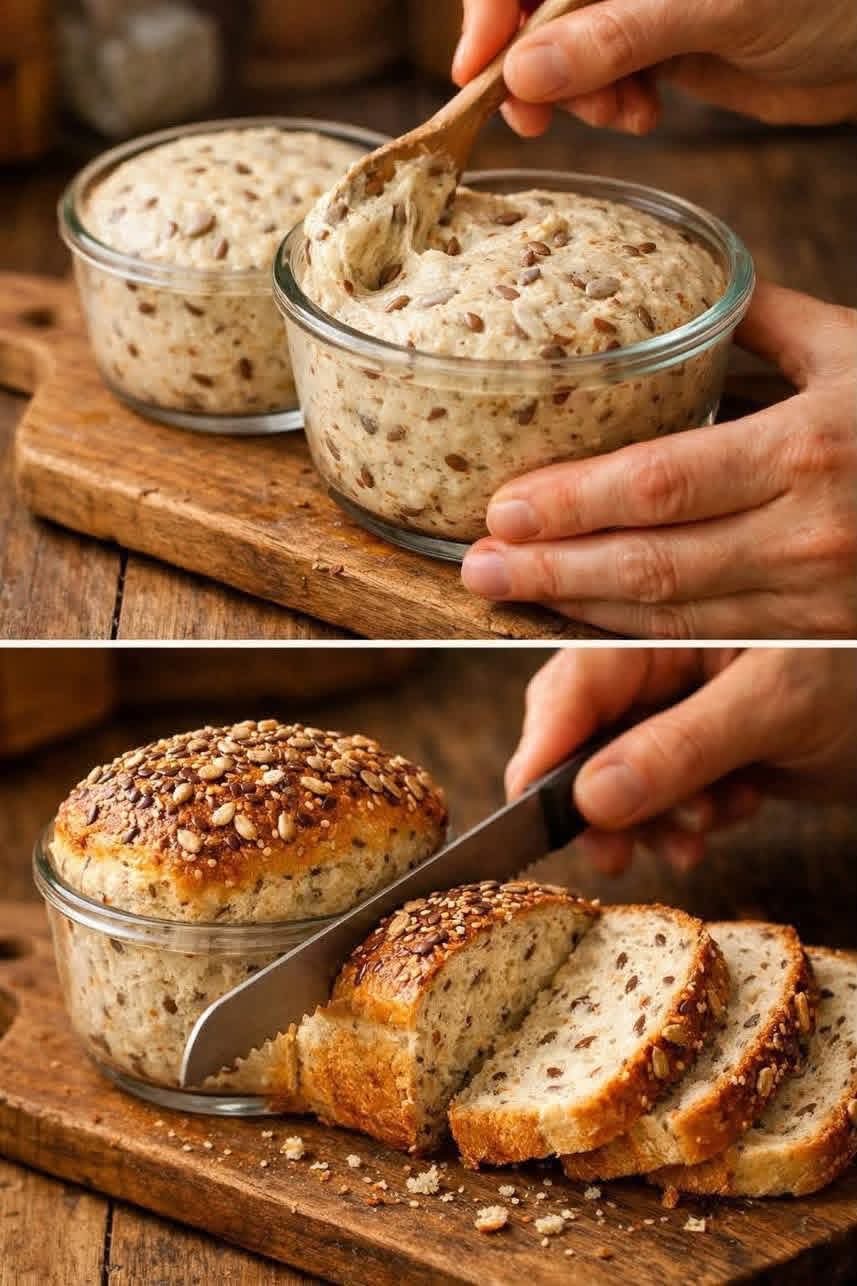
This Homemade Seeded Bread in a Jar is a rustic, hearty loaf with a soft, tender crumb and a beautifully golden, crunchy seed-covered crust.
The dough is packed with nutritious seeds and baked in glass jars or small oven-safe baking containers to create a unique homemade bread that is both practical and visually impressive.
The finished bread has a wonderful nutty flavor and is perfect for breakfast, sandwiches, toast, or serving alongside soups and salads.
If you’re looking for an easy homemade bread recipe, healthy seeded bread, or a rustic loaf with excellent texture, this recipe is a delicious option.
Recipe Overview
| Recipe Detail | Information |
| Prep Time | 25 minutes |
| First Rise | 1½–2 hours |
| Second Rise | 30–45 minutes |
| Bake Time | 30–40 minutes |
| Total Time | About 3 hours |
| Yield | 2 small loaves |
| Servings | 12–16 slices |
| Difficulty | Easy–Intermediate |
| Oven Temperature | 375°F (190°C) |
| Course | Breakfast / Bread |
| Cuisine | Rustic European-inspired |
Why You’ll Love This Recipe
This bread has a wonderfully soft interior surrounded by a golden, crunchy crust.
A combination of sunflower, pumpkin, flax, sesame, and other seeds gives the loaf a delicious nutty flavor and pleasant texture.
The dough is simple to prepare and does not require complicated bread-making techniques.
Baking the dough in straight-sided oven-safe glass containers gives the finished loaves their distinctive shape.
The bread is delicious toasted with butter, topped with cheese, used for sandwiches, or served alongside a warm bowl of soup.
Ingredients
For the Bread Dough
| Ingredient | Amount |
| Bread flour | 3 cups (375 g) |
| Whole-wheat flour | 1 cup (125 g) |
| Warm water | 1¾ cups (420 ml) |
| Instant yeast | 2¼ teaspoons (7 g) |
| Honey or maple syrup | 1 tablespoon |
| Olive oil | 2 tablespoons |
| Fine sea salt | 1½ teaspoons |
| Sunflower seeds | ¼ cup (35 g) |
| Pumpkin seeds | ¼ cup (35 g) |
| Ground flaxseed | 2 tablespoons |
| Sesame seeds | 2 tablespoons |
| Chia seeds | 1 tablespoon |
For the Seed Topping
| Ingredient | Amount |
| Sunflower seeds | 2 tablespoons |
| Pumpkin seeds | 2 tablespoons |
| Sesame seeds | 1 tablespoon |
| Flaxseeds | 1 tablespoon |
| Water | 1 tablespoon |
Step-by-Step Instructions
Prepare the Seed Mixture
Combine the sunflower seeds, pumpkin seeds, ground flaxseed, sesame seeds, and chia seeds in a small bowl.
Set them aside while preparing the dough.
Using a combination of seeds gives the bread a much more interesting flavor and texture than using only one type.
Activate the Yeast
Pour the warm water into a large mixing bowl.
The water should be warm but not hot, ideally around 100–110°F (38–43°C).
Add the honey or maple syrup and yeast.
Stir gently.
Allow the mixture to stand for approximately 5 minutes.
If using instant yeast, it can also be mixed directly with the dry ingredients.
Combine the Flours
In a separate bowl, combine the bread flour, whole-wheat flour, and salt.
Whisk briefly to distribute the ingredients evenly.
Make the Dough
Add the flour mixture to the water and yeast mixture.
Add the olive oil.
Mix with a wooden spoon or sturdy spatula until a rough dough forms.
The dough should be soft and slightly sticky.
Knead the Dough
Transfer the dough to a lightly floured work surface.
Knead for approximately 8–10 minutes.
Alternatively, use a stand mixer fitted with a dough hook and knead on low-medium speed for approximately 6–8 minutes.
The dough should become smoother and more elastic.
Avoid adding too much flour.
A slightly tacky dough helps produce a softer loaf.
Add the Seeds
Flatten the dough slightly.
Sprinkle the prepared seed mixture over the surface.
Fold the dough over itself several times to distribute the seeds throughout.
Continue kneading gently for another 1–2 minutes.
The seeds should be evenly incorporated.
First Rise
Place the dough into a lightly oiled bowl.
Cover with plastic wrap or a clean kitchen towel.
Leave it in a warm, draft-free place for approximately 1½–2 hours.
The dough should become noticeably larger and approximately double in volume.
The exact rising time will depend on the temperature of your kitchen.
Prepare the Glass Containers
Use oven-safe glass jars or glass baking containers specifically rated for baking.
Do not use ordinary decorative, storage, or non-oven-safe glass jars.
Lightly grease the inside of two containers.
The containers should have enough room for the dough to expand during proofing and baking.
Do not fill them more than approximately one-third full with dough.
Shape the Dough
Gently press the dough down to release excess air.
Divide it into two equal portions.
Shape each portion into a smooth ball or slightly elongated loaf.
Place one portion into each prepared container.
The dough should sit loosely inside the container.
Second Rise
Cover the containers loosely with a clean towel.
Allow the dough to rise for approximately 30–45 minutes.
The dough should become visibly puffy.
Do not allow it to rise excessively because the dough will continue expanding in the oven.
Add the Seed Topping
Lightly brush the surface of each loaf with water.
Sprinkle the sunflower seeds, pumpkin seeds, sesame seeds, and flaxseeds over the top.
Gently press the seeds into the dough so they adhere during baking.
Bake
Preheat the oven to 375°F (190°C).
Place the oven-safe containers on a baking sheet.
Bake for approximately 30–40 minutes.
The bread should develop a deep golden-brown crust.
If the top becomes dark too quickly, loosely cover it with aluminum foil during the final portion of baking.
For the most accurate result, the internal temperature of the bread should reach approximately 190–200°F (88–93°C).
Cool the Bread
Carefully remove the containers from the oven.
Allow them to cool for approximately 10–15 minutes.
If the bread is baked in a container designed for easy removal, carefully turn the loaf out.
Place the bread on a wire rack.
Allow it to cool for at least 45–60 minutes before slicing.
This is important because the crumb continues to set as the bread cools.
Best Tips
Use a kitchen scale when possible for the most consistent bread results.
Do not make the water too hot because excessive heat can damage the yeast.
Keep the dough slightly soft and tacky rather than adding large amounts of flour.
Give the dough enough time to rise. A slow, proper fermentation creates better flavor and texture.
Toast the seeds lightly before adding them if you want a deeper, nuttier flavor.
Do not fill the containers too high because the dough expands substantially during proofing and baking.
Always verify that your glass containers are specifically labeled as oven-safe.
Never place cold glass containers directly into a very hot oven if the manufacturer does not specifically allow that use.
Best Ingredient Options
Flour
Bread flour creates a stronger, chewier structure.
Whole-wheat flour adds flavor and a slightly denser texture.
For a lighter loaf, replace some of the whole-wheat flour with additional bread flour.
Seeds
Sunflower seeds provide a mild, buttery flavor.
Pumpkin seeds add crunch and a slightly sweet nuttiness.
Flaxseed gives the bread an earthy flavor.
Sesame seeds contribute a delicate toasted aroma.
Chia seeds can be included in small quantities for additional texture.
Sweetener
Honey adds subtle sweetness and pairs beautifully with whole grains.
Maple syrup can be used for a slightly different flavor.
Oil
Extra-virgin olive oil gives the bread a mild savory character.
Neutral oil can also be used.
Recipe Variations
Multigrain Seeded Bread
Replace ½ cup of the bread flour with your favorite multigrain flour blend.
Add additional sunflower and pumpkin seeds to the topping.
Herb Seed Bread
Add 1 teaspoon dried rosemary and 1 teaspoon dried thyme to the dough.
This version is particularly good with soups and roasted vegetables.
Garlic Seed Bread
Add 1 teaspoon garlic powder to the dough.
For a stronger flavor, mix in finely minced roasted garlic.
Honey Oat Seed Bread
Replace ½ cup of the flour with rolled oats.
Increase the honey to 2 tablespoons for a slightly sweeter loaf.
Cranberry Seed Bread
Add ½ cup dried cranberries to the dough along with the seeds.
The sweet-tart cranberries pair wonderfully with pumpkin and sunflower seeds.
Walnut Seed Bread
Add ½ cup chopped walnuts to the dough.
This creates a particularly hearty and crunchy loaf.
What to Serve With
This seeded bread is excellent toasted with butter and honey.
Serve it with scrambled eggs or omelets for a satisfying breakfast.
It also makes excellent sandwiches with turkey, chicken, cheese, roasted vegetables, or avocado.
For a simple snack, toast a slice and top it with cream cheese and fresh fruit.
The bread is also wonderful alongside creamy soups, lentil soup, vegetable soup, or hearty stews.
For a Mediterranean-inspired serving, add olive oil, tomatoes, olives, and soft cheese.
Make-Ahead Instructions
The dough can be prepared the evening before.
After kneading and adding the seeds, place the covered dough in the refrigerator.
Allow it to rise slowly overnight.
The following day, let the dough sit at room temperature for approximately 30–60 minutes before shaping.
Place it into the prepared containers and allow it to complete its second rise before baking.
This method can also improve the flavor of the finished bread.
Storage
Allow the bread to cool completely before storing.
Place it in an airtight bread bag or container.
Store at room temperature for approximately 3 days.
For the best texture, avoid storing homemade bread in the refrigerator because refrigeration can accelerate staling.
Reheating
Individual slices can be toasted until crisp and golden.
For a softer slice, warm it in the microwave for approximately 10–15 seconds.
You can also wrap the loaf loosely in foil and warm it in a 300°F (150°C) oven for approximately 10 minutes.
Freezing
This bread freezes very well.
Allow the loaf to cool completely.
Slice it before freezing so you can remove only the amount you need.
Place the slices in a freezer-safe bag with parchment paper between them if desired.
Freeze for up to 3 months for the best quality.
Thaw individual slices at room temperature or toast them directly from frozen.
Common Mistakes to Avoid
Using Non-Oven-Safe Glass
This is the most important safety consideration.
Only use glass containers specifically designed and rated for oven baking.
Never assume that an ordinary storage jar is safe for baking.
Filling the Containers Too Much
The dough expands considerably.
Filling the containers too high can cause the dough to overflow.
Keep the dough level relatively low before proofing.
Adding Too Much Flour
A very stiff dough produces a dense loaf.
The dough should remain soft and slightly tacky.
Not Kneading Enough
Proper kneading develops the gluten structure needed for a light, airy crumb.
Overproofing
If the dough rises excessively, it can collapse during baking.
Bake when the dough is visibly puffy and has increased substantially in volume.
Cutting the Bread Too Early
Fresh bread needs time to cool.
Cutting immediately after baking can produce a gummy or compressed interior.
Using Too Many Seeds Inside the Dough
Seeds add flavor and texture, but excessive amounts can make the dough heavy.
Keep the quantities balanced for a soft crumb.
Nutrition Estimate
Nutrition values are approximate and depend on the exact ingredients and portion size.
| Nutrition | Approximate Amount Per Serving |
| Calories | 220 kcal |
| Protein | 7 g |
| Carbohydrates | 34 g |
| Fat | 7 g |
| Saturated Fat | 1 g |
| Fiber | 4 g |
| Sugar | 3 g |
| Sodium | 290 mg |
| Calcium | 45 mg |
| Iron | 2 mg |
Frequently Asked Questions
Can I use regular glass jars?
Only if the manufacturer specifically states that they are oven-safe for baking at the temperature used.
Ordinary food-storage jars are not automatically suitable for oven baking and can break from thermal stress.
Can I bake this bread in a loaf pan?
Yes.
A standard 9 × 5-inch loaf pan works very well.
The baking time may need to be adjusted depending on the size and shape of the loaf.
Can I use only whole-wheat flour?
You can, but the bread will be denser and have a stronger whole-grain flavor.
For a lighter texture, combine whole-wheat flour with bread flour.
Why is my bread dense?
Dense bread can result from inactive yeast, insufficient kneading, too much flour, or underproofing.
Make sure the yeast is fresh and allow the dough enough time to rise.
Can I use different seeds?
Absolutely.
Hemp seeds, poppy seeds, sesame seeds, sunflower seeds, pumpkin seeds, and flaxseed can all be used.
Should I toast the seeds first?
It is optional.
Lightly toasting the seeds before adding them can give the bread a deeper, nuttier flavor.
How do I know when the bread is fully baked?
The crust should be deeply golden and the internal temperature should be approximately 190–200°F (88–93°C).
The loaf should sound slightly hollow when tapped.
Can I make this bread without honey?
Yes.
Replace the honey with maple syrup or use a small amount of sugar.
You can also omit it if preferred.
Can I make smaller individual breads?
Yes.
Divide the dough into smaller portions and place them into appropriately sized oven-safe baking containers.
Reduce the baking time and check the internal temperature earlier.
Final Thoughts
This Homemade Seeded Bread in a Jar is a fun and delicious way to create rustic bakery-style bread at home.
The combination of soft, flavorful bread and a crunchy mixture of seeds makes every slice satisfying.
For the best results, keep the dough soft, allow sufficient rising time, and avoid overfilling the baking containers.
Most importantly, use only properly rated oven-safe containers and follow the manufacturer’s instructions for baking.
Enjoy the finished bread toasted with butter, layered into sandwiches, or served alongside your favorite homemade soup.