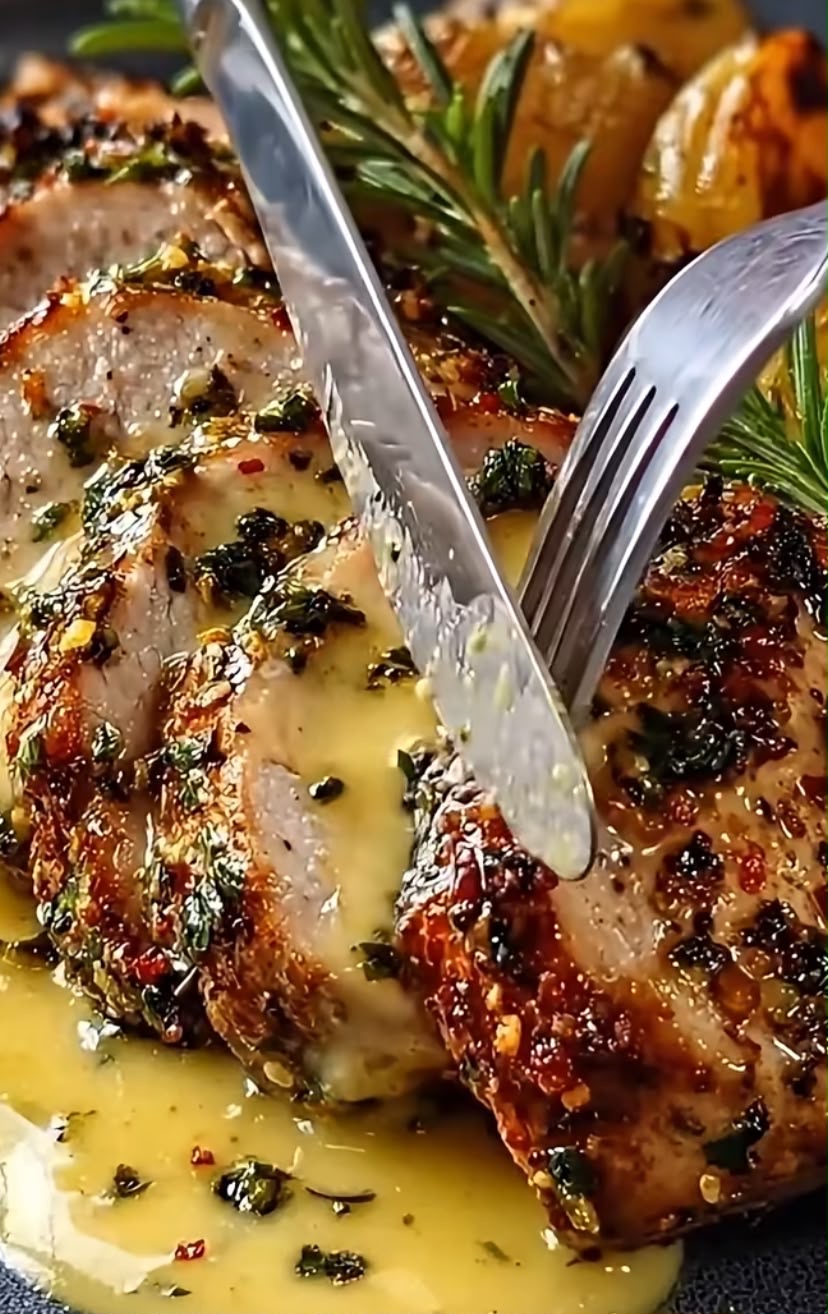
The image appears to show juicy roasted pork tenderloin sliced and coated with a rich garlic-herb butter sauce, with rosemary and roasted vegetables on the side. Here’s a complete recipe designed to recreate that look and flavor.
Introduction
This Garlic Herb Butter Roasted Pork Tenderloin is tender, juicy, beautifully browned, and packed with garlic, rosemary, thyme, and buttery flavor. The pork is first seared to develop a golden crust, then finished in the oven with a fragrant herb butter that melts over the meat as it cooks.
It is an easy restaurant-style dinner that works equally well for a weeknight meal, Sunday dinner, or special occasion.
Recipe Overview
| Category | Details |
| Recipe | Garlic Herb Butter Roasted Pork Tenderloin |
| Prep Time | 10 minutes |
| Cook Time | 20–25 minutes |
| Resting Time | 5–10 minutes |
| Total Time | About 40 minutes |
| Servings | 4 |
| Difficulty | Easy |
| Cooking Method | Searing + roasting |
| Main Flavor | Garlic, butter & fresh herbs |
Why You’ll Love This Recipe
This pork tenderloin has a gorgeous golden-brown crust while staying tender and juicy inside. The combination of melted butter, fresh garlic, rosemary, thyme, and a touch of red pepper flakes creates a rich sauce that coats every slice.
It also requires simple ingredients and comes together quickly, making it ideal when you want an impressive dinner without spending hours in the kitchen.
Ingredients
For the Pork
| Ingredient | Amount |
| Pork tenderloin | 1½ lb (680 g) |
| Olive oil | 1 tbsp |
| Salt | 1 tsp |
| Black pepper | ½ tsp |
| Garlic powder | ½ tsp |
| Paprika | ½ tsp |
Garlic Herb Butter
| Ingredient | Amount |
| Unsalted butter | 4 tbsp |
| Fresh garlic, minced | 4–5 cloves |
| Fresh rosemary, chopped | 1 tbsp |
| Fresh thyme leaves | 1 tsp |
| Fresh parsley, chopped | 1 tbsp |
| Red pepper flakes | ¼ tsp |
| Lemon juice | 1 tsp |
Optional Roasted Vegetables
| Ingredient | Amount |
| Baby potatoes | 1 lb |
| Carrots | 3 |
| Olive oil | 1 tbsp |
| Salt | To taste |
| Black pepper | To taste |
| Fresh rosemary | 1 sprig |
Step-by-Step Instructions
1. Prepare the Pork
Remove the pork tenderloin from the refrigerator about 15–20 minutes before cooking.
Pat it thoroughly dry with paper towels. Trim away any visible silver skin or excess fat.
Season all sides with salt, black pepper, garlic powder, and paprika.
2. Make the Herb Butter
In a small bowl, combine the softened butter, minced garlic, rosemary, thyme, parsley, red pepper flakes, and lemon juice.
Mix until evenly combined.
3. Sear the Tenderloin
Heat the olive oil in a large oven-safe skillet over medium-high heat.
Once hot, add the pork tenderloin.
Sear for approximately 2–3 minutes per side, turning until all sides are deeply golden brown.
The goal is to develop a flavorful crust rather than cook the pork completely at this stage.
4. Add the Garlic Herb Butter
Reduce the heat slightly.
Add the garlic herb butter to the skillet and allow it to melt around the pork.
Spoon the melted butter over the tenderloin several times.
5. Roast
Transfer the skillet to a preheated 400°F (200°C) oven.
Roast for approximately 12–18 minutes, depending on the thickness of the tenderloin.
For the most accurate result, use an instant-read thermometer. Pork tenderloin should reach 145°F (63°C) internally, followed by a short resting period.
6. Baste the Pork
Halfway through roasting, carefully spoon the melted garlic herb butter over the pork.
This helps create the glossy, flavorful coating visible in the finished dish.
7. Rest
Remove the pork from the oven and let it rest for 5–10 minutes before slicing.
This allows the juices to redistribute and helps keep the meat moist.
8. Slice and Serve
Slice the tenderloin into thick medallions.
Arrange the slices on a serving plate and spoon the remaining garlic herb butter from the skillet over the top.
Garnish with fresh rosemary and parsley.
Best Tips
For exceptionally juicy pork, avoid cooking it far beyond the recommended internal temperature. A thermometer is much more reliable than judging doneness by cooking time alone.
Drying the pork thoroughly before seasoning is also important because excess moisture prevents proper browning. Give every side enough contact with the hot skillet to develop a deep golden crust.
Don’t skip the resting period. Even five minutes makes a noticeable difference in the texture of the sliced pork.
For maximum flavor, use fresh garlic and fresh rosemary whenever possible. They give the butter sauce a much more aromatic flavor than dried herbs alone.
Best Ingredient Options
Pork tenderloin: Pork loin can be substituted, but it is larger and requires a different cooking time. Pork tenderloin is preferable for this particular recipe because it cooks quickly and remains naturally tender.
Butter: Unsalted butter gives you better control over the salt level. Salted butter can also be used; simply reduce the additional salt.
Herbs: Fresh rosemary and thyme provide the best flavor, but dried herbs can work in a pinch. Use smaller quantities because dried herbs are more concentrated.
Olive oil: Extra-virgin olive oil works well for searing, although a neutral cooking oil can also be used.
Recipe Variations
For a lemon garlic pork tenderloin, increase the lemon juice to 1 tablespoon and add a little fresh lemon zest to the herb butter.
For a spicy version, increase the red pepper flakes or add a pinch of cayenne pepper to the seasoning.
For a honey garlic version, add 1 tablespoon of honey to the herb butter for a slightly sweet and caramelized finish.
For a Parmesan herb crust, sprinkle finely grated Parmesan over the pork during the final few minutes of roasting.
What to Serve With
This pork pairs beautifully with roasted baby potatoes, carrots, green beans, asparagus, mashed potatoes, roasted Brussels sprouts, or a simple green salad.
For the presentation shown in the image, roasted potatoes and vegetables work especially well because they can soak up the garlic herb butter from the skillet.
Make-Ahead Instructions
The herb butter can be prepared up to 2 days ahead and stored covered in the refrigerator.
The pork can also be seasoned several hours before cooking. Keep it refrigerated until about 15–20 minutes before searing.
For the best texture, sear and roast the pork shortly before serving.
Storage
Allow leftover pork to cool, then place it in an airtight container.
Refrigerate for up to 3–4 days.
Store any remaining herb butter or pan juices with the pork if possible to help prevent it from drying out.
Reheating
For the best results, gently reheat sliced pork in a covered skillet over low heat with a tablespoon or two of broth, water, or leftover herb butter.
Heat only until warmed through. Avoid prolonged high heat because pork tenderloin can become dry.
Freezing
Cooked pork tenderloin can be frozen for up to 2–3 months when tightly wrapped and stored in a freezer-safe container.
For better results, slice the pork after thawing rather than before freezing.
Thaw overnight in the refrigerator and reheat gently.
Common Mistakes to Avoid
Skipping the sear: Roasting the pork without first developing a crust means you miss much of the caramelized flavor.
Using wet pork: Excess moisture makes browning difficult. Always pat the tenderloin dry before seasoning.
Overcooking: Pork tenderloin is lean and can become dry if cooked too long. Use a thermometer whenever possible.
Cutting immediately: Slicing straight from the oven allows more juices to escape. Give the meat several minutes to rest.
Burning the garlic: Garlic can burn quickly in a very hot pan. Add the herb butter after the initial searing and monitor the heat carefully.
Nutrition Estimate
Approximate values per serving, assuming 4 servings and excluding optional vegetables.
| Nutrient | Approximate Amount |
| Calories | 430 kcal |
| Protein | 42 g |
| Fat | 27 g |
| Saturated Fat | 11 g |
| Carbohydrates | 3 g |
| Fiber | 0.5 g |
| Sugar | 0.5 g |
| Sodium | 650 mg |
Frequently Asked Questions
Can I use pork loin instead of pork tenderloin?
Yes, but pork loin is considerably larger and thicker. It will require a longer cooking time, so rely on the internal temperature rather than the time listed for tenderloin.
How do I know when pork tenderloin is done?
The safest approach is to check the thickest part with an instant-read thermometer. The target is 145°F (63°C), followed by resting.
Can I make this without an oven-safe skillet?
Yes. Sear the pork in a regular skillet, then transfer it to a baking dish with the herb butter and finish it in the oven.
Can I use dried rosemary?
Yes. Use approximately 1 teaspoon dried rosemary in place of 1 tablespoon fresh rosemary.
Why is my pork dry?
The most common reason is overcooking. Pork tenderloin is lean, so monitoring its internal temperature is more reliable than following a fixed cooking time.
Conclusion
This Garlic Herb Butter Roasted Pork Tenderloin delivers everything you want from an easy impressive dinner: a deeply browned crust, juicy slices, fragrant rosemary and garlic, and plenty of buttery pan sauce.
Serve it with roasted potatoes and vegetables, spoon the herb butter over the sliced pork, and finish with fresh rosemary for a beautiful restaurant-style presentation.