Introduction
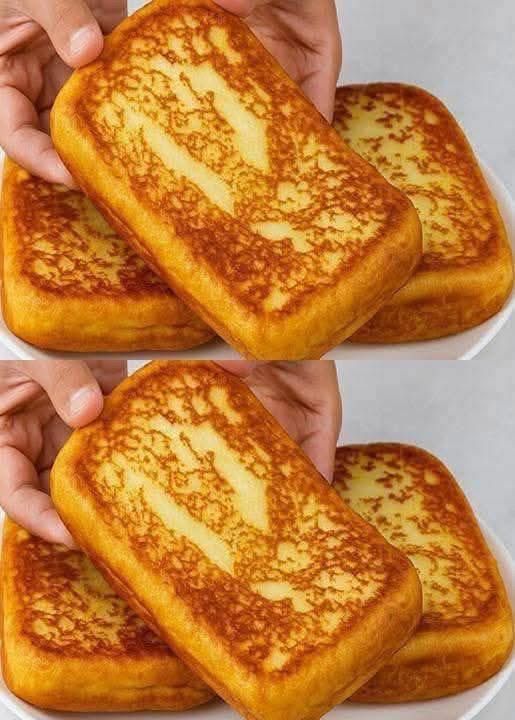
This Golden Milk Bread Toast is a simple homemade treat with a beautifully golden, crisp exterior and a soft, tender center. Each thick slice is lightly caramelized on the outside while remaining fluffy and rich inside, making it perfect for breakfast, brunch, or an afternoon snack.
Made with everyday pantry ingredients such as flour, milk, eggs, sugar, and butter, this easy bread recipe doesn’t require complicated techniques. The result is a batch of thick, golden bread pieces that look bakery-worthy but are surprisingly easy to make at home.
Serve them warm with butter, honey, jam, condensed milk, or your favorite spread for a comforting homemade breakfast that the whole family will enjoy.
Recipe Overview
| Category | Details |
| Recipe Name | Golden Milk Bread Toast |
| Preparation Time | 20 minutes |
| Resting Time | 1–1½ hours |
| Cooking Time | 15–20 minutes |
| Total Time | About 2 hours |
| Servings | 6–8 pieces |
| Difficulty | Easy to Moderate |
| Texture | Soft, fluffy center with a golden crust |
| Flavor | Milky, buttery, lightly sweet |
| Best For | Breakfast, brunch, snack |
| Cooking Method | Pan-fried |
Why You’ll Love This Recipe
This homemade milk bread is wonderfully soft inside while developing a rich golden crust when cooked in a buttered pan. The combination of milk, butter, and a touch of sugar gives the bread a subtle sweetness that makes it delicious even without toppings.
Unlike complicated bakery-style breads, this recipe uses simple ingredients and straightforward steps. Once the dough is kneaded and allowed to rise, the pieces are shaped and cooked until beautifully golden.
The thick rectangular shape also makes this bread especially satisfying. Each piece has plenty of soft interior crumb surrounded by a lightly crisp, caramelized surface.
It’s also incredibly versatile. You can enjoy it sweet with honey or jam, turn it into French toast, or serve it alongside eggs and savory breakfast dishes.
Ingredients
For the Milk Bread Dough
| Ingredient | Amount |
| All-purpose flour | 300 g (2½ cups) |
| Warm milk | 180 ml (¾ cup) |
| Granulated sugar | 35 g (3 tbsp) |
| Egg | 1 large |
| Unsalted butter, softened | 30 g (2 tbsp) |
| Instant yeast | 1 tsp |
| Salt | ½ tsp |
| Vanilla extract | 1 tsp |
For Cooking
| Ingredient | Amount |
| Unsalted butter | 2–3 tbsp |
| Neutral oil | 1 tsp, optional |
Optional Toppings
| Ingredient | Amount |
| Honey | As desired |
| Condensed milk | As desired |
| Jam | As desired |
| Powdered sugar | For dusting |
| Butter | For serving |
Step-by-Step Instructions
1. Activate the Yeast
Pour the warm milk into a large mixing bowl.
The milk should feel warm but not hot, ideally around 100–110°F (38–43°C).
Add the sugar and instant yeast. Stir gently and allow the mixture to stand for about 5–10 minutes.
If the mixture becomes slightly foamy, the yeast is active.
2. Make the Dough
Add the egg and vanilla extract to the milk mixture and whisk until combined.
Gradually add the flour and salt, mixing with a wooden spoon or spatula until a soft dough begins to form.
The dough should be soft and slightly tacky but not excessively sticky.
3. Add the Butter
Add the softened butter and knead it into the dough.
Continue kneading for approximately 8–10 minutes by hand, or around 5–7 minutes using a stand mixer.
The dough should become smooth, elastic, and slightly glossy.
Avoid adding too much extra flour. A slightly soft dough produces a more tender finished bread.
4. Let the Dough Rise
Shape the dough into a ball and place it in a lightly greased bowl.
Cover it with plastic wrap or a clean kitchen towel.
Leave it in a warm place for approximately 60–90 minutes, or until it has roughly doubled in size.
The exact rising time will depend on the temperature of your kitchen.
5. Divide the Dough
Once the dough has risen, gently press it down to release excess air.
Transfer it to a lightly floured surface and divide it into 6–8 equal portions.
Shape each piece into a smooth rectangle or oval.
6. Shape the Bread
For the thick rectangular shape shown in the photo, gently flatten each piece into a compact rectangle.
Avoid making the pieces too thin. Keeping them relatively thick helps create the soft, fluffy center.
Place the shaped pieces on a lightly greased tray, cover them, and allow them to rest for another 15–20 minutes.
7. Heat the Pan
Place a large non-stick skillet or heavy-bottomed frying pan over low to medium-low heat.
Add a small amount of butter.
The pan should be hot enough to brown the bread gradually but not so hot that the outside burns before the center is cooked.
8. Cook the Bread
Place the bread pieces in the pan, leaving enough space between them.
Cook for approximately 3–5 minutes per side, depending on their thickness.
Turn them gently when the bottom becomes golden brown.
Continue cooking all sides until they develop an even, deep golden color.
If the bread is particularly thick, reduce the heat to low and cover the pan for a few minutes. This allows the center to cook gently without over-browning the crust.
9. Finish and Serve
Transfer the golden bread to a plate and brush lightly with melted butter while still warm.
Serve immediately with honey, jam, condensed milk, butter, or powdered sugar.
Best Tips
The temperature of the milk is important. Milk that is too hot can damage the yeast, while milk that is too cool will slow down the rising process.
Don’t add too much flour while kneading. It can be tempting to keep adding flour when the dough feels sticky, but excessive flour will produce a heavier and drier bread.
Give the dough enough time to rise. A properly risen dough should feel light and airy and should roughly double in volume.
Cook the bread over low to medium-low heat. Thick pieces need time to cook through, and high heat can cause the outside to become dark before the center is ready.
For the beautifully golden finish shown in the photo, use a small amount of butter in the pan and turn the bread regularly so that all sides brown evenly.
Best Ingredient Options
Flour
All-purpose flour works perfectly for this recipe. Bread flour can also be used and will produce a slightly chewier texture.
Milk
Whole milk gives the richest flavor and softest crumb. You can use semi-skimmed milk, although the bread may be slightly less rich.
Butter
Unsalted butter provides the best control over the salt level. For a richer flavor, use good-quality butter.
Sweetener
Granulated sugar works well, but honey can replace part of the sugar for a slightly different flavor.
Yeast
Instant yeast is the easiest option. Active dry yeast can also be used, although it may require slightly more activation time.
Recipe Variations
Honey Milk Bread
Replace 1 tablespoon of the sugar with honey. The bread will have a subtle floral sweetness and a beautifully golden crust.
Cinnamon Milk Bread
Add 1 teaspoon of ground cinnamon to the dough for a warm, aromatic version perfect for breakfast.
Chocolate Milk Bread
Add a small amount of chocolate chips to each piece before shaping. Seal the dough well so the chocolate remains inside while cooking.
Coconut Milk Bread
Replace part of the regular milk with coconut milk and add 2 tablespoons of finely shredded coconut.
Cheese Milk Bread
For a savory version, reduce the sugar slightly and add grated cheddar, mozzarella, or another melting cheese to the dough.
French Toast Style
Slice the finished bread thickly, dip it in an egg-and-milk mixture, and pan-fry it with butter until golden. Serve with maple syrup and fresh fruit.
What to Serve With
This golden milk bread is delicious with a wide variety of toppings.
For a sweet breakfast, serve it warm with butter and honey, strawberry jam, chocolate spread, or condensed milk.
Fresh fruit such as bananas, strawberries, blueberries, or sliced peaches also pairs beautifully with the soft bread.
For a savory breakfast, serve it with scrambled eggs, omelets, cheese, or grilled vegetables.
A cup of coffee, tea, hot chocolate, or warm milk makes the perfect drink alongside these golden bread pieces.
Make-Ahead Instructions
The dough can be prepared the night before.
After kneading, place the covered dough in the refrigerator and allow it to rise slowly overnight.
The following day, let the dough sit at room temperature for approximately 20–30 minutes, then divide, shape, and cook as directed.
You can also shape the bread ahead of time and keep the covered pieces refrigerated until you’re ready to cook them.
Storage
Allow the cooked bread to cool completely before storing.
Place the pieces in an airtight container or zip-top bag.
They can be kept at room temperature for approximately 2 days.
For longer storage, refrigerate for up to 4–5 days, although the bread is best when freshly prepared.
Reheating
For the softest texture, reheat the bread in a skillet over low heat for a few minutes.
You can also microwave one piece for approximately 10–15 seconds.
For a slightly crisp exterior, reheat it in a toaster oven or conventional oven at 325°F (165°C) for approximately 5–8 minutes.
Freezing
The cooked bread can be frozen for up to 2 months.
Allow it to cool completely before wrapping each piece individually in plastic wrap or freezer-safe material.
Place the wrapped pieces in a freezer bag and remove as much excess air as possible.
To serve, thaw at room temperature and reheat gently in a skillet or oven.
You can also freeze the shaped, unbaked dough. Thaw it in the refrigerator overnight, allow it to come closer to room temperature, and then cook as directed.
Common Mistakes to Avoid
Using milk that is too hot
Very hot milk can prevent the yeast from working properly. Always use comfortably warm milk rather than steaming-hot milk.
Adding too much flour
A stiff dough will produce dense bread. Keep the dough soft and knead it until it becomes smooth and elastic.
Skipping the first rise
The first rise is essential for developing the light, airy texture. Don’t rush this step.
Cooking over high heat
High heat will brown the exterior too quickly. Since these pieces are thick, they need gentle heat to cook all the way through.
Making the bread too thin
The thick shape is part of what makes this bread so soft and satisfying. Keep the pieces reasonably thick when shaping.
Not covering the bread while cooking
If the bread is browning quickly but the center remains undercooked, cover the pan and reduce the heat. This helps the interior cook without burning the outside.
Estimated Nutrition
Approximate values per serving, based on 8 pieces and excluding optional toppings.
| Nutrient | Per Serving |
| Calories | ~235 kcal |
| Carbohydrates | ~34 g |
| Protein | ~6 g |
| Fat | ~8 g |
| Saturated Fat | ~4 g |
| Sugar | ~6 g |
| Fiber | ~1 g |
| Sodium | ~190 mg |
Frequently Asked Questions
Is this bread sweet?
It is lightly sweet rather than dessert-sweet. This makes it versatile enough to serve with both sweet and savory toppings.
Can I make this bread without eggs?
Yes. You can replace the egg with a suitable egg substitute, although the finished bread may be slightly less rich and tender.
Why is my bread dense?
Dense bread is usually caused by too much flour, insufficient kneading, inactive yeast, or not allowing the dough enough time to rise.
Can I bake this bread instead of pan-frying it?
Yes. Place the shaped dough on a lined baking tray and bake at approximately 350°F (175°C) for 18–25 minutes, or until golden brown.
Can I use whole-wheat flour?
You can replace part of the all-purpose flour with whole-wheat flour. For the softest texture, keep at least half of the flour as regular all-purpose flour.
Can I make the dough without a stand mixer?
Absolutely. Kneading by hand works very well. It may take approximately 8–10 minutes to develop a smooth, elastic dough.
How do I get the bread as golden as the photo?
Cook it slowly in a buttered pan over low to medium-low heat. Turn it regularly so all sides have time to develop an even golden-brown crust.
What is the best way to eat this bread?
It’s delicious warm with butter and honey, condensed milk, jam, chocolate spread, or powdered sugar. For a savory option, pair it with eggs and cheese.
Conclusion
This Golden Milk Bread Toast is a wonderfully simple homemade recipe that delivers a soft, fluffy interior and an irresistible golden-brown crust. The combination of milk, butter, egg, and a touch of sugar creates a rich yet delicate flavor that makes these thick bread pieces perfect for breakfast or an afternoon treat.
Whether you enjoy them with honey and butter, turn them into French toast, or pair them with savory breakfast dishes, these homemade golden bread pieces are sure to become a family favorite.
With a little patience during the rising process and gentle cooking over low heat, you can recreate that beautifully golden, bakery-style appearance at home.