Introduction
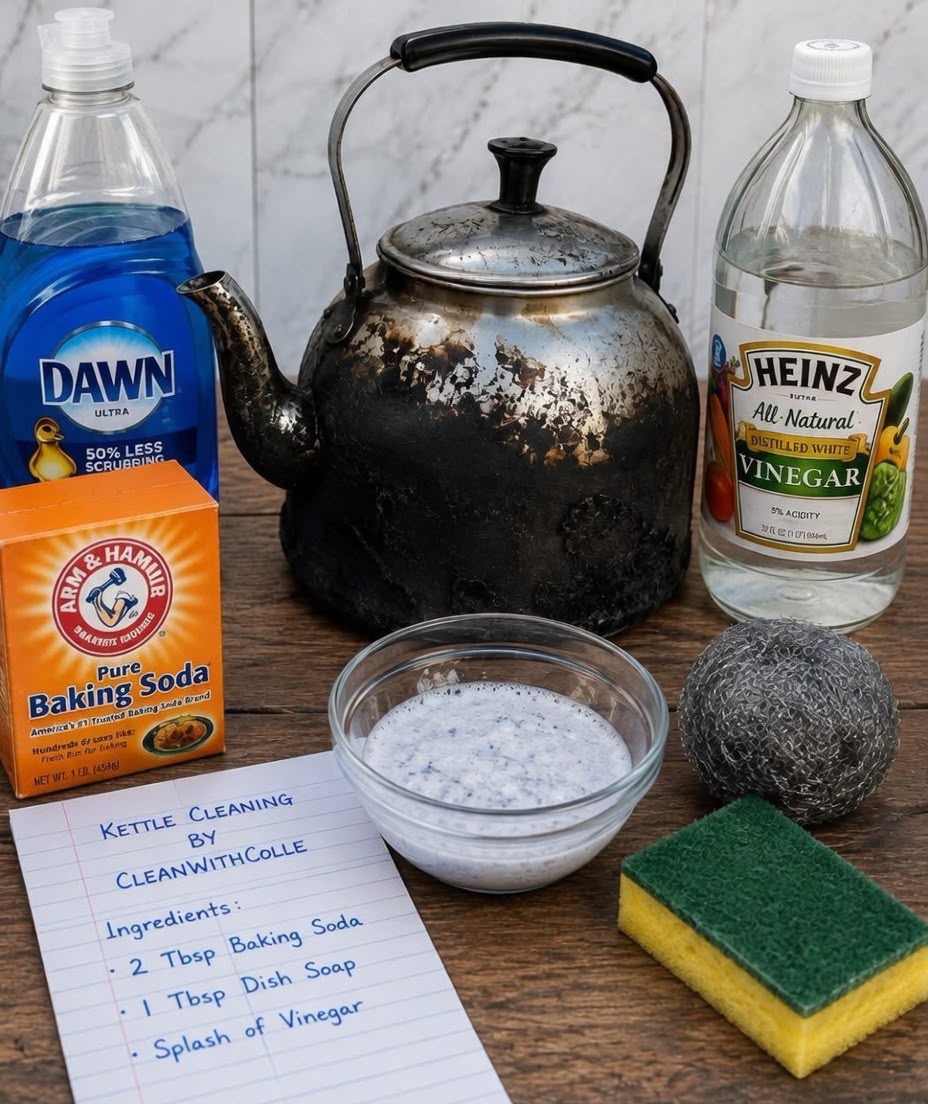
A burnt kettle can make your kitchen look untidy and become difficult to clean with ordinary soap. Fortunately, you don’t need expensive commercial cleaners to restore its shine. Using common household ingredients like baking soda, dish soap, and white vinegar, you can remove stubborn grease, burnt residue, and discoloration safely and effectively.
This easy cleaning method is affordable, beginner-friendly, and works on many stainless steel and metal kettles. With a little patience and gentle scrubbing, your kettle can look almost like new again.
Cleaning Overview
| Cleaning Details | Information |
| Method | Natural Cleaning |
| Difficulty | Easy |
| Preparation Time | 5 minutes |
| Cleaning Time | 20–30 minutes |
| Total Time | 35 minutes |
| Suitable For | Stainless Steel & Metal Kettles |
| Cost | Budget-Friendly |
Why You’ll Love This Cleaning Method
This method uses inexpensive household ingredients that most people already have.
It removes stubborn burnt stains without harsh chemical cleaners.
The paste is simple to prepare and easy to apply.
It helps restore the kettle’s appearance with minimal effort.
The ingredients are versatile and can also be used to clean other cookware.
Ingredients
| Ingredient | Amount |
| Baking soda | 2 tablespoons |
| Dish soap | 1 tablespoon |
| White vinegar | 1–2 tablespoons |
| Warm water | As needed |
| Soft sponge | 1 |
| Non-scratch scrub pad | 1 |
| Fine steel wool (optional, for heavy stains) | 1 |
Step-by-Step Instructions
Make a thick paste by mixing the baking soda, dish soap, and white vinegar in a small bowl.
Apply the paste generously over the burnt areas of the kettle.
Allow the mixture to sit for 15–20 minutes to help loosen grease and burnt residue.
Use a soft sponge or non-scratch scrub pad to scrub the surface using gentle circular motions.
For stubborn exterior stains, carefully use fine steel wool with light pressure if appropriate for your kettle’s finish.
Rinse thoroughly with warm water.
Dry immediately with a soft microfiber cloth to prevent water spots.
Repeat the process if necessary for heavily burnt areas.
Best Tips
Test the cleaning paste on a small hidden area before treating the entire kettle.
Avoid using excessive force while scrubbing to prevent scratching.
Dry the kettle completely after cleaning to maintain its shine.
Clean the kettle regularly to prevent heavy grease buildup.
Best Ingredient Options
Lemon juice can replace vinegar for a fresh citrus scent.
Castile soap can be used instead of regular dish soap.
A microfiber cloth is excellent for polishing stainless steel surfaces.
Cream of tartar can help remove stubborn discoloration.
Cleaning Variations
Add a few drops of lemon essential oil for a pleasant fragrance.
Use only baking soda and water for delicate finishes.
Fill the kettle with equal parts water and white vinegar and boil it to remove mineral buildup inside the kettle.
Finish with a stainless steel polish for extra shine.
Additional Uses
This cleaning paste also works well on stainless steel pots.
It can remove burnt food from baking trays.
It helps clean oven racks and metal cookware.
It is useful for cleaning greasy stovetop surfaces.
Storage
Prepare only the amount you need for immediate use.
Discard any leftover mixture after cleaning for the best results.
Store baking soda, vinegar, and dish soap separately in a cool, dry place.
Common Mistakes to Avoid
Using abrasive tools on delicate finishes can cause scratches.
Leaving vinegar on certain metal surfaces for extended periods may dull the finish.
Mixing large amounts of vinegar and baking soda in a sealed container is not recommended because the reaction produces gas.
Skipping the soaking time makes burnt residue harder to remove.
Not rinsing thoroughly can leave a soapy residue.
Frequently Asked Questions
Can I use this on stainless steel kettles?
Yes. This method works well for most stainless steel kettles when used gently.
Can it remove heavy burnt stains?
Yes. Deep stains may require a second or third application.
Will vinegar damage my kettle?
Short contact times are generally safe for stainless steel, but avoid leaving vinegar on the exterior for extended periods and always rinse thoroughly.
Can I clean the inside of the kettle?
Yes. Boiling a solution of equal parts water and white vinegar can help remove limescale inside the kettle. Rinse several times with clean water afterward.
Final Thoughts
Keeping your kettle clean doesn’t require expensive products or harsh chemicals. With baking soda, dish soap, and white vinegar, you can tackle grease, burnt residue, and everyday stains using simple household ingredients. Regular cleaning helps extend the life of your kettle and keeps it looking its best.