Introduction
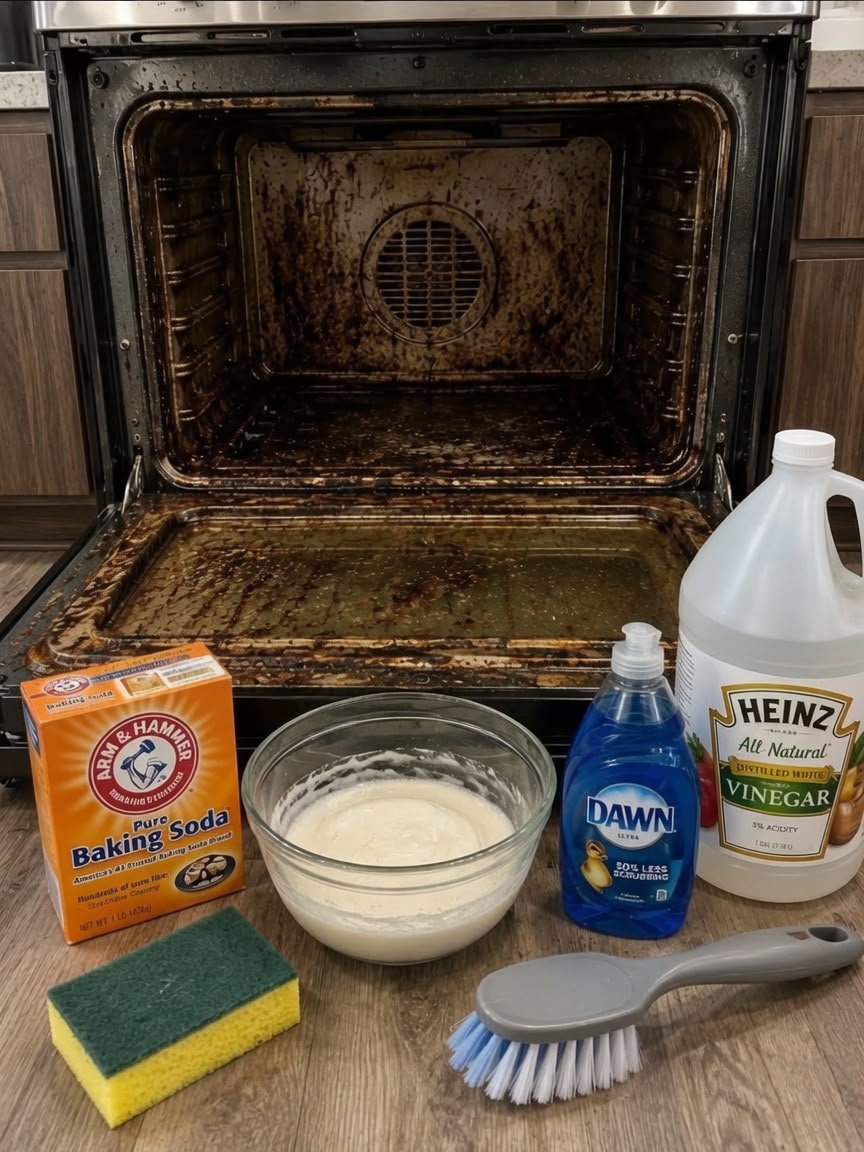
Looking for the best homemade oven cleaner without harsh chemicals? This easy DIY oven cleaning paste uses simple household ingredients like baking soda, dish soap, and white vinegar to loosen stubborn baked-on grease and burnt food. It’s an affordable, effective cleaning solution that leaves your oven looking fresh with minimal scrubbing.
Recipe Overview
| Cleaning Recipe | Information |
| Recipe Name | Homemade Oven Cleaner |
| Prep Time | 5 minutes |
| Resting Time | 8–12 hours |
| Cleaning Time | 20–30 minutes |
| Total Time | Overnight |
| Yield | 1 batch |
| Difficulty | Easy |
| Best For | Grease, baked-on food, burnt stains |
Why You’ll Love This Recipe
This homemade cleaner is made with inexpensive ingredients that are commonly found in most kitchens.
The thick paste clings to oven walls, allowing it to break down stubborn grease while you sleep.
It requires very little scrubbing compared to many commercial oven cleaners.
The recipe is easy to prepare in just a few minutes.
It’s perfect for routine oven maintenance and deep cleaning.
Ingredients
Cleaning Paste
| Ingredient | Amount |
| Baking soda | 1 cup |
| Dawn dish soap | 2 tablespoons |
| Warm water | 3–4 tablespoons |
| White vinegar (for spraying or rinsing) | ½–1 cup |
Supplies
| Item | Purpose |
| Mixing bowl | Mix the paste |
| Sponge | Wipe surfaces |
| Scrub brush | Remove stubborn residue |
| Spray bottle (optional) | Apply vinegar |
| Microfiber cloth | Final polish |
| Rubber gloves | Protect hands |
Step-by-Step Instructions
Remove the oven racks and any loose crumbs.
In a bowl, combine the baking soda, Dawn dish soap, and warm water until a thick, spreadable paste forms.
Spread the paste over the inside of the cool oven, avoiding the heating elements and fan openings.
Apply a thicker layer to heavily stained areas.
Allow the paste to sit for 8–12 hours or overnight.
Use a damp sponge or scrub brush to loosen the softened grease and burnt residue.
Spray or wipe white vinegar over any remaining baking soda residue. The fizzing action helps lift leftover grime.
Wipe the oven thoroughly with a clean damp cloth.
Repeat on stubborn spots if necessary.
Replace the oven racks after the oven is completely clean and dry.
Best Tips
Always clean the oven when it is completely cool to avoid burns.
Remove the racks and clean them separately for the best results.
Use a plastic scraper for stubborn baked-on food instead of metal tools that may scratch the finish.
Allowing the paste to sit overnight greatly improves cleaning performance.
Finish by wiping with clean water to remove any remaining residue.
Best Ingredient Options
| Ingredient | Alternative |
| Dawn dish soap | Any grease-cutting dish soap |
| White vinegar | Cleaning vinegar (higher acidity) |
| Baking soda | No recommended substitute |
Recipe Variations
Add a few drops of lemon essential oil for a fresh citrus scent.
Mix in one tablespoon of coarse salt for additional scrubbing power on stubborn stains.
Use cleaning vinegar for extra-strength grease removal.
Clean the oven racks separately by soaking them in hot water with dish soap before scrubbing.
What to Clean With It
This cleaning paste works well on oven doors and interior walls.
It can also be used on oven racks after soaking.
Use it on broiler pans and baking trays with baked-on grease.
It is effective for cleaning enamel-coated cookware with burnt residue.
Avoid using it on aluminum surfaces unless the manufacturer recommends it.
Make-Ahead Instructions
Mix the cleaning paste ahead of time and store it in an airtight container for up to one week. Stir before using if it thickens.
Storage
Store leftover paste in a sealed container at room temperature for up to 7 days.
Reheating
No reheating is required. Stir well before each use.
Freezing
Freezing is not recommended because the mixture may separate and lose its consistency.
Common Mistakes to Avoid
Applying the cleaner to a hot oven can cause it to dry too quickly and reduce effectiveness.
Using too much water will make the paste run off the oven walls.
Skipping the overnight soak will make stubborn grease much harder to remove.
Using abrasive metal scrubbers may scratch certain oven finishes.
Forgetting to wipe away all baking soda residue can leave a white film after cleaning.
Nutrition Estimate
| Nutrient | Amount |
| Calories | 0 |
| Protein | 0 g |
| Carbohydrates | 0 g |
| Fat | 0 g |
| Fiber | 0 g |
| Sugar | 0 g |
| Sodium | N/A |
Frequently Asked Questions
Can I use this on a self-cleaning oven?
Yes, but only if the manufacturer allows manual cleaning. Avoid damaging the self-cleaning coating and never use it during the self-cleaning cycle.
Is it safe for oven glass?
Yes. The paste is generally safe for most oven door glass. Let it sit before gently scrubbing with a non-abrasive sponge.
How often should I clean my oven?
A deep clean every three to four months is recommended, or more often if you cook frequently.
Can I substitute another dish soap?
Yes. Any quality grease-cutting dish soap can be used.
Does vinegar replace the baking soda?
No. Baking soda does most of the cleaning, while vinegar is mainly used afterward to help remove the residue and make wiping easier.
Final Thoughts
This Homemade Oven Cleaner is an easy, budget-friendly solution for tackling baked-on grease and stubborn food residue. With just baking soda, dish soap, and white vinegar, you can restore your oven’s shine without relying on harsh commercial cleaners. Regular use helps keep your oven cleaner, reduces smoke from burnt spills, and makes future cleaning much easier.