Introduction
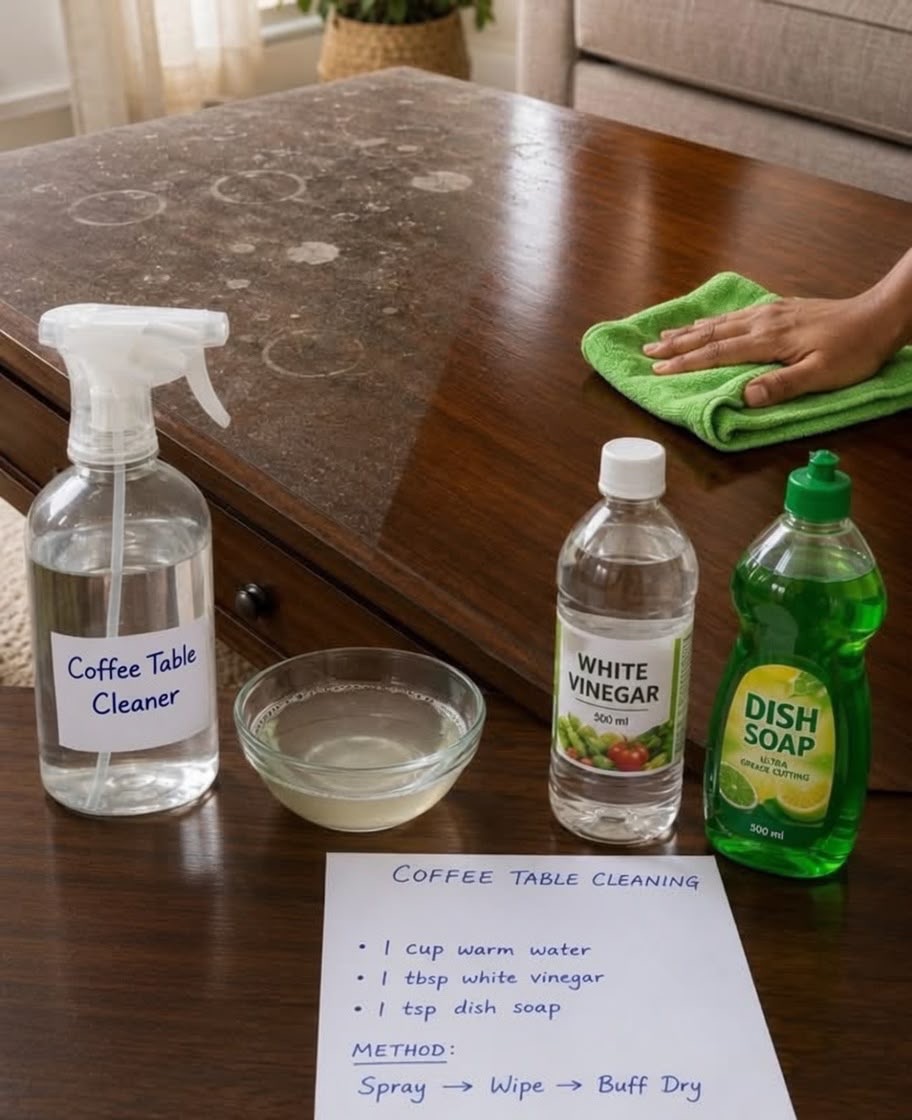
Looking for the best homemade wood furniture cleaner? This easy DIY coffee table cleaner helps remove dust, fingerprints, light grease, and everyday grime while restoring your table’s natural shine. As shown in the image, this simple recipe uses common household ingredients like white vinegar, dish soap, and warm water to clean wooden coffee tables quickly and effectively.
Whether you’re maintaining expensive hardwood furniture or refreshing an everyday coffee table, this natural wood cleaner is affordable, easy to make, and perfect for regular home cleaning.
Recipe Overview
| Detail | Information |
| Recipe Name | DIY Coffee Table Cleaner |
| Prep Time | 3 minutes |
| Mixing Time | 2 minutes |
| Total Time | 5 minutes |
| Yield | About 1 cup cleaner |
| Difficulty | Easy |
| Best For | Wooden coffee tables and sealed wood furniture |
Why You’ll Love This Recipe
This homemade wood furniture cleaner is inexpensive because it uses simple ingredients already found in most kitchens.
It removes fingerprints, dust, and light stains without leaving behind a sticky residue.
The spray takes only a few minutes to prepare, making it ideal for weekly cleaning routines.
The ingredients are gentle enough for most sealed wood furniture when used correctly.
It helps restore the natural appearance and shine of your coffee table with minimal effort.
Ingredients
Cleaning Solution
| Ingredient | Amount | Purpose |
| Warm water | 1 cup (240 ml) | Base cleaner |
| White vinegar | 1 tablespoon | Removes residue and light stains |
| Mild dish soap | 1 teaspoon | Cuts grease and dirt |
Equipment
| Item | Purpose |
| Spray bottle | Holds the cleaner |
| Microfiber cloth | Wiping the surface |
| Dry microfiber cloth | Buffing to a shine |
| Small funnel | Easy pouring |
Step-by-Step Instructions
Pour the warm water into a clean spray bottle.
Add the white vinegar.
Add the dish soap slowly to reduce excessive bubbles.
Close the bottle and gently swirl until everything is mixed.
Lightly spray the cleaner onto a microfiber cloth instead of directly onto the wood whenever possible.
Wipe the table using gentle circular motions.
Immediately dry and buff the surface with a clean microfiber cloth until it shines.
Allow the table to air dry completely before placing decorative items back on the surface.
Best Tips
Always test the cleaner on a small hidden area before cleaning the entire table.
Use only a lightly damp cloth because excess moisture can damage wood over time.
Buff immediately after cleaning for the best natural shine.
Clean once or twice each week to prevent dust buildup.
Avoid soaking the wood or allowing liquid to sit on the surface.
Best Ingredient Options
| Original Ingredient | Alternative |
| White vinegar | Distilled vinegar |
| Mild dish soap | Plant-based dish soap |
| Warm water | Distilled water |
| Microfiber cloth | Soft cotton cloth |
Recipe Variations
For extra shine, add a few drops of food-safe mineral oil after cleaning and buff thoroughly.
For a fresh scent, add 3–5 drops of lemon or orange essential oil to the mixture.
For everyday dusting, simply use warm water and a microfiber cloth without vinegar.
What to Serve With
This cleaner works well alongside a complete home cleaning routine.
Use it after dusting bookshelves, polishing wooden side tables, cleaning TV stands, and wiping dining tables for a consistently fresh-looking living room.
Make-Ahead Instructions
Mix the cleaner ahead of time and keep it in a labeled spray bottle for quick weekly use.
Shake gently before each use because the ingredients naturally separate over time.
Storage
Store the cleaner in a cool, dry place away from direct sunlight.
Use within one month for the best cleaning performance.
Keep the bottle tightly sealed.
Reheating
No reheating is required.
Use the cleaner at room temperature.
Freezing
Freezing is not recommended because it may affect the consistency of the cleaning solution.
Common Mistakes to Avoid
Using too much vinegar can dull certain wood finishes over time.
Spraying directly onto wood can allow excess moisture to seep into joints and edges.
Using abrasive scrubbers may scratch the finish.
Leaving moisture on the surface instead of buffing dry can reduce the natural shine.
Using this cleaner on unfinished or waxed wood without testing first may damage the surface.
Nutrition Estimate
| Nutrient | Amount |
| Calories | 0 |
| Fat | 0 g |
| Carbohydrates | 0 g |
| Protein | 0 g |
| Sugar | 0 g |
| Sodium | 0 mg |
This is a household cleaning recipe and is not edible. The nutrition table is included only to match the requested recipe format.
Frequently Asked Questions
Can I use this cleaner on all wood furniture?
It is best for sealed or finished wood. Always test on a hidden area first.
Can I replace white vinegar with apple cider vinegar?
White vinegar is recommended because it leaves less residue and has a milder color.
How often should I clean my coffee table?
Once or twice a week is usually enough for regular household use.
Can I use paper towels?
A microfiber cloth is recommended because it traps dust better and reduces the risk of scratching.
Will this remove water rings?
It can help with light marks, but deep water stains may require specialized wood restoration methods.
Final Thoughts
This DIY coffee table cleaner is a simple, affordable, and effective solution for keeping wood furniture looking its best. With just warm water, white vinegar, and a small amount of dish soap, you can safely remove everyday dirt while maintaining a beautiful natural finish. Keep a bottle ready for routine cleaning, and your coffee table will stay fresh, clean, and polished all year long.