Introduction
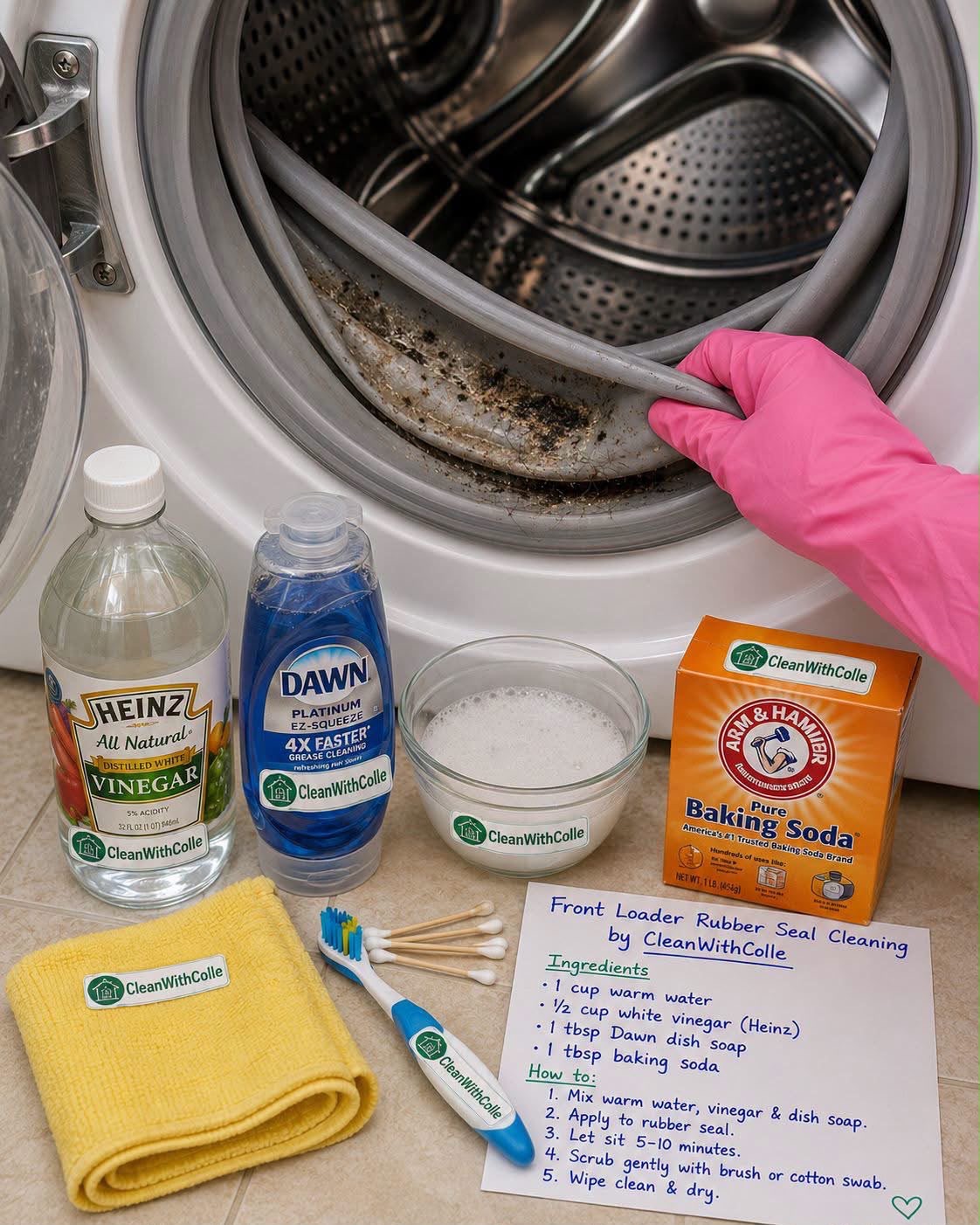
Cleaning the rubber seal of a front-load washing machine is an important part of regular home maintenance. Over time, moisture, detergent residue, lint, hair, and dirt can collect inside the folds of the door gasket.
This buildup can create unpleasant odors and make the washing machine look dirty, even when the drum itself appears clean.
This simple washing machine cleaning method uses warm water, white vinegar, dish soap, and baking soda to help loosen everyday grime from the rubber seal.
Recipe Overview
| Category | Details |
| Preparation Time | 5 minutes |
| Application Time | 5–10 minutes |
| Scrubbing Time | 5–10 minutes |
| Total Time | Approximately 20–25 minutes |
| Difficulty | Easy |
| Best For | Front-load washing machine rubber seals |
| Cleaning Frequency | As needed, depending on buildup |
Why You’ll Love This Cleaning Method
This homemade washing machine cleaner uses simple household ingredients that are easy to find.
The method is inexpensive and can help remove surface dirt, detergent residue, and everyday buildup from the rubber gasket.
The process is also straightforward and does not require complicated equipment.
Regularly cleaning the front-load washer door seal can help keep the appliance fresher and more pleasant to use.
Ingredients
Cleaning Solution
| Ingredient | Quantity |
| Warm water | 1 cup |
| White vinegar | ½ cup |
| Dish soap | 1 tablespoon |
| Baking soda | 1 tablespoon |
Cleaning Tools
| Tool | Purpose |
| Soft cleaning cloth | Wiping the rubber seal |
| Small cleaning brush | Scrubbing stubborn residue |
| Cotton swabs | Reaching narrow areas |
| Small bowl | Mixing the cleaning solution |
| Dry microfiber cloth | Final drying |
Step-by-Step Instructions
Prepare the Washing Machine
Make sure the washing machine is turned off and completely empty.
Open the washing machine door and gently pull back the folds of the rubber gasket.
Inspect the seal carefully, paying particular attention to the lower section where moisture and debris can collect.
Remove Loose Debris
Use a dry cloth or paper towel to remove loose hair, lint, dust, and other visible debris from inside the rubber seal.
Do not force sharp objects into the gasket because they could damage the rubber.
Prepare the Cleaning Solution
Add the warm water, white vinegar, and dish soap to a small bowl.
Stir the ingredients gently until combined.
Add the baking soda carefully because it may foam when it comes into contact with the acidic vinegar.
Apply the Solution
Dip a soft cloth into the cleaning mixture.
Wring out any excess liquid.
Wipe the entire rubber seal, including the inner folds and the area around the door opening.
For areas with heavier buildup, apply a small amount of the solution directly to the affected area.
Let It Sit
Allow the cleaning solution to sit on the buildup for approximately 5–10 minutes.
This gives the solution time to help loosen surface residue and grime.
Do not allow the mixture to dry completely on the rubber seal.
Scrub the Rubber Seal
Use a soft brush to gently scrub the dirty areas.
Pay special attention to the folds and crevices of the gasket.
Use cotton swabs to reach narrow spaces that are difficult to clean with a larger brush.
Wipe and Rinse
Use a clean damp cloth to remove the loosened dirt and remaining cleaning solution.
Wipe the rubber seal several times until no visible residue remains.
Dry Thoroughly
Use a clean, dry microfiber cloth to dry the entire gasket.
Leave the washing machine door open for a while to allow the remaining moisture to evaporate.
Best Tips
Always inspect the folds of the rubber seal because dirt and moisture can remain hidden inside the gasket.
Drying the rubber seal after cleaning is an important step because trapped moisture can contribute to unpleasant odors.
Use a soft brush rather than a hard or sharp tool to avoid damaging the rubber.
Clean the detergent drawer and washing machine door at the same time for a more complete appliance cleaning routine.
Leaving the washing machine door slightly open between washes can help the interior dry more effectively.
Best Ingredient Options
White vinegar can be used as an acidic household cleaning ingredient for certain surface residues.
A mild dish soap can help loosen greasy or soapy buildup.
Baking soda can be used as a gentle abrasive when carefully applied.
Warm water helps dissolve and loosen everyday dirt more effectively than cold water.
For heavily soiled areas, a commercially formulated washing machine cleaner may be a better option than homemade cleaning ingredients.
Recipe Variations
Vinegar and Water Cleaning Method
For light buildup, mix equal parts white vinegar and warm water and wipe the rubber seal thoroughly.
Baking Soda Paste
Mix a small amount of baking soda with water to create a paste.
Apply it to stubborn surface residue, gently scrub, and wipe away completely.
Dish Soap Cleaning Method
For greasy or soapy residue, use a small amount of mild dish soap diluted with warm water.
Commercial Washing Machine Cleaner
A manufacturer-approved washing machine cleaning product can be used according to the instructions on the product label.
What to Use With This Cleaning Method
After cleaning the rubber seal, you can also clean the detergent drawer and the inside of the washing machine door.
Running a washing machine cleaning cycle according to the manufacturer’s instructions can also be part of a regular appliance maintenance routine.
Always follow the care instructions provided for your specific washing machine model.
Make-Ahead Instructions
The dry cleaning tools can be prepared in advance.
However, it is best to mix only the amount of cleaning solution needed for the cleaning session.
Do not store homemade cleaning mixtures in unmarked containers.
Storage
Store white vinegar, dish soap, and baking soda separately in their original labeled containers.
Keep all cleaning ingredients away from children and pets.
Do not store mixed cleaning solutions in food or beverage containers.
Reheating
Reheating does not apply to this cleaning method.
Always allow the washing machine to cool completely if it has recently been running a hot cycle before beginning manual cleaning.
Freezing
Freezing does not apply to this cleaning method.
Do not freeze homemade cleaning mixtures.
Common Mistakes to Avoid
Do not use sharp objects to scrape dirt from the rubber gasket.
Do not use excessive force when pulling or stretching the rubber seal.
Do not leave large amounts of liquid trapped inside the gasket after cleaning.
Do not mix vinegar with chlorine bleach or other incompatible cleaning products.
Do not use cleaning ingredients that are not recommended for your specific washing machine without checking the manufacturer’s care instructions.
Nutrition Estimate
| Category | Details |
| Calories | Not applicable |
| Protein | Not applicable |
| Carbohydrates | Not applicable |
| Fat | Not applicable |
| Intended Use | Household cleaning |
Frequently Asked Questions
How often should I clean my washing machine rubber seal?
The ideal cleaning frequency depends on how often the washing machine is used and how much moisture or residue accumulates. Inspecting the gasket regularly can help you determine when it needs cleaning.
Why does my washing machine rubber seal smell bad?
Moisture, detergent residue, dirt, and trapped debris can contribute to unpleasant odors inside the gasket.
Can I use baking soda and vinegar together?
They can react and foam when combined. For effective cleaning, avoid relying on the mixture as if the reaction itself were a powerful cleaning solution. Always follow your washing machine manufacturer’s recommendations.
Can I use bleach to clean the rubber seal?
Some manufacturers may allow specific bleach-based cleaning procedures, while others may not. Check the care instructions for your washing machine before using bleach.
Should I leave the washing machine door open after cleaning?
Leaving the door open or slightly ajar can help the interior dry, provided it is safe to do so and the appliance is located in a suitable area.
What if the rubber seal has black spots or persistent staining?
Persistent discoloration or staining may require a manufacturer-approved cleaning product or professional advice. If the gasket is damaged, cracked, or deteriorating, it may need replacement.
Final Thoughts
Cleaning the rubber seal of a front-load washing machine is a simple but important part of regular appliance maintenance.
By removing trapped debris, wiping away residue, gently scrubbing the folds, and drying the gasket thoroughly, you can help keep the washing machine cleaner and fresher.
For the best results, make this cleaning task part of a regular home cleaning routine and always follow the care instructions provided by your washing machine manufacturer.