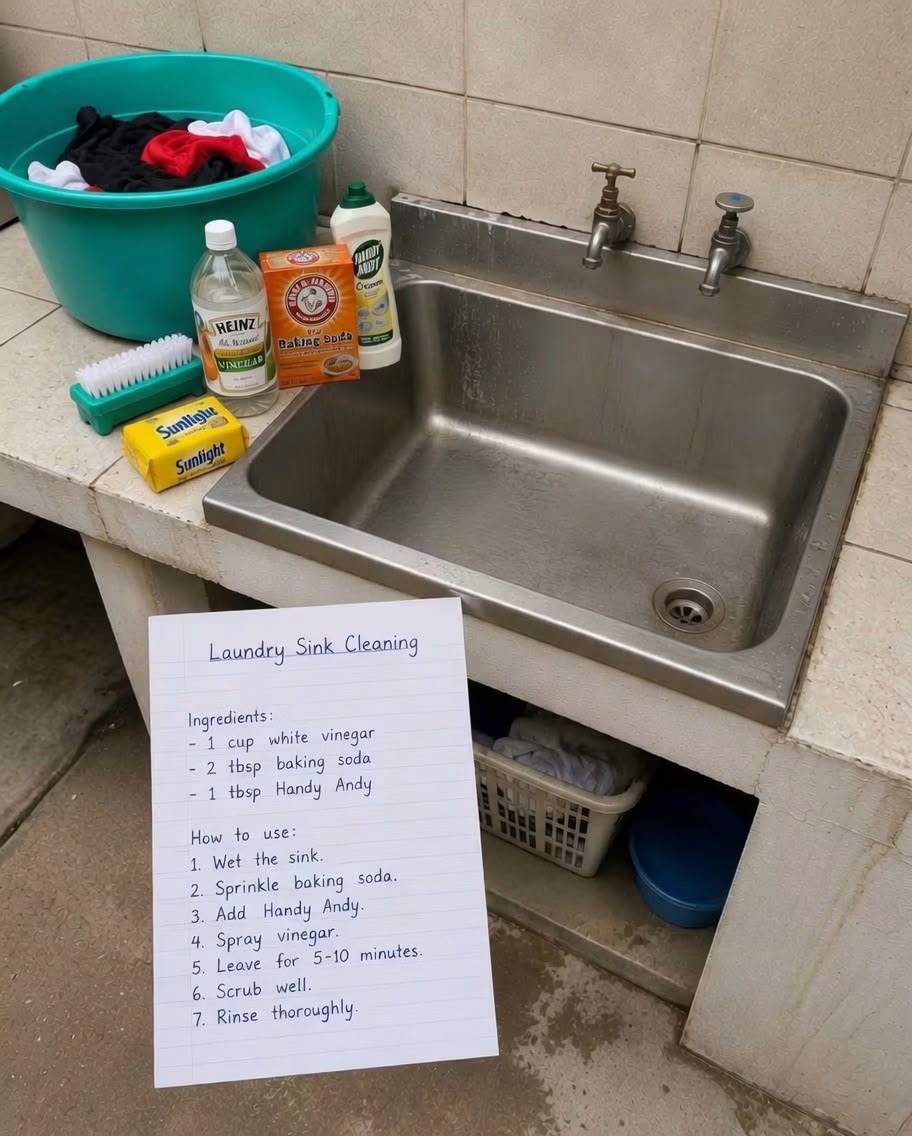
A laundry sink is one of the hardest-working fixtures in any home. It collects dirt, detergent residue, grease, and stains from clothing, making regular cleaning essential. This easy homemade laundry sink cleaner combines white vinegar, baking soda, and liquid cleaner to help remove grime, deodorize the sink, and restore its shine. With just a few inexpensive household ingredients, you can deep clean your utility sink in under 20 minutes.
Recipe Overview
| Detail | Information |
| Recipe Name | Homemade Laundry Sink Cleaner |
| Preparation Time | 5 minutes |
| Cleaning Time | 10 minutes |
| Total Time | 15 minutes |
| Yield | 1 Sink Cleaning |
| Difficulty | Easy |
| Category | Home Cleaning |
| Cost | Budget-Friendly |
Why You’ll Love This Recipe
This homemade sink cleaner uses affordable ingredients that are commonly found in most homes, making it an economical alternative to expensive commercial cleaning products.
The cleaning process is quick and requires very little effort. The combination of baking soda and vinegar helps loosen dirt, while the liquid cleaner helps remove grease and stubborn stains.
Unlike many harsh chemical cleaners, this method is easy to prepare and suitable for routine maintenance, helping keep your laundry sink looking fresh and clean.
Ingredients
Cleaning Ingredients
| Ingredient | Quantity |
| White vinegar | 1 cup (240 ml) |
| Baking soda | 2 tablespoons |
| Liquid cleaner (dishwashing liquid or all-purpose cleaner) | 1 tablespoon |
Equipment
| Item | Purpose |
| Scrub brush | Removes stains |
| Sponge | Wiping surfaces |
| Spray bottle (optional) | Applying vinegar |
| Rubber gloves | Protect hands |
Step-by-Step Instructions
Wet the entire sink with warm water.
Sprinkle the baking soda evenly over the sink surface.
Apply the liquid cleaner directly over the baking soda.
Slowly pour or spray the white vinegar over the cleaning mixture.
Allow the mixture to sit for 5–10 minutes.
Using a scrub brush, scrub every surface of the sink, paying extra attention to corners, stains, and around the drain.
Rinse thoroughly with warm water.
Dry the sink with a clean microfiber cloth for a polished finish.
Best Tips
Use warm water before cleaning to help loosen grease and soap residue.
Allow the cleaning mixture to sit for the full ten minutes when tackling stubborn stains.
Clean the sink once a week to prevent mineral buildup and unpleasant odors.
Use a soft brush for delicate sink finishes to avoid scratching the surface.
Best Ingredient Options
| Original Ingredient | Alternative |
| White vinegar | Cleaning vinegar |
| Baking soda | Washing soda (for heavy-duty cleaning) |
| Dish soap | Multi-purpose cleaner |
| Scrub brush | Non-scratch sponge |
Recipe Variations
Add a few drops of lemon essential oil for a fresh citrus scent after cleaning.
Mix a teaspoon of oxygen-based cleaner with the baking soda for heavily stained sinks.
Finish by wiping the sink with a microfiber cloth to enhance its shine.
What to Serve With
This cleaning method works well alongside routine laundry room maintenance. Clean the countertop, faucet, drain cover, and nearby tiles during the same session for a complete refresh.
It also pairs perfectly with organizing laundry supplies and disinfecting washing machine surfaces.
Make-Ahead Instructions
Pre-measure the baking soda into a small container and keep vinegar in a labeled spray bottle. This makes weekly sink cleaning quick and convenient.
Storage
Store unused white vinegar and baking soda separately in tightly sealed containers in a cool, dry place.
Never mix vinegar and baking soda together for storage because the reaction quickly loses its cleaning effectiveness.
Reheating
Not applicable. This homemade cleaner is used at room temperature.
Freezing
Freezing is not recommended.
Common Mistakes to Avoid
Using abrasive steel wool may scratch stainless steel sinks and reduce their shine.
Skipping the waiting time prevents the cleaner from loosening stubborn grime effectively.
Using too much liquid cleaner can leave a slippery residue that requires additional rinsing.
Mixing extra cleaning chemicals, such as bleach with vinegar, is unsafe and should always be avoided.
Nutrition Estimate
| Nutrient | Amount |
| Calories | 0 |
| Protein | 0 g |
| Carbohydrates | 0 g |
| Fat | 0 g |
| Fiber | 0 g |
| Sugar | 0 g |
Note: This section is not applicable because this is a household cleaning recipe and is not edible.
Frequently Asked Questions
Can I use this cleaner on stainless steel sinks?
Yes. It is generally suitable for stainless steel laundry sinks when used with a non-abrasive brush or sponge.
How often should I clean my laundry sink?
A weekly cleaning helps prevent soap scum, stains, and unpleasant odors.
Can I use apple cider vinegar instead?
White vinegar is recommended because it is colorless and more commonly used for household cleaning.
Does this remove rust stains?
Light rust stains may improve after scrubbing, but severe rust may require a dedicated rust remover designed for the sink material.
Final Thoughts
Keeping your laundry sink clean is simple with this easy homemade cleaning solution. Using white vinegar, baking soda, and a mild liquid cleaner helps remove everyday grime, freshen the sink, and maintain a clean laundry area. Regular maintenance takes only a few minutes and helps your sink stay looking its best for years.