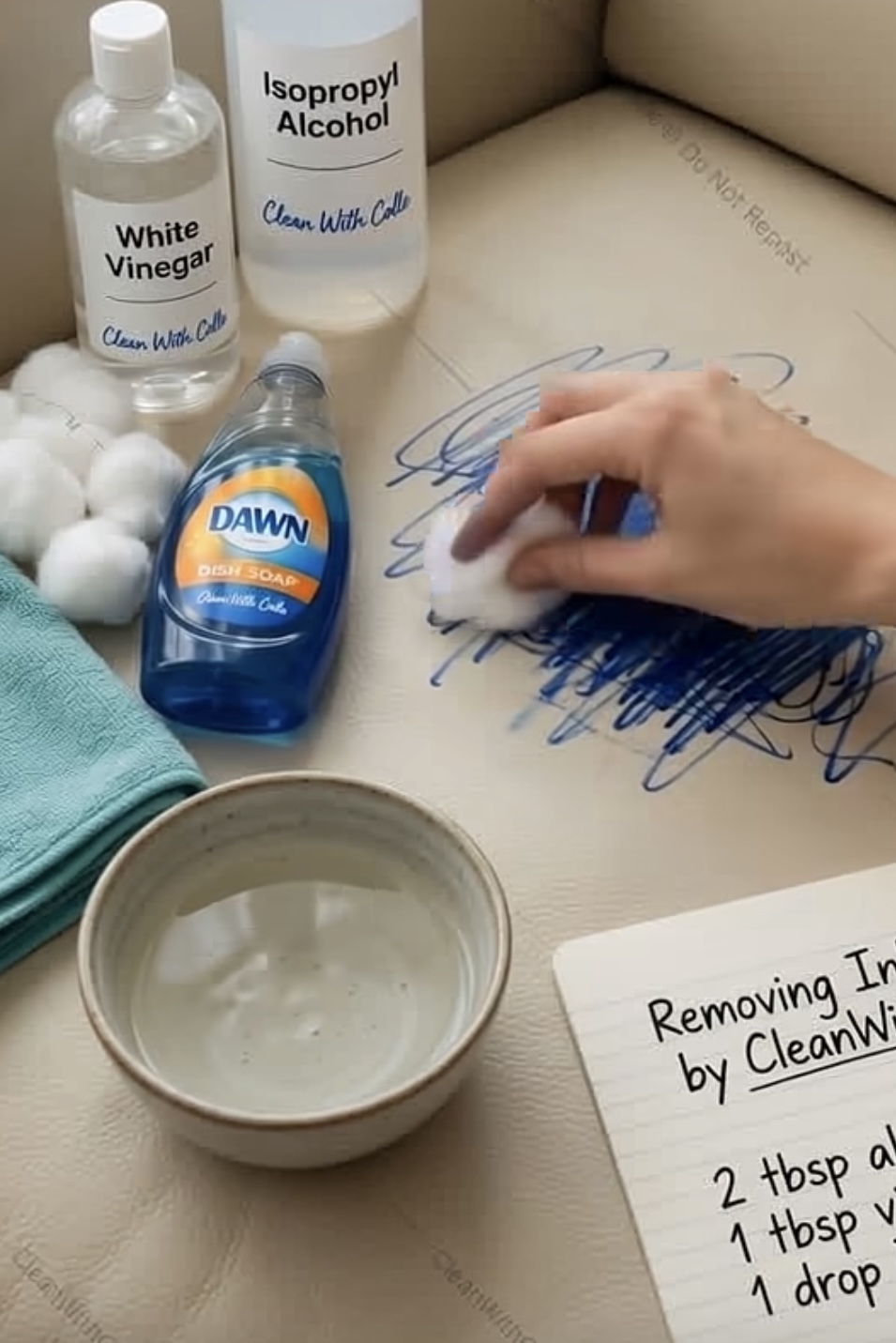
Introduction
Ink stains on a leather couch, car seats, handbags, or office chairs can be frustrating and difficult to remove. Ballpoint pen ink contains oils and pigments that penetrate leather surfaces quickly, making ordinary cleaning methods less effective. Fortunately, a simple DIY leather cleaning solution can help reduce fresh ink marks while preserving the beauty and durability of your leather furniture and accessories. This affordable home remedy is ideal for routine leather care and stain maintenance.
Ingredients
Two tablespoons of isopropyl alcohol can help loosen ink pigments and residue from finished leather surfaces.
One tablespoon of white vinegar helps lift light stains and remove surface residue without leaving a heavy film.
One drop of mild dish soap helps break down oils and suspend loosened particles.
A small ceramic bowl provides a convenient container for mixing the solution.
Soft cotton balls or microfiber cloths allow gentle application without scratching the leather.
Instructions
Begin by testing the solution on a hidden area to ensure the leather finish does not discolor or become damaged.
Lightly dampen a cotton ball with the prepared mixture, avoiding excessive moisture.
Gently dab the ink stain rather than rubbing it aggressively.
Work from the outer edge toward the center to help prevent spreading the stain.
Replace the cotton ball as it becomes discolored to avoid transferring ink back onto the surface.
Wipe the treated area with a cloth slightly dampened with clean water to remove residue.
Allow the leather to dry naturally away from direct sunlight or heat sources.
Apply a quality leather conditioner after drying to help maintain softness and flexibility.
How to Make
Pour two tablespoons of isopropyl alcohol into a clean bowl.
Add one tablespoon of white vinegar and mix gently.
Add one drop of mild liquid dish soap.
Stir carefully until the ingredients are evenly combined.
Use the solution immediately for best results.
Variations
For delicate or untreated leather, skip the vinegar and use a mixture of mild soap and distilled water instead.
For faux leather and vinyl surfaces, a slightly stronger alcohol solution may help with stubborn marks.
For older stains on finished leather, a mild baking soda paste can sometimes provide additional cleaning power when used carefully.
Tips
Always act quickly because fresh ink stains are easier to remove than old stains.
Avoid vigorous scrubbing, which may damage the leather finish and spread the ink.
Never use acetone, bleach, or nail polish remover because these harsh chemicals can permanently discolor leather.
Use a soft microfiber cloth to absorb moisture and prevent oversaturation.
Regular conditioning helps preserve the natural appearance and extend the lifespan of leather furniture and accessories.
Solution Properties
Isopropyl alcohol acts as a solvent that can help dissolve certain ink components.
White vinegar contains acetic acid, which helps remove surface residue and odors.
Dish soap contains surfactants that help lift oils and suspended particles from the leather surface.
Benefits
Using common household ingredients can reduce reliance on expensive commercial leather cleaners.
Gentle cleaning methods may help preserve the appearance and longevity of leather furniture and car interiors.
DIY leather cleaning solutions are affordable and convenient for routine maintenance.
Regular leather care can help maintain softness and reduce the buildup of dirt and stains over time.
Conclusion
Removing ink stains from leather requires patience, gentle cleaning techniques, and proper conditioning afterward. With the right approach and timely treatment, many fresh ink marks can be minimized while helping preserve the appearance of your leather furniture, handbags, and vehicle interiors. Consistent leather maintenance remains one of the best ways to keep valuable leather items looking clean and attractive for years.