Introduction
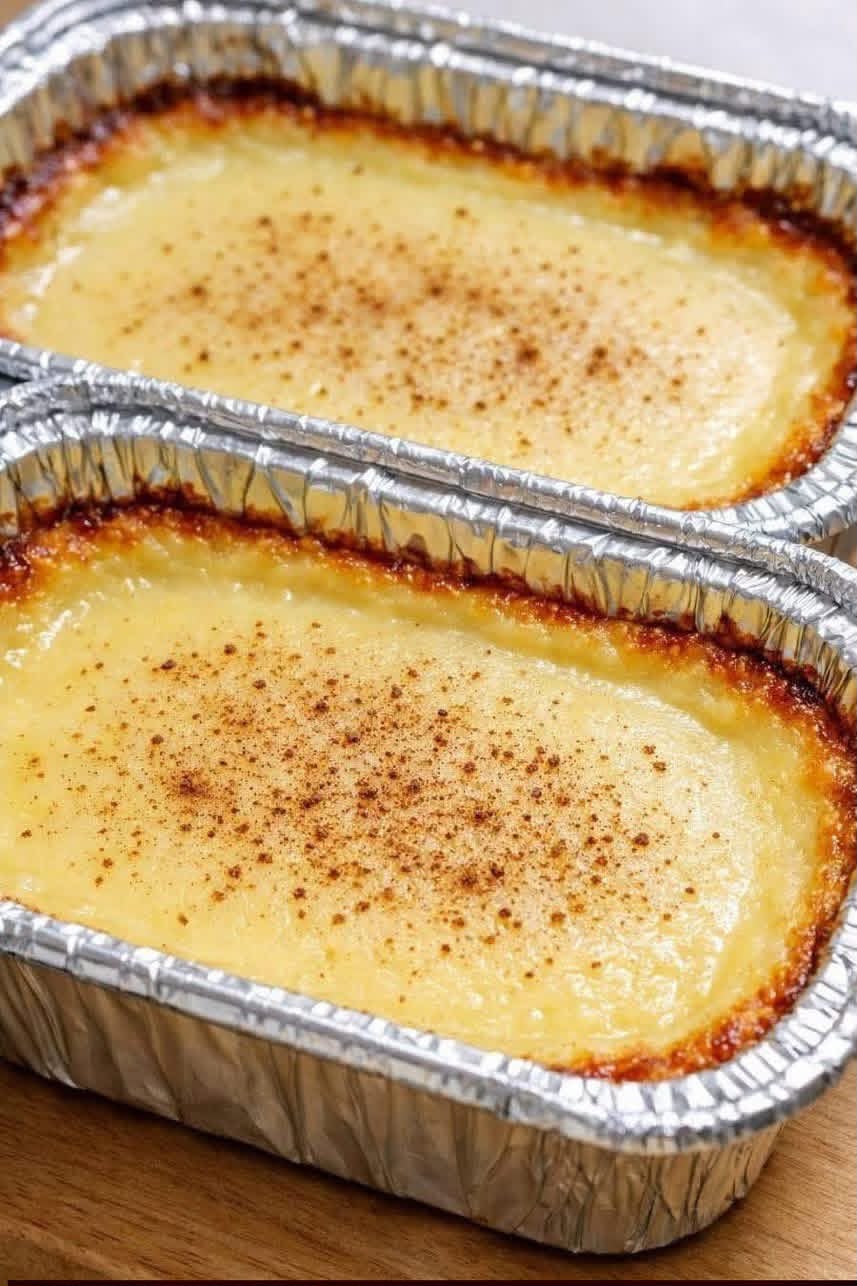
This Old-Fashioned Baked Custard is a simple, creamy dessert with a silky center and beautifully golden edges.
The custard is made with everyday ingredients including milk, eggs, sugar, vanilla, and a touch of nutmeg.
It is baked gently until the center is just set, creating a smooth texture with a lightly browned top.
This classic homemade custard is perfect for family dinners, holidays, potlucks, and make-ahead desserts.
The recipe can also be baked in individual aluminum dishes, making it convenient for serving, gifting, or storing.
Recipe Overview
| Category | Details |
| Recipe | Old-Fashioned Baked Custard |
| Preparation Time | 10 minutes |
| Baking Time | 45–55 minutes |
| Cooling Time | 30 minutes |
| Chilling Time | 2 hours |
| Total Time | About 3 hours |
| Servings | 8 |
| Baking Temperature | 325°F (165°C) |
| Texture | Smooth, creamy, silky |
| Difficulty | Easy |
| Best For | Dessert, holidays, family gatherings |
Why You’ll Love This Recipe
This baked custard is incredibly easy to prepare, yet it has the comforting flavor of a traditional homemade dessert.
The combination of creamy milk, eggs, sugar, and vanilla creates a delicate custard that is rich without being overly heavy.
A light sprinkle of ground nutmeg adds warmth and gives the dessert its classic old-fashioned flavor.
The edges become lightly golden during baking while the center stays soft and creamy.
Ingredients
For the Custard
| Ingredient | Amount |
| Whole milk | 4 cups (960 ml) |
| Large eggs | 5 |
| Granulated sugar | ¾ cup (150 g) |
| Vanilla extract | 2 tsp |
| Salt | ¼ tsp |
| Ground nutmeg | ½ tsp |
| Unsalted butter, for greasing | 1 tbsp |
For the Topping
| Ingredient | Amount |
| Ground nutmeg | ¼ tsp |
| Ground cinnamon, optional | ⅛ tsp |
Step-by-Step Instructions
Step 1: Preheat the Oven
Preheat your oven to 325°F (165°C).
Lightly butter an approximately 2-quart baking dish or several individual oven-safe dishes.
Set the prepared dish aside.
Step 2: Warm the Milk
Pour the milk into a saucepan.
Warm it over medium-low heat until it is hot and steaming but not boiling.
Remove the milk from the heat.
Allow it to cool for approximately 5 minutes.
Step 3: Beat the Eggs
In a large mixing bowl, whisk the eggs until smooth.
Add the granulated sugar and salt.
Whisk gently until the sugar begins to dissolve.
Add the vanilla extract.
Do not whip the mixture excessively because too much air can create bubbles in the finished custard.
Step 4: Combine the Milk and Eggs
Slowly pour the warm milk into the egg mixture while whisking continuously.
Adding the milk gradually helps prevent the eggs from scrambling.
Continue whisking gently until the mixture is completely combined.
Step 5: Strain the Custard
For an especially smooth homemade custard, pour the mixture through a fine-mesh strainer into a large measuring jug or bowl.
This removes any small pieces of cooked egg and creates a silky final texture.
Step 6: Fill the Baking Dish
Pour the custard mixture into the prepared baking dish.
Sprinkle the surface evenly with ground nutmeg.
If using individual aluminum dishes, divide the custard evenly between them.
Do not fill the dishes completely to the top. Leave approximately ½ inch of space.
Step 7: Prepare a Water Bath
Place the filled baking dish inside a larger roasting pan.
Carefully pour hot water into the roasting pan until it reaches approximately halfway up the sides of the custard dish.
The water bath helps the custard cook gently and evenly.
Step 8: Bake the Custard
Carefully transfer the pan to the oven.
Bake at 325°F (165°C) for approximately 45–55 minutes.
Individual dishes may require approximately 30–40 minutes.
The custard is ready when the edges are set and the center still has a gentle wobble.
Do not wait for the center to become completely firm because the custard will continue setting as it cools.
Step 9: Cool the Custard
Carefully remove the custard from the water bath.
Allow it to cool at room temperature for approximately 30 minutes.
The surface will continue to firm as the custard cools.
Step 10: Chill Before Serving
Cover the custard and refrigerate for at least 2 hours.
For the best texture, allow it to chill overnight.
Serve cold or slightly chilled.
Best Tips
Use whole milk for the creamiest and richest texture.
Room-temperature eggs combine more easily with the warm milk.
Keep the milk warm rather than boiling it. Boiling milk can make the custard more difficult to combine smoothly.
Whisk gently instead of vigorously to prevent excessive air bubbles.
A water bath is highly recommended because it protects the custard from harsh direct heat.
The center should still have a slight jiggle when the custard comes out of the oven.
Best Ingredient Options
Milk
Whole milk gives the best balance of richness and creaminess.
For an even richer custard, replace 1 cup of the milk with heavy cream.
Sweetener
Granulated white sugar provides the cleanest classic flavor.
Light brown sugar can be used for a deeper caramel-like taste, although it will slightly change the color.
Vanilla
Pure vanilla extract gives the custard a warm, traditional flavor.
Vanilla bean paste can be used for a more intense vanilla flavor and beautiful vanilla specks.
Spices
Nutmeg is the classic choice.
Cinnamon can be added for a warmer flavor, or a very small amount of cardamom can be used for a more distinctive variation.
Recipe Variations
For a vanilla bean custard, replace the vanilla extract with vanilla bean paste or the seeds from one vanilla bean.
For a cinnamon custard, add ½ teaspoon of ground cinnamon to the egg mixture.
For a maple custard, replace ¼ cup of the granulated sugar with pure maple syrup.
For a coconut custard, replace 1 cup of the milk with unsweetened coconut milk.
For a lemon custard, add 1 teaspoon of finely grated lemon zest for a bright citrus flavor.
For individual servings, divide the custard between small ramekins and reduce the baking time to approximately 30–40 minutes.
What to Serve With
Serve the custard chilled with fresh berries for a simple and elegant dessert.
A spoonful of lightly sweetened whipped cream adds extra richness.
Fresh strawberries, raspberries, blueberries, or sliced peaches pair particularly well with the creamy vanilla flavor.
For a more indulgent dessert, drizzle each serving with a small amount of caramel sauce.
Make-Ahead Instructions
This baked custard is an excellent make-ahead dessert.
Prepare and bake it up to 2 days before serving.
Allow it to cool completely, cover tightly, and refrigerate.
Keep the nutmeg topping on the surface for the classic presentation.
Storage
Store baked custard covered in the refrigerator.
It will keep well for approximately 3–4 days.
Keep the custard refrigerated until serving.
Because this dessert contains eggs and milk, avoid leaving it at room temperature for extended periods.
Reheating
Baked custard is generally best served chilled or slightly cool.
If you prefer it warm, place an individual serving in a microwave-safe dish.
Heat at 50% power for 15–20 seconds at a time until gently warmed.
Avoid overheating because high heat can cause the custard to become watery or curdled.
Freezing
Freezing is not recommended for the best texture.
Custard can become watery or slightly grainy after thawing because of the high moisture content.
For the smoothest result, prepare the dessert fresh and refrigerate it instead.
Common Mistakes to Avoid
Do not boil the milk before combining it with the eggs.
Avoid adding hot milk too quickly because it can partially cook the eggs.
Do not overbeat the eggs because excess air can create bubbles throughout the custard.
Avoid overbaking. A slight jiggle in the center is desirable.
Do not skip the water bath if you want an especially smooth and creamy texture.
Allow the custard to cool gradually before refrigerating it.
Nutrition Estimate
Nutrition values are approximate and will vary depending on the exact ingredients and serving size.
| Nutrient | Approx. Per Serving |
| Calories | 190 kcal |
| Protein | 7 g |
| Total Fat | 7 g |
| Saturated Fat | 3 g |
| Carbohydrates | 25 g |
| Sugar | 24 g |
| Fiber | 0 g |
| Sodium | 110 mg |
| Cholesterol | 135 mg |
Frequently Asked Questions
Why is my baked custard watery?
Custard can become watery when it is undercooked, overcooked, or chilled too quickly.
Bake it until the edges are set and the center has only a gentle wobble.
How do I know when custard is done?
The edges should be firm while the center should still jiggle slightly when the dish is gently moved.
It will continue setting as it cools.
Can I make this custard without a water bath?
Yes, but a water bath is strongly recommended.
It provides gentle heat and helps prevent the eggs from overcooking.
Can I use evaporated milk?
Yes.
Replace part or all of the whole milk with evaporated milk for a richer, creamier flavor.
Can I make individual custards?
Absolutely.
Divide the mixture between ramekins or small oven-safe dishes.
Bake for approximately 30–40 minutes, depending on their size.
Can I serve baked custard warm?
Yes.
It can be served slightly warm, at room temperature, or chilled.
For the firmest texture, refrigeration is recommended.
Can I add cinnamon?
Yes.
A small amount of cinnamon pairs beautifully with the vanilla and nutmeg.
Can I make this recipe ahead?
Yes.
The custard can be made up to 2 days ahead and stored covered in the refrigerator.
Final Thoughts
This Old-Fashioned Baked Custard is proof that simple ingredients can create an incredibly comforting homemade dessert.
The silky egg custard, warm vanilla flavor, delicate nutmeg topping, and golden edges make it both nostalgic and satisfying.
For the smoothest results, bake it gently in a water bath and remove it from the oven while the center still has a slight wobble.
Serve it chilled for an easy, elegant dessert that is perfect for family meals, holidays, and special occasions.