Introduction
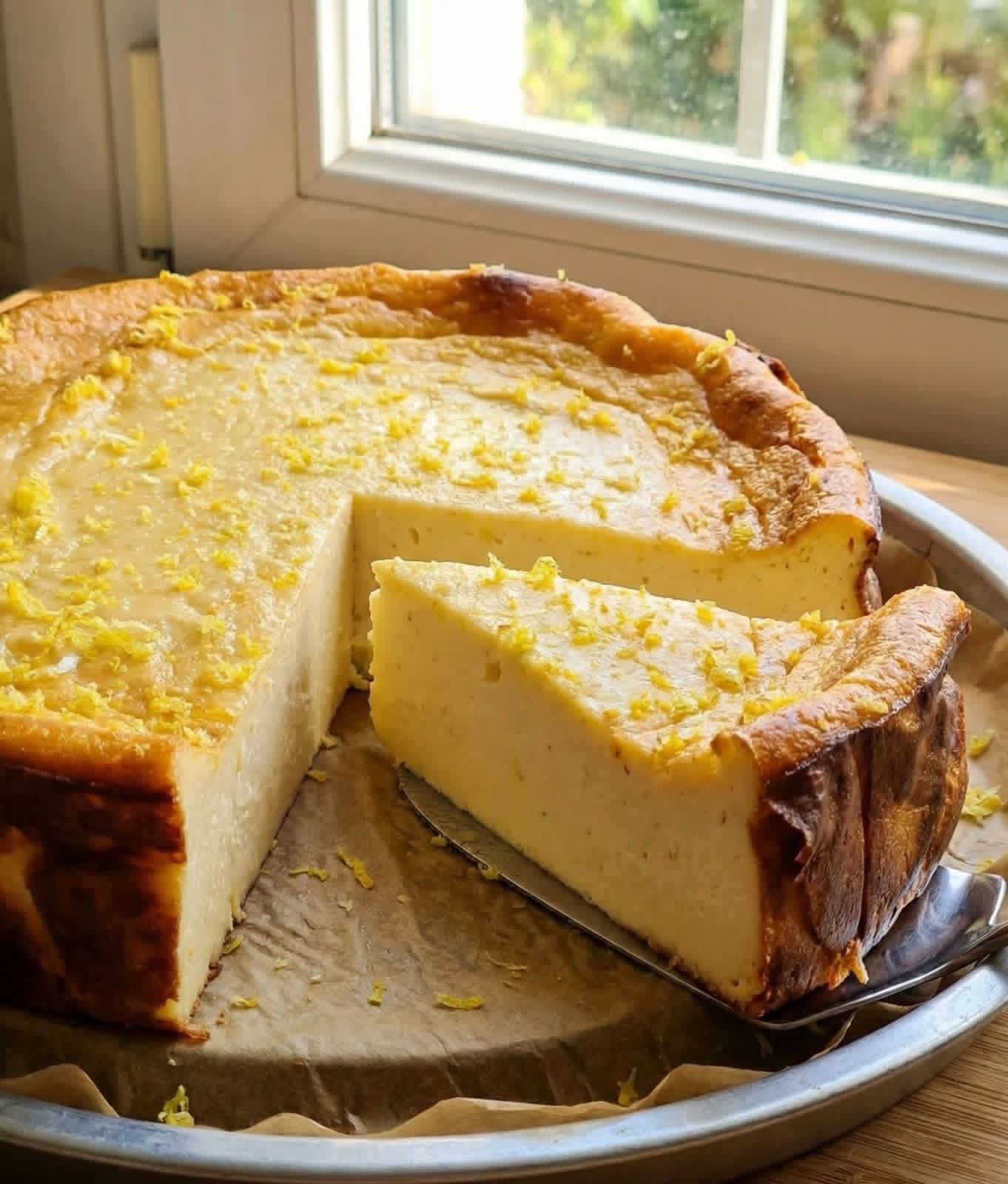
This Creamy Lemon Basque Cheesecake is rich, silky, and wonderfully creamy, with a beautifully caramelized golden-brown top and deeply browned edges.
Fresh lemon zest gives the cheesecake a bright citrus flavor that balances the richness of the cream cheese.
Unlike a traditional cheesecake, this Basque-style version has no complicated water bath and no need for a perfectly smooth top.
The result is an impressive easy baked cheesecake with a soft, custardy center and a beautifully caramelized exterior.
Recipe Overview
| Recipe Detail | Information |
| Prep Time | 20 minutes |
| Bake Time | 45–55 minutes |
| Cooling Time | 2 hours |
| Chilling Time | 4 hours |
| Total Time | About 7 hours |
| Servings | 10–12 slices |
| Difficulty | Easy |
| Course | Dessert |
| Cuisine | Spanish-inspired |
| Oven Temperature | 425°F (220°C) |
Why You’ll Love This Recipe
This cheesecake has an incredibly creamy center that almost melts in your mouth.
The caramelized top adds a slightly toasted flavor that contrasts beautifully with the smooth lemon filling.
Fresh lemon zest makes the dessert taste bright without overpowering the classic cheesecake flavor.
There is also no crust to prepare, making this a wonderfully simple Basque cheesecake recipe for home bakers.
The rustic appearance is part of its charm. Cracks, wrinkles, and dark edges are completely normal.
Ingredients
For the Cheesecake
| Ingredient | Amount |
| Full-fat cream cheese, softened | 32 oz (900 g) |
| Granulated sugar | 1¼ cups (250 g) |
| Large eggs | 5 |
| Heavy cream | 1½ cups (360 ml) |
| All-purpose flour | 2 tablespoons |
| Fresh lemon zest | 2 tablespoons |
| Fresh lemon juice | 2 tablespoons |
| Vanilla extract | 1 teaspoon |
| Salt | ¼ teaspoon |
For the Pan
| Ingredient | Amount |
| Parchment paper | Enough to line the pan |
| Butter or cooking spray | For the pan, optional |
For Garnishing
| Ingredient | Amount |
| Fresh lemon zest | 1–2 teaspoons |
| Powdered sugar | Optional |
| Fresh berries | Optional |
Step-by-Step Instructions
Prepare the Pan
Preheat your oven to 425°F (220°C).
Use a 9-inch (23 cm) springform pan for a tall cheesecake similar to the one shown.
Crumple a large sheet of parchment paper into a ball, then flatten it again.
This makes the parchment easier to shape inside the pan.
Press the parchment into the pan, allowing several inches to extend above the rim.
Do not worry about making it perfectly smooth. The rustic folds are characteristic of Basque cheesecake.
Soften the Cream Cheese
Make sure the cream cheese is softened to room temperature.
This is important because cold cream cheese can create lumps in the batter.
Place the cream cheese in a large mixing bowl.
Beat it on medium speed until completely smooth and creamy.
Add the Sugar
Gradually add the granulated sugar.
Beat for approximately 2–3 minutes, scraping down the sides of the bowl as needed.
The mixture should become smooth and creamy.
Add the Eggs
Add the eggs one at a time.
Mix on low speed after each addition until incorporated.
Avoid excessive mixing because too much air can cause the cheesecake to rise dramatically and then collapse.
Add the Lemon
Add the fresh lemon zest and lemon juice.
Mix gently until incorporated.
The lemon zest is particularly important because it provides most of the fresh citrus aroma.
Add the Cream
Slowly pour in the heavy cream while mixing on low speed.
Continue mixing until the batter is smooth.
Add the Flour
Sift the flour over the batter.
Add the salt and vanilla extract.
Mix just until everything is combined.
Do not overmix.
The finished batter should be smooth, thick, and pourable.
Pour Into the Pan
Pour the cheesecake batter into the parchment-lined springform pan.
Gently tap the pan against the countertop a few times to release large air bubbles.
If small bubbles remain on the surface, you can gently pop them with a toothpick.
Bake the Cheesecake
Place the cheesecake in the center of the preheated oven.
Bake at 425°F (220°C) for approximately 45–55 minutes.
The top should become deeply golden brown, with some darker caramelized areas.
The edges should look set while the center should still have a noticeable wobble.
Do not wait for the center to become completely firm.
Check for Doneness
Gently shake the pan.
The outer portion should look set while the middle should move like soft custard.
The cheesecake will continue cooking slightly from residual heat after it leaves the oven.
If the top is becoming dark too quickly but the center is still very loose, reduce the oven temperature slightly and continue baking.
Cool Completely
Remove the cheesecake from the oven.
Place the pan on a cooling rack.
Allow it to cool at room temperature for approximately 1–2 hours.
The cheesecake will naturally sink slightly as it cools.
This is completely normal.
Chill
Once the cheesecake has cooled, cover it loosely and refrigerate for at least 4 hours.
For the cleanest slices and best texture, chilling overnight is even better.
Serve
Remove the cheesecake from the refrigerator approximately 15–20 minutes before serving.
Carefully remove the springform ring and peel away the parchment.
Sprinkle the top with fresh lemon zest.
Slice with a sharp knife.
For especially clean cuts, wipe the knife between slices.
Best Tips
Use full-fat cream cheese for the richest and creamiest texture.
Make sure the cream cheese and eggs are close to room temperature before mixing.
Do not overbeat the batter. Excessive air can cause the cheesecake to rise too much and collapse unevenly.
Use fresh lemons rather than bottled lemon juice for the brightest flavor.
Do not panic if the cheesecake looks underdone in the center when it comes out of the oven.
The center is supposed to be soft and jiggly.
The dark top is not a mistake. The intense heat is what creates the signature caramelized Basque cheesecake surface.
Chill the cheesecake thoroughly before slicing for the best texture.
Best Ingredient Options
Cream Cheese
Full-fat block-style cream cheese is the best choice.
Avoid whipped or spreadable cream cheese because it contains more air and can have a different moisture content.
Lemons
Freshly grated lemon zest gives the strongest citrus aroma.
Choose lemons with bright, firm skin and wash them well before zesting.
Heavy Cream
Heavy cream creates the rich, silky consistency associated with Basque cheesecake.
Do not replace it with low-fat milk if you want the same texture.
Sugar
Granulated white sugar works best because it dissolves easily and helps create the caramelized exterior.
Flour
Only a small amount of flour is needed.
It provides enough structure while allowing the center to remain soft and creamy.
Recipe Variations
Extra Lemon Cheesecake
Increase the lemon zest to 3 tablespoons and add another teaspoon of lemon juice.
This creates a more pronounced citrus flavor.
Lemon Blueberry Cheesecake
Serve slices with fresh blueberries and a spoonful of blueberry sauce.
The combination of blueberry and lemon is especially delicious.
Orange Basque Cheesecake
Replace the lemon zest and juice with fresh orange zest and orange juice.
Add a small amount of orange zest to the finished cheesecake.
Lemon Raspberry Cheesecake
Serve the cheesecake with fresh raspberries or a simple raspberry coulis.
The tart berries balance the rich cream cheese filling.
Vanilla Lemon Cheesecake
Increase the vanilla extract to 2 teaspoons for a softer, sweeter vanilla flavor.
Honey Lemon Cheesecake
Replace a small portion of the granulated sugar with honey.
Keep the amount modest because too much liquid sweetener can change the texture.
What to Serve With
Serve each slice with a few fresh berries for a simple presentation.
Raspberries, blueberries, strawberries, and blackberries all pair beautifully with lemon.
A spoonful of lightly sweetened whipped cream adds extra richness.
For an elegant dessert, serve the cheesecake with a drizzle of berry sauce or lemon curd.
A cup of coffee or espresso makes an excellent pairing.
Hot black tea also works particularly well with the bright lemon flavor.
Make-Ahead Instructions
This cheesecake is an excellent make-ahead dessert.
Prepare it the day before serving and refrigerate it overnight.
The additional chilling time allows the center to become creamy and sliceable.
For a dinner party or holiday meal, prepare the cheesecake up to 2 days in advance.
Keep it refrigerated and garnish just before serving.
Storage
Store leftover cheesecake covered in the refrigerator.
It will keep well for approximately 4–5 days.
Keep the cheesecake chilled until ready to serve.
For the best texture, allow individual slices to sit at room temperature for approximately 15 minutes before eating.
Reheating
This cheesecake is designed to be served chilled or slightly cool.
Reheating is not recommended because the creamy filling can soften excessively and lose its structure.
If you prefer a softer texture, simply allow a slice to sit at room temperature for 20–30 minutes.
Freezing
Basque cheesecake can be frozen successfully.
Cut the cheesecake into individual slices.
Wrap each slice tightly in plastic wrap, then place the wrapped pieces in a freezer-safe container.
Freeze for up to 2 months for the best quality.
Thaw overnight in the refrigerator.
Allow the slice to sit at room temperature for approximately 15–20 minutes before serving.
Common Mistakes to Avoid
Using Cold Cream Cheese
Cold cream cheese can create lumps.
Allow it to soften before mixing.
Overmixing the Batter
Too much mixing incorporates excessive air.
This can cause the cheesecake to rise dramatically and collapse.
Mix only until the ingredients are smooth and combined.
Baking at Too Low a Temperature
The signature dark, caramelized surface comes from high-temperature baking.
A low oven temperature may produce a pale cheesecake without the characteristic Basque flavor.
Overbaking
The center should still wobble when the cheesecake comes out of the oven.
If you bake until the center is completely firm, the finished cheesecake may lose its signature creamy texture.
Removing It From the Pan Too Soon
Allow the cheesecake to cool and chill properly before removing the springform ring.
The center needs time to stabilize.
Cutting While Warm
A warm Basque cheesecake will be extremely soft.
For clean slices, chill it thoroughly before serving.
Nutrition Estimate
Nutrition values are approximate and depend on the exact ingredients and portion size.
| Nutrition | Approximate Amount Per Slice |
| Calories | 520 kcal |
| Protein | 9 g |
| Carbohydrates | 38 g |
| Fat | 38 g |
| Saturated Fat | 22 g |
| Sugar | 30 g |
| Fiber | 0.5 g |
| Sodium | 390 mg |
| Calcium | 120 mg |
Frequently Asked Questions
Why does Basque cheesecake have a burnt top?
The dark surface is intentional.
The cheesecake is baked at a high temperature, which caramelizes the sugar and creates the characteristic deeply browned exterior.
Should the center be jiggly?
Yes.
The center should have a noticeable wobble when the cheesecake comes out of the oven.
It will firm up considerably as it cools and chills.
Why did my cheesecake crack?
Cracks can happen when the cheesecake is overbaked, mixed too aggressively, or cools quickly.
However, cracks are completely acceptable with Basque cheesecake because its rustic appearance is part of the style.
Can I make this cheesecake without flour?
Yes.
You can omit the flour for an even softer, more custard-like texture.
The cheesecake may be more delicate, so thorough chilling becomes especially important.
Can I use bottled lemon juice?
Fresh lemon juice is strongly recommended.
Bottled juice usually lacks the fresh aroma that makes this lemon cheesecake so flavorful.
Can I use a different pan size?
Yes, but the baking time will change.
A smaller pan produces a taller cheesecake and generally requires additional baking time.
A larger pan produces a thinner cheesecake and usually requires less time.
Why did my cheesecake sink?
A slight sinking is completely normal.
Basque cheesecake rises in the oven and naturally settles as it cools.
Can I freeze the whole cheesecake?
Yes.
Wrap the completely chilled cheesecake tightly and freeze it in a freezer-safe container.
However, freezing individual slices makes thawing and serving much easier.
Final Thoughts
This Creamy Lemon Basque Cheesecake is the perfect combination of rustic appearance, rich creaminess, and bright citrus flavor.
The deeply caramelized top provides a delicious contrast to the soft, silky lemon cheesecake underneath.
There is no crust to prepare, no water bath, and no need to achieve a perfectly smooth surface.
For the best results, use full-fat cream cheese, fresh lemon zest, room-temperature ingredients, and avoid overbaking.
Chill it thoroughly, finish with a little fresh lemon zest, and serve this impressive easy lemon dessert for a beautiful homemade treat.