Introduction
If you have ever dreamed of making incredibly soft bakery-style donuts filled with a rich, silky vanilla custard, this homemade Bomboloni recipe is the perfect guide.
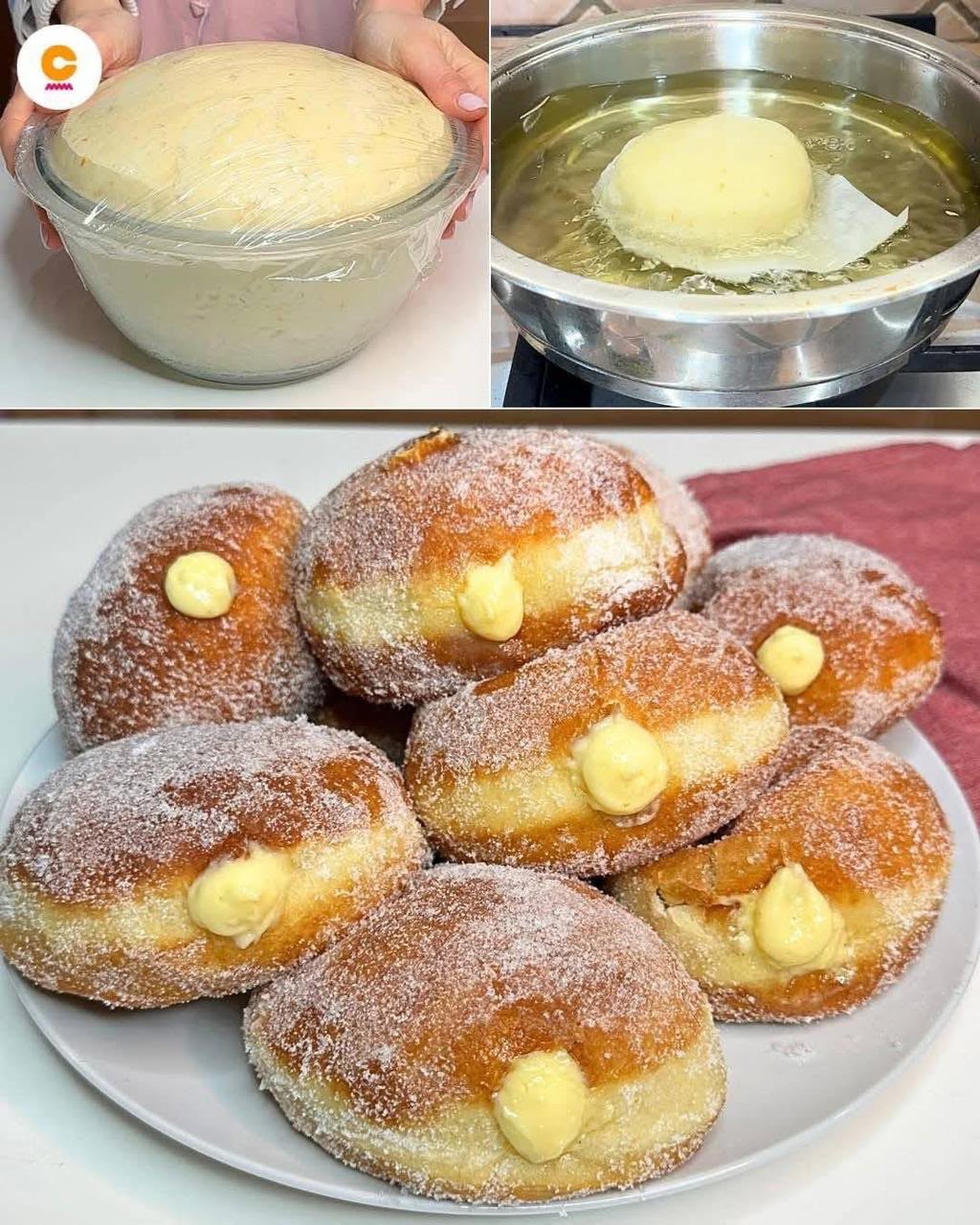
Italian Bomboloni are known for their light, fluffy texture, golden fried exterior, generous sugar coating, and irresistible creamy filling.
This detailed recipe walks you through every important step, from preparing the vanilla pastry cream and kneading the enriched dough to mastering the second rise, frying temperature, and filling technique.
Whether you are preparing a special breakfast, weekend brunch, afternoon treat, or homemade dessert, these vanilla custard-filled donuts are guaranteed to bring a bakery-style experience straight to your kitchen.
Recipe Overview
| Recipe Detail | Information |
| Prep Time | 45 minutes |
| Cook Time | 15 minutes |
| Resting / Rising Time | About 2 hours |
| Total Time | About 3 hours |
| Yield | 12 donuts |
| Category | Dessert / Sweet Pastry |
| Cuisine | Italian / International |
| Difficulty | Intermediate |
Why You’ll Love This Recipe
These Bomboloni have an exceptionally soft and airy interior thanks to the enriched yeast dough. The combination of eggs, butter, milk, and vanilla creates a tender texture with a deliciously rich flavor.
The homemade vanilla pastry cream is smooth, creamy, and fragrant. It provides the perfect contrast to the lightly crisp golden exterior of the fried donuts.
The parchment-paper technique makes transferring the delicate risen dough much easier. It helps prevent the donuts from collapsing before they reach the hot oil.
Rolling the freshly fried Bomboloni in sugar gives them their classic Italian bakery finish. Each bite combines fluffy dough, sweet sugar, and luxurious vanilla custard.
Ingredients
For the Donut Dough
| Ingredient | Quantity | Metric | Notes |
| Whole milk, warm | ¾ cup | 180 ml | About 45°C / 113°F |
| Active dry yeast | 2¼ tsp | 7 g | About 1 packet |
| Granulated sugar | ¼ cup | 50 g | Plus 1 tsp for yeast |
| Bread flour or strong flour | 3¼ cups | 415 g | T45/T55 also works |
| Salt | ½ tsp | 3 g | Balances sweetness |
| Large eggs | 2 | About 100 g | Room temperature |
| Unsalted butter, softened | ¼ cup | 57 g | Cut into small cubes |
| Vanilla extract | 1 tsp | 5 ml | Pure vanilla preferred |
For the Vanilla Pastry Cream
| Ingredient | Quantity | Metric | Notes |
| Whole milk | 2 cups | 480 ml | Essential for richness |
| Large egg yolks | 6 | About 110 g | |
| Granulated sugar | ½ cup | 100 g | |
| Cornstarch | ¼ cup | 30 g | Thickens the custard |
| Unsalted butter | 2 tbsp | 28 g | Added after cooking |
| Vanilla bean paste | 1 tbsp | 15 ml | Or pure vanilla extract |
For Frying and Coating
| Ingredient | Quantity | Metric | Notes |
| Vegetable or canola oil | About 6 cups | 1.5 L | For deep frying |
| Granulated sugar | 1 cup | 200 g | For coating |
Step-by-Step Instructions
Step 1: Make the Vanilla Pastry Cream
In a medium bowl, whisk the egg yolks, sugar, and cornstarch until the mixture becomes pale and smooth.
Heat the whole milk in a saucepan over medium heat until it is steaming and just beginning to simmer.
Slowly pour the hot milk into the egg mixture while whisking constantly. This process gently raises the temperature of the eggs and prevents them from scrambling.
Return the mixture to the saucepan.
Cook over medium heat, whisking continuously, until the pastry cream becomes thick and begins to bubble.
Once it reaches a gentle boil, continue cooking for about 1 to 2 minutes while whisking.
Remove the saucepan from the heat and immediately whisk in the butter and vanilla.
Transfer the pastry cream to a clean bowl and press plastic wrap directly against the surface. This prevents a skin from forming.
Refrigerate for at least 2 hours until completely chilled.
Step 2: Activate the Yeast
Pour the warm milk into the bowl of a stand mixer.
Add 1 teaspoon of sugar and the active dry yeast.
Stir gently and allow the mixture to sit for 5 to 10 minutes.
The surface should become slightly foamy, indicating that the yeast is active.
Step 3: Mix and Knead the Dough
Add the remaining sugar, flour, salt, eggs, and vanilla extract to the yeast mixture.
Using the dough hook attachment, mix on low speed until a rough dough begins to form.
Gradually add the softened butter, one small piece at a time, allowing each piece to incorporate before adding the next.
Continue kneading at medium speed for approximately 8 to 10 minutes.
The dough should become smooth, elastic, and soft. It may remain slightly sticky, but it should gradually pull away from the sides of the bowl.
Step 4: First Rise
Shape the dough into a ball.
Place it in a lightly greased bowl and cover tightly with plastic wrap.
Leave the dough in a warm, draft-free location for approximately 1 to 1½ hours, or until it has doubled in volume.
The exact rising time depends on the temperature of your kitchen and the activity of your yeast.
Step 5: Shape the Donuts
Transfer the risen dough to a lightly floured work surface.
Gently press out some of the excess air.
Roll the dough to approximately 1.25 cm / ½ inch thick.
Use a round 7.5 cm / 3-inch cookie cutter to cut out approximately 12 dough rounds.
Avoid overworking the leftover dough because excessive handling can make the donuts less tender.
Step 6: Second Rise on Parchment Paper
Cut parchment paper into individual squares approximately 10 × 10 cm / 4 × 4 inches.
Place each dough round on its own parchment square.
Arrange the donuts on a baking sheet with enough space between them.
Loosely cover them with a clean kitchen towel.
Allow them to rise for approximately 45 to 60 minutes, or until visibly puffed and almost doubled in height.
Step 7: Fry the Bomboloni
Pour the oil into a large, heavy-bottomed pot.
Heat the oil to approximately 170°C / 340°F.
Carefully pick up one risen donut using its parchment square and gently lower it into the hot oil, parchment side down.
After several seconds, carefully remove the parchment paper using kitchen tongs.
Fry the donuts for approximately 2 to 3 minutes per side, turning them carefully until they become evenly golden brown.
Do not overcrowd the pot. Fry only 2 to 3 donuts at a time so the oil temperature remains stable.
Remove the cooked donuts with a slotted spoon and place them on a wire rack lined underneath with paper towels.
Allow excess oil to drain for about 1 minute.
Step 8: Coat with Sugar
Place the granulated sugar in a shallow bowl.
While the Bomboloni are still warm, gently roll them in the sugar.
Turn them several times until the entire exterior is evenly coated.
Allow the donuts to cool completely before filling.
Step 9: Fill and Serve
Remove the chilled pastry cream from the refrigerator and whisk it briefly until smooth and creamy.
Transfer it to a piping bag fitted with a round piping tip.
Use a small knife, skewer, or chopstick to make a small opening in the side of each cooled donut.
Insert the piping tip into the center of the donut.
Squeeze the pastry cream generously into the donut until it feels noticeably heavier and a small amount of cream begins to appear at the opening.
Repeat with the remaining Bomboloni.
Serve fresh for the best texture and flavor.
Best Tips
Keeping the frying oil at the correct temperature is one of the most important parts of this recipe. Aim for approximately 170°C / 340°F. If the oil becomes too cool, the donuts can absorb excessive oil. If it becomes too hot, the outside can brown before the center is properly cooked.
The parchment-paper method makes the delicate risen donuts much easier to transfer into the oil. Handle the dough gently throughout the process to preserve its airy structure.
Avoid overcrowding the frying pot. Adding too many donuts at once can cause the oil temperature to drop dramatically and lead to uneven frying.
Pay attention to the dough rather than relying only on the clock. Properly risen donuts should look noticeably puffy and feel light when handled.
Allow the Bomboloni to cool before filling them. Filling them while they are extremely hot can cause the pastry cream to soften excessively.
For the best homemade donut texture, serve the Bomboloni on the day they are fried.
Best Ingredient Options
Flour
Bread flour provides good elasticity and structure. T55 all-purpose flour can also be used in a 1:1 ratio.
The finished Bomboloni may be slightly less elastic but should remain soft and delicious.
Whole Milk
Whole milk provides richness and tenderness.
For a dairy-free version, unsweetened oat or almond milk can be used. The butter should also be replaced with a suitable plant-based butter or margarine.
Yeast
Instant yeast can replace active dry yeast in approximately the same quantity.
With instant yeast, you can generally add it directly to the dry ingredients without waiting for a separate activation step.
Vanilla
Vanilla bean paste provides an especially intense vanilla flavor and beautiful vanilla specks.
Pure vanilla extract is an excellent alternative when vanilla paste is unavailable.
Recipe Variations
Nutella Bomboloni
Replace the vanilla pastry cream with chocolate-hazelnut spread for an indulgent chocolate-filled version.
Jam-Filled Bomboloni
Fill the donuts with smooth strawberry, raspberry, or apricot jam for a classic European-style variation.
Cinnamon Sugar Bomboloni
Mix 1 tablespoon of ground cinnamon into the granulated sugar before coating the warm donuts.
Lemon Custard Bomboloni
Add finely grated fresh lemon zest to the pastry cream for a bright, refreshing citrus flavor.
Coffee Bomboloni
Add a small amount of strong espresso or instant espresso powder to the pastry cream for a rich coffee-flavored filling.
What to Serve With Bomboloni
These donuts are sweet and rich, so they pair particularly well with beverages that have a slightly bitter or bold flavor.
A freshly prepared double espresso is an excellent choice and complements the vanilla custard beautifully.
An Americano or strong brewed coffee also balances the sweetness of the Bomboloni.
For a milder option, serve them with a cold glass of milk.
A strong black tea such as Earl Grey or English Breakfast is another delicious pairing.
Make-Ahead Instructions
The vanilla pastry cream can be prepared up to 3 days in advance.
Store it in an airtight container in the refrigerator with plastic wrap pressed directly against the surface.
The donut dough can also be prepared the night before.
After kneading, place the covered dough in the refrigerator for approximately 8 to 12 hours.
The slow overnight fermentation allows the yeast to work gradually and can help develop a deeper flavor.
The following day, shape the donuts and allow them to complete their second rise before frying.
Storage
At Room Temperature
Unfilled Bomboloni are best enjoyed on the same day.
They can be stored in a paper bag or loosely covered container at room temperature for up to approximately 24 hours.
In the Refrigerator
Because the filling contains eggs and dairy, filled Bomboloni should be refrigerated.
Store them in an airtight container and consume them within approximately 2 to 3 days.
Keep in mind that refrigeration can make the donut dough firmer and less fluffy.
Reheating
Filled Bomboloni are generally not ideal for reheating because the pastry cream can become very soft or change texture when heated.
For unfilled donuts, a short period in an oven or air fryer can help restore some of their softness.
You can also microwave an unfilled Bomboloni for approximately 10 to 15 seconds, being careful not to overheat it.
Freezing
For the best results, freeze the Bomboloni without their filling.
Allow the fried donuts to cool completely.
Place them in an airtight freezer-safe bag or container and freeze for up to approximately 2 months.
Thaw them at room temperature for several hours.
Warm them gently before coating with sugar and filling with freshly prepared pastry cream.
Freezing the pastry cream is not recommended because its texture may become grainy or separate after thawing.
Common Mistakes to Avoid
Adding the Hot Milk Too Quickly
Pouring very hot milk directly onto the egg yolks can cause them to scramble.
Always add the milk gradually while whisking continuously.
Ignoring the Oil Temperature
Oil that is too cool can produce greasy donuts, while oil that is too hot can burn the exterior.
A kitchen thermometer is strongly recommended.
Overcrowding the Pot
Frying too many Bomboloni at once causes the oil temperature to drop and can result in unevenly cooked donuts.
Under-Proofing the Dough
If the donuts have not risen enough, they can become dense rather than light and airy.
The dough should be visibly puffed before frying.
Handling the Dough Too Much
Excessive handling after the second rise can deflate the dough.
The parchment-paper technique helps reduce unnecessary movement.
Filling the Donuts While Too Hot
Allow the fried donuts to cool before filling them so the pastry cream maintains its smooth texture.
Nutrition Estimate
These nutritional values are approximate and can vary depending on the exact ingredients used and the amount of oil absorbed during frying.
| Nutrient | Per Filled Donut | % Daily Value* |
| Calories | About 385 kcal | 19% |
| Total Fat | 18 g | 23% |
| Saturated Fat | 7 g | 35% |
| Cholesterol | 135 mg | 45% |
| Sodium | 160 mg | 7% |
| Total Carbohydrates | 48 g | 17% |
| Dietary Fiber | 1 g | 4% |
| Sugars | 22 g | — |
| Protein | 8 g | 16% |
*Percent Daily Values are based on a 2,000-calorie diet.
Frequently Asked Questions
Can I bake these Bomboloni instead of frying them?
Yes, but the texture will be different.
You can bake the dough at approximately 175°C / 350°F for 12 to 15 minutes, depending on your oven.
However, baked Bomboloni will be more similar to sweet brioche rolls than traditional fried Italian donuts.
For an authentic Bomboloni texture, frying is the preferred method.
Why is my pastry cream too runny?
The pastry cream needs to reach a proper boil for approximately 1 to 2 minutes while being whisked continuously.
If you remove it from the heat too early, the cornstarch may not have enough time to thicken the custard properly.
The pastry cream also needs to cool completely in the refrigerator before filling the donuts.
What is the best oil for frying donuts?
Choose a neutral oil with a high smoke point.
Canola oil, sunflower oil, peanut oil, and standard vegetable oil are excellent choices.
Avoid strongly flavored oils that could overpower the delicate vanilla flavor.
Why are my Bomboloni greasy?
The most common reason is oil that is too cool.
When the frying temperature drops too much, the dough absorbs more oil.
Maintain approximately 170°C / 340°F and avoid frying too many donuts at the same time.
Why are my Bomboloni dense?
Dense donuts can be caused by insufficient rising time, inactive yeast, or adding too much flour.
Give the dough enough time to rise and focus on its appearance and volume rather than following the clock alone.
Final Thoughts
Making homemade vanilla custard-filled Bomboloni requires some patience, but the final result is absolutely worth the effort.
The combination of fluffy yeast dough, golden fried edges, a generous sugar coating, and silky vanilla pastry cream creates an irresistible homemade dessert.
The most important secrets are maintaining the correct frying temperature, allowing the dough enough time to rise, and handling the delicate dough carefully.
Prepare these Italian-style donuts for breakfast, brunch, an afternoon treat, a celebration, or simply whenever you want something wonderfully indulgent.
Once you taste a freshly fried Bomboloni filled with homemade vanilla custard, it may quickly become one of your favorite homemade dessert recipes.