Introduction
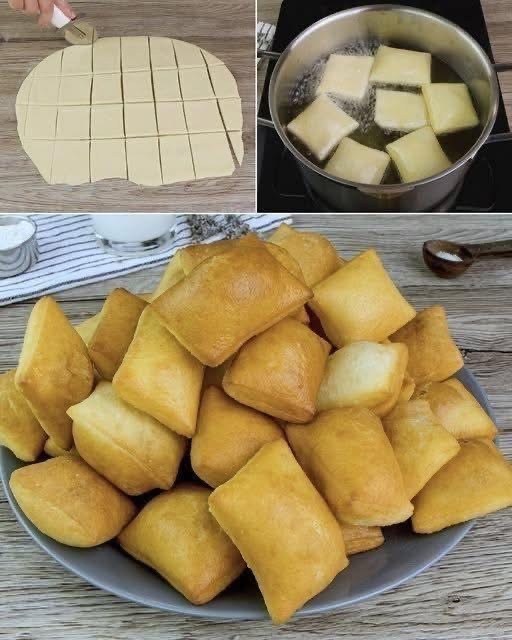
There is something wonderfully comforting about freshly fried dough. These crispy fried dough bites are made from a simple yeast dough, rolled out, cut into small squares, and deep-fried until beautifully golden on the outside while remaining soft and airy inside.
They are inexpensive, easy to prepare, and perfect for breakfast, afternoon tea, family gatherings, or as a simple homemade snack. The dough can be prepared with everyday pantry ingredients, making this an excellent easy fried dough recipe when you want something delicious without complicated techniques.
Recipe Overview
| Category | Details |
| Recipe | Crispy Fried Dough Bites |
| Cuisine | International / Homemade |
| Preparation Time | 20 minutes |
| Resting Time | 1 hour |
| Cooking Time | 15–20 minutes |
| Total Time | About 1 hour 40 minutes |
| Servings | 6–8 |
| Difficulty | Easy |
| Cooking Method | Deep frying |
| Texture | Crisp outside, soft and fluffy inside |
| Best For | Breakfast, snack, tea time, parties |
Why You’ll Love This Recipe
1. Simple pantry ingredients
You only need flour, yeast, sugar, salt, water, and oil to make these delicious fried dough bites. There is no need for expensive or unusual ingredients.
2. Crispy outside and fluffy inside
The secret is the combination of a properly rested yeast dough and correctly heated oil. The pieces puff beautifully during frying, creating a light interior and a golden, slightly crisp exterior.
3. Easy to customize
You can keep them plain, dust them with powdered sugar, serve them with honey, or turn them into a savory snack with cheese, herbs, or dipping sauces.
4. Perfect for sharing
The small square shape makes these homemade fried dough bites ideal for serving on a large platter. They are especially delicious when eaten warm.
Ingredients
For the Dough
| Ingredient | Amount |
| All-purpose flour | 4 cups (500 g) |
| Warm water | 1¾ cups (420 ml), approximately |
| Instant yeast | 2¼ tsp (7 g) |
| Granulated sugar | 2 tbsp (25 g) |
| Salt | 1 tsp (6 g) |
| Vegetable oil | 2 tbsp (30 ml) |
Tip: Add the water gradually. Depending on the flour, you may need slightly more or less water.
For Frying
| Ingredient | Amount |
| Neutral vegetable oil | 5–6 cups, or enough for deep frying |
Canola, sunflower, or peanut oil works particularly well because these oils have a relatively high smoke point and a neutral flavor.
Optional Toppings
| Topping | Suggested Amount |
| Powdered sugar | 2–3 tbsp |
| Honey | As desired |
| Cinnamon | ½ tsp |
| Sesame seeds | 1–2 tbsp |
| Granulated sugar | As desired |
Instructions Step by Step
Step 1: Activate the Yeast
Add the warm water, sugar, and yeast to a large bowl.
The water should be warm rather than hot, ideally around 100–110°F (38–43°C).
Stir gently and allow the mixture to stand for 5–10 minutes.
If using instant yeast, you can also mix it directly with the flour, but activating it first is a useful way to check that the yeast is still active.
Step 2: Make the Dough
Add the flour, salt, and vegetable oil.
Mix with a wooden spoon or your hands until a rough dough forms.
Gradually add the remaining water as necessary. The finished dough should be soft and slightly tacky but not excessively sticky.
Transfer it to a lightly floured work surface.
Step 3: Knead Until Smooth
Knead the dough for approximately 8–10 minutes by hand.
You are looking for a dough that becomes smooth, elastic, and soft.
If the dough feels extremely sticky, add flour one tablespoon at a time. Avoid adding too much flour because a stiff dough can produce heavy fried pastries.
Step 4: Let the Dough Rise
Place the dough in a lightly oiled bowl.
Cover with plastic wrap or a clean kitchen towel.
Allow it to rise in a warm, draft-free place for approximately 45–60 minutes, or until it has noticeably increased in size.
The exact rising time depends on the temperature of your kitchen.
Step 5: Roll Out the Dough
Lightly flour your work surface.
Transfer the risen dough onto the surface and gently press out excess air.
Roll the dough into a rectangle approximately ¼ inch (6 mm) thick.
Try to maintain an even thickness so that all the pieces cook at approximately the same rate.
Step 6: Cut Into Squares
Using a sharp knife or pizza cutter, cut the dough into approximately 2½–3 inch (6–8 cm) squares or rectangles.
You don’t need perfectly identical pieces—the rustic appearance is part of their charm.
Step 7: Heat the Oil
Pour the vegetable oil into a deep, heavy-bottomed saucepan or Dutch oven.
Heat the oil to approximately 350°F (175°C).
Use a kitchen thermometer for the most reliable results.
No thermometer?
Drop a tiny piece of dough into the oil. It should immediately begin bubbling and rise toward the surface without burning rapidly.
Step 8: Fry the Dough
Carefully place several dough pieces into the hot oil.
Do not overcrowd the pan because adding too many pieces at once can lower the oil temperature and make the dough greasy.
Fry for approximately 2–3 minutes per side, turning gently with a slotted spoon.
Continue cooking until the pieces are puffed, golden brown, and cooked through.
Step 9: Drain
Transfer the fried dough bites to a plate or baking sheet lined with paper towels.
Allow excess oil to drain for a minute or two.
Repeat with the remaining dough.
Serve warm.
Practical Tips
Keep the dough soft
A soft dough generally produces lighter and fluffier fried pieces. Avoid adding excessive flour during kneading.
Don’t rush the rising process
Proper fermentation gives the dough its characteristic light texture. If your kitchen is cold, the dough may need longer than one hour.
Maintain the correct oil temperature
Aim for 350°F (175°C).
- Oil too cool: the dough absorbs too much oil.
- Oil too hot: the outside browns before the inside cooks.
- Oil at the right temperature: the pieces puff and become evenly golden.
Fry in small batches
Leave enough space for each piece to move freely in the oil.
Drain immediately
A wire rack is even better than paper towels because it prevents the bottoms from becoming soggy.
Best Ingredient Alternatives
| Original Ingredient | Alternative | Result |
| All-purpose flour | Bread flour | Slightly chewier texture |
| White sugar | Honey | Mildly richer flavor |
| Vegetable oil | Sunflower oil | Light, neutral flavor |
| Instant yeast | Active dry yeast | Excellent alternative |
| Water | Milk | Richer, softer dough |
| White flour | Part whole-wheat flour | More hearty flavor |
If using whole-wheat flour, replace only about 25–30% of the all-purpose flour initially. Using too much can make the fried dough heavier.
Recipe Variations
Sweet Fried Dough Bites
After frying, toss the warm pieces with powdered sugar and a small amount of cinnamon.
For a more indulgent dessert, drizzle them with honey or chocolate sauce.
Cinnamon Sugar Version
Combine:
- ½ cup granulated sugar
- 1 tsp ground cinnamon
Toss the freshly fried pieces in the mixture while they are still warm.
Savory Herb Version
Reduce the sugar in the dough to 1 teaspoon and add:
- ½ tsp garlic powder
- 1 tsp dried oregano
- 1 tbsp chopped fresh parsley
Serve with a yogurt or tomato-based dipping sauce.
Cheese-Filled Version
Place a small cube of mild cheese in the center of each dough piece before sealing and frying.
Make sure the edges are firmly closed so the filling does not escape into the hot oil.
What to Serve With Fried Dough
These golden bites are extremely versatile.
For Breakfast
Serve them with:
- Honey
- Jam
- Butter
- Cream cheese
- Fresh fruit
- Tea or coffee
For a Savory Snack
Try them with:
- Garlic yogurt dip
- Tomato sauce
- Spicy harissa-style sauce
- Hummus
- Cheese dip
For Dessert
Dust with powdered sugar and serve with:
- Chocolate sauce
- Caramel sauce
- Honey
- Vanilla ice cream
Make-Ahead Preparation
You can prepare the dough up to 24 hours in advance.
After kneading, place it in a lightly oiled airtight container and refrigerate.
The slow fermentation can actually improve the flavor.
When ready to cook, remove the dough from the refrigerator and allow it to sit at room temperature for approximately 30–60 minutes before rolling and cutting.
For the best texture, fry the dough shortly before serving.
Storage
Freshly fried dough is best eaten warm on the same day.
If you have leftovers, allow them to cool completely before placing them in an airtight container.
They can be kept at room temperature for approximately 1 day or refrigerated for 2–3 days.
Keep in mind that refrigeration can soften the crispy exterior.
How to Reheat Fried Dough
For the best results, use an oven or air fryer.
Oven
Heat the oven to 350°F (175°C).
Place the fried dough on a baking sheet and heat for approximately 5–8 minutes.
Air Fryer
Reheat at 350°F (175°C) for approximately 3–5 minutes.
Avoid microwaving if possible because it tends to make fried dough soft and chewy.
Can You Freeze Fried Dough?
Yes.
Allow the fried pieces to cool completely, then place them in a freezer-safe container or bag.
For best quality, use within 2 months.
To reheat, place them directly into a 350°F (175°C) oven or air fryer. There is no need to completely thaw them first.
For an even better result, you can freeze the uncooked cut dough pieces instead. Arrange them in a single layer, freeze until firm, then transfer them to a freezer bag. Allow them to thaw and become slightly puffy before frying.
Common Mistakes to Avoid
1. Using water that is too hot
Very hot water can damage or kill the yeast.
Solution: Keep the water comfortably warm, around 100–110°F (38–43°C).
2. Adding too much flour
This creates a dense, tough dough.
Solution: Add flour gradually and aim for a soft, elastic dough.
3. Skipping the resting time
Unfermented dough tends to produce heavier fried pieces.
Solution: Give the dough enough time to rise until visibly expanded.
4. Overcrowding the pan
Too many pieces can dramatically reduce the oil temperature.
Solution: Fry in several small batches.
5. Frying at the wrong temperature
This is one of the most common causes of greasy fried dough.
Solution: Maintain approximately 350°F (175°C) throughout frying.
6. Cutting pieces of very different sizes
Small pieces will cook faster than large ones.
Solution: Keep the squares reasonably similar in size.
Estimated Nutrition
The following values are approximate and will vary depending on the amount of oil absorbed during frying and serving size.
| Nutrient | Approx. Per Serving |
| Calories | 280–340 kcal |
| Carbohydrates | 40–45 g |
| Protein | 6–7 g |
| Fat | 11–15 g |
| Saturated Fat | 1–2 g |
| Fiber | 1–2 g |
| Sugar | 2–4 g |
| Sodium | 250–350 mg |
These figures are estimates and should not be considered laboratory nutrition data.
Frequently Asked Questions
Can I make these fried dough bites without yeast?
Yes, but the texture will be different. Yeast provides the airy, fluffy structure seen in the photograph. Baking powder can be used for a quicker version, but it will produce a more biscuit-like texture.
Why did my fried dough turn out greasy?
The most likely cause is oil that was not hot enough. When the temperature drops too much, the dough absorbs more oil instead of quickly forming a crisp exterior.
Why didn’t my dough puff?
Possible causes include inactive yeast, insufficient resting time, dough that is too thick or too stiff, or oil that is not hot enough.
Can I use an air fryer?
You can, although the result will not be exactly the same as deep-fried dough. Lightly brush the pieces with oil and air-fry at approximately 375°F (190°C) until golden and cooked through.
Can I make the dough less sweet?
Absolutely. For a neutral dough, reduce the sugar to 1 tablespoon or even 1 teaspoon if you intend to serve the fried pieces with savory dips.
What oil is best for deep frying?
A neutral oil with a high smoke point, such as sunflower, canola, or peanut oil, works well.
How do I know when the dough is fully cooked?
The exterior should be evenly golden brown and the pieces should feel light and crisp. If the outside browns extremely quickly while the center remains doughy, reduce the oil temperature slightly.
Conclusion
These crispy fried dough bites are proof that simple ingredients can create an incredibly satisfying homemade treat. With a soft yeast dough, a little patience, and properly heated oil, you can make golden, fluffy pastries that are perfect for breakfast, afternoon tea, dessert, or casual snacking.
The recipe is also wonderfully adaptable: keep the pieces plain, coat them in cinnamon sugar, drizzle them with honey, or experiment with savory fillings and dips.
For the crispiest and fluffiest results, remember the three essentials: let the dough rise properly, keep the oil around 350°F (175°C), and fry in small batches.