Introduction
Bright, healthy-looking teeth are something many people want, which is why simple DIY teeth-whitening methods often become popular online.
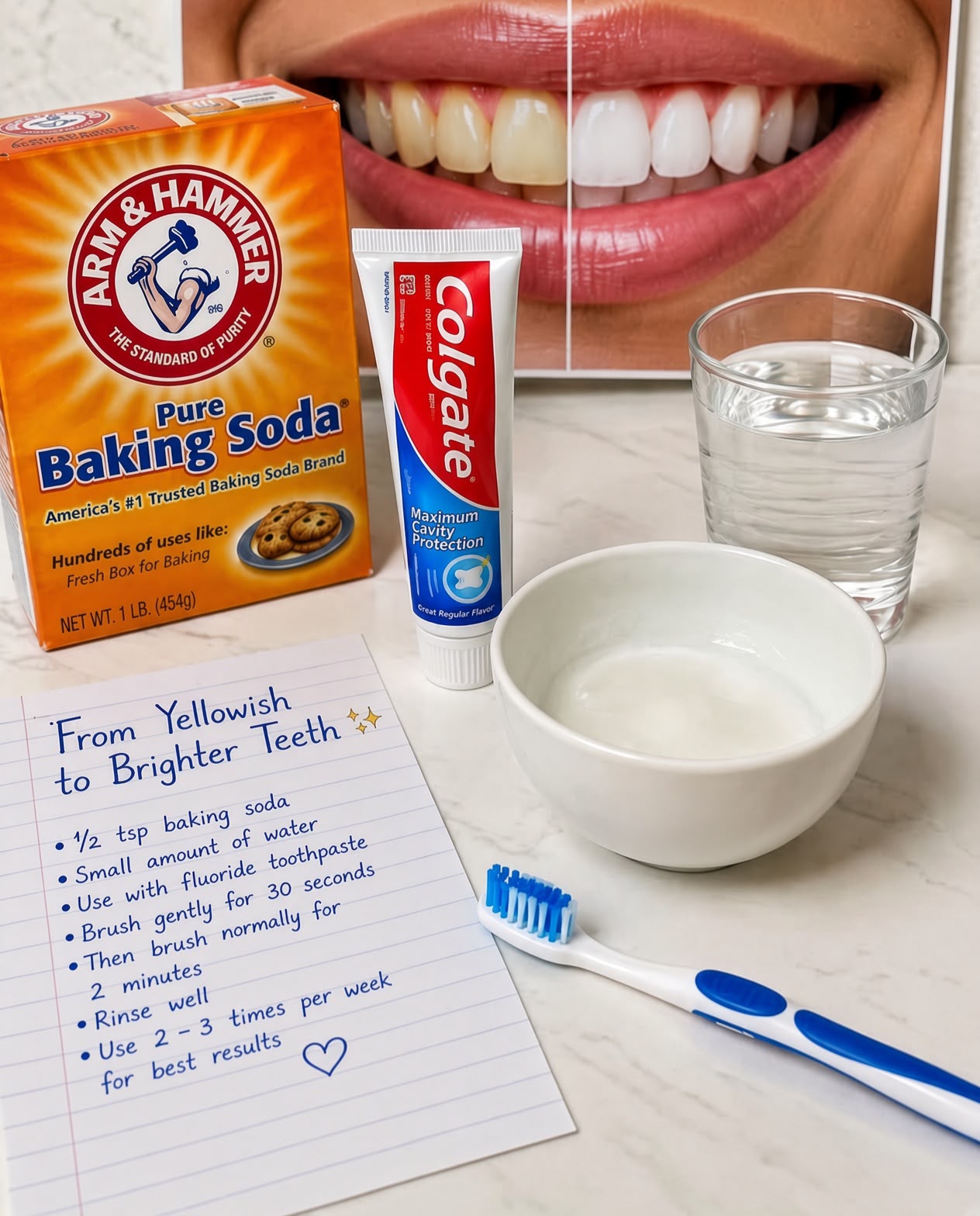
The image shows a mixture of baking soda, water, and fluoride toothpaste marketed as a way to make yellowish teeth look brighter.
However, it is important to separate a social-media beauty tip from evidence-based dental care. Baking soda can have a role in some formulated toothpastes, but that does not mean homemade mixtures are equivalent to professionally formulated whitening products. The American Dental Association notes that DIY whitening methods have limited evidence for both effectiveness and safety.
For everyday oral health, the priority should remain brushing twice daily with fluoride toothpaste, cleaning between the teeth, and having regular dental checkups.
Recipe Overview
| Details | Information |
| Method | DIY dental mixture |
| Main Ingredient | Baking soda |
| Other Ingredient | Fluoride toothpaste |
| Liquid | Water |
| Intended Purpose | Removing some surface stains |
| Evidence | Limited for homemade whitening mixtures |
| Recommended Routine | Regular fluoride toothpaste twice daily |
Why You May See This Tip Online
Baking soda is mildly abrasive, and baking-soda-containing toothpastes can help remove some external surface stains.
The ADA explains that whitening toothpastes primarily work through abrasives that mechanically remove extrinsic surface stains.
This is different from chemically bleaching the natural color of the tooth.
A homemade baking soda mixture should therefore not be presented as a guaranteed way to dramatically whiten teeth.
Ingredients
Common DIY Version Shown in the Image
| Ingredient | Amount |
| Baking soda 🥄 | ½ teaspoon |
| Fluoride toothpaste 🪥 | Small amount |
| Water 💧 | Small amount |
Step-by-Step Instructions
1. Understand the Mixture
The method shown combines a small amount of baking soda with toothpaste and water.
The baking soda provides an abrasive component, while fluoride toothpaste is designed primarily to help protect against tooth decay.
2. Do Not Replace Your Normal Brushing Routine
Your regular oral-care routine should remain the foundation of dental care.
The NHS recommends brushing twice a day for about 2 minutes with fluoride toothpaste.
3. Be Gentle
If someone chooses to use a baking-soda-containing dental product, aggressive brushing should be avoided.
Hard brushing can unnecessarily wear dental surfaces and irritate the gums.
4. Rinse
After brushing, spit out the toothpaste.
The NHS advises spitting after brushing rather than rinsing with water because rinsing immediately can wash away fluoride left on the teeth.
Best Tips
The safest approach is to choose a commercially formulated fluoride toothpaste rather than creating abrasive mixtures at home.
Look for dental products that are specifically designed and tested for whitening or stain removal.
The ADA notes that products carrying its Seal of Acceptance have been evaluated for safety and effectiveness according to its requirements.
If your teeth have persistent yellow, brown, or gray discoloration, the cause may not simply be surface staining. A dental professional can determine the cause and recommend an appropriate treatment.
Best Ingredient Options
Fluoride Toothpaste 🪥
A fluoride toothpaste is important for cavity prevention. The ADA explains that fluoride strengthens enamel and helps remineralize early areas of weakened enamel.
Baking Soda 🥄
Baking soda is used as an abrasive ingredient in some commercially formulated toothpastes.
However, using loose baking soda at home does not provide the same controlled formulation as a professionally developed toothpaste.
Water 💧
Water can be used to dilute a mixture, but it does not provide any whitening benefit itself.
Recipe Variations
Instead of making a homemade whitening mixture, consider using a commercially formulated whitening toothpaste.
Whitening strips are another established over-the-counter option. According to the ADA, most whitening strips rely primarily on peroxide to bleach teeth, while whitening toothpastes mainly remove surface stains.
For stronger whitening, dentist-supervised treatment is an option and can be more appropriate depending on the condition of your teeth and gums.
What to Use for Everyday Oral Care
A simple daily routine is more important than DIY whitening hacks.
Brush twice a day with fluoride toothpaste and clean between your teeth every day with floss or an interdental cleaner. Regular dental examinations can also help identify problems early.
Make-Ahead Instructions
A homemade baking soda and toothpaste mixture should not be prepared in large quantities and stored for repeated use.
If whitening is your goal, it is better to use a dental product according to its package instructions.
Storage
Do not store a homemade mixture in an unlabelled container.
Keep toothpaste and baking soda in their original containers and follow the manufacturer’s storage instructions.
Reheating
Not applicable.
This is a dental-care method rather than a food recipe.
Freezing
Not applicable.
Common Mistakes to Avoid
Avoid aggressively scrubbing your teeth in an attempt to make them whiter faster.
Do not assume that removing more enamel will make teeth healthier or whiter. The ADA has reported concerns about abrasive DIY whitening methods, including enamel abrasion with some household mixtures.
Do not replace fluoride toothpaste with baking soda alone. Fluoride plays an important role in preventing tooth decay.
Avoid using homemade whitening methods if you have significant tooth sensitivity, gum problems, damaged enamel, or untreated dental issues without first speaking with a dentist.
Nutrition Estimate
Nutrition information is not applicable because this is a dental-care method rather than something intended to be consumed.
Frequently Asked Questions
Does baking soda whiten teeth?
Baking soda can help remove some surface stains, particularly when incorporated into a properly formulated toothpaste. It should not be considered a guaranteed bleaching treatment for changing the natural color of teeth.
Can I brush with baking soda every day?
It is better to use a commercially formulated fluoride toothpaste for your regular brushing routine rather than relying on homemade baking soda mixtures.
Is baking soda safe for enamel?
The safety of an abrasive depends on the formulation, amount, frequency, and brushing technique. Excessive or aggressive use of abrasive substances can contribute to tooth wear.
What is the safest way to whiten teeth?
For mild surface stains, a properly formulated whitening toothpaste may help. For noticeable whitening, over-the-counter peroxide products or dentist-supervised whitening are better-established options.
How often should I brush my teeth?
The NHS recommends brushing twice a day for about 2 minutes with fluoride toothpaste.
When should I see a dentist?
See a dentist if you have tooth pain, bleeding or swollen gums, significant sensitivity, visible damage, or discoloration that does not improve with normal oral hygiene.
Final Thoughts
The baking soda and toothpaste mixture shown in the image is a popular DIY teeth-whitening idea, but it should not be treated as a proven replacement for professional or properly formulated whitening products.
For healthier teeth and gums, focus on consistent fluoride toothpaste use, gentle brushing, daily cleaning between the teeth, and regular dental checkups.
If you want noticeably whiter teeth, a dentist can help determine the safest option for your individual situation. 🦷✨
⚠️ Important: This DIY method may not be suitable for everyone. If you have sensitive teeth, gum problems, enamel damage, cavities, dental restorations, or other oral-health concerns, consult a dentist before trying whitening methods.