Introduction
If ants are appearing around your kitchen, windows, doors, or other entry points, a simple homemade ant deterrent spray can be a convenient first step.
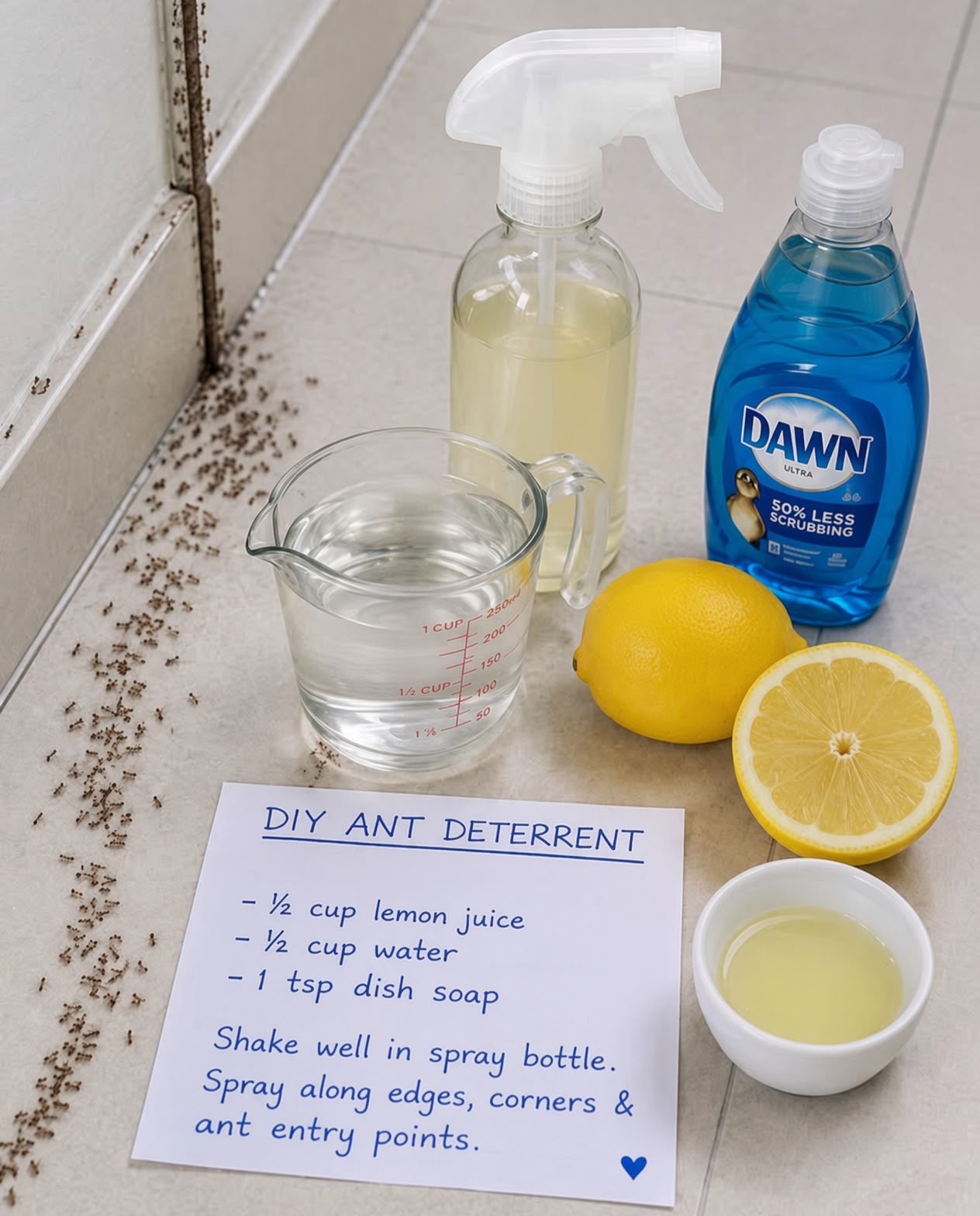
This DIY ant spray combines fresh lemon juice, water, and a small amount of dish soap to create an easy household solution for areas where ants are active.
The ingredients are inexpensive and easy to find, making this recipe a practical addition to your home cleaning and pest-control routine.
It is best used as a spot treatment around ant trails and potential entry points rather than as a guaranteed solution for an entire infestation.
Recipe Overview
| Category | Details |
| Recipe | DIY Ant Deterrent Spray |
| Preparation Time | 5 minutes |
| Application Time | 5–10 minutes |
| Total Time | About 10 minutes |
| Yield | About 1 cup |
| Difficulty | Very Easy |
| Main Ingredients | Lemon juice, water, dish soap |
| Best For | Ant trails and entry points |
| Storage | Short-term, in a labeled spray bottle |
Why You’ll Love This DIY Ant Spray
This homemade ant deterrent is quick to prepare and requires only three simple ingredients.
Lemon juice provides a strong citrus scent, while dish soap helps the mixture spread across surfaces and can interfere with insects that come directly into contact with it.
It is also an inexpensive alternative to buying a ready-made household pest control spray for minor ant activity.
Another advantage is convenience. You can mix a small batch in just a few minutes and apply it directly around corners, cracks, windows, doors, and other areas where ants are entering.
Ingredients
Main Ingredients
| Ingredient | Amount |
| Fresh lemon juice | ½ cup |
| Water | ½ cup |
| Dish soap | 1 teaspoon |
Equipment
| Item | Amount |
| Clean spray bottle | 1 |
| Measuring cup | 1 |
| Small funnel | Optional |
Step-by-Step Instructions
1. Prepare the Lemon Juice
Squeeze fresh lemons and measure ½ cup of lemon juice.
Strain out large seeds or pieces of pulp so they do not clog the spray nozzle.
2. Add the Water
Pour ½ cup of water into a clean measuring cup.
Room-temperature water is ideal for this simple homemade cleaning and pest-control solution.
3. Add the Dish Soap
Add 1 teaspoon of dish soap to the lemon juice and water.
Stir gently to combine without creating excessive foam.
4. Transfer to a Spray Bottle
Using a funnel if necessary, pour the mixture into a clean spray bottle.
Close the bottle securely.
5. Mix Gently
Shake the bottle gently for a few seconds before application.
Do not shake aggressively because the dish soap can create a large amount of foam.
6. Apply to Ant Trails
Spray a light amount directly along visible ant trails, corners, cracks, window edges, door frames, and potential entry points.
Avoid soaking surfaces.
7. Reapply When Necessary
Allow the treated area to dry naturally.
If ants return, clean the surface and repeat the application as needed.
For persistent or large infestations, identifying and addressing the colony or using an appropriate professional pest-control method may be necessary.
Best Tips
Clean the area before spraying whenever possible. Food crumbs, grease, and sugary residue can continue attracting ants even after applying the homemade spray.
Pay close attention to entry points. Ants can enter through surprisingly small gaps around windows, doors, pipes, and cracks.
Use a light spray rather than flooding the surface. Excess moisture can damage some materials and create unnecessary cleanup.
Always test the solution on a small, inconspicuous area first, especially when using it on painted surfaces, natural stone, wood, or delicate finishes.
Keep the spray bottle clearly labeled so nobody accidentally mistakes the mixture for another household product.
Best Ingredient Options
Fresh lemon juice is ideal because it provides a strong citrus aroma. Bottled lemon juice can also be used when fresh lemons are unavailable.
Use a mild liquid dish soap rather than a concentrated industrial cleaning chemical.
For the water, ordinary tap water is generally sufficient.
Do not add bleach, ammonia, vinegar, or other cleaning chemicals to this mixture. Combining household chemicals can create dangerous fumes or reactions.
Recipe Variations
For a stronger citrus scent, you can add a small amount of finely grated lemon zest before straining the mixture. Make sure all solid pieces are removed before transferring it to the spray bottle.
You can also make a smaller batch by keeping the same proportions: equal parts lemon juice and water with approximately 1 teaspoon of dish soap per cup of liquid.
For a simple cleaning-focused version, reduce the dish soap slightly and use the mixture primarily for wiping suitable hard surfaces rather than soaking them.
What to Serve With
This section is not applicable because this is a household pest-control spray, not a food recipe.
Keep the mixture completely separate from food, cooking ingredients, dishes, and food-preparation surfaces.
Make-Ahead Instructions
This spray can be prepared ahead of time and kept ready for use.
Pour the mixture into a clean, labeled spray bottle immediately after preparation.
Before each use, gently shake the bottle to redistribute the ingredients.
Storage
Store the spray in a clearly labeled, tightly closed bottle.
Keep it away from children and pets.
Because this recipe contains fresh lemon juice and water without commercial preservatives, it is best to make small batches rather than keeping a large quantity for a long period.
Discard the mixture if it develops an unusual smell, visible contamination, or other noticeable changes.
Reheating
Reheating is not applicable to this recipe.
Do not heat the mixture or place the spray bottle near a heat source.
Use it at room temperature.
Freezing
Freezing is not recommended.
The spray is simple and inexpensive to prepare, so making a fresh small batch when needed is more practical.
Common Mistakes to Avoid
Using Too Much Dish Soap
More soap does not necessarily make the spray more effective.
Stick to approximately 1 teaspoon per 1 cup of total liquid.
Spraying Without Cleaning First
If food residue remains on the surface, ants may continue returning.
Wipe away crumbs, sugar, grease, and other attractants before applying the spray.
Ignoring Entry Points
Simply spraying visible ants may not solve the underlying problem.
Look for cracks, gaps, and other places where ants are entering your home.
Using It on Every Surface
Lemon juice is acidic and may affect certain surfaces.
Always perform a small spot test before treating painted walls, marble, natural stone, wood, or other delicate materials.
Mixing With Other Chemicals
Never combine this homemade spray with bleach, ammonia, strong acids, or other chemical cleaners.
Keep the recipe simple and use the ingredients exactly as intended.
Nutrition Estimate
Nutrition information is not applicable because this recipe is a household cleaning and pest-control mixture and is not intended for consumption.
| Nutrient | Amount |
| Calories | Not applicable |
| Protein | Not applicable |
| Carbohydrates | Not applicable |
| Fat | Not applicable |
| Sugar | Not applicable |
| Sodium | Not applicable |
Frequently Asked Questions
Does lemon juice get rid of ants?
Lemon juice can help make treated areas less attractive to ants because of its strong citrus scent, but it should not be considered a guaranteed method for eliminating an established colony.
How often should I use this ant spray?
You can reapply when ant trails become visible again. Clean the area first and avoid excessive spraying.
Can I use bottled lemon juice?
Yes. Bottled lemon juice can be used if fresh lemon juice is unavailable.
Can I use this spray in the kitchen?
It can be used around suitable hard surfaces, but always test the surface first.
Do not spray directly onto food, food-contact surfaces, or utensils unless the surface is subsequently cleaned thoroughly according to its material and normal food-safety practices.
Is this spray safe around pets?
Do not spray directly on pets, their food, water bowls, bedding, or skin.
Keep pets away from freshly treated surfaces until they are dry, and use extra caution if your pet is sensitive to cleaning products or citrus.
Will this homemade spray eliminate an entire ant colony?
Not necessarily.
A surface spray may help with visible ant activity, but persistent infestations can require a more comprehensive pest-control approach.
Can I use this as a general household cleaner?
The mixture may be useful for certain washable surfaces, but it should not be treated as a universal household cleaner.
Always check the material and perform a small spot test first.
Final Thoughts
This DIY ant deterrent spray is a simple homemade solution made with lemon juice, water, and dish soap.
It takes only a few minutes to prepare and can be useful for treating visible ant trails and potential entry points around the home.
For the best results, combine this type of household pest-control routine with good sanitation, proper food storage, and sealing obvious entry points.
If you are dealing with a large, persistent, or recurring ant infestation, consider identifying the species and consulting a qualified pest-control professional for an appropriate treatment plan.