Introduction
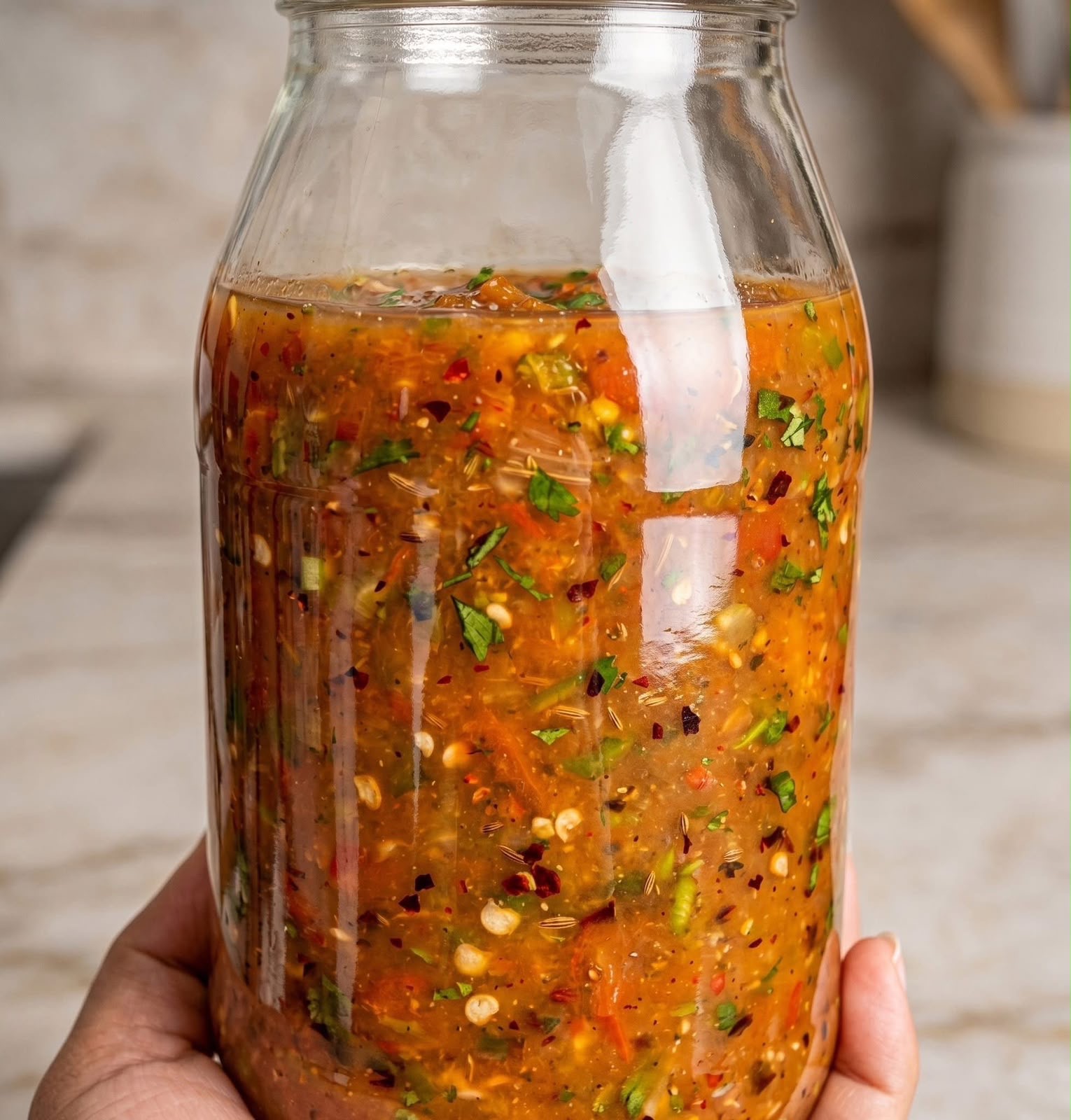
This homemade spicy chili garlic sauce is a bold, flavorful condiment made with fresh peppers, tomatoes, garlic, herbs, and aromatic spices. It has a vibrant orange-red color, a chunky texture, and the perfect balance of heat, savory flavor, and freshness.
Making your own hot sauce at home is surprisingly simple and gives you complete control over the level of spiciness, ingredients, and texture. This versatile sauce can be served with grilled meats, roasted vegetables, rice, pasta, sandwiches, burgers, eggs, or almost any meal that needs an extra kick.
Unlike many store-bought sauces, this homemade version can be adjusted to your preferred flavor and heat level. It is an excellent addition to your homemade condiment collection and makes a flavorful refrigerator staple.
Recipe Overview
| Category | Details |
| Recipe | Homemade Spicy Chili Garlic Sauce |
| Preparation Time | 15 minutes |
| Cooking Time | 20–25 minutes |
| Total Time | 35–40 minutes |
| Yield | About 2 cups |
| Cuisine | Homemade / International |
| Difficulty | Easy |
| Texture | Chunky and saucy |
| Spice Level | Medium to Hot |
| Storage | Refrigerate |
Why You’ll Love This Recipe
This homemade chili garlic sauce delivers intense flavor without requiring complicated cooking techniques. Fresh peppers provide heat, tomatoes add natural sweetness and body, while garlic and herbs create a savory aroma that makes the sauce incredibly appetizing.
The recipe is also highly customizable. You can use mild peppers for a gentler sauce or hotter chilies when you want a more intense spicy garlic sauce. Adjusting the amount of red pepper flakes also allows you to control the final heat level.
Another advantage is versatility. A spoonful can transform grilled chicken, steak, roasted potatoes, noodles, rice bowls, eggs, sandwiches, or vegetables. It is also an easy way to add homemade flavor to everyday meals.
Ingredients
Fresh Ingredients
| Ingredient | Amount |
| Ripe tomatoes, chopped | 4 medium |
| Fresh red chilies | 4–6 |
| Green chili peppers | 2 |
| Garlic cloves | 6–8 |
| Fresh cilantro, chopped | ¼ cup |
| Small onion, chopped | ½ |
| Fresh lemon juice | 2 tbsp |
Spices & Seasonings
| Ingredient | Amount |
| Red pepper flakes | 1–2 tsp |
| Ground cumin | 1 tsp |
| Salt | 1 tsp, or to taste |
| Black pepper | ½ tsp |
| Paprika | 1 tsp |
| Sugar | ½ tsp, optional |
Liquid Ingredients
| Ingredient | Amount |
| Olive oil or neutral cooking oil | 3 tbsp |
| Water | ¼ cup, as needed |
Step-by-Step Instructions
1. Prepare the Vegetables
Wash the tomatoes, chilies, green peppers, cilantro, and other fresh ingredients thoroughly. Roughly chop the tomatoes, peppers, onion, and garlic.
For a milder homemade hot sauce, remove some or all of the seeds and membranes from the chilies. For a hotter sauce, leave them intact.
2. Blend the Base
Add the tomatoes, fresh chilies, green peppers, garlic, onion, and lemon juice to a food processor or blender.
Pulse several times until the mixture becomes finely chopped but still slightly textured. Avoid blending it completely smooth if you prefer the chunky appearance shown in the image.
3. Heat the Oil
Place a medium saucepan over medium heat and add the olive oil.
Allow the oil to warm for about 1–2 minutes, then carefully add the blended vegetable mixture.
4. Add the Seasonings
Stir in the cumin, paprika, black pepper, salt, and red pepper flakes.
Mix thoroughly so the spices are evenly distributed throughout the sauce.
5. Simmer the Sauce
Bring the mixture to a gentle simmer over medium-low heat.
Cook uncovered for approximately 20–25 minutes, stirring every few minutes to prevent sticking.
The sauce should become thicker, darker, and more concentrated as excess moisture evaporates.
If the mixture becomes too thick before the vegetables are fully cooked, add 1–2 tablespoons of water at a time.
6. Add the Cilantro
Stir in the chopped fresh cilantro during the final 3–5 minutes of cooking.
This keeps its fresh flavor while allowing it to blend into the sauce.
7. Adjust the Flavor
Taste the sauce carefully and adjust the seasoning.
Add more salt for savory depth, lemon juice for brightness, red pepper flakes for additional heat, or a small amount of sugar if the tomatoes and chilies are particularly sharp.
8. Cool and Store
Remove the saucepan from the heat and allow the sauce to cool.
Transfer it to a clean glass jar or airtight container and refrigerate before serving.
For the best flavor, let the sauce rest for several hours so the spices and aromatics have time to blend.
Best Tips
Use ripe, flavorful tomatoes because they provide much of the sauce’s natural body and sweetness. Fresh chilies will also give the condiment a brighter flavor than dried peppers alone.
The heat level is completely adjustable. Removing the seeds and inner membranes from the peppers will generally produce a milder sauce, while keeping them will create a hotter result.
For a smoother chili garlic sauce, blend the cooked mixture after simmering. For a rustic, chunky texture, simply leave it as prepared.
Do not rush the simmering process. Cooking the sauce gently allows the tomatoes, peppers, garlic, and spices to develop a deeper flavor.
Always taste the finished sauce after it has cooled slightly because heat and seasoning can seem stronger when the mixture is extremely hot.
Best Ingredient Options
For the tomatoes, ripe Roma tomatoes work especially well because they contain relatively little excess liquid. Regular vine-ripened tomatoes can also be used.
Fresh red chilies provide color and heat, while jalapeños or other green chilies can add a fresher, slightly grassy flavor.
Fresh garlic gives the strongest flavor, but you can reduce the amount if you prefer a more subtle garlic sauce.
Cilantro can be replaced with fresh parsley if you prefer a milder herbal flavor.
Olive oil adds a fruity note, while a neutral oil such as avocado or sunflower oil allows the peppers and spices to stand out more.
Recipe Variations
For an extra-hot version, add additional fresh chilies or a small amount of cayenne pepper. Start with a little and increase gradually because the heat can become intense quickly.
For a smoky chili sauce, add smoked paprika instead of regular paprika. A small amount can give the sauce a deeper, roasted character.
For a sweeter version, increase the sugar slightly or use naturally sweet roasted red peppers.
For a smoother restaurant-style hot sauce, blend the finished cooked mixture until completely smooth and strain it if desired.
For a roasted version, roast the tomatoes, peppers, garlic, and onion at 400°F (200°C) until lightly charred before blending and simmering.
What to Serve With
This spicy garlic sauce is excellent with grilled chicken, steak, burgers, roasted vegetables, potatoes, rice, pasta, noodles, tacos, wraps, sandwiches, and eggs.
It can also be served as a dipping sauce alongside grilled meats, fried foods, bread, or roasted vegetables. A small spoonful mixed into rice or noodles can instantly add extra flavor.
Make-Ahead Instructions
This sauce is ideal for preparing ahead because the flavors become more developed after resting.
Prepare the sauce according to the recipe, allow it to cool completely, and transfer it to a clean airtight container. Refrigerate it until ready to use.
For the best flavor and texture, allow the sauce to sit in the refrigerator for several hours before serving.
Storage
Store the finished sauce in a clean, airtight container in the refrigerator.
Because this homemade recipe does not use commercial preservatives or a validated canning process, it should not be stored at room temperature.
For food safety, use clean utensils whenever serving the sauce and discard it if you notice mold, an unusual odor, fermentation, or other signs of spoilage.
Reheating
This sauce is generally best served cold or at room temperature, so reheating is not necessary.
If you want to use it as a warm sauce, place the desired amount in a small saucepan and heat gently over low heat until warmed through.
Avoid repeatedly heating the entire jar. Instead, warm only the portion you plan to eat.
Freezing
For longer storage, the sauce can be frozen in small portions.
Place the cooled sauce into freezer-safe containers or silicone molds, leaving a little room for expansion. Freeze until solid, then transfer individual portions to a suitable freezer bag or container.
Thaw overnight in the refrigerator and stir well before serving.
The texture may become slightly softer after freezing and thawing, but the flavor should remain enjoyable.
Common Mistakes to Avoid
Using Too Many Hot Peppers
Adding a large amount of hot chilies at once can make the sauce difficult to balance. Start with less and increase the heat gradually.
Over-Blending
Blending for too long can turn a naturally chunky sauce into a completely smooth puree. Pulse briefly if you want a texture similar to the pictured sauce.
Cooking Over High Heat
Very high heat can cause the mixture to stick or scorch. A gentle simmer gives the ingredients enough time to cook without burning.
Adding Too Much Liquid
The tomatoes and peppers already contain plenty of moisture. Add water only when necessary to prevent the sauce from becoming too thin.
Ignoring Food Safety
Because this is a fresh homemade condiment without a tested preservation process, proper refrigeration is important. Do not treat it like commercially bottled shelf-stable hot sauce.
Nutrition Estimate
The following values are approximate and will vary depending on the exact ingredients and serving size.
| Nutrient | Approx. Per Serving |
| Serving Size | 2 tbsp |
| Calories | 35 kcal |
| Carbohydrates | 4 g |
| Protein | 1 g |
| Fat | 2 g |
| Saturated Fat | 0.3 g |
| Fiber | 1 g |
| Sugar | 2 g |
| Sodium | 190 mg |
Frequently Asked Questions
How spicy is this homemade chili sauce?
The spice level depends mainly on the type and quantity of chilies used. Removing the seeds and membranes can make the sauce milder, while hotter pepper varieties will create a much stronger result.
Can I make this sauce without cilantro?
Yes. You can leave out the cilantro or replace it with fresh parsley.
Can I make the sauce smoother?
Absolutely. Blend the cooked sauce until smooth. If you want an exceptionally silky consistency, pass it through a fine-mesh strainer.
Can I use canned tomatoes?
Yes, canned tomatoes can work when fresh tomatoes are unavailable. Drain excess liquid if the tomatoes are very watery and adjust the simmering time as needed.
Can I make this garlic chili sauce less spicy?
Yes. Use fewer hot peppers, remove the seeds and membranes, and replace some of the hot chilies with sweet red peppers.
Is this sauce good for meal prep?
Yes. Preparing a batch ahead of time makes it convenient to add flavor to meals throughout the week, provided it is stored safely in the refrigerator.
Can I use this as a marinade?
Yes, it can be used as a flavorful marinade for foods such as chicken or vegetables. If you use it with raw meat, keep any unused sauce separate and never reuse marinade that has contacted raw meat unless it is thoroughly cooked.
Final Thoughts
This homemade spicy chili garlic sauce is an easy way to bring fresh chili flavor, garlic, herbs, and aromatic spices to everyday meals. Its chunky texture and vibrant color make it especially appealing, while the adjustable heat level means you can create a version that suits your taste.
Whether you serve it with grilled chicken, roasted vegetables, rice, noodles, burgers, eggs, or sandwiches, this homemade condiment can become a versatile refrigerator staple. Once you make your own batch, it is easy to experiment with different peppers, herbs, and spices to create your favorite signature hot sauce.
⚠️This recipe may not be suitable for everyone, so it is advisable to consult a doctor.