Introduction
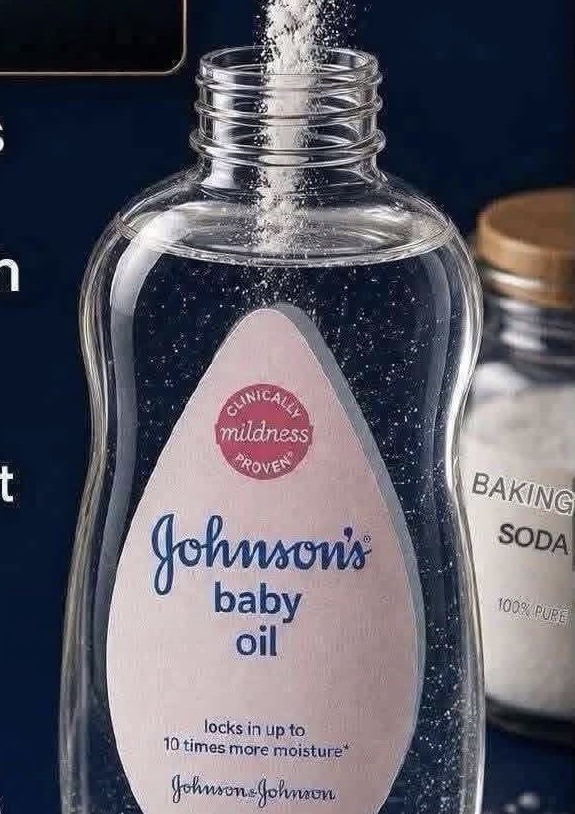
A homemade mixture of baby oil and baking soda has recently been shared online as a simple beauty remedy, with claims that it can make mature skin look younger, smoother, or brighter. The viral recipe often suggests mixing the two ingredients and applying a small amount at night for several days.
However, it is important to separate online beauty claims from evidence-based skin care. There is no good clinical evidence that applying baby oil mixed with baking soda can make someone look decades younger or reverse wrinkles. Baking soda can also be irritating when used as a facial scrub or leave-on treatment, particularly for sensitive skin.
Baby oil may help reduce moisture loss because mineral oil is an occlusive ingredient used in moisturizers, but that does not mean that combining it with baking soda creates an anti-aging treatment. The American Academy of Dermatology recommends gentle, non-abrasive skin care and warns that irritating products can worsen skin problems.
Recipe Overview
| Detail | Information |
| Recipe | Baby Oil & Baking Soda Skin Mixture |
| Category | DIY Skin Care |
| Main Ingredients | Baby oil, baking soda |
| Intended Use | Viral homemade beauty remedy |
| Evidence for anti-aging claims | Not established |
| Recommended for facial use? | Not routinely recommended |
| Application | Avoid using as a facial scrub or overnight treatment |
| Safer alternative | Gentle cleanser + fragrance-free moisturizer + sunscreen |
Why You’ll Love This Skin-Care Guide
The biggest benefit of this guide is that it explains what these ingredients can realistically do instead of promising unrealistic anti-aging results.
Baby oil commonly contains mineral oil, an ingredient that can help reduce water loss from the skin. Mineral oil is recognized by dermatologists as one of the ingredients that may be useful in moisturizers for dry skin.
Baking soda, on the other hand, is not a necessary facial exfoliant. Scrubbing the skin with abrasive substances can cause irritation, and dermatologists recommend gentle, non-abrasive cleansing rather than aggressive scrubbing.
Ingredients
| Ingredient | Amount | Purpose |
| Baby oil | — | Helps create an occlusive layer |
| Baking soda | — | Commonly promoted online as an exfoliant, but not recommended for routine facial use |
Important: I would not recommend preparing a measured baby-oil-and-baking-soda mixture for use on the face. The viral claim that “two drops nightly for 21 days” produces a dramatically younger appearance is not supported by reliable clinical evidence.
Step-by-Step: A Safer Alternative
Step 1: Cleanse gently
Wash your face with a mild, non-abrasive cleanser and lukewarm water. Use your fingertips rather than scrubbing with a rough cloth or sponge.
Step 2: Pat the skin dry
Gently pat your face with a clean, soft towel. Avoid vigorous rubbing.
Step 3: Apply moisturizer
Choose a fragrance-free moisturizer appropriate for your skin type. If your skin is very dry, creams and ointments can provide more moisture than lighter lotions.
Step 4: Use sunscreen during the day
For an evidence-based anti-aging routine, daily broad-spectrum sunscreen is much more useful than relying on a homemade baking-soda mixture. Dermatologists recommend broad-spectrum, water-resistant SPF 30 or higher.
Best Tips
Avoid using baking soda as a facial scrub, especially if you have sensitive, dry, irritated, or acne-prone skin.
Do not apply the mixture around the eyes, on broken skin, or over an active rash.
If you are trying a new skin-care product, dermatologists recommend testing it on a small area first. If redness, itching, swelling, or irritation develops, wash it off and discontinue use.
For dry skin, look for proven moisturizing ingredients such as glycerin, hyaluronic acid, dimethicone, mineral oil, petrolatum, or shea butter rather than relying on DIY combinations.
Best Ingredient Options
For a simple skin-care routine, consider:
| Skin-care goal | Better option |
| Dry skin | Fragrance-free cream or ointment |
| Daily hydration | Glycerin or hyaluronic-acid moisturizer |
| Protecting the skin barrier | Ceramides, petrolatum, or dimethicone |
| Sun protection | Broad-spectrum SPF 30+ |
| Acne-prone skin | Non-comedogenic, oil-free moisturizer |
| Sensitive skin | Fragrance-free, gentle products |
Recipe Variations
Rather than modifying the baking-soda mixture, choose a skin-care routine according to your skin type.
For dry skin, use a richer fragrance-free cream or ointment.
For oily or acne-prone skin, choose a lightweight, non-comedogenic moisturizer. The AAD specifically recommends looking for labels such as “oil-free” or “non-comedogenic.”
For sensitive skin, keep the routine simple and avoid unnecessary scrubs and irritating ingredients.
What to Use Instead
A simple routine can be more effective than a complicated DIY treatment:
Morning: gentle cleanser → moisturizer → SPF 30+ sunscreen.
Evening: gentle cleanser → fragrance-free moisturizer.
Consistency is generally more useful than repeatedly experimenting with harsh homemade treatments.
Make-Ahead Instructions
There is no need to prepare a baking-soda-and-baby-oil mixture in advance.
For skin care, it is better to use properly formulated products according to their labels rather than storing homemade mixtures, particularly when the mixture is intended for repeated facial application.
Storage
If using commercial skin-care products, keep them tightly closed and follow the manufacturer’s storage instructions.
Do not transfer products into unlabelled containers, and avoid storing homemade mixtures for prolonged periods.
Reheating
Not applicable. This is a topical skin-care discussion rather than a food recipe.
Freezing
Do not freeze the mixture or use frozen skin-care ingredients directly on the face.
Common Mistakes to Avoid
Using baking soda as an aggressive scrub
Scrubbing can irritate the skin. The AAD recommends gentle cleansing and specifically advises against scrubbing the face.
Expecting dramatic anti-aging results
A homemade mixture cannot be assumed to remove wrinkles or make mature skin look decades younger simply because the claim appears in a viral image.
Applying it overnight without testing
Leaving an irritating product on the skin for hours can increase the chance of an unwanted reaction.
Using it around the eyes
The skin around the eyes is particularly delicate and can develop contact dermatitis from products that come into contact with it.
Ignoring irritation
If you experience burning, redness, itching, swelling, or a rash, stop using the product and gently wash the area. Persistent or severe reactions should be assessed by a healthcare professional.
Nutrition Estimate
Because this is a topical skin-care preparation rather than food, a nutrition estimate is not applicable.
| Nutrient | Amount |
| Calories | N/A |
| Protein | N/A |
| Carbohydrates | N/A |
| Fat | N/A |
| Fiber | N/A |
| Sugar | N/A |
Frequently Asked Questions
Does baby oil and baking soda really make you look younger?
There is no reliable clinical evidence that this mixture can dramatically reverse wrinkles or make someone look decades younger. Baby oil may help reduce moisture loss, but that is different from reversing skin aging.
Can I use baking soda on my face?
It is better to avoid routine facial use, particularly as a scrub. Gentle, non-abrasive skin care is preferred because irritation can damage the skin barrier and worsen sensitivity.
Is baby oil good for dry skin?
Mineral oil can help reduce water loss and is included among moisturizing ingredients recommended by dermatologists. However, a properly formulated fragrance-free moisturizer may be a better everyday choice for facial skin.
Can I use this mixture every night for 21 days?
I would not recommend following the viral “two drops every night for 21 days” instruction. There is no established clinical evidence supporting that schedule or the claimed anti-aging results.
What is a better natural-looking anti-aging routine?
Keep the routine simple: gentle cleansing, regular moisturizing, and daily broad-spectrum SPF 30 or higher. For specific concerns such as wrinkles, pigmentation, or persistent acne, a dermatologist can recommend evidence-based treatments.
Should I patch-test skin-care products?
Yes. The American Academy of Dermatology recommends testing new skin-care products on a small area before using them more widely.
Final Thoughts
The baby oil and baking soda trend may look like an inexpensive anti-aging solution, but the dramatic claims shown in viral posts should not be treated as established medical facts. Baby oil can provide an occlusive moisturizing effect, while baking soda does not have a proven role in making facial skin dramatically younger.
For healthier-looking skin, focus on a gentle cleanser, an appropriate moisturizer, and daily sunscreen. If you have a particular skin concern, an evidence-based treatment recommended by a dermatologist is a safer approach than experimenting with harsh DIY mixtures.
⚠️This recipe may not be suitable for everyone, so it is advisable to consult a doctor.