Introduction
There’s nothing quite like the smell of freshly baked homemade French bread filling your kitchen. With its crisp golden crust, soft and airy interior, and simple pantry ingredients, this classic bread recipe is perfect for beginners and experienced bakers alike. Whether you’re making sandwiches, serving it alongside soup, or enjoying a warm slice with butter, this easy French bread recipe delivers bakery-quality results every time.
Unlike store-bought loaves, homemade French bread has a rich flavor and satisfying texture that comes from a slow rise and proper baking. Best of all, you only need a handful of everyday ingredients to create beautiful artisan-style loaves right in your own oven.
Recipe Overview
| Detail | Information |
| Recipe Name | Homemade French Bread |
| Recipe Type | Bread |
| Difficulty | Easy |
| Prep Time | 25 minutes |
| Rise Time | 2 hours |
| Bake Time | 25–30 minutes |
| Total Time | About 3 hours |
| Servings | 3 loaves |
| Calories | Approximately 180 per slice |
Why You’ll Love This Recipe
This homemade French bread has a wonderfully crisp crust while remaining soft, fluffy, and light inside. Every loaf develops a beautiful golden color and an authentic bakery-style texture that’s hard to resist.
The recipe uses simple pantry staples like flour, yeast, water, sugar, salt, and oil, making it both affordable and convenient whenever you’re craving fresh bread.
Whether you’re serving it with dinner, making garlic bread, or preparing sandwiches, these loaves stay delicious for days and freeze beautifully for future meals.
Ingredients
🥖 Bread Dough
| Ingredient | Amount |
| Warm water (110°F / 43°C) | 2½ cups |
| Active dry yeast | 2¼ teaspoons (1 packet) |
| Granulated sugar | 2 tablespoons |
| Vegetable oil or olive oil | 2 tablespoons |
| Salt | 2 teaspoons |
| Bread flour | 6–6½ cups |
🧈 Optional Topping
| Ingredient | Amount |
| Melted butter | 2 tablespoons |
| Flour for dusting | As needed |
Step-by-Step Instructions
Step 1
In a large mixing bowl, combine the warm water, sugar, and yeast. Let the mixture sit for 5–10 minutes until it becomes foamy.
Step 2
Add the vegetable oil, salt, and about half of the flour. Mix until well combined.
Step 3
Gradually add the remaining flour until a soft dough forms that pulls away from the sides of the bowl.
Step 4
Transfer the dough to a lightly floured surface and knead for 8–10 minutes until smooth and elastic.
Step 5
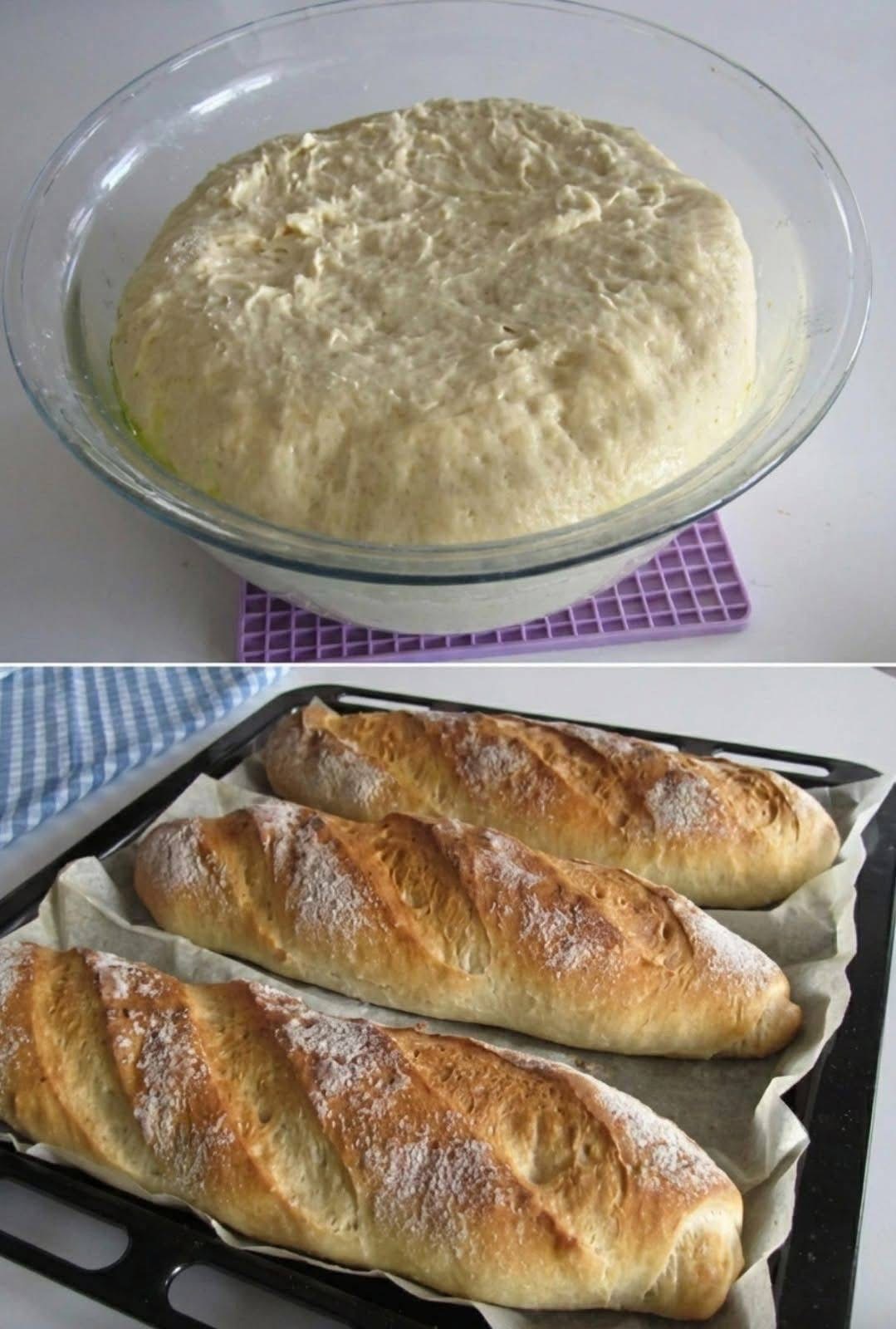
Place the dough into a lightly greased bowl, cover with a clean towel or plastic wrap, and let it rise in a warm place for about 1 hour or until doubled in size.
Step 6
Punch down the dough and divide it evenly into three portions.
Step 7
Shape each portion into a long loaf about 12–14 inches long and place them on parchment-lined baking sheets.
Step 8
Cover loosely and let the loaves rise again for 30–45 minutes until puffy.
Step 9
Preheat your oven to 375°F (190°C).
Step 10
Using a sharp knife or bread lame, make 3–4 diagonal slashes across the top of each loaf. Lightly dust with flour if desired.
Step 11
Bake for 25–30 minutes, or until the loaves are deep golden brown and sound hollow when tapped on the bottom.
Step 12
Brush with melted butter immediately after baking for a softer crust, then cool on a wire rack before slicing.
Best Tips
Use bread flour instead of all-purpose flour if possible. The higher protein content produces a chewier texture and better rise.
Avoid adding too much flour while kneading. A slightly soft dough creates a lighter and fluffier loaf.
If your kitchen is cool, allow the dough to rise inside an oven with only the light turned on to provide gentle warmth.
For an extra crispy crust, place a small oven-safe pan of hot water on the bottom rack while the bread bakes.
Best Ingredient Options
| Ingredient | Best Alternative |
| Bread flour | All-purpose flour |
| Active dry yeast | Instant yeast |
| Vegetable oil | Olive oil |
| Granulated sugar | Honey |
| Butter | Olive oil for brushing |
Recipe Variations
Add minced garlic and Italian herbs to the dough for a flavorful herb bread that’s perfect alongside pasta dishes.
Mix shredded cheddar, mozzarella, or Parmesan cheese into the dough for a cheesy homemade bread with extra richness.
Replace part of the bread flour with whole wheat flour for a heartier loaf while still maintaining a soft texture.
Sprinkle sesame seeds, poppy seeds, or everything bagel seasoning over the loaves before baking for added flavor and crunch.
What to Serve With
Fresh French bread pairs wonderfully with soups like tomato soup, chicken noodle soup, or creamy potato soup, making every meal more satisfying.
It also complements pasta dishes, grilled meats, roasted vegetables, and hearty stews while soaking up delicious sauces.
Use leftovers to make garlic bread, French toast, panini sandwiches, or homemade croutons for salads.
Make-Ahead Instructions
Prepare the dough through the first rise, then refrigerate it overnight. Allow it to come to room temperature for about 30 minutes before shaping and completing the second rise.
Storage
Store cooled bread in a paper bag or airtight container at room temperature for up to 3 days. Avoid refrigerating, as it can dry out the bread more quickly.
Reheating
Wrap the loaf in aluminum foil and warm it in a 350°F (175°C) oven for about 10 minutes. This helps restore the fresh-baked texture.
Freezing
Wrap each completely cooled loaf tightly in plastic wrap followed by aluminum foil or a freezer-safe bag. Freeze for up to 3 months. Thaw at room temperature before reheating.
Common Mistakes to Avoid
Using water that’s too hot can kill the yeast, preventing the dough from rising properly. Keep the water around 110°F (43°C).
Adding too much flour creates dense, dry bread. Add flour gradually until the dough is soft but not sticky.
Skipping the second rise often results in smaller, heavier loaves with less airy texture.
Cutting into the bread immediately after baking allows steam to escape too quickly, making the crumb gummy. Let it cool for at least 20 minutes before slicing.
Nutrition Estimate
| Nutrient | Per Slice |
| Calories | 180 |
| Carbohydrates | 35g |
| Protein | 6g |
| Fat | 2g |
| Saturated Fat | 0.3g |
| Fiber | 1g |
| Sugar | 1g |
| Sodium | 190mg |
Frequently Asked Questions
Can I use all-purpose flour instead of bread flour?
Yes. Bread flour produces a slightly chewier loaf, but all-purpose flour works very well.
Why didn’t my bread rise?
The yeast may have been expired, or the water may have been too hot or too cold. Always proof the yeast before mixing.
Can I freeze the dough?
Yes. After the first rise, wrap the dough tightly and freeze for up to three months. Thaw overnight in the refrigerator before shaping.
How do I get a crispier crust?
Bake with steam by placing a pan of hot water in the oven during baking.
Can I make one large loaf instead of three?
Absolutely. Increase the baking time to about 35–40 minutes and check for a deep golden crust.
Final Thoughts
This Homemade French Bread Recipe is a reliable, bakery-style loaf that’s perfect for everyday meals, holiday dinners, or weekend baking. With its crisp crust, soft interior, and rich homemade flavor, it’s a recipe you’ll return to again and again. Once you experience the aroma and taste of fresh bread straight from your own oven, you’ll understand why homemade French bread remains a timeless favorite.