Introduction
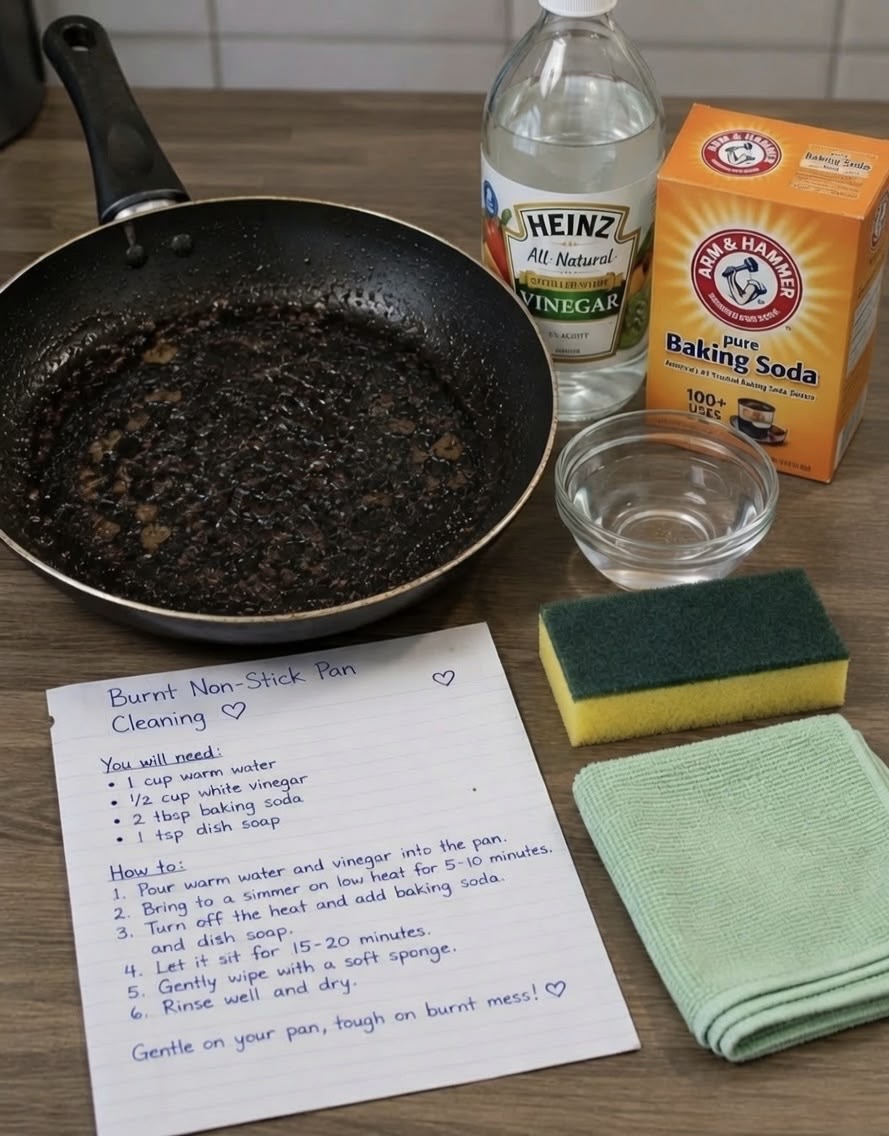
A burnt non-stick pan doesn’t always need to be replaced. This simple vinegar and baking soda cleaning method helps loosen burnt-on food and stubborn grease while being gentler than harsh scrubbing. Using everyday kitchen ingredients, you can restore your cookware with minimal effort. While this method works well for many light to moderate burnt stains, extremely damaged non-stick coatings may not return to their original condition and should be replaced if the coating is peeling or flaking.
Recipe Overview
| Cleaning Method | Details |
| Method Name | Burnt Non-Stick Pan Cleaning |
| Prep Time | 5 minutes |
| Heating Time | 10 minutes |
| Soaking Time | 20 minutes |
| Total Time | 35 minutes |
| Difficulty | Easy |
| Best For | Burnt Food & Grease |
| Cost | Budget-Friendly |
Why You’ll Love This Recipe
This easy homemade cleaning solution uses common household ingredients that are inexpensive, effective, and widely available.
The combination of warm water, white vinegar, baking soda, and a small amount of dish soap helps soften burnt residue, making it easier to remove without aggressive scrubbing.
Unlike many commercial cleaners, this DIY method requires only a few simple steps and can be completed in less than an hour.
Ingredients
| Ingredient | Amount | Purpose |
| 💧 Warm water | 1 cup (240 ml) | Loosens burnt residue |
| 🍶 White vinegar | ½ cup (120 ml) | Helps dissolve buildup |
| 🥄 Baking soda | 2 tablespoons | Gentle abrasive cleaner |
| 🫧 Dish soap | 1 teaspoon | Removes grease |
| 🧽 Soft sponge | 1 | Gentle cleaning |
| 🧺 Microfiber cloth | 1 | Drying and polishing |
Step-by-Step Instructions
Step 1
Pour 1 cup of warm water and ½ cup of white vinegar into the burnt pan.
Step 2
Place the pan over low to medium heat and bring the mixture to a gentle simmer for 5–10 minutes.
Step 3
Remove the pan from the heat.
Step 4
Carefully stir in 2 tablespoons of baking soda. The mixture will fizz, which is normal.
Step 5
Add 1 teaspoon of dish soap and gently mix.
Step 6
Allow the solution to sit for 15–20 minutes so the burnt residue softens.
Step 7
Use a soft sponge to gently wipe away the loosened food. Avoid steel wool or metal scrubbers.
Step 8
Rinse thoroughly with warm water and dry immediately using a microfiber cloth.
Best Tips
Always use a soft sponge to protect the non-stick coating from scratches.
Heat the vinegar mixture gently rather than boiling it vigorously, as excessive heat is unnecessary.
Repeat the process for stubborn stains instead of scrubbing aggressively.
Dry the pan completely after washing to help prevent water spots.
Best Ingredient Options
| Original Ingredient | Alternative |
| White vinegar | Cleaning vinegar (diluted if needed) |
| Baking soda | No recommended substitute |
| Dish soap | Mild liquid detergent |
| Soft sponge | Non-scratch cleaning pad |
| Microfiber cloth | Soft cotton towel |
Recipe Variations
For light grease buildup, use only warm water and dish soap without baking soda.
Add a few drops of fresh lemon juice for a naturally fresh scent after cleaning.
For stainless steel cookware, the soaking time can be slightly extended if needed, but always follow the manufacturer’s care instructions.
What to Serve With
Since this is a household cleaning method rather than a food recipe, the freshly cleaned pan is ideal for preparing scrambled eggs, pancakes, grilled vegetables, stir-fries, or other everyday meals once it has been thoroughly rinsed and dried.
Make-Ahead Instructions
Pre-measure the baking soda and vinegar before beginning to make the cleaning process quicker and more organized.
Storage
Do not store the mixed cleaning solution. Prepare a fresh batch each time for the best cleaning performance.
Store unused vinegar and baking soda separately in their original containers.
Reheating
If the solution cools before cleaning, gently warm it again over low heat for a few minutes.
Freezing
Freezing is not recommended for this cleaning solution.
Common Mistakes to Avoid
Using steel wool or abrasive scouring pads can permanently damage non-stick coatings.
Boiling the mixture too aggressively may cause unnecessary splashing.
Skipping the soaking time often makes burnt residue more difficult to remove.
Using this method on cookware with peeling or damaged non-stick coating is not recommended, as the pan may need replacing for safety.
Nutrition Estimate
| Nutrient | Amount |
| Calories | 0 |
| Fat | 0 g |
| Protein | 0 g |
| Carbohydrates | 0 g |
| Sugar | 0 g |
| Sodium | 0 mg |
This section is included only to match the requested recipe format. This is a household cleaning method and is not edible.
Frequently Asked Questions
Can this method restore every burnt pan?
It works well for many light to moderate burnt stains, but severely damaged or peeling non-stick pans may not be fully restored.
Can I use apple cider vinegar?
White vinegar is recommended because it is more effective for cleaning and leaves less residue.
Is baking soda safe for non-stick cookware?
Yes, when used gently with a soft sponge, baking soda is generally considered a mild abrasive.
Can I use a metal scrubber?
No. Metal scrubbers can scratch and permanently damage the non-stick coating.
How often can I use this cleaning method?
Use it whenever burnt residue builds up, but always clean gently to help extend the life of your cookware.
Final Thoughts
This Burnt Non-Stick Pan Cleaning Method is an easy, affordable, and effective way to tackle burnt food and grease using simple household ingredients. With a little patience and gentle cleaning, you can often restore your cookware without harsh chemicals or excessive scrubbing. Remember to replace any pan with a damaged or peeling non-stick coating, as continued use may not be safe.