Welcome to an essential household recipe that every home cook needs in their arsenal to maintain a spotless, pest-free cooking environment.
When you are constantly testing out new culinary creations and sharing delicious meals with your online community, keeping your kitchen counters pristine is just as important as the food itself.
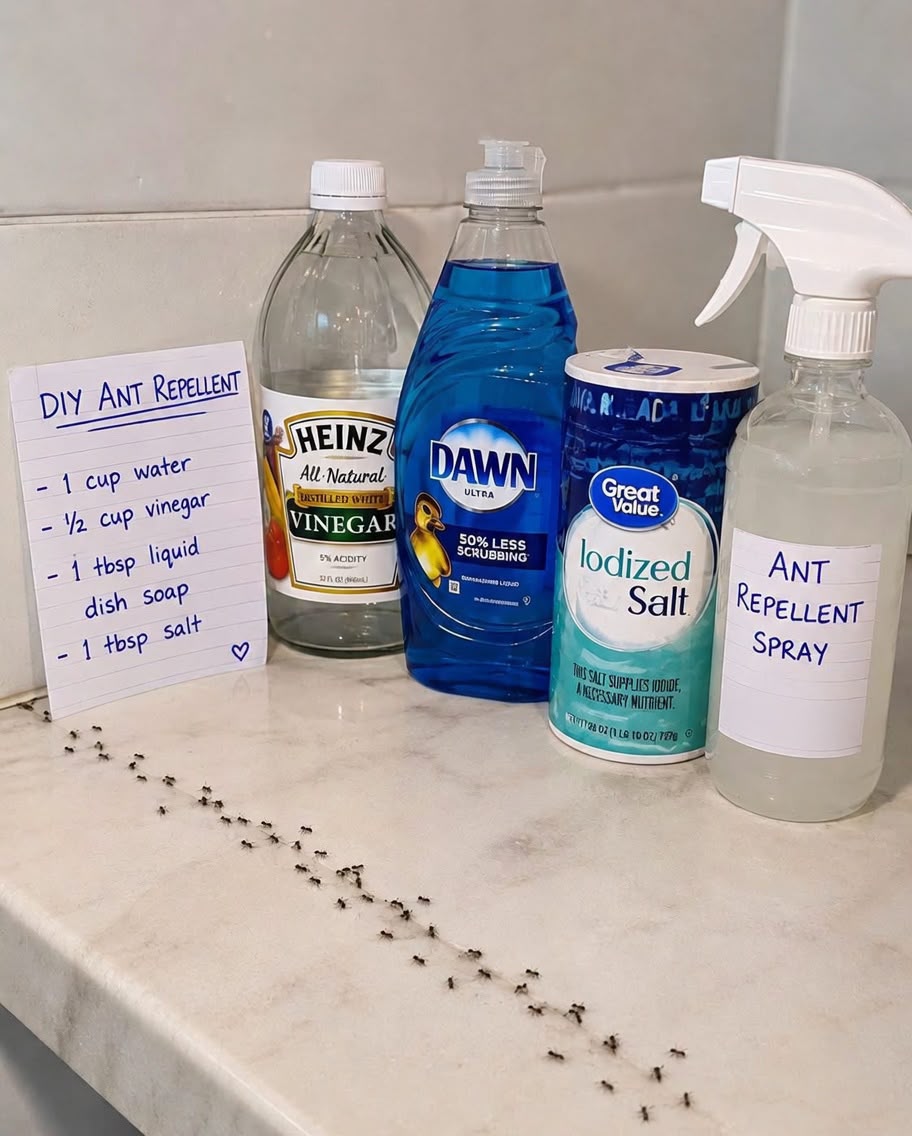
As clearly demonstrated in image_4.png, you do not need harsh, expensive chemicals to keep tiny invaders away from your valuable ingredients and prep stations.
This highly effective, budget-friendly DIY ant repellent spray utilizes common pantry staples to create a safe barrier, ensuring your cooking space remains hygienic and ready for your next big recipe project.
Recipe Overview
| Recipe Details | Specification |
| Preparation Time | 3 minutes |
| Active Time | 2 minutes |
| Total Time | 5 minutes |
| Yield | 1 full spray bottle (approx. 12 oz) |
| Category | Household / Natural Pest Control |
Why You Will Love This Recipe
[#why-you-will-love-this-recipe]
First, this natural pest control solution is incredibly cost-effective, utilizing basic items you already have sitting in your pantry and under your sink.
Second, it allows you to maintain a clean food-preparation area without spraying toxic, strong-smelling commercial insecticides near your fresh produce or cooking utensils.
Finally, the combination of distilled vinegar and dish soap disrupts the scent trails left by worker ants, preventing the rest of the colony from finding their way onto your beautiful kitchen countertops.
Ingredients
| Ingredient | Exact Measurement | Preparation Notes |
| Fresh Water | 1 Cup | Tap water works perfectly fine for this mixture. |
| Distilled White Vinegar | 1/2 Cup | Acts as a natural astringent to eliminate pheromone trails. |
| Liquid Dish Soap | 1 Tablespoon | Breaks surface tension and traps the pests. |
| Iodized Salt | 1 Tablespoon | Acts as a natural dehydrating agent and deterrent. |
Step-by-Step Instructions
- Gather a clean, empty plastic or glass spray bottle and a small funnel to make pouring easier.
- Pour exactly one cup of fresh water directly into the empty spray bottle.
- Carefully measure and add the half cup of distilled white vinegar to the water.
- Spoon in the tablespoon of iodized salt, then swirl the bottle gently for about 30 seconds until the salt granules are completely dissolved in the liquid.
- Add the tablespoon of liquid dish soap last to prevent excessive bubbling and foaming during the mixing process.
- Secure the spray nozzle tightly onto the bottle and give it a very gentle shake to incorporate all the ingredients evenly.
- Spray generously along baseboards, windowsills, door frames, and anywhere you have spotted a line of ants traversing your kitchen.
Best Tips
[#best-tips]
Always add your liquid dish soap as the very last step in the process; if you add it before the water, your bottle will overflow with useless thick suds before you can finish mixing.
For the highest efficiency, spray this solution directly onto the active ant trails and let it sit for about five minutes before wiping it away with a damp paper towel.
Label your spray bottle clearly with a permanent marker, just like the lovely handwritten note in the reference photo, so nobody accidentally uses it for cooking or baking.
Best Ingredient Options
Standard distilled white vinegar (5% acidity) is the absolute best choice here, as apple cider vinegar can leave a sticky residue that might actually attract fruit flies instead.
For the soap component, a standard blue liquid dish detergent is highly recommended because of its unmatched grease-cutting capabilities, which effectively break down the ants’ exoskeletons.
Recipe Variations
[#recipe-variations]
The Essential Oil Upgrade: Add 10 to 15 drops of pure peppermint essential oil or tea tree oil to the mixture to leave your kitchen smelling minty fresh while adding an extra layer of natural insect repulsion.
The Citrus Burst Deterrent: Substitute half of the water with boiled, strained water that has been steeped with leftover lemon and orange peels for a vibrant citrus scent that ants naturally despise.
What to Serve With
[#what-to-serve-with]
Since this is a household cleaning recipe, “serve” this powerful spray alongside a high-quality microfiber cleaning cloth and a durable scrubbing sponge.
It pairs wonderfully with a dedicated weekend deep-cleaning routine, ensuring your culinary workspace is absolutely flawless before you begin filming or photographing your next viral recipe post.
Make-Ahead Instructions
This solution is perfect for making in large batches ahead of the warm summer months when pests are most active.
You can easily double or triple the measurements and store the excess liquid in a large, tightly sealed plastic jug until you need to refill your main kitchen spray bottle.
Storage
Store your fully mixed ant repellent spray at room temperature in a dark cabinet, preferably under the kitchen sink, keeping it out of direct, harsh sunlight.
When stored properly in an airtight bottle, this DIY mixture will maintain its maximum potency for up to six months.
Reheating
Under no circumstances should you attempt to reheat or boil this completed mixture on your stovetop or in a microwave.
Heating distilled vinegar and dish soap will release incredibly strong, irritating fumes into your kitchen and degrade the effectiveness of the solution.
Freezing
Do not freeze this household recipe, as the water content will expand rapidly and cause your plastic or glass spray bottle to crack and shatter.
If the mixture accidentally freezes in a cold garage, allow it to thaw completely at room temperature and shake vigorously before attempting to use it again.
Common Mistakes to Avoid
[#common-mistakes-to-avoid]
The most critical error to avoid is spraying this acidic vinegar mixture on natural stone countertops, such as unsealed granite or marble.
The high acidity of the vinegar can etch and permanently damage expensive natural stone surfaces, so restrict your spraying to sealed floors, baseboards, and laminate surfaces only.
Nutrition Estimate
| Nutritional Value | Amount per Serving |
| Important Note | DO NOT CONSUME. FOR CLEANING ONLY. |
| Calories | 0 kcal |
| Total Fat | 0g |
| Sodium | 0mg |
| Total Carbohydrates | 0g |
| Protein | 0g |
Frequently Asked Questions
Is this spray safe to use around my family and pets? Yes, once the spray has completely dried on the surface, it is generally safe. However, you should always keep wet puddles of the solution away from pets, as consuming large amounts of salt and soap can upset their stomachs.
Will this spray kill the ants or just repel them? If sprayed directly onto the insects, the dish soap will eliminate them on contact. If sprayed as a barrier on a clean surface, the strong vinegar scent will effectively repel new ants from crossing the invisible line.
Final Thoughts
Maintaining a hygienic, pest-free kitchen is the foundational step to becoming a successful home chef and building a trustworthy cooking platform.
By utilizing this simple, quick, and natural DIY ant repellent spray, you can protect your valuable ingredients and keep your focus entirely on creating mouth-watering dishes.
Cette recette peut ne pas convenir à tous. Il est conseillé de consulter un médecin.