Introduction
Growing ginger at home is an easy and rewarding gardening project that can be done in containers, pots, or directly in the garden.
With a healthy piece of fresh ginger, well-draining soil, warmth, moisture, and patience, you can grow your own ginger plants at home.
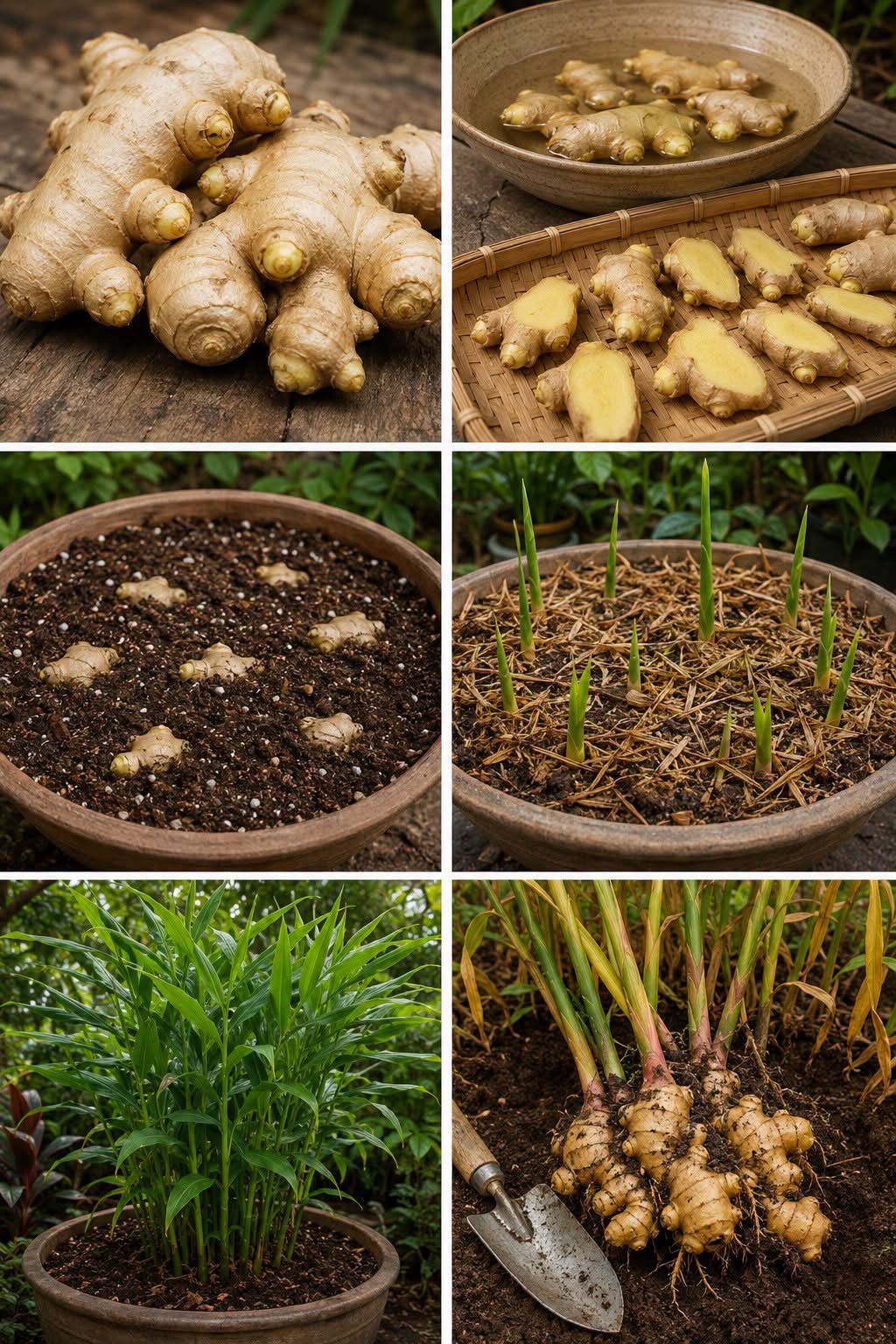
Ginger grows from a rhizome rather than a traditional seed. The small buds on the ginger root eventually develop into green shoots and leafy stems, while new ginger rhizomes grow beneath the soil.
Recipe Overview
| Category | Details |
| Preparation Time | 15–20 minutes |
| Sprouting Time | 2–6 weeks |
| Growing Time | 8–10 months |
| Difficulty | Easy to Moderate |
| Growing Location | Pot, container, or garden |
| Best Temperature | Approximately 20–30°C |
| Harvest Time | When the leaves begin to yellow and dry |
Why You’ll Love This Growing Method
Growing ginger at home is a simple way to enjoy a rewarding gardening project with minimal equipment.
You can grow ginger in a container, making it suitable for balconies, patios, terraces, greenhouses, and small gardens.
The plant also has attractive green foliage that can add a tropical appearance to your growing space.
Once established, ginger requires regular watering, warmth, and patience rather than complicated gardening techniques.
Ingredients and Materials
For Planting
| Material | Quantity |
| Fresh ginger root | 1 healthy piece |
| Well-draining potting soil | As needed |
| Compost | Optional |
| Large container with drainage holes | 1 |
| Water | As needed |
| Organic mulch | Optional |
Choosing the Ginger Root
| Feature | What to Look For |
| Appearance | Firm and healthy |
| Texture | Plump and not shriveled |
| Buds | Visible small growth buds |
| Condition | Free from mold and soft spots |
| Size | A piece with several healthy sections |
Step-by-Step Instructions
Choose a Healthy Ginger Root
Select a fresh, firm ginger rhizome with visible growth buds.
The buds may appear as small bumps or small pointed areas on the surface of the ginger.
Avoid ginger that is excessively dry, soft, moldy, or damaged.
A larger piece can be divided into sections, provided each section contains at least one healthy growth bud.
Soak the Ginger
Place the ginger root in clean, lukewarm water for several hours.
Some gardeners prefer to soak the ginger overnight to help rehydrate the rhizome.
After soaking, remove the ginger and allow excess water to drain.
Prepare the Container
Choose a wide container with good drainage holes.
Ginger grows horizontally underground, so a wide pot is often more useful than an extremely deep container.
Fill the container with loose, rich, well-draining potting soil.
Mixing in compost can help improve the growing medium.
Plant the Ginger
Place the ginger rhizome horizontally on the surface of the soil.
Position the growth buds facing upward.
Cover the ginger with approximately 2–5 centimeters of soil.
Do not bury the rhizome too deeply because excessive soil can make it more difficult for the shoots to emerge.
Water the Soil
Water the soil gently after planting.
The soil should remain consistently moist but should not become waterlogged.
Excess water can increase the risk of rhizome rot.
Place the Container in a Warm Location
Place the pot in a warm location with bright, indirect sunlight.
Ginger prefers warmth and generally does not perform well in cold conditions.
Avoid exposing young ginger shoots to frost or freezing temperatures.
Wait for the Shoots to Appear
Ginger can take several weeks to begin sprouting.
Depending on temperature, moisture, and the condition of the rhizome, shoots may appear after approximately 2–6 weeks.
Continue providing warmth and gentle moisture while waiting for growth.
Maintain the Growing Plant
Water when the top layer of soil begins to dry.
Keep the soil moist without allowing water to remain stagnant around the roots.
As the plant grows, it will develop tall green stems and long leaves.
Add Mulch
A thin layer of organic mulch can help maintain soil moisture.
Mulch may also help protect the soil from drying too quickly.
Avoid placing excessive mulch directly against the plant stems.
Harvest the Ginger
Ginger usually requires several months to develop mature rhizomes.
For mature ginger, harvest when the leaves begin to turn yellow and dry.
Carefully loosen the soil around the plant and lift the rhizomes from the container.
Remove excess soil and rinse the ginger before using or storing it.
Best Tips
Choose ginger with visible growth buds because these areas are where new shoots can develop.
Use a container with excellent drainage to help prevent excess moisture around the rhizome.
Keep the soil consistently moist but never waterlogged.
Warm temperatures are important for successful ginger growth.
A wide container is often better than a narrow container because ginger rhizomes spread horizontally.
Be patient because ginger can take several weeks to sprout and several months to produce a substantial harvest.
Best Ingredient and Material Options
A rich, loose potting mix is ideal for container-grown ginger.
Compost can be added to improve the soil structure and provide organic matter.
A container with multiple drainage holes is preferable to one that allows water to collect at the bottom.
Organic mulch such as straw or dried leaves can help retain soil moisture.
If growing indoors, place the container near a warm area with bright, indirect light.
Growing Variations
Growing Ginger in a Large Pot
Plant the rhizome in a wide container and place it on a balcony, patio, or terrace.
Growing Ginger in a Garden Bed
In warm climates, ginger can be planted directly into a prepared garden bed with rich, well-draining soil.
Growing Ginger Indoors
A container can be kept indoors in a warm location with bright, indirect light.
Growing Baby Ginger
Harvest the rhizomes earlier for young ginger with a softer texture and milder flavor.
Growing Organic Ginger
Use organic soil, compost, and natural gardening practices if you prefer an organic growing approach.
What to Grow With Ginger
Ginger can be grown as part of a container herb and vegetable garden.
It can be placed near other plants that enjoy warm growing conditions, provided each plant has enough space and the watering requirements are compatible.
Growing ginger alongside herbs and other edible plants can create a productive home garden.
Make-Ahead Instructions
The planting materials can be prepared in advance.
You can select the ginger, prepare the pot, and organize the soil before planting.
However, the ginger should be planted soon after preparation to maintain good growing conditions.
Storage
Freshly harvested ginger can be stored in a cool, dry place for short-term use.
For longer storage, ginger can be kept in the refrigerator or frozen according to your preferred storage method.
Always remove soil and excess moisture before storing freshly harvested rhizomes.
Reheating
Reheating does not apply to growing ginger.
If harvested ginger is later used in cooking, it can be prepared according to the specific recipe.
Freezing
Fresh ginger can be frozen for longer-term storage after harvesting.
It can be frozen whole, sliced, or grated depending on how you plan to use it.
Place the ginger in a suitable airtight freezer container or bag to help protect its quality.
Common Mistakes to Avoid
Do not plant ginger in soil that remains constantly wet.
Do not place the rhizome too deeply beneath the soil.
Avoid using a container without drainage holes.
Do not expose young ginger plants to cold temperatures or frost.
Avoid placing the plant in intense direct sunlight for long periods if the leaves show signs of stress.
Do not harvest too early if you want large, mature ginger rhizomes.
Nutrition Estimate
| Nutrient | Estimated Amount |
| Calories | Depends on the amount consumed |
| Protein | Depends on the amount consumed |
| Carbohydrates | Depends on the amount consumed |
| Fat | Depends on the amount consumed |
| Fiber | Depends on the amount consumed |
Nutrition values depend on the amount of harvested ginger consumed.
Frequently Asked Questions
Can I grow ginger from ginger bought at the grocery store?
Yes. A fresh ginger root with healthy growth buds can sometimes be used for planting.
How long does ginger take to sprout?
Ginger may take approximately 2–6 weeks to sprout, depending on temperature, moisture, and the condition of the rhizome.
Can I grow ginger in a pot?
Yes. Ginger grows well in containers, especially wide pots with good drainage.
How often should I water ginger?
Water when the top layer of soil begins to dry, keeping the soil consistently moist without making it waterlogged.
Does ginger need full sun?
Ginger generally prefers warmth and bright, indirect light or partial shade, particularly in hot climates.
How long does ginger take to grow?
Mature ginger can take approximately 8–10 months to develop, although young ginger may be harvested earlier.
Why is my ginger not growing?
Common reasons include cold temperatures, excessive water, poor drainage, an unhealthy rhizome, or insufficient moisture.
Final Thoughts
Growing ginger at home is a rewarding gardening project that requires only a healthy ginger rhizome, suitable soil, warmth, moisture, and patience.
Whether you grow it in a large pot, garden bed, or container on a balcony, the process is simple enough for beginners and satisfying for experienced gardeners.
With proper care and the right growing conditions, a small piece of ginger can eventually develop into a beautiful leafy plant and produce fresh rhizomes beneath the soil.