Introduction
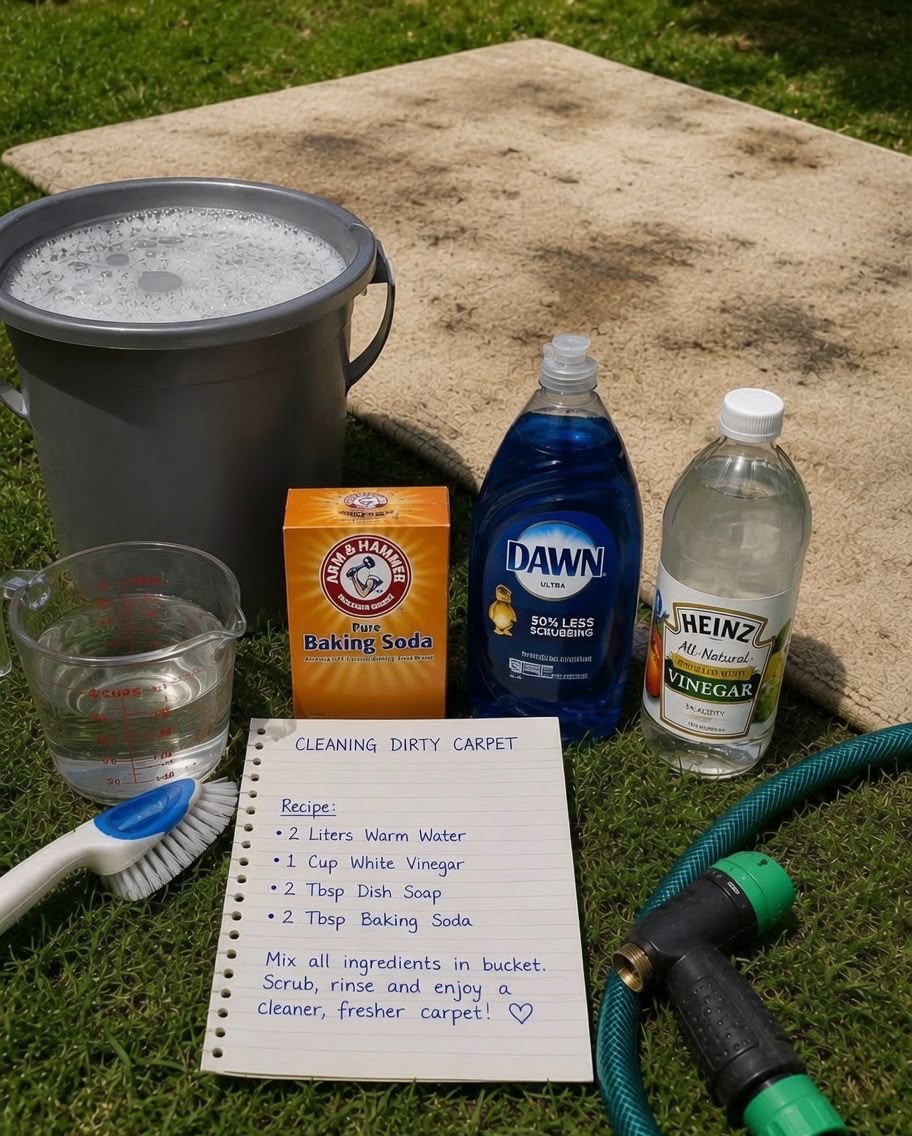
Cleaning a dirty carpet at home does not always require expensive commercial products. This simple homemade carpet cleaning solution combines warm water, white vinegar, dish soap, and baking soda to help freshen carpets and loosen everyday dirt and grime.
The recipe is easy to prepare and uses common household ingredients. It can be useful for routine carpet cleaning and freshening, but it is important to test any homemade cleaning solution on a small, hidden area first to check for discoloration or damage.
Recipe Overview
| Category | Details |
| Preparation Time | 5 minutes |
| Cleaning Time | 15–30 minutes |
| Drying Time | Several hours |
| Total Time | Depends on carpet size and ventilation |
| Yield | Approximately 2 liters of cleaning solution |
| Difficulty | Easy |
| Best For | Freshening and cleaning suitable carpets |
Why You’ll Love This Recipe
This homemade carpet cleaner is simple, affordable, and easy to prepare with ingredients that are commonly found at home.
The combination of warm water and a small amount of dish soap can help loosen everyday dirt, while white vinegar is commonly used in household cleaning for its acidic properties. Baking soda can also help freshen surfaces and reduce unwanted odors.
Another advantage of this DIY carpet cleaning solution is that you can prepare it quickly whenever your carpet needs refreshing. However, homemade cleaning solutions are not suitable for every carpet material, so always check the manufacturer’s care instructions before cleaning.
Ingredients
For the Homemade Carpet Cleaning Solution
| Ingredient | Amount |
| Warm water | 2 liters |
| White vinegar | 1 cup |
| Dish soap | 2 tablespoons |
| Baking soda | 2 tablespoons |
Equipment
| Item | Purpose |
| Large bucket | Mixing the solution |
| Measuring cup | Measuring ingredients |
| Soft-bristle brush | Scrubbing the carpet |
| Clean cloths | Blotting excess moisture |
| Vacuum cleaner | Removing loose dirt and dry baking soda |
Step-by-Step Instructions
Vacuum the Carpet First
Begin by thoroughly vacuuming the carpet to remove loose dirt, dust, hair, and debris.
This step is important because cleaning a heavily dusty carpet with a wet solution can make the dirt more difficult to remove.
Prepare the Cleaning Solution
Add 2 liters of warm water to a large bucket.
Add the white vinegar and dish soap.
Stir the ingredients gently to combine.
Add the baking soda slowly and carefully because it may foam when it comes into contact with the vinegar.
Wait until the bubbling has reduced before using the mixture.
Test a Small Area
Before applying the solution to the entire carpet, test it on a small, hidden area.
Apply a small amount, wait several minutes, and check for color changes, fading, or damage.
If the carpet shows any discoloration or damage, do not continue using the solution.
Apply the Solution
Dip a soft-bristle brush into the cleaning mixture.
Do not completely soak the carpet. A small amount of solution is usually sufficient for surface cleaning.
Work in small sections, gently scrubbing the carpet with circular motions.
Avoid excessive pressure, especially on delicate fibers.
Blot Excess Moisture
Use a clean, dry cloth to blot areas that are too wet.
The goal is to clean the carpet without saturating the backing or padding underneath.
Allow the Carpet to Dry
Open windows or use fans to improve air circulation.
Allow the carpet to dry completely before walking on it regularly.
Drying time can vary depending on the carpet thickness, humidity, room temperature, and amount of water used.
Vacuum Again
Once the carpet is completely dry, vacuum it again to remove any remaining loose residue and help restore the carpet fibers.
Best Tips
Always vacuum before wet cleaning. Removing loose dirt first can make the cleaning process more effective.
Use warm water rather than extremely hot water. Very hot water may damage certain carpet fibers or affect dyes.
Do not oversaturate the carpet. Excess moisture can take a long time to dry and may contribute to unpleasant odors or moisture-related problems.
Always perform a patch test before using a homemade cleaning solution on the entire carpet.
Good ventilation can significantly improve drying time. Open windows and use fans when possible.
For valuable, antique, wool, silk, or delicate carpets, professional carpet cleaning may be safer than using a homemade solution.
Best Ingredient Options
White Vinegar
Plain white vinegar is the preferred option for this recipe. Avoid using colored or flavored vinegar because it may leave unwanted stains or residues.
Dish Soap
Choose a mild dish soap and avoid using excessive amounts. Too much soap can leave a sticky residue that attracts dirt.
Baking Soda
Use fresh, ordinary baking soda. It can be useful for helping freshen carpets, but it should not be treated as a guaranteed solution for every type of carpet odor or stain.
Warm Water
Clean, warm water helps dilute the other ingredients and supports the cleaning process.
Recipe Variations
Light Carpet Freshener
For a lighter cleaning solution, use warm water with a small amount of mild dish soap and skip the vinegar if your carpet manufacturer’s instructions advise against acidic products.
Odor-Freshening Method
For carpets that simply need freshening, sprinkle a small amount of dry baking soda over the carpet, allow it to sit for a limited period, and vacuum thoroughly.
Always check the carpet manufacturer’s instructions before using powders.
Spot Cleaning Solution
For a small spot, prepare a much smaller amount of the solution rather than mixing the entire 2-liter batch.
Apply a small amount to a clean cloth and gently blot the affected area.
Deep Carpet Cleaning
For heavily soiled carpets, a professional carpet cleaning machine or professional cleaning service may provide better results than a homemade cleaning solution.
What to Use With This Carpet Cleaning Solution
This homemade solution can be used with a soft-bristle carpet brush for gentle manual cleaning.
A clean microfiber cloth can help blot excess moisture.
A vacuum cleaner is useful before and after cleaning.
Fans can help improve air circulation and reduce drying time.
Make-Ahead Instructions
The cleaning solution is best prepared fresh when needed.
If you prepare it in advance, store it in a clearly labeled container and keep it away from children and pets.
Because the mixture contains multiple ingredients, preparing a fresh batch for each cleaning session is generally the simplest approach.
Storage
Store unused ingredients separately in their original containers whenever possible.
If you keep a prepared solution, use a clean, clearly labeled container and avoid storing it in an unmarked bottle.
Never store homemade cleaning products in food or beverage containers.
Reheating
This recipe does not require reheating.
If the solution becomes cold, it can generally still be used, but warm water may be more comfortable for manual cleaning.
Do not heat the mixture on a stove or in a microwave.
Freezing
This cleaning solution should not be frozen.
Freezing is unnecessary and may affect the mixture’s consistency and the container used to store it.
Common Mistakes to Avoid
Using Too Much Dish Soap
Excess soap can leave a sticky residue on the carpet and may attract more dirt.
Soaking the Carpet
Too much liquid can penetrate deeply into the carpet padding and significantly increase drying time.
Skipping the Patch Test
Different carpet fibers and dyes can react differently to cleaning products. Always test first.
Scrubbing Too Aggressively
Hard scrubbing can damage carpet fibers and spread certain stains.
Mixing Ingredients Too Quickly
Adding baking soda to vinegar can create bubbling. Add it slowly and allow the reaction to settle before using the solution.
Using the Recipe on Every Carpet Type
Some carpets, including certain natural fibers and delicate materials, require specialized cleaning methods.
Expecting a Homemade Cleaner to Remove Every Stain
Old, oily, deeply set, or chemically complex stains may require specialized stain treatment or professional carpet cleaning.
Nutrition Estimate
This is a household cleaning solution and is not intended for consumption.
| Nutrient | Amount |
| Calories | Not applicable |
| Protein | Not applicable |
| Carbohydrates | Not applicable |
| Fat | Not applicable |
| Fiber | Not applicable |
Frequently Asked Questions
Can I use this homemade carpet cleaner on all carpets?
No. Carpet materials vary significantly. Always check the manufacturer’s care instructions and perform a patch test before using the solution.
Can I use this recipe on wool carpets?
Wool and other delicate natural fibers may require specialized cleaning methods. It is best to follow the manufacturer’s instructions or consult a professional carpet cleaner.
Will vinegar remove every carpet stain?
No. Vinegar is not a universal stain remover. Different stains require different cleaning approaches, and some stains may need professional treatment.
How long does the carpet take to dry?
Drying time varies depending on the amount of moisture used, ventilation, humidity, room temperature, and carpet thickness.
Can I use more baking soda for better results?
Using more ingredients does not necessarily produce better cleaning results. Excess baking soda can leave residue and may be difficult to remove completely.
Can I use this solution in a carpet cleaning machine?
Check the manufacturer’s instructions before putting homemade cleaning solutions into a carpet cleaning machine. Some machines require specific cleaning formulas.
Is this homemade carpet cleaner safe for pets?
Ingredients and cleaning products can affect animals differently. Keep pets away from wet carpets and allow the area to dry completely. Always consult a veterinarian if you have concerns about a pet’s exposure to a cleaning product.
Final Thoughts
This homemade carpet cleaning solution offers a simple and budget-friendly approach to freshening suitable carpets using warm water, white vinegar, mild dish soap, and baking soda.
The most important steps are testing the solution first, avoiding excessive moisture, using gentle cleaning techniques, and allowing the carpet to dry completely.
For delicate, expensive, heavily stained, or specialty carpets, professional carpet cleaning may be the safest and most effective option.