Introduction
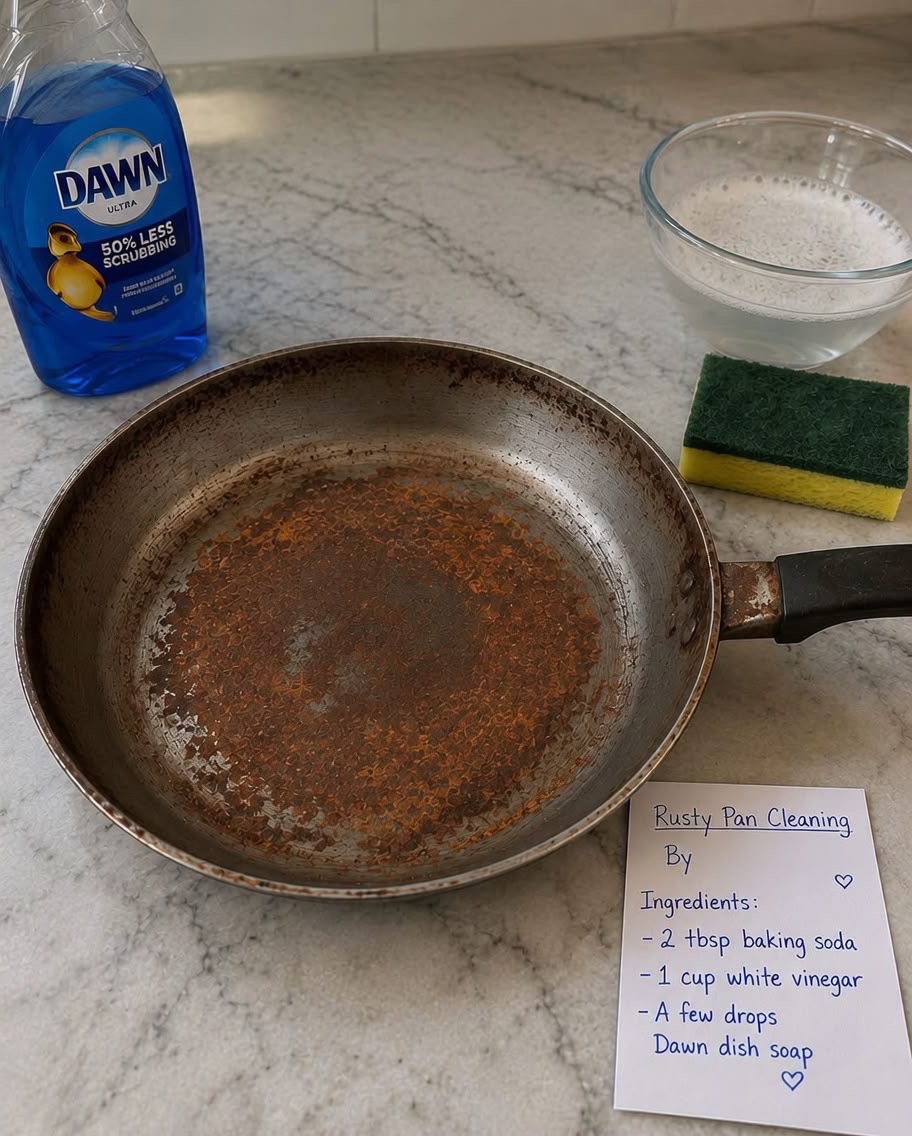
A rusty pan does not always need to be thrown away. With a few affordable household ingredients, you can remove light to moderate rust and restore your cookware for everyday use. This simple cleaning method combines baking soda, white vinegar, and dish soap to loosen rust, lift stubborn stains, and leave your pan looking much cleaner.
Whether you’re restoring an old frying pan or refreshing cookware that has been stored for a long time, this easy DIY pan cleaning method is budget-friendly, beginner-friendly, and requires only a few minutes of hands-on work.
⸻
Recipe Overview
| Details | Information |
| Recipe Name | Rusty Pan Cleaning Solution |
| Category | Cleaning & Home Care |
| Method | Soak and Scrub |
| Prep Time | 5 minutes |
| Soaking Time | 20–30 minutes |
| Scrubbing Time | 10 minutes |
| Total Time | 35–45 minutes |
| Difficulty | Easy |
| Best For | Light to Moderate Rust |
| Cost | Budget-Friendly |
⸻
Why You’ll Love This Recipe
This homemade cleaning solution uses inexpensive ingredients that are already found in many kitchens, making it an affordable alternative to specialty rust removers.
The ingredients work together to loosen rust, dissolve mineral buildup, and help remove grease without requiring harsh chemicals for everyday cleaning.
The process is simple enough for beginners and works well on many stainless steel and carbon steel pans with surface rust.
Since only a few ingredients are needed, you can prepare this cleaner anytime without making a trip to the store.
⸻
Ingredients
Cleaning Ingredients
| Ingredient | Amount | Purpose |
| Baking Soda | 2 tablespoons | Helps lift rust and stains |
| White Vinegar | 1 cup | Breaks down rust deposits |
| Dawn Dish Soap (or any grease-cutting dish soap) | A few drops | Removes grease and residue |
| Warm Water | As needed | Rinsing |
Supplies
| Item | Purpose |
| Non-scratch sponge | Cleaning |
| Soft scrub pad | Stubborn rust |
| Microfiber towel | Drying |
| Rubber gloves (optional) | Hand protection |
⸻
Step-by-Step Instructions
Step 1
Sprinkle the baking soda evenly across the rusty areas of the pan.
Step 2
Slowly pour the white vinegar over the baking soda. The mixture will fizz immediately, which helps loosen rust and residue.
Step 3
Add a few drops of dish soap to the mixture.
Step 4
Allow the pan to soak for 20 to 30 minutes.
Step 5
Using a sponge or soft scrub pad, gently scrub the rusty areas in circular motions.
Step 6
If necessary, sprinkle a little more baking soda onto stubborn spots and continue scrubbing.
Step 7
Rinse thoroughly with warm water.
Step 8
Dry the pan immediately using a clean towel to prevent new rust from forming.
⸻
Best Tips
Always dry metal cookware immediately after washing because standing water can quickly cause rust to return.
For heavier rust, repeat the cleaning process instead of scrubbing aggressively, which may scratch the pan.
Applying a very thin layer of cooking oil after cleaning can help protect carbon steel or cast iron cookware from future rust.
Store cookware in a dry location with good air circulation to reduce moisture buildup.
⸻
Best Ingredient Options
| Ingredient | Best Alternative |
| White Vinegar | Cleaning vinegar |
| Baking Soda | Washing soda (use carefully) |
| Dawn Dish Soap | Any quality grease-cutting dish soap |
| Soft Sponge | Nylon scrub pad |
⸻
Recipe Variations
For stubborn rust, create a thicker paste by mixing baking soda with a small amount of water before adding vinegar to targeted areas.
A sprinkle of coarse salt can provide additional scrubbing power when removing difficult rust patches.
For cast iron cookware, finish by seasoning the pan with a thin coat of cooking oil after it has been completely cleaned and dried.
⸻
What to Serve With
Although this is a cleaning recipe rather than food, it pairs well with regular cookware maintenance. After restoring your pan, it’s ideal for preparing homemade breakfasts, grilled sandwiches, sautéed vegetables, eggs, pancakes, steaks, and many everyday family meals.
⸻
Make-Ahead Instructions
The baking soda and vinegar should be mixed immediately before use for the most effective cleaning action. Prepare fresh batches whenever needed.
⸻
Storage
Unused dry baking soda can be stored in an airtight container for months.
White vinegar should remain tightly sealed in its original bottle at room temperature.
Prepared cleaning mixtures should not be stored because the chemical reaction quickly loses effectiveness.
⸻
Reheating
Not applicable. This is a household cleaning solution.
⸻
Freezing
Freezing is not recommended.
⸻
Common Mistakes to Avoid
Leaving the pan wet after cleaning often causes rust to reappear quickly.
Using steel wool aggressively may scratch certain cookware surfaces and remove protective finishes.
Skipping the final rinse can leave behind cleaning residue.
Using this method on cookware with damaged non-stick coatings may shorten the coating’s lifespan.
Ignoring severe structural rust may result in cookware that is no longer safe to use.
⸻
Nutrition Estimate
| Nutrient | Amount |
| Calories | 0 |
| Protein | 0 g |
| Carbohydrates | 0 g |
| Fat | 0 g |
| Fiber | 0 g |
| Sugar | 0 g |
| Sodium | 0 mg |
This is a cleaning solution and is not edible.
⸻
Frequently Asked Questions
Can this remove heavy rust?
It works best on light to moderate rust. Deep corrosion may require multiple treatments or specialized rust removal products.
Is this safe for stainless steel?
Yes, this method is generally suitable for stainless steel cookware with surface rust.
Can I use it on cast iron?
Yes, but dry the pan immediately and re-season it with a light coat of cooking oil afterward.
Can I use apple cider vinegar?
White vinegar is recommended because it is stronger for household cleaning and does not leave residue.
Why did the mixture fizz?
The fizzing comes from the reaction between baking soda and vinegar, which helps loosen rust and debris.
⸻
Final Thoughts
This DIY rusty pan cleaning solution is an easy, affordable way to restore cookware using common household ingredients. With baking soda, white vinegar, and dish soap, you can remove surface rust, improve the appearance of your pan, and extend its useful life. Regular cleaning, thorough drying, and proper storage will help keep your cookware in excellent condition for years.