Introduction
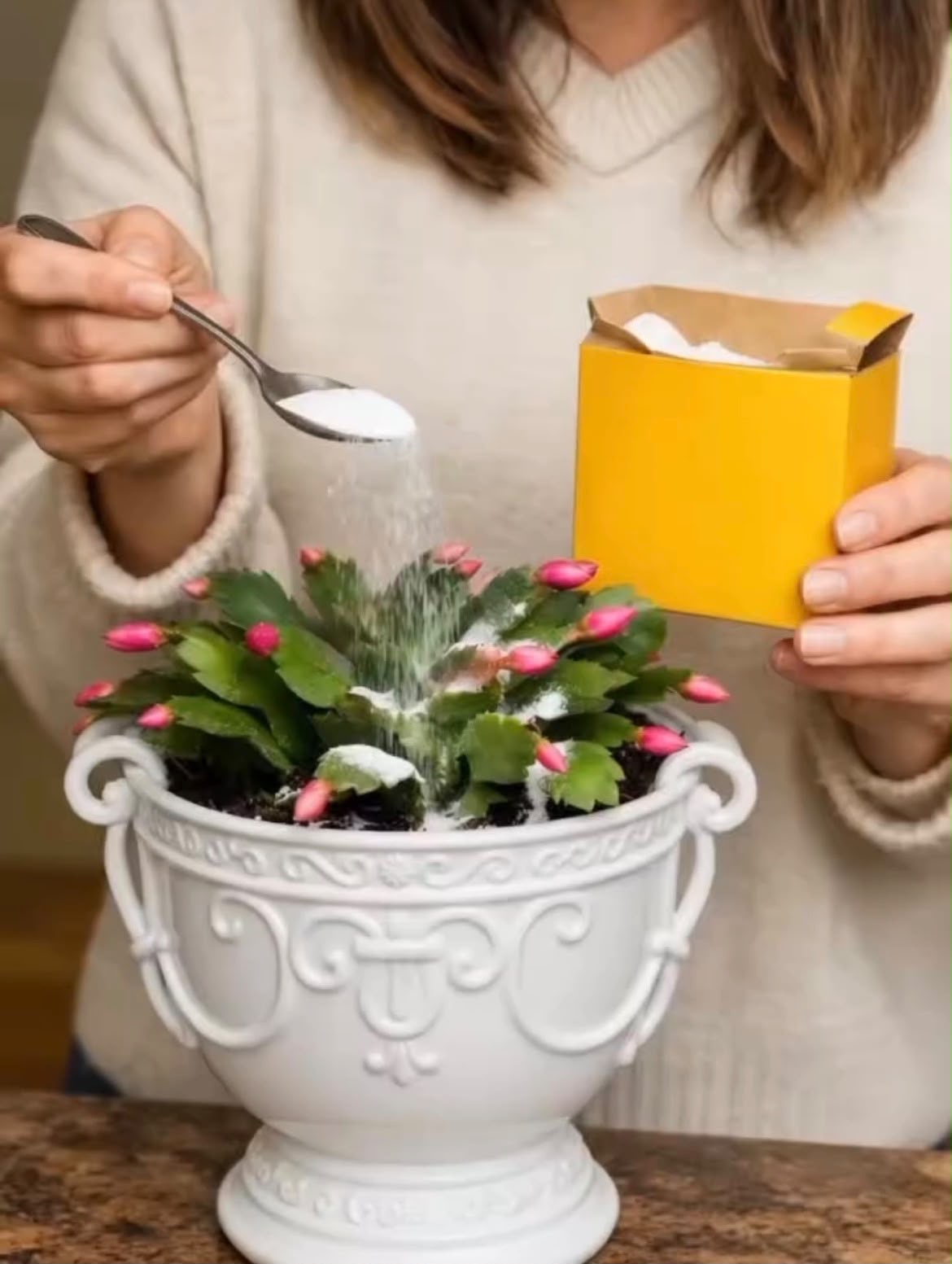
Many indoor gardening enthusiasts are discovering a simple household ingredient that may help support a healthier Thanksgiving Cactus. The light white powder often seen sprinkled on the soil is baking soda, a common kitchen staple that some gardeners use as part of their indoor plant care routine. While it is not a miracle solution, using baking soda correctly may help maintain cleaner soil conditions and contribute to a thriving flowering cactus.
Ingredients
1 teaspoon baking soda
1 quart (1 liter) of water
Clean spray bottle or watering container
Healthy Thanksgiving Cactus plant
Well-draining cactus potting mix
Decorative pot with drainage holes
Instructions
Mix 1 teaspoon of baking soda into 1 quart of water.
Stir thoroughly until the baking soda dissolves completely.
Pour the solution into a spray bottle or watering can.
Apply lightly to the soil surface around the base of the plant.
Avoid over-saturating the soil.
Repeat once every 4 to 6 weeks if desired.
Monitor the plant for any signs of stress or changes in growth.
How to Make the Baking Soda Plant Solution
Start with room-temperature water.
Measure the baking soda carefully to avoid excessive concentrations.
Combine the ingredients in a clean container.
Mix until no visible powder remains.
Use immediately for the best results.
Discard any leftover solution after a few days and prepare a fresh batch when needed.
Variations
Add a few drops of mild liquid soap to create a gentle foliage spray for occasional use.
Combine baking soda with proper watering practices for a complete indoor plant care routine.
Use the solution only on ornamental houseplants that tolerate slightly alkaline conditions.
Alternate between plain water and baking soda solution to prevent excessive soil buildup.
Pair the treatment with organic compost for enhanced soil health support.
Tips
Always test the solution on a small area of the plant before widespread use.
Ensure your Thanksgiving Cactus receives bright, indirect sunlight.
Avoid applying baking soda too frequently.
Use pots with proper drainage to prevent root rot.
Maintain moderate humidity for optimal flowering.
Remove dead leaves and spent blooms regularly.
Water only when the top inch of soil feels dry.
Rotate the plant occasionally for even growth.
Nutritional Value for Plants
Although baking soda is not a fertilizer, it contains sodium bicarbonate which may influence soil pH levels.
It does not provide significant amounts of nitrogen, phosphorus, or potassium.
For complete plant nutrition, use a balanced houseplant fertilizer during the growing season.
Organic compost and specialized cactus fertilizers remain the primary sources of essential nutrients.
Healthy Benefits for Thanksgiving Cactus
May help support cleaner soil conditions when used appropriately.
Can contribute to maintaining a balanced growing environment.
Supports overall indoor plant maintenance routines.
May help reduce certain surface fungal issues under suitable conditions.
Encourages attentive plant care and regular monitoring.
Works as an affordable household gardening solution.
Can be incorporated into a broader indoor gardening strategy.
Helps gardeners maintain attractive flowering houseplants year-round.
Supports healthy root development when combined with proper watering and drainage.
May encourage stronger blooming performance through improved growing conditions.
Additional Indoor Plant Care Strategies
Provide bright, filtered light throughout the day.
Keep temperatures between 60°F and 70°F (15°C to 21°C).
Avoid sudden temperature fluctuations.
Feed with a balanced cactus fertilizer during active growth.
Reduce watering slightly before the blooming season.
Increase humidity levels during dry winter months.
Repot every two to three years using fresh potting mix.
Inspect regularly for pests such as spider mites and mealybugs.
Conclusion
The baking soda trick has gained attention among Thanksgiving Cactus owners because it is simple, inexpensive, and easy to incorporate into an indoor plant care routine. While baking soda is not a substitute for proper fertilization and watering, it can be part of a comprehensive houseplant maintenance strategy. Combined with good soil management, adequate light, and consistent care, your Thanksgiving Cactus can remain healthy, vibrant, and full of beautiful seasonal blooms.