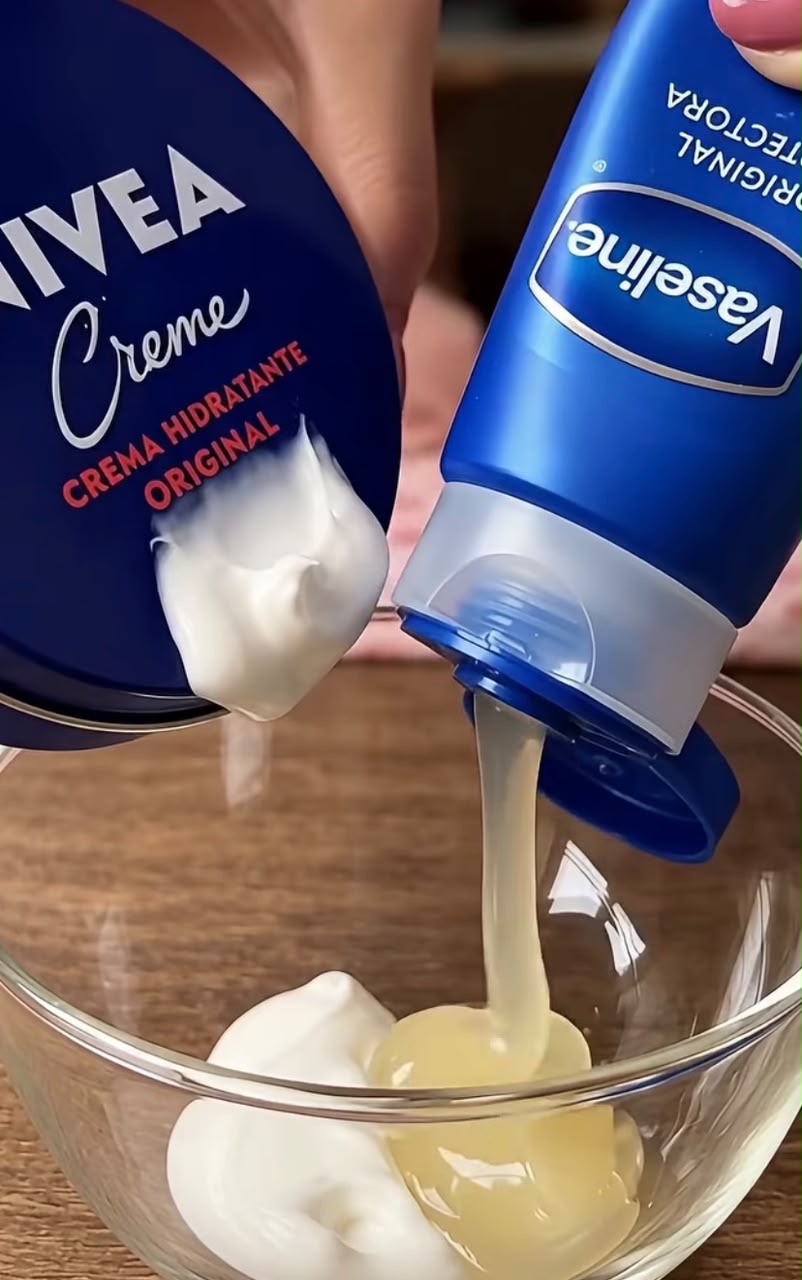
If you’re struggling with extremely dry skin, rough elbows, cracked heels, or dry winter hands, this simple Nivea and Vaseline moisture treatment may be worth learning about. Combining two well-known skincare products creates a rich, protective mixture designed to soften rough areas and help reduce moisture loss.
Nivea Original Creme is a rich moisturizing cream, while Vaseline Original Petroleum Jelly creates an occlusive layer that helps seal moisture into the skin. Together, they make a thick, easy-to-apply treatment that can be particularly useful for areas that become rough, dry, or uncomfortable.
The best part is that this DIY skincare routine requires only two products and a few minutes of preparation. It can easily become part of your evening body-care routine, especially during colder months when skin tends to lose moisture more quickly.
Important: This mixture is for external skincare use only. It is not edible, and it should not be considered a medical treatment for skin diseases or severe skin conditions.
Recipe Overview
| Details | Information |
| Preparation Time | 5 minutes |
| Application Time | 2–3 minutes |
| Total Time | 5–8 minutes |
| Yield | Small personal batch |
| Category | DIY Skincare |
| Skin Concern | Dry and rough skin |
| Application | Topical |
| Difficulty | Very Easy |
Why You’ll Love This Recipe
Only Two Ingredients: This simple skincare combination uses two familiar moisturizing products without requiring complicated preparation or expensive equipment.
Helps Reduce Moisture Loss: Vaseline forms a protective layer on the skin, helping reduce water loss and keep the skin feeling moisturized.
Perfect for Rough Areas: The rich texture makes this combination particularly suitable for dry elbows, heels, knees, and hands.
Easy Overnight Routine: Applying a small amount before bedtime can help protect dry areas while you sleep.
Budget-Friendly Skincare: You can create a simple moisturizing routine using products that are widely available in pharmacies and supermarkets.
Ingredients
You only need two products for this simple moisturizing treatment.
| Ingredient | Quantity | Purpose |
| Nivea Original Creme | 1 tablespoon | Provides moisturizing ingredients and a rich cream texture |
| Vaseline Original Petroleum Jelly | 1 tablespoon | Creates an occlusive protective layer that helps reduce moisture loss |
Important ingredient note: Use the original versions of both products and check their ingredient labels before application, especially if you have sensitive skin or known allergies.
Step-by-Step Instructions
Step 1: Prepare Your Mixing Bowl
Choose a small, clean, completely dry glass bowl. Wash your hands thoroughly before handling the skincare products to reduce the risk of contamination.
Step 2: Add the Nivea Cream
Place approximately one tablespoon of Nivea Original Creme into the bowl. This rich moisturizing cream provides the base of the mixture.
Step 3: Add the Vaseline
Add approximately one tablespoon of original Vaseline petroleum jelly. Equal parts create a thick, rich mixture suitable for small areas of particularly dry skin.
Step 4: Mix Until Smooth
Using a clean cosmetic spatula, gently stir the two products together until they are evenly combined.
The finished mixture should have a smooth, thick, creamy consistency that is easy to spread.
Step 5: Prepare Your Skin
Wash the area you want to moisturize with lukewarm water and a gentle cleanser. Pat the skin dry with a clean towel, leaving it slightly damp if comfortable.
Step 6: Apply a Thin Layer
Take a small amount of the mixture and gently massage it over dry areas such as your elbows, knees, heels, or hands.
You do not need to apply a very thick layer. A small amount is usually sufficient to create a protective coating.
Step 7: Leave It Overnight
For dry hands, consider wearing clean cotton gloves after application. For dry heels, put on clean cotton socks.
Leave the treatment on overnight if your skin tolerates it, then wash away any excess the following morning.
Best Tips
Always apply moisturizing products to clean skin to help maintain a comfortable skincare routine. Applying an occlusive product over slightly damp skin can help reduce moisture loss.
Start with a small amount rather than applying a thick layer immediately. Petroleum jelly is highly occlusive, so a little goes a long way.
Use this combination primarily on dry body areas such as heels, elbows, and knees. Avoid applying a heavy layer to areas that are naturally oily or prone to clogged pores.
Keep your hands and mixing equipment clean to minimize contamination. If you prepare a mixture, make only a small amount for immediate use rather than storing a large batch.
If you notice itching, redness, burning, or irritation, stop using the mixture and wash the area gently.
Best Ingredient Options
Nivea Original Creme: The traditional Nivea cream provides a rich moisturizing base and is suitable for many people with dry skin. Check the label for fragrance and other ingredients that may not suit sensitive skin.
Vaseline Original Petroleum Jelly: Pure petroleum jelly is an effective occlusive ingredient that helps protect the skin barrier and reduce transepidermal water loss.
Cotton Gloves: Soft cotton gloves can help protect moisturized hands overnight and prevent the product from transferring onto bedding.
Cotton Socks: These are useful for protecting dry heels after applying a small amount of moisturizer.
Gentle Cleanser: A fragrance-free cleanser is a good choice for washing dry skin without unnecessarily stripping its natural oils.
Recipe Variations
Extra-Rich Heel Treatment: Apply a small amount of the mixture to clean, dry heels before bedtime and wear cotton socks overnight. For deep or painful cracks, seek advice from a healthcare professional.
Overnight Hand Moisturizer: Apply a thin layer to the backs of your hands and dry knuckles before wearing clean cotton gloves.
Dry Elbow Treatment: Massage a small amount into rough elbows after showering while the skin is slightly damp.
Winter Skin Protection: Use a small amount on particularly dry areas exposed to cold weather and indoor heating.
Simpler Petroleum Jelly Routine: If you prefer not to mix products, apply a fragrance-free moisturizer first and then a thin layer of plain petroleum jelly over particularly dry areas.
What to Use With This Treatment
A good moisturizing routine works best when combined with gentle skincare habits.
Use a mild, fragrance-free body cleanser instead of harsh soaps that can strip natural oils. After showering, apply a suitable moisturizer while the skin is still slightly damp.
For very dry feet, comfortable cotton socks can help protect the skin after applying moisturizer. For dry hands, wear protective gloves when washing dishes or using cleaning products.
Avoid very hot showers, excessive exfoliation, and harsh scrubbing because these habits can make dry skin worse.
Make-Ahead Instructions
For hygiene reasons, it is best to prepare only the quantity you need for immediate use.
You can keep your Nivea cream and Vaseline in their original containers and combine a small amount whenever necessary.
Use a clean spatula rather than dipping wet fingers into the product containers.
Avoid transferring a large homemade batch into a jar unless you can maintain appropriate hygiene and storage conditions. Mixing the products may also change their original formulation, and the combined product has not necessarily been tested for stability or preservation.
Storage
The safest approach is to keep Nivea Creme and Vaseline in their original packaging.
Store both products according to their manufacturers’ instructions, away from excessive heat, direct sunlight, and moisture.
If you mix a small quantity for immediate application, avoid keeping leftover mixture for extended periods. Discard it if its smell, appearance, or consistency changes.
Never introduce water into the mixture or use contaminated utensils.
Reapplication
You can apply a small amount of moisturizer to dry areas whenever needed.
For hands, reapply after washing if they feel dry or tight. For heels and elbows, an evening application may be sufficient for some people.
Avoid repeatedly applying thick layers if your skin becomes uncomfortable, irritated, or excessively greasy.
Important Skin Safety and Precautions
Patch Test First: Before using the mixture regularly, apply a small amount to an inconspicuous area of skin. Monitor the area for 24–48 hours for redness, itching, swelling, or irritation.
Avoid Broken or Infected Skin: Do not apply this homemade mixture to infected wounds, open cracks, or skin that is bleeding without medical advice.
Be Careful With Sensitive Skin: Nivea Original Creme contains fragrance and other ingredients that may irritate some people. If you have sensitive skin, consider a fragrance-free moisturizer instead.
Avoid Acne-Prone Areas: Heavy occlusive products can aggravate acne or folliculitis in some individuals. Avoid applying this rich mixture to acne-prone facial areas.
Avoid the Eyes and Mucous Membranes: This treatment is intended for external body skin only.
Keep Away From Children: Store all skincare products safely out of children’s reach. Petroleum-based products can also create slippery surfaces, so take care when applying them to your feet.
Do Not Use as a Medical Treatment: This combination is a cosmetic moisturizing treatment, not a cure for eczema, psoriasis, fungal infections, or other skin conditions.
Common Mistakes to Avoid
Applying Too Much Product: A thick layer can feel greasy and uncomfortable. Start with a small amount and increase only if necessary.
Mixing With Wet or Dirty Utensils: Contamination can affect the hygiene of your skincare mixture. Always use clean, dry equipment.
Ignoring Skin Irritation: Redness, itching, burning, or swelling are signs that you should stop using the mixture.
Applying to Acne-Prone Skin: The rich, occlusive texture may not suit every skin type, especially areas prone to clogged pores.
Using It on Serious Skin Conditions: Persistent dryness, painful cracks, inflammation, or recurring rashes may require professional evaluation rather than a homemade skincare treatment.
Storing a Large Homemade Batch: Homemade mixtures are not automatically shelf-stable. Prepare only a small quantity when needed.
Frequently Asked Questions
1. Can I mix Nivea Creme and Vaseline together?
Yes. You can combine a small amount of the two products for personal topical use. However, mixing them has not been clinically tested as a separate formulation, so it is best to prepare a small amount and check how your skin responds.
2. Does Nivea and Vaseline help extremely dry skin?
Both products can help with dry skin in different ways. Nivea Original Creme provides moisturizing ingredients, while petroleum jelly creates an occlusive barrier that reduces moisture loss. Individual results vary.
3. Can I apply this mixture every night?
Some people may tolerate occasional or regular application to dry body areas. Start with a small amount and discontinue use if irritation develops. If dryness persists, consult a dermatologist.
4. Can I use this mixture on my face?
It is not ideal for everyone. Nivea Original Creme contains fragrance, and the combination is quite rich. People with acne-prone or sensitive facial skin may prefer a lightweight, fragrance-free facial moisturizer.
5. Is this treatment suitable for cracked heels?
It may help soften dry, rough heel skin by reducing moisture loss. However, deep cracks, bleeding, pain, redness, or signs of infection should be evaluated by a healthcare professional.
6. Can I leave it on overnight?
Yes, if your skin tolerates the ingredients. Apply a thin layer to a small area of clean skin before bedtime. Cotton socks or gloves can help protect your bedding.
7. Can I add vitamin E oil or essential oils?
It is better not to add extra ingredients unnecessarily. Essential oils can cause irritation or allergic reactions, and adding oils may change the texture and tolerability of the mixture.
8. How long does it take to see results?
Petroleum jelly can provide an immediate protective coating, and skin may feel softer after application. However, improving persistent dryness depends on the underlying cause and consistent, appropriate skincare.
9. Can children use this mixture?
Children’s skin can be more sensitive, and product suitability depends on their age and individual skin condition. Ask a pediatrician or pharmacist before using this combination on young children.
When Should You Consult a Doctor?
Although this simple moisturizing combination may help with ordinary dry skin, not every skin problem can be managed with cosmetic products.
Consult a dermatologist or healthcare professional if you experience persistent itching, severe dryness, painful cracks, bleeding, swelling, unusual rashes, or symptoms that do not improve with regular moisturizing.
People with diabetes, circulation problems, or reduced sensation in their feet should seek professional advice before treating cracked heels themselves.
Health Disclaimer: This DIY skincare treatment is intended for general cosmetic moisturizing purposes only. It is not a substitute for medical advice, diagnosis, or treatment. Results may vary depending on skin type and individual sensitivity. Always perform a patch test before use and consult a qualified healthcare professional if you have an existing skin condition or concerns about your skin.
Final Thoughts
This DIY Nivea and Vaseline Intense Moisture Cream is a simple skincare idea that combines two familiar products into a rich moisturizing treatment for dry body areas. The Nivea cream provides a moisturizing base, while Vaseline helps create a protective barrier that reduces moisture loss.
Whether you’re dealing with dry winter hands, rough elbows, or uncomfortable heels, this easy evening skincare routine may help keep your skin feeling softer and more comfortable.
Remember that simple skincare should always be safe and suitable for your individual skin type. Start with a small amount, avoid irritated or infected skin, and consult a dermatologist whenever dryness becomes persistent or severe.
Your skin deserves gentle care, consistent moisturizing, and the right products for its needs!
⚠️This recipe may not be suitable for everyone, so it is advisable to consult a doctor.