Healthy Recipes Daily · Nutrition & Wellness · Eye Health
Introduction
Maintaining healthy vision starts with a balanced diet rich in vitamins, minerals, antioxidants, and other essential nutrients. Colorful vegetables such as red cabbage, green cabbage, and red onions provide beneficial plant compounds that support overall health and can contribute to a nutritious, eye-friendly eating pattern.
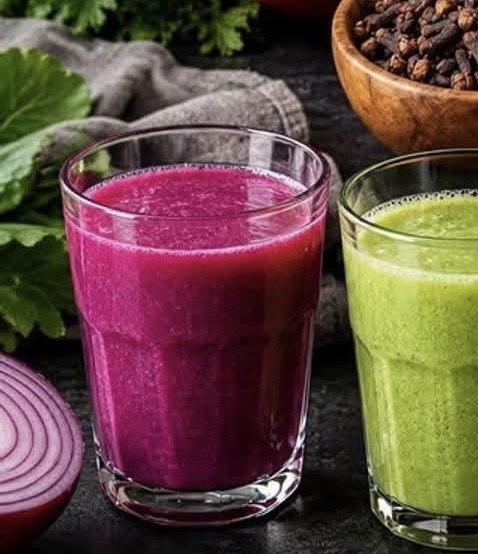
This article explores two simple homemade vegetable juice recipes inspired by the ingredients shown in the image. One features red cabbage and apple, while the other combines green cabbage, cucumber, and spinach for a refreshing drink.
Although these ingredients can be part of a healthy diet, no homemade juice can cure cataracts, restore lost vision, or replace prescription eye treatments. The best approach to eye health combines balanced nutrition, regular eye examinations, UV protection, and appropriate medical care.
Recipe Overview
| Recipe detail | Description |
| Recipe name | Natural Eye Health Vegetable Juices |
| Preparation time | 10–15 minutes |
| Cooking time | None |
| Total time | 10–15 minutes |
| Servings | 2 small servings per recipe |
| Main ingredients | Red cabbage, green cabbage, onion, cucumber, spinach, apple |
| Preparation method | Blending |
| Difficulty | Easy |
| Dietary preferences | Vegetarian, vegan, dairy-free |
| Best for | Adding vegetables and antioxidants to a balanced diet |
Why You’ll Love These Recipes
These colorful vegetable drinks offer an easy way to experiment with fresh produce and introduce more variety into your daily meals. Red cabbage contains anthocyanins, the pigments responsible for its purple color, while spinach provides lutein and zeaxanthin, carotenoids associated with eye health.
The recipes are also customizable. You can adjust the sweetness with an apple, add lemon juice for brightness, or include cucumber for a lighter, more refreshing flavor. For everyday nutrition, blending the ingredients rather than straining them helps preserve their fiber.
Ingredients
Recipe 1: Red Cabbage and Apple Wellness Juice
| Ingredient | Quantity | Purpose |
| Red cabbage | 1 cup, chopped (90 g) | Provides anthocyanins and vitamin C |
| Red onion | 1 thin slice, optional | Adds flavor and plant compounds |
| Apple | 1 medium | Adds natural sweetness and fiber |
| Lemon juice | 1 tablespoon | Adds freshness and vitamin C |
| Water | 1 cup (240 ml) | Helps blend the ingredients |
| Fresh ginger | ¼ teaspoon, optional | Adds a mild, spicy flavor |
Important: Red onion is not necessary for this drink. Its flavor can be strong, so leave it out if you prefer a sweeter, milder juice.
Recipe 2: Green Cabbage, Cucumber and Spinach Smoothie
| Ingredient | Quantity | Purpose |
| Green cabbage | 1 cup, chopped (90 g) | Supplies fiber and vitamin C |
| Fresh spinach | 1 cup (30 g) | Provides lutein and zeaxanthin |
| Cucumber | ½ medium | Adds hydration and freshness |
| Green apple | ½ medium | Balances the vegetable flavor |
| Lemon juice | 1 tablespoon | Adds a citrus note |
| Cold water | 1 cup (240 ml) | Creates a smooth consistency |
Optional Clove Infusion
Cloves appear in the image, but they are not essential ingredients for either smoothie. If you enjoy their flavor, you can steep one whole clove in a cup of hot water for 5 minutes, then remove it and allow the infusion to cool before adding a small amount to a drink.
Avoid adding large quantities of cloves or concentrated clove oil. Clove preparations can interact with certain medications and may increase bleeding risk.
Step-by-Step Instructions
Recipe 1: Red Cabbage and Apple Juice
Step 1: Wash the produce. Rinse the red cabbage, apple, and lemon thoroughly under running water. Remove damaged cabbage leaves and cut the cabbage into small pieces.
Step 2: Prepare the ingredients. Core the apple and chop it into chunks. Slice the cabbage and prepare the lemon juice. Omit the onion if you prefer a milder taste.
Step 3: Blend everything together. Add the cabbage, apple, lemon juice, water, and optional ginger to a blender. Blend for 45–60 seconds, or until the mixture reaches your preferred consistency.
Step 4: Adjust the texture. Add a little more water if the drink is too thick. For better fiber retention, serve it without straining.
Step 5: Serve fresh. Pour into two small glasses and enjoy immediately as part of a balanced breakfast or snack.
Recipe 2: Green Cabbage and Spinach Smoothie
Step 1: Clean the vegetables. Wash the cabbage, spinach, cucumber, and apple carefully under running water.
Step 2: Chop the produce. Cut the cabbage and cucumber into small pieces. Core and slice the apple.
Step 3: Blend until smooth. Place all ingredients in a blender with the water and lemon juice. Blend for approximately 45–60 seconds.
Step 4: Taste and adjust. Add additional water if needed. If the flavor is too strong, add a few extra apple slices rather than sugar.
Step 5: Enjoy. Serve immediately while fresh. Pair the smoothie with a protein-rich food, such as plain yogurt, eggs, or unsalted nuts, for a more satisfying meal.
Practical Tips
Choose fresh vegetables with vibrant colors and firm leaves. Wash all produce thoroughly before preparation, and use a powerful blender to achieve a smoother texture.
Start with small servings if you are not accustomed to eating raw cabbage, because cruciferous vegetables can cause gas or bloating in some people. Keeping the fiber in your smoothie may also help support normal digestion.
Best Ingredient Alternatives
| Original ingredient | Alternative | Benefit |
| Red cabbage | Purple carrots | Adds color and carotenoids |
| Green cabbage | Kale | Provides lutein and zeaxanthin |
| Spinach | Swiss chard | Offers a variety of micronutrients |
| Apple | Pear | Provides mild sweetness |
| Cucumber | Celery | Creates a fresh vegetable flavor |
| Lemon juice | Lime juice | Provides a similar citrus flavor |
| Fresh ginger | A small pinch of cinnamon | Adds warmth and flavor |
Recipe Variations
For a sweeter purple smoothie, combine red cabbage, apple, and a few berries. For a lighter green drink, blend cucumber, spinach, green apple, and lemon juice. If you prefer a more filling breakfast, add plain yogurt or a small portion of oats.
Keep the recipe simple and avoid adding excessive honey, sugar, or fruit juice. Whole fruits and vegetables generally provide more fiber and can help make a balanced eating pattern easier to maintain.
What to Serve With These Drinks
Serve either smoothie with whole-grain toast, eggs, plain yogurt, oatmeal, or a handful of unsalted nuts. These combinations provide additional protein, healthy fats, or complex carbohydrates, helping create a more balanced meal than vegetable juice alone.
For a broader eye-friendly diet, include foods such as oily fish, eggs, leafy greens, beans, citrus fruits, and nuts throughout the week.
Make-Ahead Instructions
For the best flavor and freshness, prepare these drinks immediately before serving. You can wash and chop the vegetables in advance and store them in clean, airtight containers in the refrigerator.
Keep cut produce refrigerated and use it promptly. If you prepare a smoothie ahead of time, refrigerate it immediately in a sealed container and shake it well before drinking.
Storage
Fresh homemade smoothies are best consumed immediately. If necessary, refrigerate them at 4°C (40°F) or below and consume within 24 hours for the best quality.
Discard the drink if it has been left at room temperature for more than two hours, or one hour in temperatures above 32°C (90°F).
Reheating
These smoothies should not be reheated. They are designed to be served cold or at room temperature. If refrigerated, simply stir or shake before serving.
Freezing
You can freeze the prepared ingredients in individual portions for easier blending later. Wash and chop the vegetables and fruit, place them in freezer-safe bags, and freeze for up to approximately three months for best quality.
Blend the frozen ingredients with fresh water when needed. Freezing a finished smoothie is also possible, although its texture may change after thawing.
Common Mistakes to Avoid
Do not assume that a vegetable smoothie can replace an eye examination or prescribed medication. Avoid adding excessive amounts of raw onion or cloves, as these can make the drink unpleasant and may cause digestive discomfort.
Another common mistake is straining every smoothie, which removes much of its fiber. Finally, do not rely on a single ingredient or drink to supply all the nutrients your eyes need. Dietary variety is more useful than consuming large amounts of one particular food.
Nutrition Estimate
The following values are approximate and depend on the exact ingredients and serving size.
| Nutrient | Red cabbage and apple | Green cabbage and spinach |
| Calories | 45–70 kcal | 35–60 kcal |
| Carbohydrates | 10–16 g | 7–12 g |
| Fiber | 2–4 g | 2–4 g |
| Protein | 1–2 g | 1–3 g |
| Fat | 0–1 g | 0–1 g |
| Vitamin C | Present | Present |
| Antioxidants | Anthocyanins and other plant compounds | Lutein, zeaxanthin, and other plant compounds |
Estimates are for one small serving, assuming the ingredients are blended without added sugar.
Frequently Asked Questions
1. Can red cabbage juice improve eyesight?
Red cabbage provides vitamin C and anthocyanins, which contribute to a nutritious diet. However, there is no good evidence that red cabbage juice alone improves visual acuity or reverses vision loss.
2. Which vegetables are beneficial for eye health?
Spinach, kale, broccoli, carrots, and other colorful vegetables can contribute useful nutrients. Leafy greens are particularly good sources of lutein and zeaxanthin, while carrots provide beta-carotene, which the body can convert into vitamin A.
3. Can this drink cure cataracts?
No. Cataracts involve clouding of the eye’s natural lens. A healthy diet supports general eye health but does not remove cataracts. An eye-care professional can assess treatment options.
4. Is it necessary to drink this smoothie every day?
No. There is no requirement to drink these specific recipes daily. Eating a varied diet that includes vegetables, fruit, whole grains, protein sources, and healthy fats is more important.
5. Can I add cloves to the smoothie?
You can experiment with a very small amount of clove-infused water for flavor, but cloves are not a proven treatment for eye conditions. Avoid concentrated clove oil, especially if you take medication that affects blood clotting.
6. Can this recipe help prevent age-related vision problems?
A balanced diet can contribute to long-term eye health, but no individual drink guarantees prevention of age-related eye disease. Regular eye examinations, not smoking, and protecting your eyes from excessive UV exposure are also important.
7. Who should be cautious with these drinks?
People who need to limit potassium or vitamin K, take certain medications, or have specific dietary restrictions should ask their healthcare professional whether the ingredients are appropriate. People taking warfarin, for example, should maintain a consistent intake of vitamin K-rich foods rather than suddenly making major dietary changes.
Conclusion
Red cabbage, green cabbage, spinach, cucumber, and apples can all contribute to delicious, nutrient-rich homemade smoothies. These two recipes offer a simple way to add more vegetables to your routine while enjoying different flavors and textures.
For lasting eye health, focus on a varied diet, regular eye examinations, adequate sleep, and appropriate eye protection. Remember that natural ingredients can support general nutrition, but they are not substitutes for evidence-based medical treatment.
Health disclaimer: ⚠️ Cette recette peut ne pas convenir à tout le monde. Il est conseillé de consulter un médecin, notamment si vous prenez des médicaments ou suivez un régime alimentaire particulier. En cas de douleur oculaire, de baisse soudaine de la vision ou d’autres symptômes inhabituels, consultez rapidement un professionnel de santé.