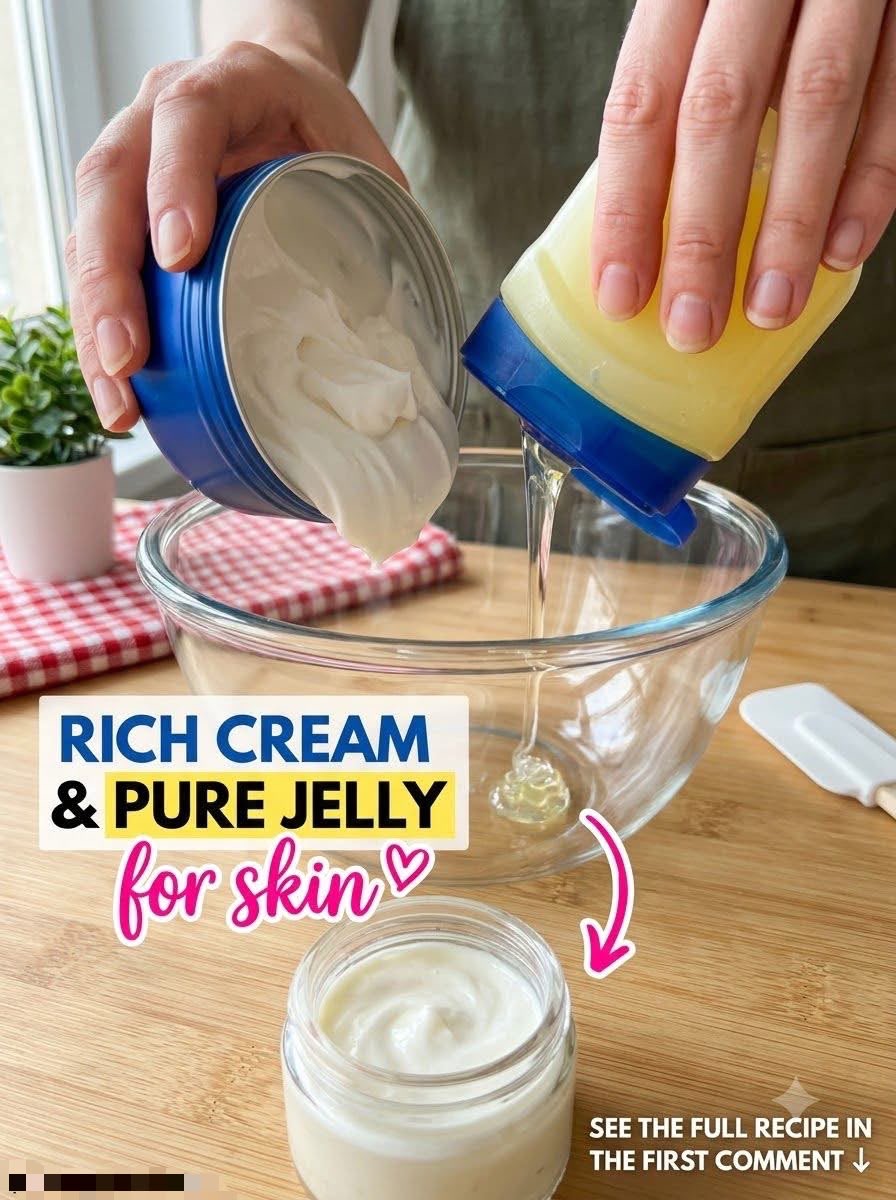
Looking for a simple way to help soften dry skin at home? This DIY ultra-moisturizing balm combines a rich moisturizing cream, such as NIVEA Creme, with pure petroleum jelly, such as Vaseline, to help protect the skin and reduce moisture loss.
This easy skincare recipe takes just a few minutes to prepare and is especially useful for rough, dry areas such as hands, elbows, knees, and heels.
Recipe Overview
| Details | Information |
| Preparation Time | 5 minutes |
| Cooking Time | None |
| Total Time | 5 minutes |
| Yield | Approximately 2 tablespoons |
| Difficulty | Very easy |
| Best For | Dry, rough skin |
| Application | Preferably in the evening |
Why You’ll Love This Moisturizing Balm
This homemade moisturizing balm uses two familiar skincare products to create a rich, protective mixture. Petroleum jelly forms an occlusive layer that helps prevent water from escaping the skin, while the moisturizing cream helps soften and condition it.
The simple preparation makes it convenient for people who want an extra layer of moisture during cold weather or after frequent handwashing.
Ingredients
| Ingredient | Quantity | Purpose |
| Rich moisturizing cream, such as NIVEA Creme | 1 tablespoon (approximately 15 g) | Helps soften and moisturize the skin |
| Pure petroleum jelly, such as Vaseline | 1 tablespoon (approximately 15 g) | Helps seal in moisture |
| Vitamin E oil (optional) | A few drops, if suitable | Optional skincare ingredient |
Important: Vitamin E oil is not necessary for this recipe. It can irritate some people’s skin, so consider leaving it out, particularly if you have sensitive skin.
Step-by-Step Instructions
Step 1: Prepare Your Equipment
Wash your hands and prepare a clean, dry mixing bowl and a small spatula. If you plan to transfer the mixture, use a clean, dry container with a lid.
Step 2: Measure the Ingredients
Add 1 tablespoon of rich moisturizing cream and 1 tablespoon of pure petroleum jelly to the bowl.
Equal quantities create a thick balm, although the final texture will depend on the cream you choose.
Step 3: Mix Until Smooth
Stir the ingredients with the spatula until they are evenly combined and have a consistent, creamy texture.
Avoid adding water, fresh aloe vera, or other untested ingredients because they can affect the mixture’s stability and safety.
Step 4: Transfer to a Container
Transfer the balm into a clean, dry container and close the lid securely.
Because this homemade mixture has not been tested for stability or microbial safety, it is best to prepare a small quantity for immediate use rather than making a large batch.
Best Tips for Best Results
Apply a small amount to clean, slightly damp skin. This helps trap existing moisture and leaves the skin feeling softer.
Use a thin layer because petroleum jelly is highly occlusive and can feel greasy. For very dry hands, elbows, knees, or heels, evening application may be particularly convenient.
If you have sensitive skin, choose products you already tolerate and test the mixture on a small area first.
Best Ingredient Options
For very dry skin: Choose a rich cream that is appropriate for the body area you want to treat.
For sensitive skin: Consider a fragrance-free moisturizer and avoid optional additives.
For a simpler formula: Use only the cream and petroleum jelly. Vitamin E oil is not required.
Recipe Variations
Dry hand balm: Apply a small amount after washing your hands to help reduce moisture loss.
Rough elbow and knee balm: Smooth a thin layer over clean skin in the evening.
Heel moisturizing treatment: Apply a small amount to dry heels before bedtime. Cotton socks can help protect bedding.
Winter skin care: Use a suitable moisturizer regularly and apply a small amount of the balm to especially dry areas when needed.
What to Use It With
For a simple skincare routine, use a gentle cleanser, a suitable moisturizer, and broad-spectrum sunscreen during the day on exposed skin.
At night, apply the balm to dry areas that need additional moisture protection. You do not need to use it over your entire face or body.
Make-Ahead Instructions
It is best to mix only the amount you expect to use soon. Combining commercial skincare products at home may change their texture and can affect the preservation system of the original cream.
Keep the original products in their own containers whenever possible, and avoid introducing water or unclean fingers into the mixture.
Storage
If you prepare a small batch, keep it in a clean, dry, closed container and follow the storage guidance for the original products.
There is no validated shelf life for this homemade mixture. Discard it if its smell, color, or consistency changes, or if contamination is suspected. Do not assume that it will remain safe for the full shelf life of the original cream.
Reheating
No heating is required. Mix the ingredients at room temperature and avoid microwaving the mixture, which could affect its consistency.
Freezing
Freezing is not recommended because it may alter the texture and stability of the cream.
Common Mistakes to Avoid
Avoid applying a thick layer to acne-prone areas if it causes breakouts or discomfort. Do not apply the mixture to infected skin, deep wounds, or irritated areas without appropriate medical advice.
Do not add water, food ingredients, or herbal preparations. These additions can introduce contamination or make the mixture less stable.
Stop using the balm if you experience itching, redness, swelling, or irritation.
Nutrition Estimate
This is a topical skincare product rather than a food recipe, so nutritional values do not apply.
| Skin care effect | What to expect |
| Moisture retention | Helps reduce water loss from the skin |
| Skin softness | May improve the feel of dry, rough skin |
| Dry hands and heels | Can provide an additional protective layer |
| Wrinkle reduction | May temporarily soften the appearance of dryness-related fine lines |
| Permanent anti-aging effects | Not established |
Frequently Asked Questions
1. Can I use NIVEA cream and Vaseline together?
Yes, they can generally be combined for external use if you tolerate both products. The mixture will be thicker and greasier than many ordinary moisturizers.
2. Is this balm suitable for the face?
It may be suitable for some people, but the mixture can feel heavy and may not suit acne-prone skin. Avoid the eye area and follow the product labels.
3. Does this mixture remove wrinkles?
No. It may temporarily make fine lines caused by dryness less noticeable by helping the skin retain moisture. It does not permanently remove wrinkles or reverse aging.
4. Can I use it every night?
You may use a small amount on dry areas if your skin tolerates it. Adjust the frequency according to your skin’s needs and stop if irritation occurs.
5. Should I add vitamin E oil?
It is optional and unnecessary for basic moisture protection. Vitamin E can cause skin reactions in some people, so leaving it out is a reasonable choice.
6. Can I use it on my hands and feet?
Yes, if you tolerate both ingredients. It can be especially useful on dry hands, elbows, knees, and heels.
7. Is homemade balm better than a commercial moisturizer?
Not necessarily. Commercial moisturizers are formulated and tested for stability and product safety. This homemade mixture is a simple option, but it has not undergone the same testing.
Final Thoughts
This DIY ultra-moisturizing balm combines rich cream and petroleum jelly to help soften dry skin and reduce moisture loss. With only two main ingredients and about five minutes of preparation, it is an easy addition to a simple skincare routine.
For the best results, apply a small amount to slightly damp skin, use it mainly on dry areas, and keep the mixture clean.
Skincare disclaimer: This recipe may not be suitable for everyone. Test a small area first, follow the product labels, and consult a dermatologist if you have persistent irritation or an existing skin condition.
⚠️ This recipe may not be suitable for everyone, so it is advisable to consult a doctor